The flesh is the colour of lipstick, it smells of roasted almonds and burnt caramel, and the only place on earth you can eat it fresh is in the jungles of Sabah, Sarawak, and Brunei.
Red durian in Borneo is one of the rarest tropical fruits in Southeast Asia, a wild species that most visitors to Malaysia will never encounter unless they know exactly where and when to look.
We first tasted red durian at a tamu market in Kota Kinabalu during the tail end of the fruiting season. What we found challenged everything we thought we knew about the king of fruits.
Forget the Musang King and D24 varieties that dominate Peninsular Malaysia. These are different species altogether, with different flavours, different textures, and a very different experience. Here is your complete guide to the orange and red durian in Borneo.
Read also: Absolute 10 Best Things to Do in Miri, Sarawak

What Are Red and Orange Durians in Borneo?
Red and orange durians are wild jungle fruit species found almost exclusively on the island of Borneo.
Unlike the commercially farmed durians sold across Thailand and Peninsular Malaysia, these varieties grow in remote rainforests of Sabah, Sarawak, and Brunei. They belong to two entirely separate species and are prized for their vivid flesh colours and notably milder scent.
Read also: Best Sarawak Food: 20 Must-Try Traditional Dishes Guide
Durian Sukang (Red-Fleshed)
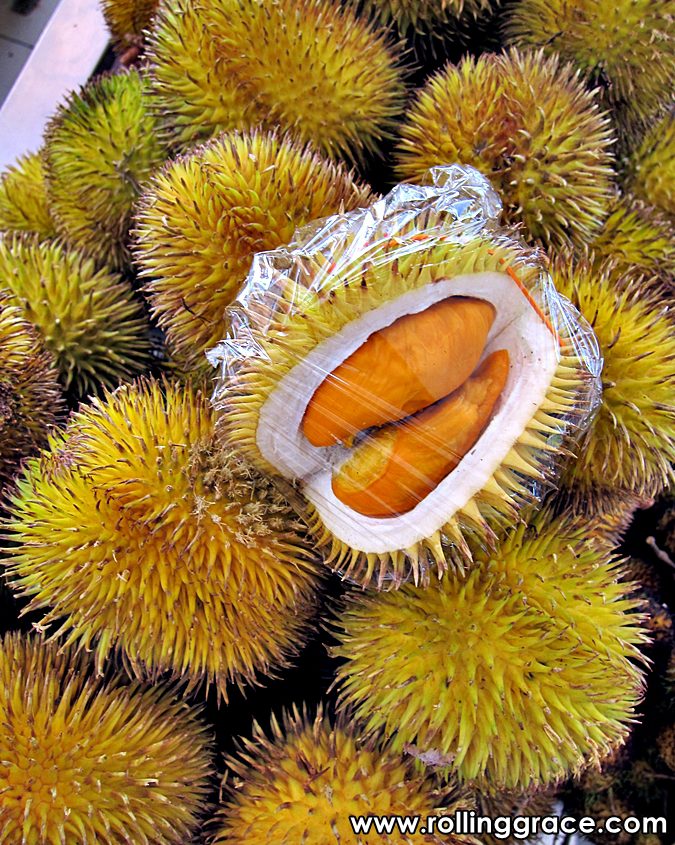
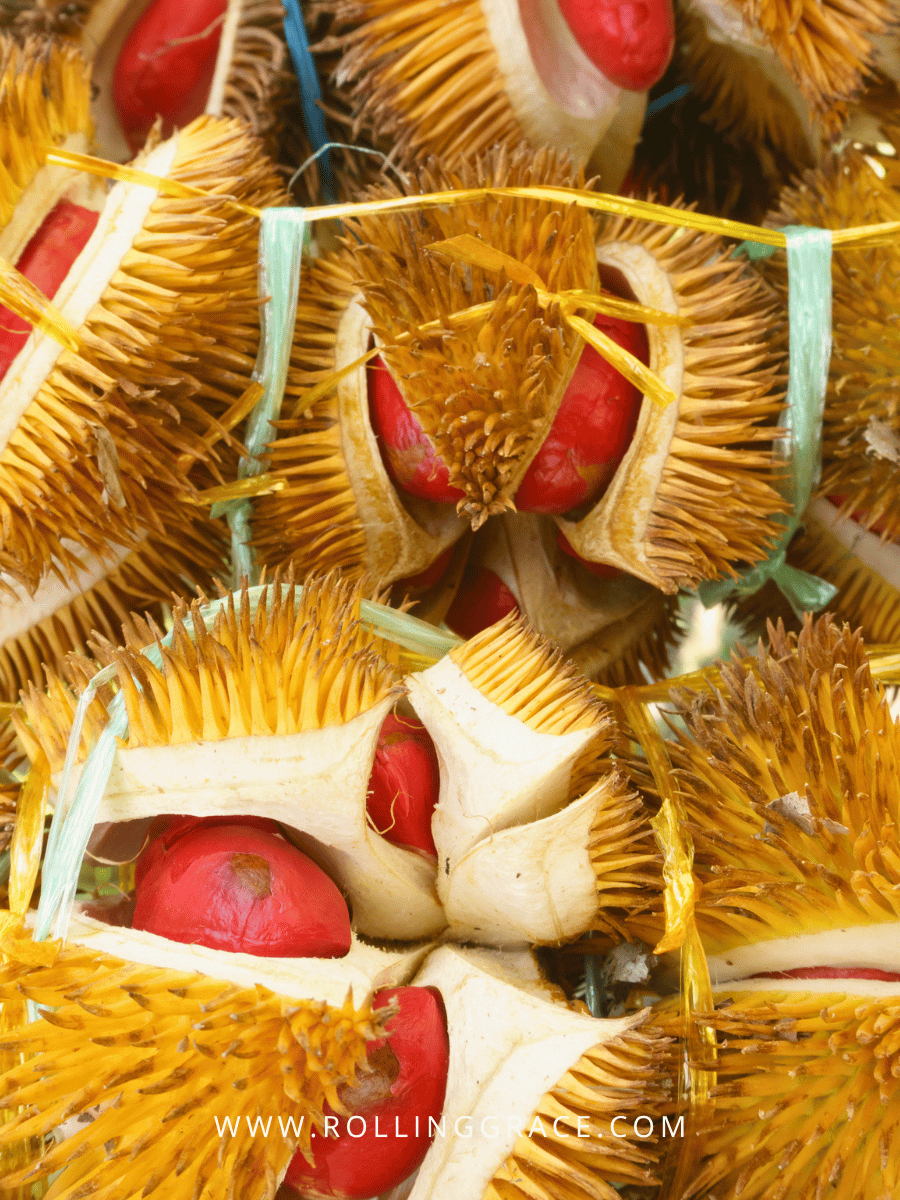
Durian Sukang is the species Durio graveolens. Its flesh ranges from deep crimson to bright red. When ripe, the husk turns a golden yellow with short, sharp spines. The fruit is small enough to hold in one hand.
What makes Durian Sukang distinctive is that the fruit splits open while still attached to the tree, dropping its flesh and seeds to the forest floor below.
Unlike common durians (Durio zibethinus), which fall to the ground whole when ripe, Sukang must be harvested before it cracks open on the branch or collected from the ground after the seeds drop.

Durian Dalit (Orange-Fleshed)
Durian Dalit is a completely separate species: Durio oxleyanus. Its flesh is a warm orange to golden yellow, and the husk stays green with long, thick thorns.
Like Sukang, it is a palm-sized fruit. In Sarawak, it is also known locally as isu or durian kuning. Dalit behaves more like a conventional durian and falls to the ground once ripe.
Read also: What to Buy in Sarawak: 10 Best Souvenirs From Borneo
Where Does the Durian Come From?
The word “durian” comes from duri, meaning thorn in the Malay language. Borneo, together with neighbouring Sumatra, is where the fruit is believed to have originated. From here, durians spread along ancient trade routes through present-day Myanmar and into Thailand and South Vietnam.
Read also: 5 Reasons Sarawak Laksa is the Best Breakfast in Borneo
Neither Sabah nor Sarawak exports their durian crop in any meaningful commercial volume. But the island holds something Thailand cannot claim: the greatest diversity of wild durian species on earth.
There are at least 16 Durio species in Sarawak alone, half of which are edible. This makes Borneo the spiritual and botanical home of the durian, even if it will never compete with Thailand on export tonnage.
What Does Red Durian in Borneo Taste Like?
Red durian in Borneo tastes milder, lighter, and far less pungent than the yellow-fleshed commercial varieties found in Peninsular Malaysia and Thailand.
The flesh is drier and less dense, with a subtle sweetness and a scent that many describe as nearly odourless compared to its famously strong-smelling cousin, Durio zibethinus.
Durian Sukang Flavour Profile
Durian Sukang carries the stronger flavour of the two wild varieties. Botanical sources describe its fragrance as roasted almonds and burnt caramel, with slight carrot-like undertones. The taste has been likened to sweet, cheesy avocado with an alcoholic aftertaste.
Among locals, there is a long-standing claim that eating too many Durian Sukang can leave you feeling slightly light-headed, almost as if you have had a glass of wine. Sukang is generally the more expensive and more popular of the two varieties because of this intensity.
Read also: Limbang Sarawak: 7 Things to Know Before You Visit This Border Town

Durian Dalit Flavour Profile
Durian Dalit is blander by comparison. The flesh is sweet but noticeably milder, and it lacks the fermented wine-like kick of its red-fleshed counterpart. For first-timers who find the idea of durian intimidating, Dalit is the gentler entry point.
Both species are significantly smaller than regular durians. Each fruit may contain only two or three seed segments, and in some cases just one.
Tempoyak Durian Merah
Tempoyak is a traditional fermented durian condiment found across Malaysia and parts of Indonesia.
In its classic form, durian flesh is mixed with salt and left to ferment for three to seven days at room temperature, producing a tangy, sour paste used as the base for dishes like gulai ikan patin (silver catfish curry) and sambal.
Variation of Tempoyak in Sabah
In parts of Sabah, particularly among the Sungai communities of Tongod, Kinabatangan, Telupid, and Beluran, red durian flesh is prepared differently. The flesh of Durio graveolens is preserved with salt and stir-fried with bird’s eye chilli, onion, and oil, then served alongside warm white rice.
This Sabah-style preparation skips the prolonged fermentation of traditional tempoyak and functions more as a quick preserve or sambal.
Where and When to Buy Red Durian in Borneo
Red durian in Borneo is not commercially farmed on any large scale, and you will not find them in the supermarkets of Kuala Lumpur or the durian stalls of Penang.
To try them, you need to be in the right part of Borneo during the right months, between roughly October and February depending on the state.
Sabah
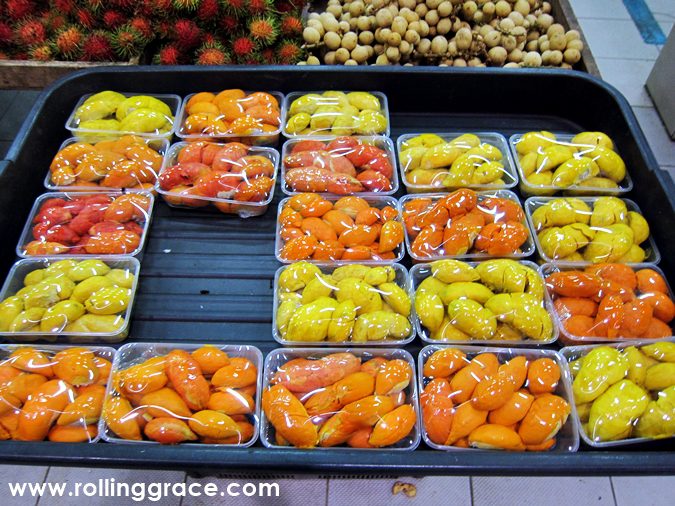
The best places to find red and orange durians in Sabah are the tamu markets. A tamu is an open-air market where indigenous farmers and local producers sell their goods directly.
Read also: 5 Best Markets in Miri, Sarawak Worth Visiting
Check tamu markets in Kota Kinabalu (Petagas and Donggongon are good starting points), as well as Sandakan, Kota Kinabalu Central Market, and the Gaya Street Sunday Market. During peak season, vendors also sell from the backs of trucks and vans at roadside stops between towns.
Sarawak
In Sarawak, look for wild durians at tamu markets and roadside stalls along the Serian-to-Kuching road and in the Miri region. The red-fleshed variety is rarer here than in Sabah, though the orange-fleshed Dalit appears more frequently.
Brunei
Similar tamu-style markets in Brunei carry wild durians during the fruiting season, though availability is unpredictable.
Read also: 7 Best Things to See at Tamu Kianggeh Market, Brunei
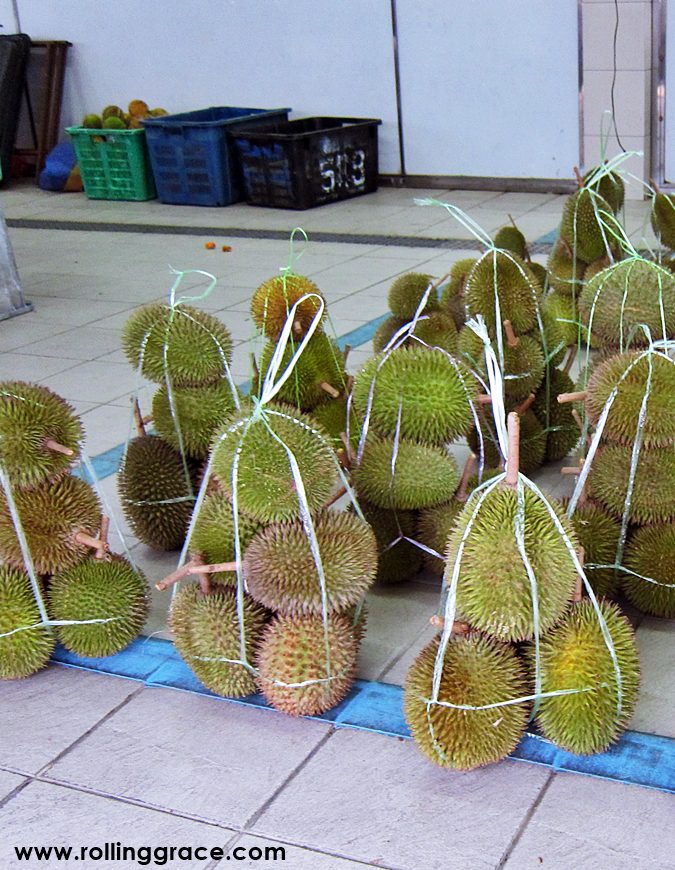
When Is Red Durian Season?
Wild durians in Borneo follow a different calendar to the common durian season on the Malaysian peninsula.
The primary season in Sabah runs from October to December, sometimes extending into January. In Sarawak, the season typically begins in late November and can stretch into February. This varies year to year depending on rainfall and weather patterns.
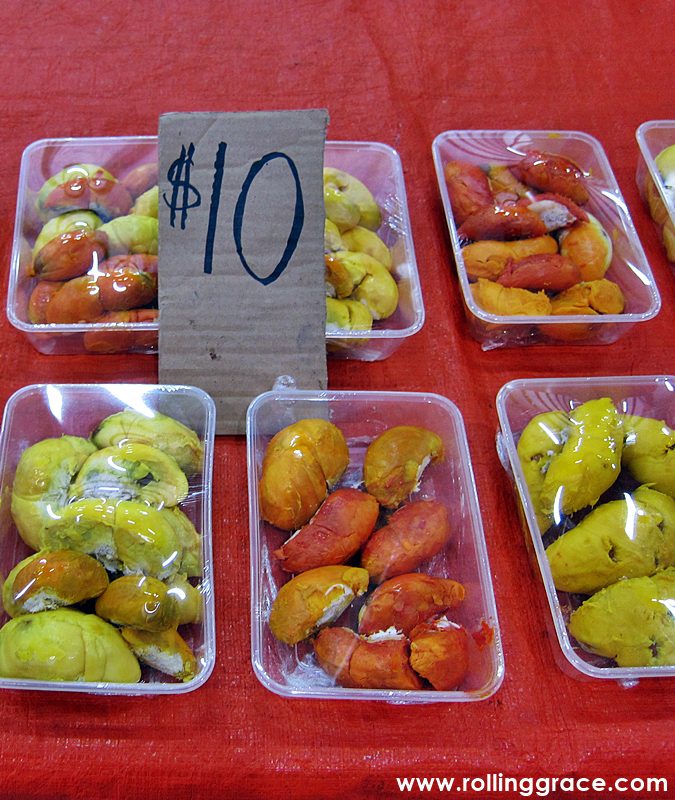
Prices fluctuate heavily based on harvest volume and location. Expect a range of RM15 to RM35 per kilogram for wild durians, with Durian Sukang generally commanding a higher price than Dalit.
At some rural tamu markets, individual fruits have sold for as little as RM2 to RM3 each. Arrive early. They sell fast.
Is Red Durian in Borneo Worth Trying?
For anyone travelling to Sabah or Sarawak between October and February, tasting red durian in Borneo is one of those food experiences that simply does not exist anywhere else on earth.
These are wild, seasonal fruits from the world’s oldest tropical rainforests, sold by the same indigenous communities who have harvested them for generations.
A Note on Conservation
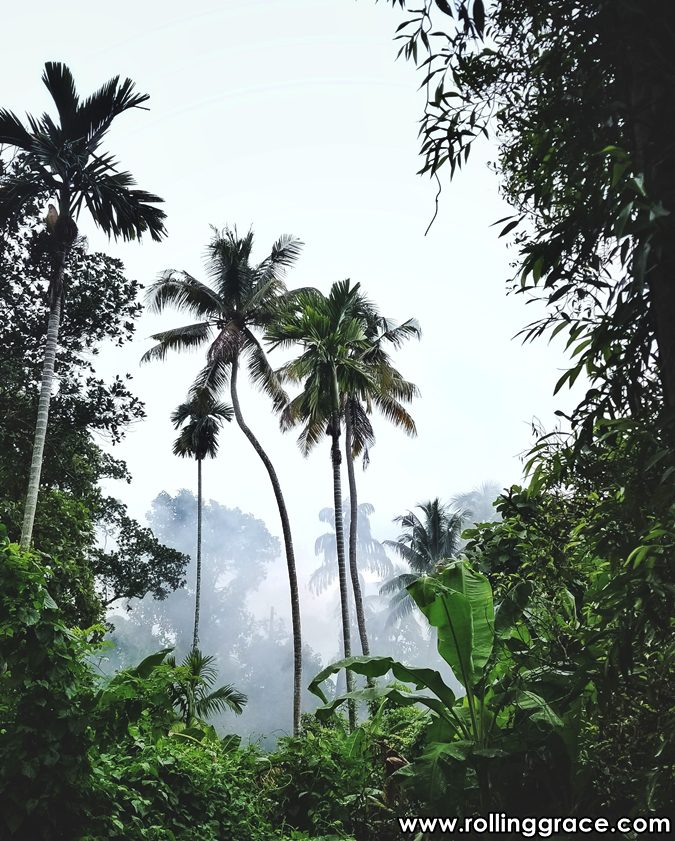
The IUCN lists Durio graveolens as Vulnerable, and Durio oxleyanus as Near Threatened. As Borneo’s forests face ongoing pressure from development and palm oil expansion, these wild durian species are increasingly at risk.
Buying them from local tamu vendors supports the small-scale indigenous farmers and foragers who have the strongest incentive to protect the forests these trees depend on. Red durian in Borneo will not replace your Musang King addiction. The taste is different, the texture is lighter, and the portions are tiny. But that is exactly the point.
This is not a commercial product chasing export dollars. It is a wild, ancient fruit that tastes like Borneo itself: unexpected, vivid, and impossible to find anywhere else.
Get the good stuff first. Join Rolling Grace for the restaurants worth crossing a city for, the stays worth the upgrade, and the places to go before everyone else. Free, straight to your inbox.
Leave a Reply