Sarawak has 31 ethnic groups, centuries of craft tradition, and market stalls that will slow you down for hours. The hard part is not finding something to buy. It is knowing what is worth it.
Malaysia’s largest state sits on the northwestern shore of Borneo, and its souvenirs reflect exactly that, natural materials, indigenous techniques, and a craft culture that has been passed down through generations of Iban, Kenyah, Penan, Lun Bawang, Melanau and Malay artisans. What you find here is not reproduced anywhere else in the country.
Here is what to buy in Sarawak and why each one earns its space in your bag.
Read also: 7 Best Things to Do at Bako National Park, Sarawak

Pua Kumbu
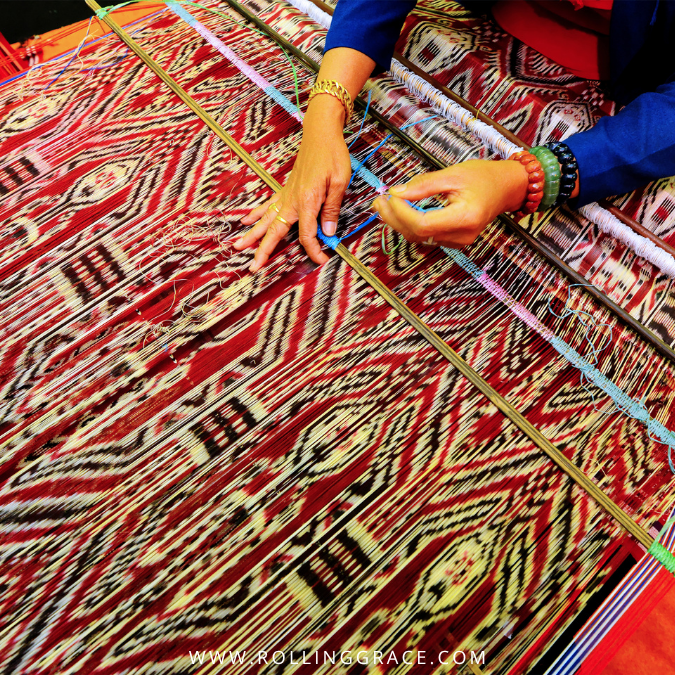
The most important textile you can bring home from Sarawak. Pua Kumbu is a ceremonial cotton cloth produced by Iban women using a warp ikat technique, where threads are bound and dyed before weaving to create the pattern. The designs carry cultural meaning, each motif tied to Iban mythology, spiritual beliefs, and community identity.
The number of women who still hold the full knowledge of traditional dye preparation is dwindling, which makes older, handmade pieces increasingly rare. Contemporary versions produced by younger weavers are more accessible and still carry the craft forward.
Expect to pay anywhere from RM200 to several thousand ringgit for a full piece, depending on age, intricacy, and whether it is handmade or workshop-produced. Buy from the Sarawak Cultural Village or the Sarawak Craft Council where provenance is clearer.
Traditional Beads
Beadwork is central to the daily and ceremonial life of Borneo’s indigenous communities. The Iban use beads to decorate baby carriers, collars, necklaces, phone pouches and headgear, each piece built from hundreds of tiny glass or ceramic beads in blue, white, yellow and black.
The craft is both decorative and communicative. Certain patterns signal age, status, and community affiliation. Buying a beaded piece from a Sarawakian artisan is one of the more direct ways your money reaches the people who made it.
Beaded jewellery is widely available at the Main Bazaar in Kuching and at the Miri Handicraft Centre. Smaller pieces like earrings and bracelets start from around RM20. Elaborate collars and carriers are significantly more.
Rattan and Woven Baskets
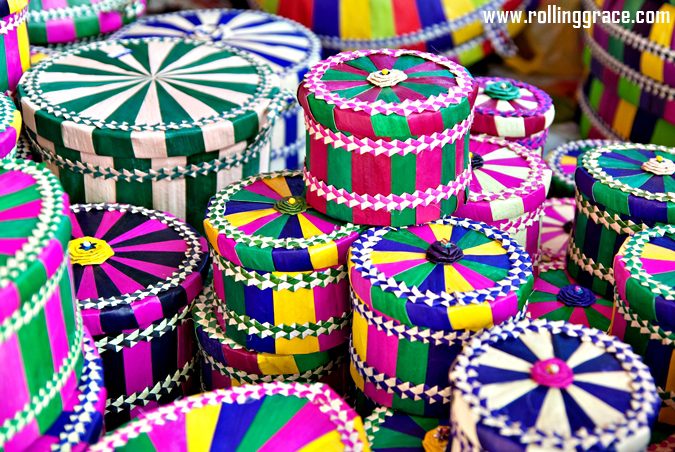
Rattan is a climbing palm harvested from Borneo’s forests and woven into baskets, floor mats, table mats, wall hangings, and furniture. It is one of the most durable natural materials in the region, resistant to heat and wear, and the finished products are built to last decades rather than years.
The Wakid, a bamboo basket traditionally used to carry produce at wet markets, is one of the better-known Borneo basket forms. Smaller decorative versions make practical and lightweight souvenirs. It is one of the items visitors look for when planning what to buy in Sarawak.
Rattan products vary widely in quality. The better pieces have tight, even weave with no loose ends. Looser weave with visible gaps usually means faster production and shorter lifespan. If you are buying something large, the Serikin Border Market near Kuching offers some of the best rattan pricing in the state.

Sarawak Pepper
Sarawak produces some of the most prized pepper in the world. The state accounts for a significant share of Malaysia’s pepper exports, and both black and white varieties grown here are recognised for their bold, clean heat and aromatic profile.
Black Sarawak pepper has a sharper, more complex flavour than most commercially available pepper. White Sarawak pepper is milder, earthier, and widely used in Chinese cooking across the region.
Buy it vacuum-sealed or in tins. Loose pepper sold in open bags has a much shorter shelf life once exposed to air. Most supermarkets and souvenir shops across Sarawak stock it, and it is one of the easiest things to carry home without worrying about damage or customs.
Price range: approximately RM15 to RM80 depending on weight and grade.

Kek Lapis Sarawak
Sarawak’s layered cake is in a different category from the kek lapis found on the peninsula. The Sarawakian version uses vivid food colouring and intricate cutting techniques to produce geometric and tribal-inspired patterns inside each slice. The layers are baked individually and held together, with designs that can take hours to complete.
It is both a local staple and a legitimate art form. Bakers in Kampung Gersik and Kampung Boyan along the Sarawak River have been producing it as a cottage industry for generations.
Kek lapis travels well for a few days at room temperature and longer when refrigerated. Buy it fresh from Satok Weekend Market in Kuching or from dedicated kek lapis shops along the Main Bazaar. Prices start from around RM20 per cake and go higher for elaborate designs.
It stands among the items people seek out when deciding what to buy in Sarawak.

Bark Cloth and Embroidered Textiles
Bark cloth is produced from the inner bast of the tekalong tree and is one of the oldest textile traditions in Borneo. The Lun Bawang tribe use it to make embroidered jackets worn as ceremonial dress. It is not widely available outside Sarawak and its production depends on a very small number of remaining practitioners.
If you find a bark cloth piece, buy it. It is not going to get easier to find.
More accessible are the contemporary textiles produced by Tanoti, a Kuching-based social enterprise employing young Sarawakian women weavers. Their songket-influenced pieces have won international craft recognition and are available at their workshop on Jalan Tabuan in Kuching.
Tribal Bags and Pouches
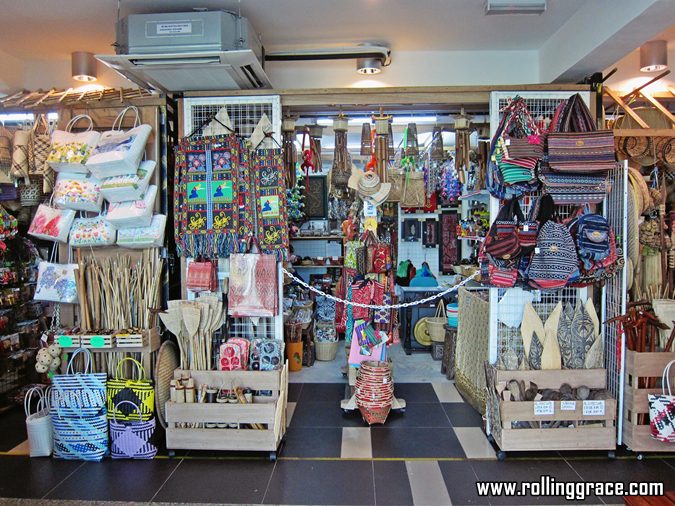
Sarawakian tribal bags combine beadwork, traditional fabric, and indigenous motifs into everyday carry pieces. They range from small coin pouches and phone cases to full shoulder bags, and the better ones are entirely handmade.
The designs draw from Iban and Kenyah visual traditions, and each piece looks distinct. They are one of the more wearable souvenirs from the state, practical enough to actually use rather than display on a shelf.
Available widely at the Main Bazaar in Kuching and at the Miri Handicraft Centre. Price range varies significantly. A handmade beaded bag can run from RM80 to several hundred ringgit depending on the complexity of the beadwork. It is one of the things to look for when planning what to buy in Sarawak.

Miniature Sape
The sape is a traditional lute of the Kenyah people, carved from a single piece of wood with two or more strings. It is played at ceremonies and has found its way onto international stages as Sarawakian musicians bring it into contemporary arrangements.
A full-sized sape is roughly one metre long and not practical to carry home. Miniature versions, keychain forms, and framed decorative pieces are sold across souvenir shops in Kuching and Miri. They are one of the more distinctive souvenirs from Sarawak and one of the least generic. It is often included in lists of what to buy in Sarawak.
Earthenware and Ceramics
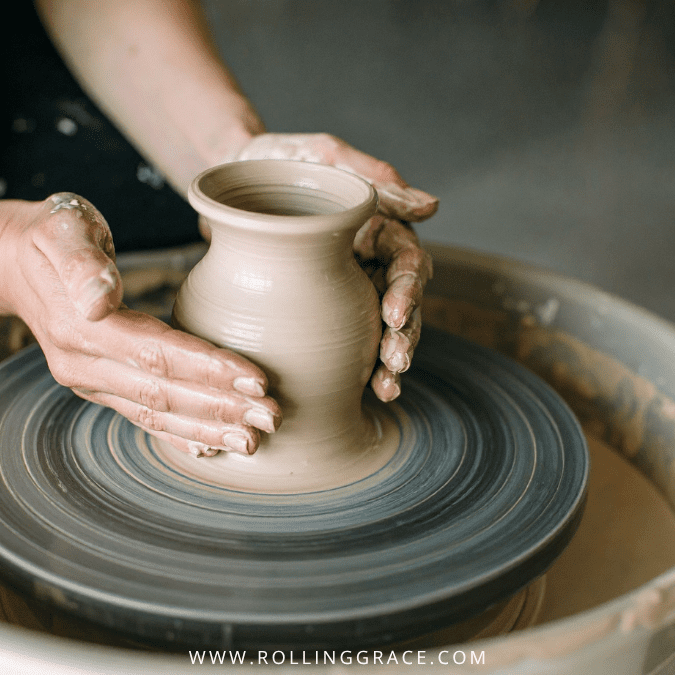
Sarawak has two distinct ceramic traditions: one from Iban, Murut and Kelabit potters, the other from Chinese potters whose families have been working in the region for generations. The output ranges from decorative vases with hand-painted Sarawak motifs to functional pieces like mugs, candle holders and water jars.
Earthenware is heavier to carry but holds up well if wrapped properly. It is the kind of souvenir that actually looks considered when you get it home rather than sitting forgotten in a drawer.
Available at craft shops along the Main Bazaar and at the Craft Council outlets in Kuching.
Sarawak Laksa Paste
For anyone who has eaten Sarawak laksa and immediately wanted to know how to make it at home, the paste is sold in vacuum-sealed packets at supermarkets and souvenir shops across the state. It is not a substitute for a bowl at a Kuching kopitiam at 7am, but it is a reasonable approximation in your own kitchen.
Instant laksa paste packets are available at most supermarkets and along the Main Bazaar. They are lightweight, inexpensive, and one of the more crowd-pleasing things to bring back for people who are not interested in crafts. It is one of the items to consider when deciding what to buy in Sarawak.

Where to Buy Souvenirs in Sarawak
Main Bazaar, Kuching Waterfront
The most concentrated stretch of souvenir and handicraft shops in Sarawak. A row of two-storey shophouses running parallel to the Kuching waterfront, stocked with beadwork, textiles, rattan, blowpipes, ceramics, and food products. Prices are competitive given the density of shops. Some accept cards, but cash is safer.
Satok Weekend Market, Kuching
Runs Saturday into Sunday at Medan Niaga Satok. More local than touristy, and the best place in Kuching for kek lapis, fresh produce, and food souvenirs. Fewer handicrafts than the Main Bazaar but worth the early morning visit for the atmosphere alone.
Sarawak Cultural Village, Kuching
A living museum where you can buy directly from artisans representing different ethnic groups. Smaller selection but higher authenticity. Pairs well with a half-day visit to the village itself.
Serikin Border Market
Weekend only, approximately two hours from Kuching near the Sarawak-Indonesia border. Best pricing in the state for rattan, textiles, and leather goods. The inventory here has an Indonesian influence that makes it distinct from what you find in Kuching’s city centre. Bargaining is expected and part of the experience.
Miri Handicraft Centre
Located on Jalan Brooke in Miri, this is the dedicated handicraft destination if you are based in northern Sarawak rather than Kuching. Two levels of stalls, 90% handmade items, and a wide range of ethnic craft from across the state.
Address: Corner of Jalan Brooke and Jalan Merbau, 98000 Miri, Sarawak Opening hours: 9am to 6pm daily

Shop Responsibly
Sarawak’s craft traditions survive because people buy them. Purchasing directly from artisans or from certified outlets like the Sarawak Craft Council puts money back into the communities that produce the work. Avoid buying items made from wildlife products or anything that cannot be clearly explained to you by the seller.
Frequently Asked Questions on What to Buy in Sarawak
What is Sarawak most famous for buying?
Pua Kumbu textiles, traditional beadwork, Sarawak pepper, and kek lapis are the most recognised. Each one is specific to Sarawak and not widely available outside the state.
Where is the best place to shop in Sarawak?
The Main Bazaar along the Kuching Waterfront has the widest selection for handicrafts. Satok Weekend Market is better for food souvenirs. Serikin Border Market offers the best prices if you have time to make the trip.
Can I bargain at Sarawak markets?
At markets like Serikin and Satok, yes. At established shops along the Main Bazaar, prices are usually fixed, though it is worth asking on larger purchases.
Is Sarawak pepper worth buying?
Yes. It is one of the most highly regarded peppers in the world and significantly better than what most people have at home. Buy it vacuum-sealed for the longest shelf life.
Are the handicrafts at tourist markets authentic?
Quality varies. The most reliable places for authenticated handmade craft are the Sarawak Craft Council and the Sarawak Cultural Village. Main Bazaar shops are a mix of handmade and mass-produced. Ask the seller directly and look for signs of hand finishing.
Get the good stuff first. Join Rolling Grace for the restaurants worth crossing a city for, the stays worth the upgrade, and the places to go before everyone else. Free, straight to your inbox.
Leave a Reply