Markets in Miri range from the pre-dawn seafood haul at Pasar Besar Krokop to the Thursday evening smoke of grilled fish at Saberkas, with three indigenous tamu in between selling Bario rice and jungle honey straight from Borneo’s interior.
The best way to understand Miri is to get up before sunrise and follow the locals to market.
This is where Kelabit highlanders bring hand-harvested Bario rice down from the remote northeast, where elderly vendors arrange jungle ferns in neat bundles before sunrise, and where the evening air carries the smoke of grilled fish and satay in equal measure.
The five markets below cover every mode of Miri’s market culture, from the pre-dawn wet market to the Thursday night food hunt.
Read also: What to Buy in Sarawak: 10 Best Souvenirs From Borneo
Pasar Malam Saberkas
The Saberkas Night Market is Miri’s most visited evening market and one of the liveliest food destinations in the city. Located at Saberkas Commercial Centre along the Pujut-Lutong road, it draws crowds from across the Krokop, Piasau, Pujut, and Senadin neighbourhoods every Thursday to Sunday evening. More than 170 stalls line the market, selling everything from grilled river fish and chicken wings to handmade handicrafts, local clothing, and used books.
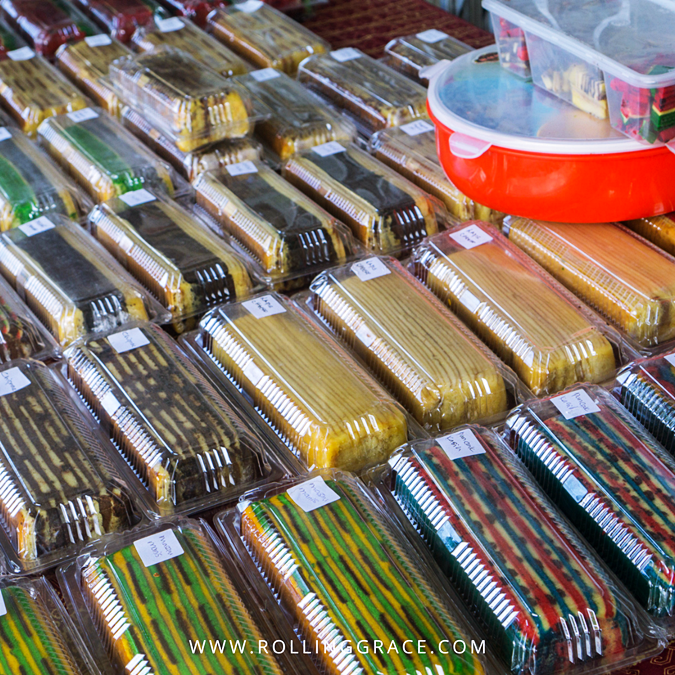
The food is the main draw. Kek Lapis Sarawak, the intricate multi-coloured layer cake that has become one of Sarawak’s most recognisable exports, is available here alongside nasi lemak, satay, apam balik, kuih-muih, and an excellent selection of grilled freshwater fish.
Prices are tagged and affordable across most stalls. The market leans predominantly Muslim in its food offering, with halal stalls making up the majority. It is one of the more visited markets in Miri, known for its steady flow of locals and travellers.
- Address: Saberkas Commercial Centre, 98000 Miri, Sarawak
- Opening hours: Thursday to Sunday, 4:00 PM to 9:30 PM. Closed Monday to Wednesday.
- Getting there: Easily spotted from Taman Bulatan Miri and Boulevard Commercial Centre. Street parking available behind the shopping lot approximately 50 metres from the market entrance.

Tamu Khas
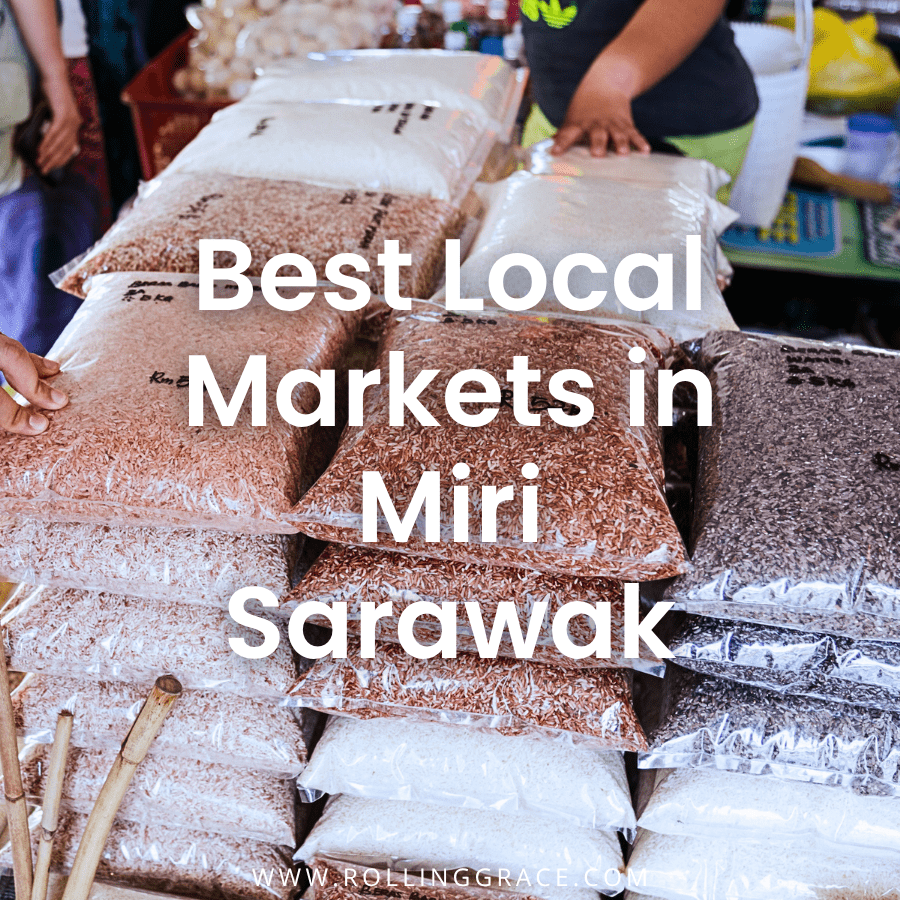
Tamu Khas, meaning Special Market, is the most ethnically distinctive of the three tamu that share the Jalan Padang complex. This is where the indigenous communities of Sarawak’s interior bring their produce to sell: jungle honey, hand-harvested Bario rice, fermented products, and baskets hand-woven by Orang Ulu artisans from upriver. It is located directly behind the main Tamu Muhibbah building and is easily missed by first-time visitors who do not know to look for it.
The baskets are the most photographed items in the market and for good reason: tightly woven from rattan and patterned with traditional Orang Ulu geometric designs, they are functional objects made with considerable skill.
Bario rice is the most sought-after food product, along with jungle honey and locally made belacan. Seasonal jungle fruits appear here before they turn up anywhere else in the city. It stands out among markets in Miri for its mix of produce, street food, and everyday trade.
- Address: Tamu Muhibbah Complex, Jalan Padang, 98000 Miri, Sarawak
- Opening hours: Daily, 8:00 AM to 6:00 PM
- Getting there: Located behind the main Tamu Muhibbah building. Enter from the Jalan Padang side and walk through the main hall.
Tamu Kedayan
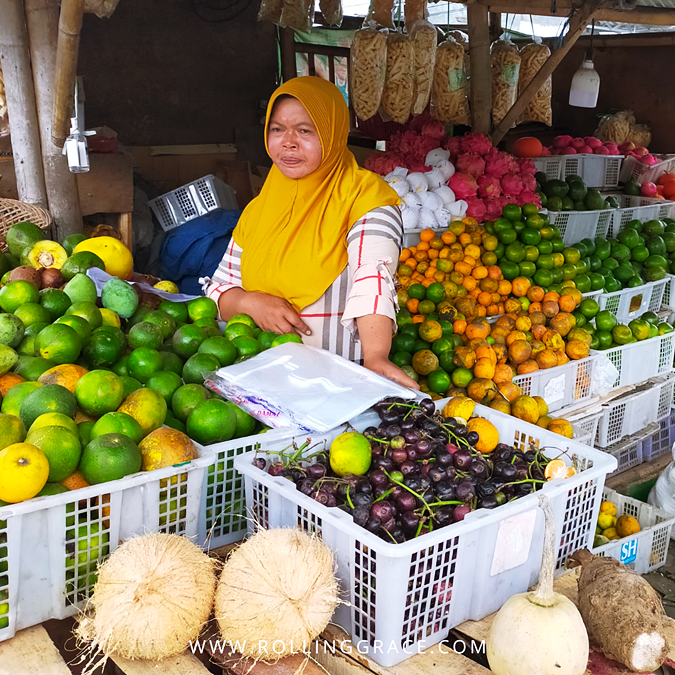
Tamu Kedayan is a wet market within the Tamu Muhibbah complex, named after the Kedayan, an indigenous farming community native to northern Sarawak and Brunei.
It is primarily a fresh produce market, opening early for the morning shopping crowd and winding down by early afternoon. The selection of locally grown vegetables, tropical fruits, and fresh herbs is broader than most supermarkets in the city.
The standout product is Bario rice, which the Kelabit people of the Bario highlands in northeast Sarawak cultivate entirely by hand without pesticides or herbicides. It is a fragrant, slightly glutinous long-grain rice with a flavour profile noticeably different from commercially grown varieties. It sells out fast. Arrive by 8:00 AM for the best selection.
Other worth-seeking items include raw hill salt, bamboo shoots, and umbut, the edible heart of the coconut palm. It is often included in guides to markets in Miri for its local atmosphere and accessibility.
- Address: Tamu Muhibbah Complex, Jalan Padang, 98000 Miri, Sarawak
- Opening hours: Daily, 6:00 AM to 6:00 PM
- Getting there: Adjacent to Tamu Muhibbah and Tamu Khas within the same Jalan Padang complex, opposite the local bus station.
Tamu Muhibbah
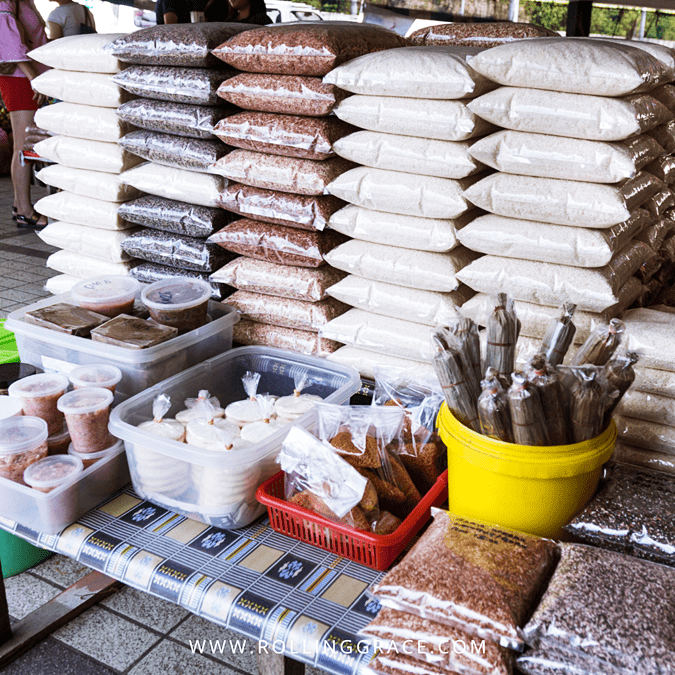
Tamu Muhibbah, which translates roughly as the Harmony Market, is the main hall of the Jalan Padang complex and the largest of the three tamu. It covers fresh vegetables, dried produce, local snacks, eggs, and a wide range of Sarawak-specific pantry staples that are difficult to find outside the state. The market opens at 6:00 AM and the fresh produce section moves quickly in the first two hours.
The list of distinctive products available at Tamu Muhibbah is one of the best arguments for visiting a market over a supermarket anywhere in Sarawak. Raw hill salt from the interior, belacan made in small batches by local producers, cencaluk (fermented small shrimps), sago in multiple forms, and gula apong, the Sarawakian palm sugar that has recently gained wider recognition through the Kuching food scene.
Wild edible ferns, specifically paku and midin, arrive fresh each morning alongside umbut, bamboo shoots, and pucuk ubi (tapioca shoots). These are ingredients that define Sarawakian home cooking and are worth buying to take home if you have the means to transport them. It is a widely frequented spot within markets in Miri, drawing regular crowds throughout the week.
The market is also available for food orders through the Foodpanda app.
- Address: Tamu Muhibbah, Jalan Padang, 98000 Miri, Sarawak
- Opening hours: Daily, 6:00 AM to 6:00 PM
- Getting there: Located next to the Padang (football field) and opposite the local bus station in central Miri.
Pasar Besar Krokop
Pasar Besar Krokop, also known as Krokop 10 Bazaar, is Miri’s largest wet market in the Krokop district and the one most locals use for their weekly shop.
The market occupies a two-storey building at the far end of Krokop along Jalan Krokop Utama, on the boundary with Piasau, meaning it serves both neighbourhoods. Ground floor stalls cover fresh and wild-caught seafood, flowers, vegetables, poultry, pork, beef, and a range of other meats. The upper floor houses a food stall centre, though a number of upper-floor stalls have remained closed since the pandemic period.
The seafood is the reason most people make the trip. Much of it is wild-caught from local waters and arrives at the market in the early hours. Arriving before 7:00 AM gives the best selection; by 9:00 AM the premium fish and shellfish are largely gone. Prices are reasonable across the ground floor stalls.
The food stalls on the upper floor that remain open serve a standard range of Chinese-style breakfast dishes, Sarawak Laksa, and Kolo Mee. It continues to rank among notable markets in Miri, particularly for those exploring local food and culture.
- Address: Jalan Krokop Utama, 98000 Miri, Sarawak
- Opening hours: Daily, 6:00 AM to 6:30 PM
- Note: Arrive before 7:00 AM for the freshest seafood selection.

Planning Your Miri Market Visit
How to Cover All Five in One Trip
The three Jalan Padang tamu (Tamu Muhibbah, Tamu Khas, Tamu Kedayan) are all in the same complex and can be covered in a single morning visit.
Start at Tamu Kedayan and Tamu Khas by 7:00 AM for the best produce, then move through Tamu Muhibbah before heading to Pasar Besar Krokop by 9:00 AM. Save Saberkas Night Market for Thursday to Sunday evenings.
What to Bring
Cash only across all five markets. No vendors accept credit cards. Bring a reusable bag; plastic is in use but increasingly discouraged. Lightweight clothing is essential; the wet markets are open-air and the humidity in Miri is consistent year-round.
Best Time to Visit Miri
Miri’s dry season runs April to October and is the most comfortable period for market visits. The wet season from November to March brings heavy afternoon rain that can disrupt open-air markets, though the morning hours are largely unaffected.
Sustainability
Tamu Muhibbah, Tamu Khas, and Tamu Kedayan represent one of the most direct supply chains in Malaysian food retail: indigenous and rural producers from Sarawak’s interior bring their goods directly to urban consumers, cutting out intermediaries entirely.
Buying Bario rice, jungle honey, or hand-woven rattan baskets at these tamu puts money directly into the hands of the Kelabit and Orang Ulu communities who produce them.
Frequently Asked Questions on Markets in Miri
What is the most popular market in Miri?
Pasar Besar Krokop is the most frequented by locals for daily shopping. Pasar Malam Saberkas draws the largest evening crowds for food. Tamu Muhibbah is the most visited by tourists looking for authentic Sarawakian produce.
Is Pasar Malam Saberkas open every day?
No. Saberkas Night Market is open Thursday to Sunday only, from 4:00 PM to 9:30 PM. It is closed Monday to Wednesday. The original operating days listed in some older guides (Tuesday to Sunday) are no longer accurate.
What is Bario rice and where can I buy it in Miri?
Bario rice is a fragrant long-grain rice grown by the Kelabit people in the remote Bario highlands of northeast Sarawak, cultivated entirely by hand without pesticides.
It is available at both Tamu Khas and Tamu Kedayan in the Jalan Padang complex. Arrive early as stock sells out by mid-morning.
What is gula apong and where can I find it in Miri?
Gula apong is a palm sugar produced from the nipah palm, native to coastal Sarawak. It is darker and more complex than coconut sugar, with a slightly smoky edge. It is available at Tamu Muhibbah and is also one of the defining flavours of Kuching’s dessert scene.
Are the markets in Miri halal-friendly?
Pasar Malam Saberkas is predominantly halal. The Jalan Padang tamu (Tamu Muhibbah, Tamu Khas, Tamu Kedayan) sell primarily fresh produce and pantry staples and are accessible to all.
Pasar Besar Krokop is a general wet market that sells pork and non-halal meats alongside halal produce.
Can I visit Tamu Khas, Tamu Kedayan, and Tamu Muhibbah in the same visit?
Yes. All three are within the same Jalan Padang complex and share the same general area. Allow around 90 minutes to walk through all three at a relaxed pace.
What time should I arrive at Pasar Besar Krokop for fresh seafood?
Before 7:00 AM. The wild-caught seafood arrives in the early hours and the best selection is gone by 9:00 AM on most days. Weekends are busier and stock moves faster.
Get the good stuff first. Join Rolling Grace for the restaurants worth crossing a city for, the stays worth the upgrade, and the places to go before everyone else. Free, straight to your inbox.
Leave a Reply