You walk into the food court on Ban Hock Road in Kuching at 7am, and three bowls of Sarawak Laksa come out of the kitchen at once. None of them is exactly the same. One leans heavier on the sambal belacan. One carries a richer coconut milk. One has the prawns shelled and arranged in a perfect ring across the surface.
This is the same coffee shop Anthony Bourdain visited in 2005 during the filming of No Reservations, and the same dish he later photographed for his Instagram in May 2015, captioning it simply #Kuching Breakfast of the Gods.
Sarawak Laksa has carried that name ever since. In September 2021, it was voted the Best Dish in Asia by TasteAtlas readers.
Read also: 5 Best Markets in Miri, Sarawak Worth Visiting
History of Sarawakian Cuisine
The best Sarawak food traces one of the most distinctive culinary traditions in Southeast Asia, drawn from a rare convergence of cultures: Iban, Bidayuh, Melanau, Orang Ulu, Kelabit, Lun Bawang, Sarawak Malay, and the Chinese diaspora communities of Hokkien, Hakka, Teochew, and Foochow.
Ingredients are pulled directly from the rainforest, the rivers, and the mangroves of Borneo. There are dishes here you will not find anywhere else in the world: jungle ferns stir-fried with belacan, chicken cooked inside bamboo over an open flame, salted fish from a freshwater species unique to the Rajang River.
This is a guide to 20 must-try Sarawak foods, ordered by cultural significance to Sarawak, from the globally iconic to the deeply indigenous.
Read also: What to Eat in Kuching, Sarawak: 7 Delicious Dishes To Try
Nasi Aruk: Sarawak Malay’s Oil-Free Fried Rice
Nasi Aruk is unique among Asian fried rice dishes for one reason: no oil is used in the cooking. The rice is fried directly on a hot wok over high heat with anchovies, sliced onions, salt, and white pepper.
The result is a smoky, slightly charred plate of rice with a wok hei that no oil-based fried rice can match. Served with sambal belacan and salted fish on the side. It is a Sarawak Malay staple available at most Malay coffee shops and stalls across the state.
This local delicacy easily ranks as one of the best recommendations for best Sarawak food if you want to experience authentic Bornean flavours.

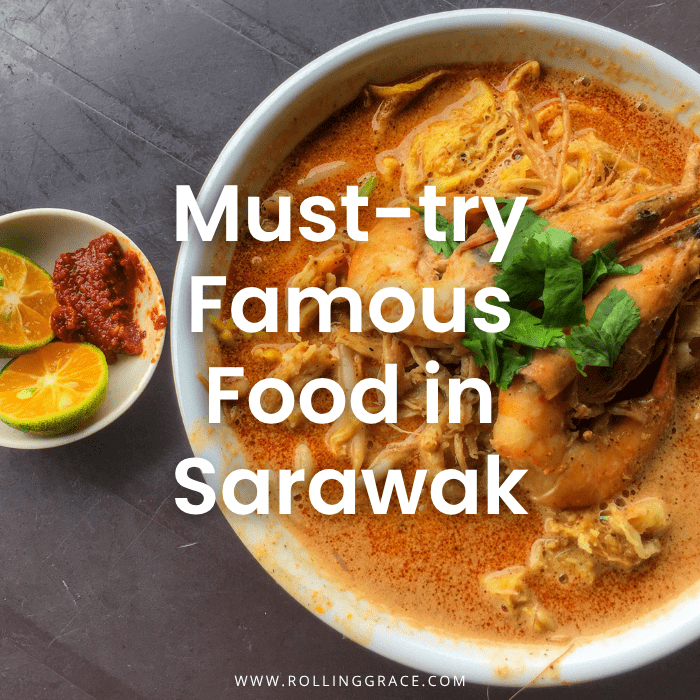
Sarawak Laksa: The Bourdain-Approved Breakfast
Sarawak Laksa is the state’s defining dish. A bowl of rice vermicelli in a fragrant broth built from shrimp, chicken, sambal belacan, coconut milk, tamarind, and a dense spice blend of coriander, cumin, fennel, lemongrass, and galangal. The garnish is generous: shredded chicken, thin omelette strips, fresh coriander, boiled prawns, fried tofu, fish cake, and bean sprouts.
A small saucer of extra sambal and half a lime arrive on the side. Use both with a heavy hand. The most historic place to eat it is Choon Hui Kopitiam, the kopitiam Bourdain immortalised, but every kopitiam in Kuching has a regulars’ opinion on who does it best.
Adding this iconic dish to your culinary hit list is one of the smartest choices for discovering the best Sarawak food during a trip across the state.

Manok Pansuh: The Iban Bamboo Chicken
Manok Pansuh (also spelled Manok Pansoh, sometimes called Ayam Pansuh in Malay) is the indigenous Iban dish that has come to symbolise Sarawak’s tribal food culture more than any other.
Chicken pieces are seasoned with bungkang leaves, lemongrass, and ginger, then stuffed into a hollow bamboo stalk along with a small amount of water. A cap of fresh tapioca leaves seals the top, and the bamboo is cooked slowly over an open fire in the uma avok, the traditional longhouse fireplace. The slow heat infuses the chicken with a subtle smoky-sweet flavour that no metal pot can replicate.
To eat Manok Pansuh in an Iban longhouse during the Gawai Dayak harvest festival in June is to understand the dish in its true cultural setting.
For a true taste of Sarawak’s rich cultural heritage, this traditional staple remains a definitive answer to what defines the best Sarawak food.
Kek Lapis Sarawak: Famous Layer Cake Souvenir
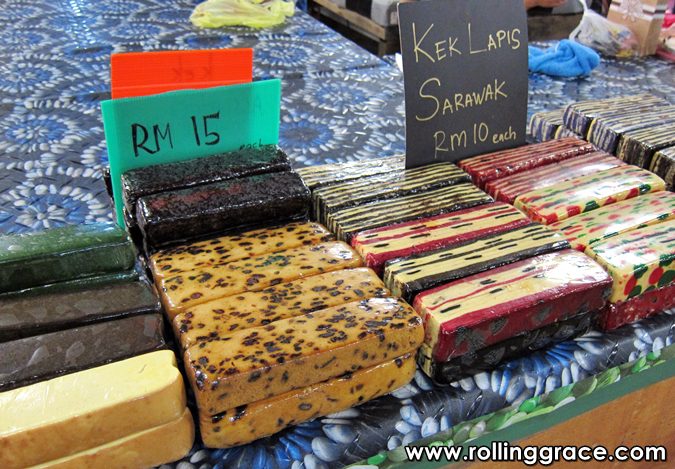
Kek Lapis Sarawak is the most iconic edible souvenir from East Malaysia and a defining product of the Sarawak Malay community.
The cake is built from dozens of thin alternating layers in different colours, flavours, and patterns, with each layer baked one at a time using a small flame torch to set the surface before the next layer is poured. Modern versions are sliced into squares, rolls, and complex geometric triangles.
The most prized varieties are Lapis Evergreen, Lapis Masam Manis, and Lapis Insang Pari. Butter-based cakes cost roughly twice as much as margarine versions; the upgrade is worth it.
You will find that trying this legendary preparation perfectly answers the question of what constitutes the best Sarawak food for adventurous foodies.
Umai: Sarawak’s Melanau-Style Raw Fish
Umai is the indigenous Melanau answer to Peruvian ceviche, and one of the most identifying dishes of the coastal Melanau communities of Mukah.
Raw fish (usually anchovies, mackerel, or black pomfret) is sliced thin and tossed with shallots, bird’s-eye chillies, salt, and freshly squeezed calamansi juice. The acid cures the fish in minutes. The result is sour, salty, fresh, and unmistakably ocean-forward. Prawn and jellyfish umai are seasonal alternatives.
To eat umai at its source, travel to Mukah, the Melanau spiritual heartland on Sarawak’s central coast. If you are looking for a comfort meal, this highly sought-after dish is one of the most recommended options for best Sarawak food.

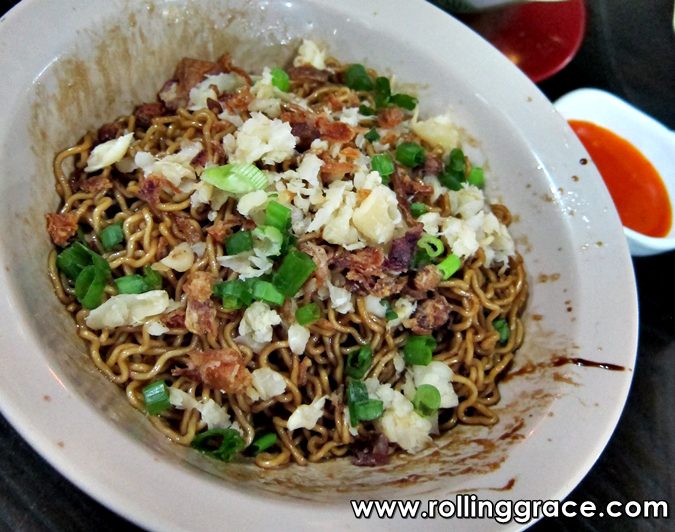
Kolo Mee: Daily Breakfast of Sarawak Chinese
Kolo Mee is the springy egg noodle dish that runs Kuching every morning. The noodles are blanched, tossed in a light pork-fat dressing with soy and shallot oil, then plated dry with minced pork, slices of char siew, and a sprinkle of spring onion.
The “red” version uses a touch of sweet char siew sauce and is the more famous of the two. The “white” version is cleaner and saltier. A bowl of clear pork or chicken soup arrives on the side. Sin Lian Shin and Sin Kwong Wah in Kuching are among the most-recommended versions.
Sibu has its own variant called Kampua Mee, a lighter and drier Foochow expression of the same idea. Tucking into a fresh serving of this specialty is one of the best ways to explore the best Sarawak food without settling for generic kopitiam alternatives.

Mee Kolok: Sarawak Malay’s Signature Noodle Bowl
Often confused with Kolo Mee, Mee Kolok is a distinct Sarawak Malay dish of springy hand-tossed egg noodles flavoured with shallot oil, soy, and a touch of vinegar, topped with minced beef, bean sprouts, chopped spring onion, and slices of grilled or fried chicken. A bowl of clear soup is served alongside.
This is the breakfast of the Sarawak Malay community: cheap, fast, deeply satisfying, available at almost every halal kopitiam from 6am. The unique blend of aromatic spices and local ingredients in this dish captures exactly what makes up the ultimate list of best Sarawak food.
Asam Siok: Bidayuh Bamboo Chicken Rice
Asam Siok (also called Nasi Sum) is the Bidayuh community’s distinctive answer to Manok Pansuh, prepared specifically for Gawai Dayak and other ceremonial occasions.
The dish takes the basic Iban bamboo-cooked chicken and adds rice to the mixture: marinated bite-sized chicken, heirloom rice, salt, ginger, lemongrass, and hand-torn tapioca leaves are stuffed into a hollow bamboo stem and wood-fired until the rice steams and the chicken turns tender. Earthy Dayak ginger, lemongrass, and bungkang leaves give the rice its identifying perfume.
Largely unknown to most Sarawakians outside the Bidayuh community, the dish was recently championed by chef Karen Yap’s Ethnic Sarawak Night supper club as a heritage dish worth preserving. Discovering how this traditional delicacy is meticulously prepared is one of the absolute highlights of exploring the best Sarawak food.
Linut: The Melanau Sago Porridge
Linut is the Melanau community’s traditional sago porridge and one of the strangest first tastes a visitor will encounter in Sarawak. Boiling water is poured directly onto a bowl of raw sago starch, where it forms a thick, gluey, completely translucent paste.
The dish is eaten with a wooden fork by twirling the paste like spaghetti and dipping it into sambal belacan, fermented shrimp paste, or a savoury side dish. Linut is more cultural than indulgent. It is the heritage food of the Melanau, the indigenous people of the central Sarawak coast, and eating a proper bowl is a small initiation into a culinary tradition that goes back centuries.
Tebaloi: Melanau Sago Biscuit Snack
Tebaloi is the second Melanau sago classic, a traditional sweet biscuit and one of the most beloved Sarawak snacks. Made from sago flour, desiccated coconut, eggs, sugar, and turmeric, the dough is spread thin on banana leaves, cooked over hot embers for around 20 minutes, then weighted down with wooden blocks and dried in a wooden stove for extra crispness.
The result is a sweet, crunchy biscuit that pairs perfectly with strong black coffee. Sold in stacks at markets across Mukah and Sibu, tebaloi is one of the simplest and most enduring expressions of Sarawak’s Melanau heritage.
It is clear from the first comforting bite why this food item is always at the top of the list for must-try best Sarawak food.
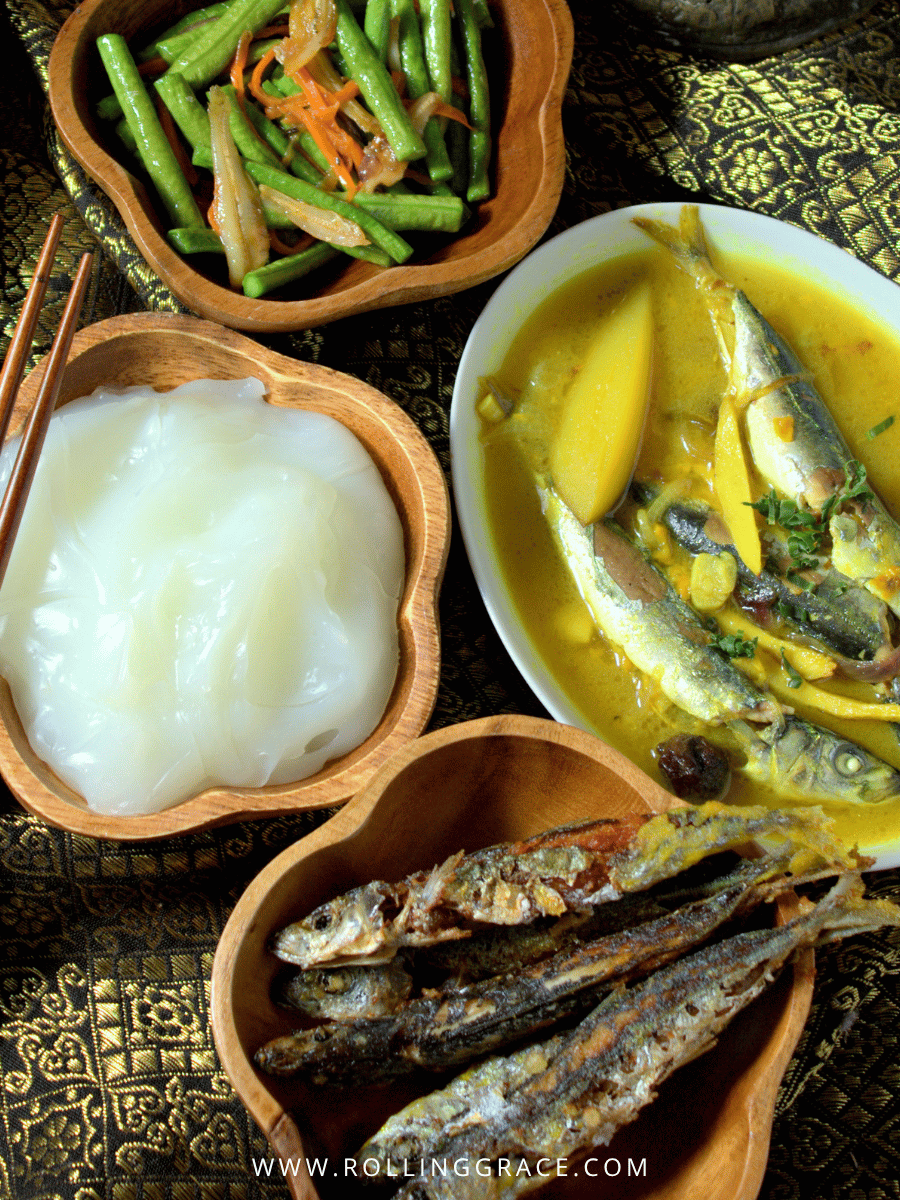
Ikan Terubuk Masin: Bintulu’s Famous Salted Fish
Ikan Terubuk (the Toli Shad) is a freshwater fish from the Rajang River basin, with oily skin and a notorious number of fine bones.
Unlike most Malaysian salted fish, Sarawak’s terubuk masin is wet-salted instead of dried, then deep-fried whole with the scales on. The taste is intense, salty, and rich.
It is the appetite-launcher of choice for any plate of warm white rice in Bintulu, where the dish is treated as a regional specialty and a defining product of the town’s coastal trading history.

Manok Kacangma: Hakka-Sarawak Confinement Dish
Manok Kacangma is a deeply traditional Hakka-Sarawak dish made with the herb known locally as kacangma (motherwort, Leonurus japonicus), generous amounts of old ginger, glutinous rice wine, and chicken, slow-simmered for hours.
The earthy, slightly bitter broth is associated with postnatal care and blood circulation in Hakka tradition, and it remains a confinement-period staple in Sarawak Hakka households.
Today it is eaten year-round as a winter-style restorative. You cannot claim to have explored the local food scene without prioritizing this essential dish on your search for the best Sarawak food.
Manicai (Sayur Manis Sarawak): Hakka Stir-Fried Vermicelli
Manicai (Cangkuk Manis or 马尼菜) is the Hakka-Sarawak preparation of Sauropus androgynus, a leafy green herb that grows abundantly in Borneo. The signature version is a stir-fried rice vermicelli dish that pairs the green with eggs, sliced chicken, and fish cake.
Light, sweet, and deeply nutritious, manicai is what locals turn to when they want a clean, vegetable-forward meal. The plant grows widely across Southeast Asia, but this Hakka-Sarawak preparation is a Kuching signature.
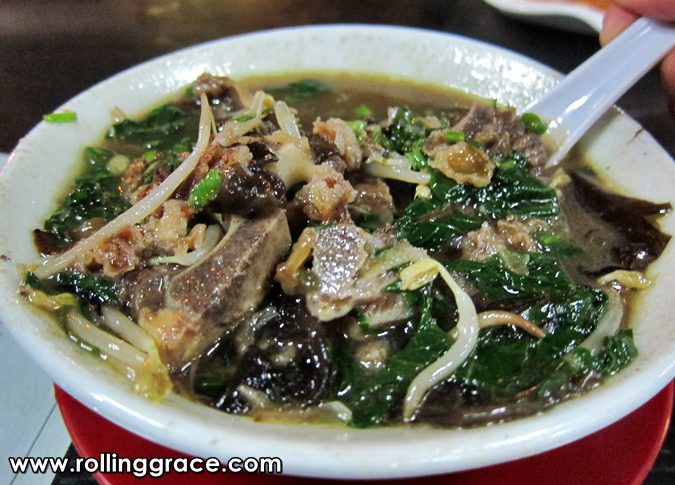
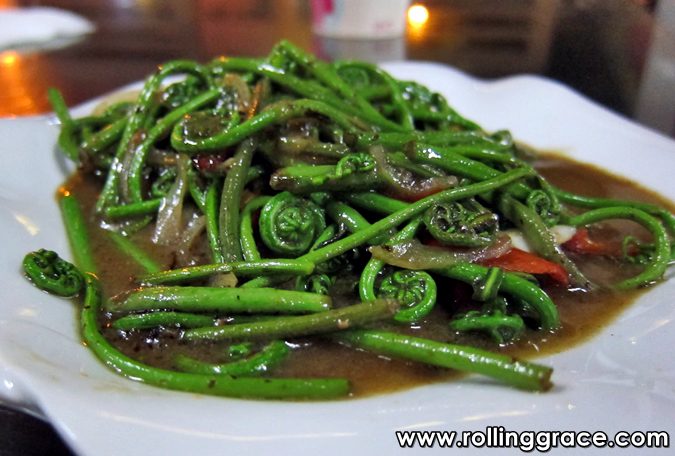
Pucuk Midin: Iconic Sarawak Jungle Fern
Pucuk Midin (Stenochlaena palustris) is the wild fern most closely associated with Sarawak cuisine.
The plant grows naturally across tropical Southeast Asia, Polynesia, and northern Australia, but Sarawak is the place where its culinary identity has been fully formed. The young shoots are picked at dawn and stir-fried with garlic, sambal belacan, and bird’s-eye chillies. The texture is crunchy, the flavour somewhere between spinach and asparagus with a faint toasted-allicin top note when garlic-fried. Sarawak’s chief minister once called it “God’s gift.”
In Peninsular Malaysia, midin now sells for RM30 to RM40 per kilo, and Singapore restaurants fly it in fresh at around SGD12 per kilo. In Kuching, you can eat it for a fraction of the price at any nasi campur stall.
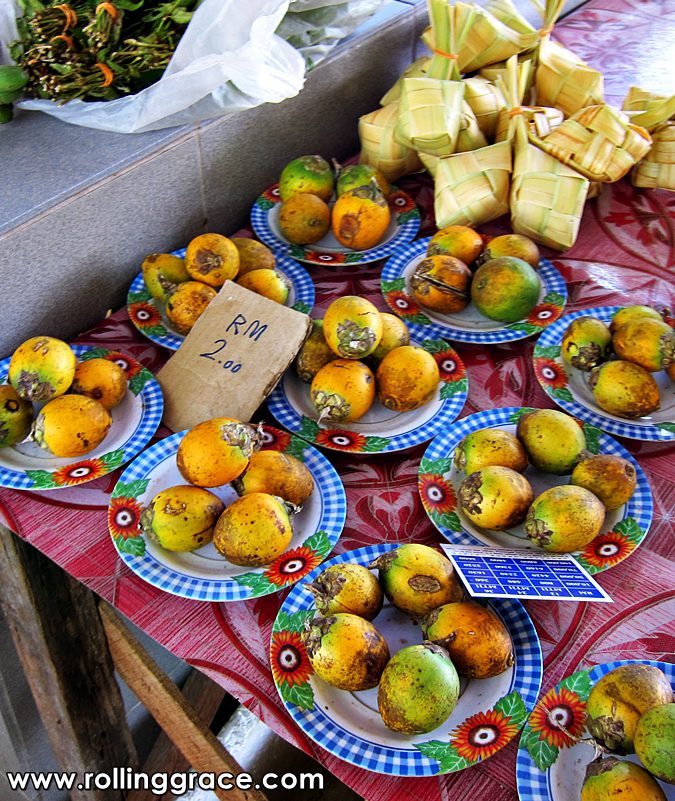
Terung Dayak: Sarawak Eggplant
Terung Dayak (also called terung asam, Solanum ferox) is a round, hairy, yellow-to-orange Borneo eggplant used in Iban and Bidayuh cooking.
The flesh is naturally sour and slightly tangy, which makes it the base for the popular Sup Terung Dayak: a sour soup paired with fresh fish, prawn, or dried salted fish. Some farmers have begun cultivating it on paddy field margins, but the best ones still come from the jungle.
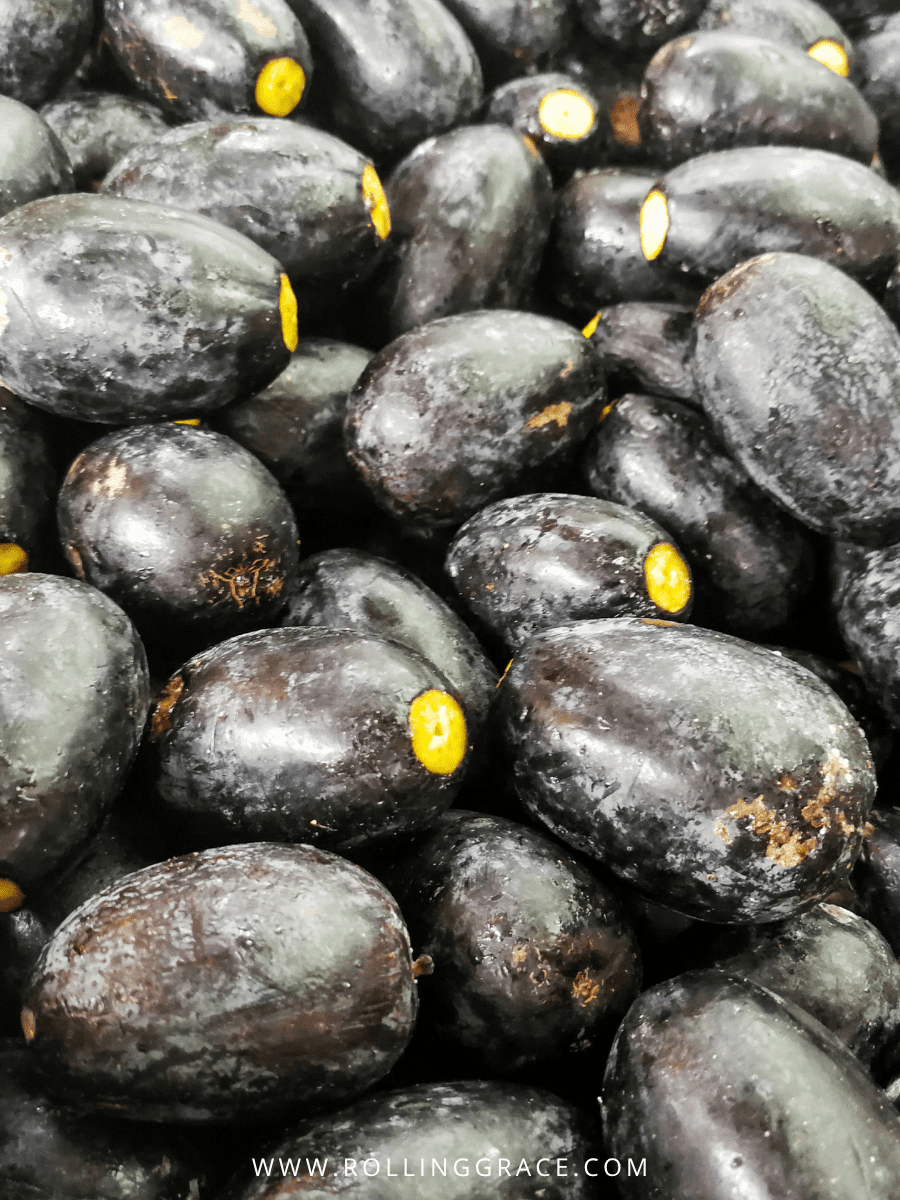
Buah Dabai: Rajang River Black Olive
Buah Dabai (Canarium odontophyllum) is a seasonal black olive native to Sarawak, and one of the few foods in the world grown exclusively in the Rajang River basin of central Sarawak. The fruit appears oblong-shaped with thin edible black skin and creamy yellow-white flesh wrapped around a three-angled seed.
It must be soaked in hot water before eating to soften the flesh. The taste is rich, slightly buttery, faintly nutty. Locals serve dabai as a side to white rice or in the specialty Nasi Goreng Dabai, fried rice flavoured with the fruit itself.
Bonus: the inner kernel of the seed is edible too. The dabai grows from the Kapit interior down through the Rajang to the coastal towns of Sibu and Sarikei, with seasonal availability from around October to January.
Tomato Mee (Keo Jiap Mee): Kuching’s Crispy Tomato Noodles
Tomato Mee, known in Hokkien as Keo Jiap Mee (茄汁麵), is Kuching’s signature Sarawak Chinese noodle dish and a global rarity. Crispy fried egg noodles or kway teow are smothered in a tangy tomato-based gravy thickened with potato starch, then topped with chicken, prawn, fish cake, sotong, and choy sum.
The dish is often compared to wat tan hor (滑蛋河) for its similar gravy treatment, but the tomato sweetness and the crispy noodle base make it distinctively Sarawakian. Kuching became a UNESCO Creative City of Gastronomy in 2022, and Tomato Mee is one of the dishes that earned the city its place on the list.
Enjoying a fresh bowl of this traditional favorite provides a deeply comforting look into the soul of the best Sarawak food.
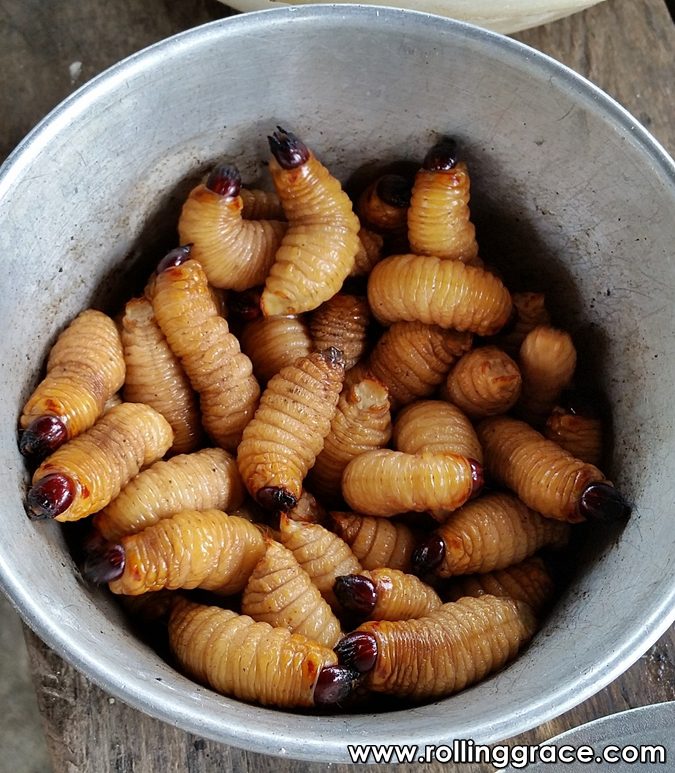
Sago Worms: Borneo’s Most Notorious Delicacy
Sago worms (ulat sagu) are the grubs of the sago palm weevil and one of the most photographed foods in Sarawak. Raw, they have a creamy, custardy interior. Cooked (fried, grilled, or roasted), they take on a salty, slightly nutty flavour that has been compared to bacon.
Indigenous Bidayuh and Iban communities have eaten them for centuries as a high-protein, high-fat food source pulled directly from the felled trunks of sago palms. They are nutritionally dense and ecologically sustainable, but the texture is the leap most first-timers cannot take.
Belacan Bee Hoon: Kuching’s Most Iconic Street Food
Belacan Bee Hoon is the Sarawak Chinese street food dish that you will see on every hawker stall in Kuching and never forget.
Rice vermicelli is served in a sweet-savoury gravy flavoured with sambal belacan (fermented Sarawakian shrimp paste), then topped with julienned cucumber, slices of century egg, cured cuttlefish, bean sprouts, and a wedge of calamansi. The belacan is what defines it. Pungent, umami-heavy, completely Sarawakian.
The complex flavor profile of this traditional favorite makes it a mandatory inclusion on any list celebrating the best Sarawak food.
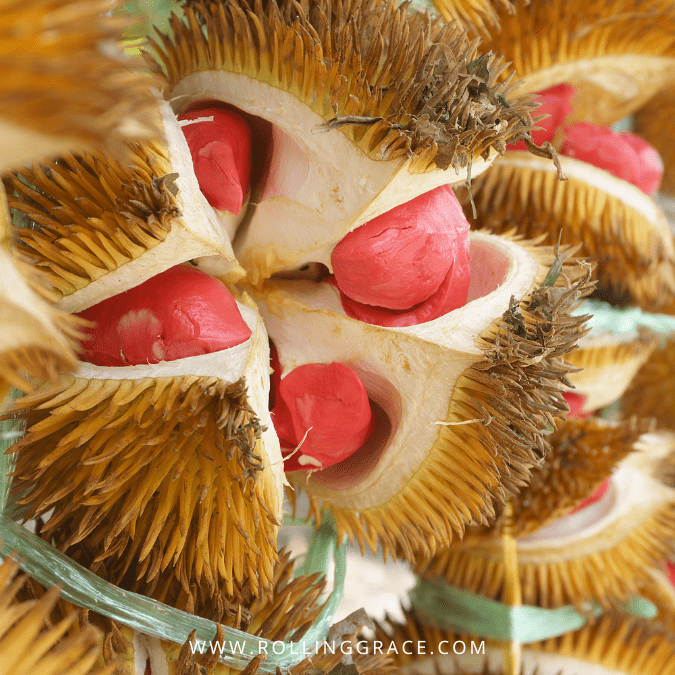
Wild Sukang and Dalit Durians: Borneo Jungle Fruits
Sarawak is one of the few places in the world where you can still find wild Borneo jungle durians, foraged from the deep rainforest by indigenous villagers.
Durian Sukang (red durian) has long curved spikes and a deep caramel-roasted-almond flesh that is sweeter and more complex than the standard yellow durian
Durian Dalit (orange durian) has short, sharp spikes, milder flesh, and a turpentine-like aroma that is acquired but addictive. Both appear seasonally at Sarawak markets between June and August. They do not export. To eat them, you have to be in Borneo.
Bonus #1: Gula Apong Ice Cream
Gula apong is the thick, dark, slightly salty palm sugar syrup tapped from the sap of Sarawak’s nipa palms. The syrup has become the defining flavour of modern Sarawak ice cream, sold at almost every ice cream shop in Kuching including the famous Aiskrim Apong stalls along the waterfront. The flavour is bitter, sweet, salty, and deeply caramel-like.

Bonus #2: Sarawak Black Pepper
Beyond the dishes, Sarawak is globally known for one ingredient above all others: Sarawak Black Pepper. It is recognised internationally as one of the highest-grade peppers in the world, prized for its bold, citrus-forward, complex aroma.
Sarawak is Malaysia’s largest pepper producer, with the crop introduced to the state in the 19th century by Chinese settlers. The pepper appears across the state’s cuisine, from Sarawak Black Pepper Crab to seasoning for Kolo Mee, and is widely sold in Kuching as a premium edible souvenir alongside Kek Lapis.
What Is the Most Famous Food in Sarawak?
The most famous food in Sarawak is Sarawak Laksa, a fragrant rice vermicelli noodle soup made with sambal belacan, coconut milk, shrimp, chicken, tamarind, and a complex spice blend. Anthony Bourdain photographed it at Choon Hui Kopitiam in Kuching and famously captioned the picture “Breakfast of the Gods” on Instagram in May 2015.
In September 2021, Sarawak Laksa was voted the Best Dish in Asia by TasteAtlas readers. Beyond Sarawak Laksa, the state is also internationally known for Manok Pansuh (Iban bamboo chicken), Asam Siok (Bidayuh bamboo chicken rice), Kek Lapis Sarawak (the layered cake), and the indigenous Melanau dish Umai (Sarawak’s ceviche).
Read also: What to Buy in Sarawak: 10 Best Souvenirs From Borneo
What Are the Top 3 Most Popular Foods in Sarawak?
The top 3 most popular foods in Sarawak are Sarawak Laksa (the state’s globally famous noodle soup, voted Best Dish in Asia by TasteAtlas in 2021), Kolo Mee (the daily breakfast noodle dish of Kuching), and Manok Pansuh (the Iban indigenous chicken cooked inside bamboo over an open flame).
Together, these three dishes capture Sarawak’s three culinary streams: the Sarawak Chinese diaspora, the urban Kuching food scene, and the indigenous tribal heritage of the rainforest interior.
Why Is Sarawak Food So Special?
Sarawak food is special because it draws from one of the most ethnically diverse populations in Southeast Asia, with over 40 sub-ethnic groups contributing their own indigenous recipes, ingredients, and cooking techniques.
The state is home to Iban, Bidayuh, Melanau, Orang Ulu, Kelabit, and Lun Bawang communities alongside Sarawak Malay, Hakka, Hokkien, Teochew, and Foochow Chinese populations, each cooking with ingredients pulled directly from the rainforest, the rivers, and the mangroves of Borneo.
Many of these ingredients (jungle ferns, Borneo olives, sago worms, wild durians, hairy eggplants) grow nowhere else in the world. Kuching was named a UNESCO Creative City of Gastronomy in 2022 in recognition of this heritage.
Best Place to Eat Authentic Sarawak Food in Kuching
The best places to eat authentic Sarawak food are concentrated in Kuching, Sibu, Bintulu, Mukah, and Miri, each with its own regional and ethnic specialty.
- Kuching, named a UNESCO Creative City of Gastronomy in 2022, is the home of Sarawak Laksa, Kolo Mee, Tomato Mee, and Belacan Bee Hoon, best eaten at the kopitiams along Carpenter Street, Ban Hock Road, and Padungan. Choon Hui Kopitiam is the historic stop for Sarawak Laksa.
- Sibu is famous for Foochow specialities including Kampua Mee and Kompia, sold at the Sibu Central Market.
- Bintulu is the home of Ikan Terubuk Masin.
- Mukah is the Melanau heartland where Umai, Linut, and Tebaloi are at their most authentic.
- Miri is the gateway to the Orang Ulu and Kelabit cuisines of the northern highlands.
Indigenous Food and Sustainability in Sarawak
Sarawak food carries one of the most diverse indigenous food heritages in Southeast Asia, with dishes that exist nowhere else in the world because the ingredients (jungle ferns, wild durians, sago worms, Borneo olives, hairy eggplants, freshwater shad) grow nowhere else in the world.
Many of these foods are foraged or grown by small-scale Iban, Bidayuh, Melanau, Orang Ulu, Kelabit, and Lun Bawang farming communities, and choosing to eat them at family-run kopitiams or village restaurants instead of chain outlets keeps the supply chain alive at the source.
Sarawak’s culinary tradition is not just a list of dishes. It is the daily practice of communities who still cook the way their grandparents did, and supporting that practice through tourism and respectful eating is the simplest way to keep it intact.
This best Sarawak food guide is based on multiple visits to Kuching, Sibu, Mukah, and Miri, with cultural origins verified against Sarawak Tourism Board resources and academic sources.
Read Next
Planning more of Malaysia? Read the complete Rolling Grace Malaysia Travel Guide for every destination, food spot, and weekend trip across the country.
Get the good stuff first. Join Rolling Grace for the restaurants worth crossing a city for, the stays worth the upgrade, and the places to go before everyone else. Free, straight to your inbox.
Leave a Reply