At a Nasi Kandar counter in George Town, Penang, I once watched a man layer four different curries over a single plate of white rice, then ask for a fifth. Nobody blinked.
In Malaysia, rice is not a side. It is the centre of every meal, across every race, and the country’s 34.1 million people have turned a single grain into one of the most varied rice cultures on earth.
Malaysia’s population breaks down into roughly 70 percent Bumiputera (Malay and indigenous groups), 22 percent Chinese, and 7 percent Indian, with smaller communities of Peranakan, Eurasian, and Orang Asli.
Every one of these groups has built its own rice traditions, and the crossover between them is what makes Malaysian rice dishes unlike anything you will find elsewhere in Southeast Asia.
Read also: Best Sarawak Food: 20 Must-Try Traditional Dishes Guide

Savoury Malaysian Rice Dishes
Nasi Lemak (Malay)
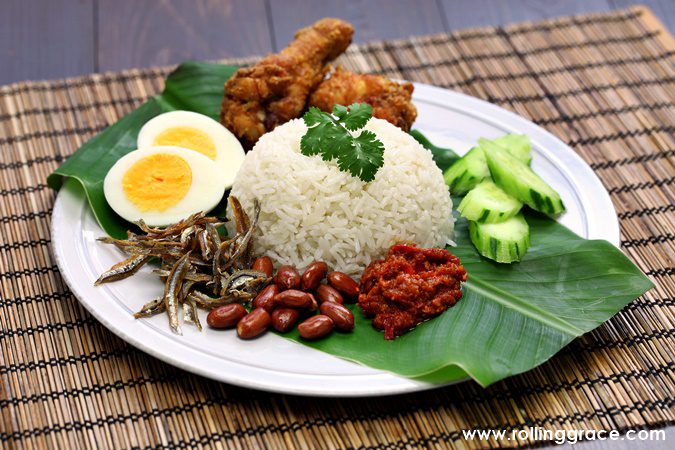
The national dish of Malaysia. The name translates to “fatty rice” because the rice is cooked in coconut cream and pandan leaf, giving it a rich, fragrant base. It is served with sambal (a sweet and spicy chilli paste), fried anchovies, roasted peanuts, a hard-boiled or fried egg, and fresh cucumber slices. The traditional version comes wrapped in a banana leaf.
Nasi lemak is eaten at breakfast, lunch, dinner, and past midnight. Hawker stall versions cost as little as RM2. Restaurant versions come with fried chicken, rendang, sambal squid, or curried prawns and can run to RM25 or more. Village Park in Damansara Uptown is one of the most consistently cited spots in the Klang Valley.
Nasi Kandar (Indian Muslim)
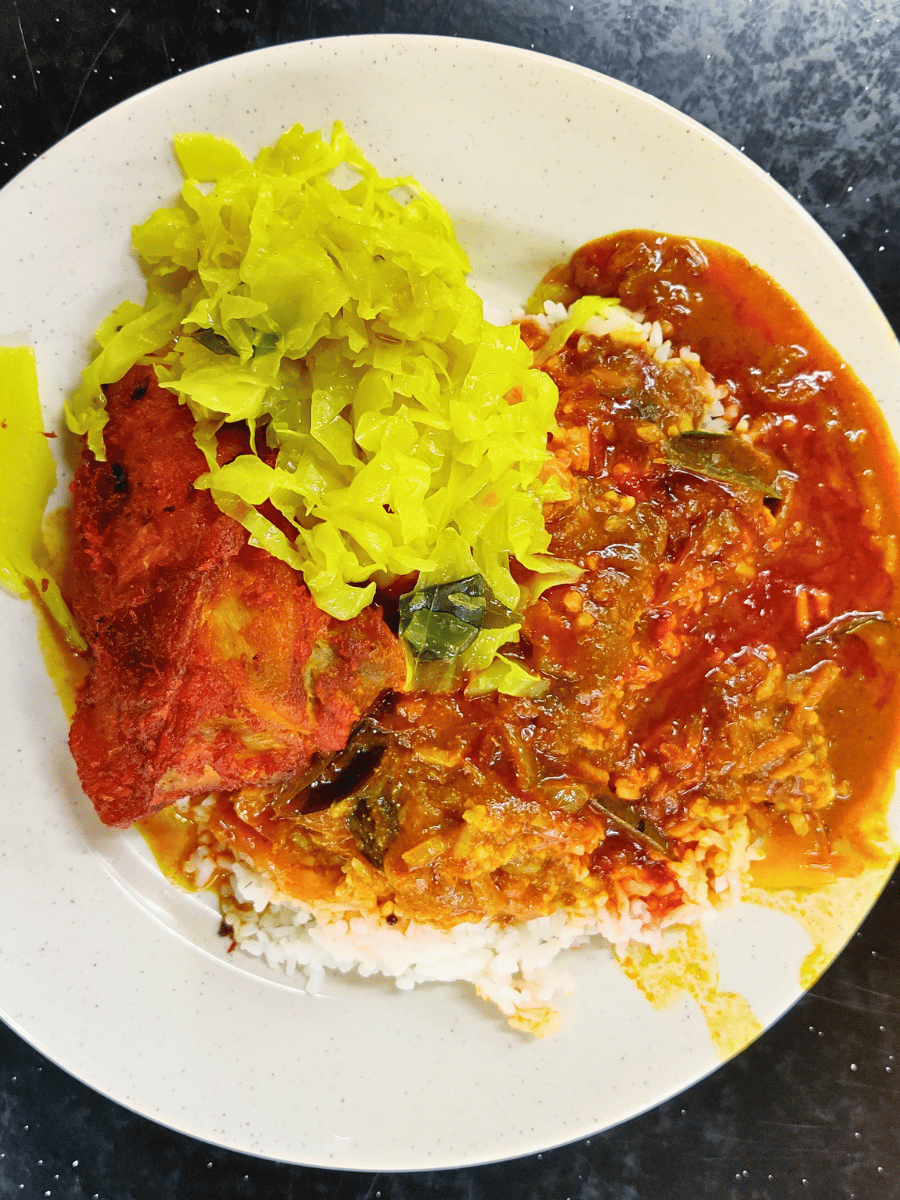
Originating from Penang, nasi kandar is steamed white rice served with a rotating selection of curries, fried meats, and vegetables displayed buffet-style. You point at what you want, and a server scoops it onto your plate. The price is calculated at the counter based on what you took.
The defining move is the kuah campur, a mix of different curry gravies poured over the rice so the flavours blend into each other. The best plates combine squid curry, ayam goreng berempah (spiced fried chicken), cabbage with mustard seeds, and stir-fried okra.
Line Clear on Penang Road and Hameediyah on Campbell Street are two of the oldest and most visited.
Nasi Dagang (Malay)
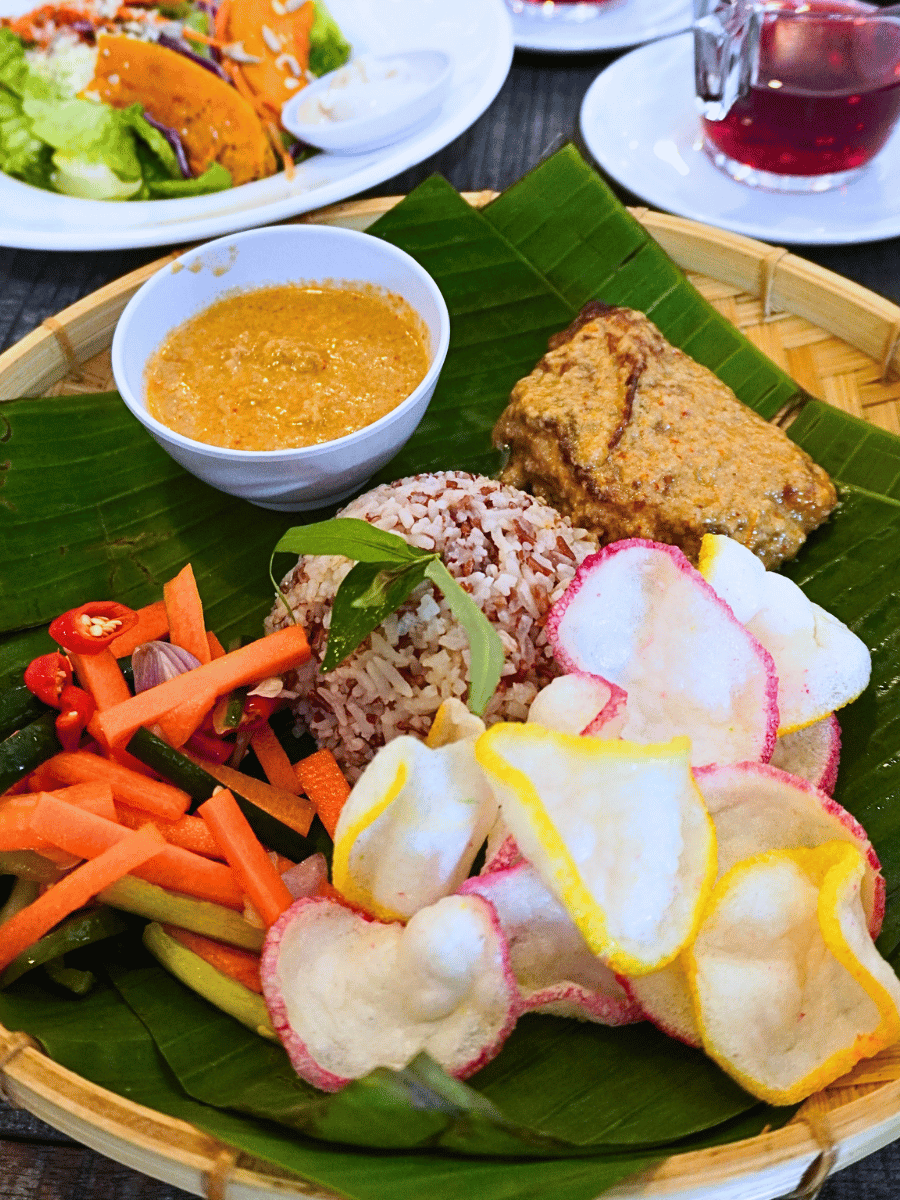
A breakfast staple of Malaysia’s east coast, nasi dagang is rice steamed in coconut milk with fenugreek seeds, giving it a distinct nutty aroma. In Kelantan, the rice used is beras merah (a red husked rice) that is slightly glutinous and chewy. In Terengganu, the same dish is made with a mix of white and glutinous rice, producing a softer result.
It is served with fish curry, usually skipjack tuna (ikan tongkol), hard-boiled eggs, roasted shaved coconut, pickled vegetables, and solok lada (stuffed green chillies). Nasi dagang is rarely found in western Peninsular Malaysia outside of dedicated east coast restaurants.
Read also: Gulai Daging Daun Kesum & Acar Rampai: 2 Easy Recipes
Nasi Kerabu (Malay)
One of the most visually striking Malaysian rice dishes. The rice is naturally dyed blue using bunga telang (butterfly pea flower petals) and served with an elaborate spread of side dishes: ulam (a traditional herb salad), prawn crackers, toasted grated coconut, fish relish, hard-boiled salted egg, and multiple types of sambal belacan.
Nasi kerabu is a Kelantanese creation and remains most closely associated with that state. The combination of herbs and raw vegetables makes it one of the lighter options on this list, and the blue rice is not just decorative: butterfly pea flower is mildly earthy in flavour and is used widely in Southeast Asian cooking as a natural colourant.

Nasi Goreng (Malay)
The Malay version of fried rice, made using leftover cooked rice stir-fried with garlic, bird’s eye chilli, sweet soy sauce (kicap manis), and a protein, usually chicken or prawns. It is almost always topped with a fried egg and served with fresh cucumber and a side of sambal.
Every household in Malaysia has its own nasi goreng recipe, and every hawker stall does it differently. The dish is eaten at any hour. Nasi goreng kampung, the village-style version with anchovies and kangkung (water spinach), is the most common variation at street-level stalls.

Nasi Goreng Ladna (Malay)
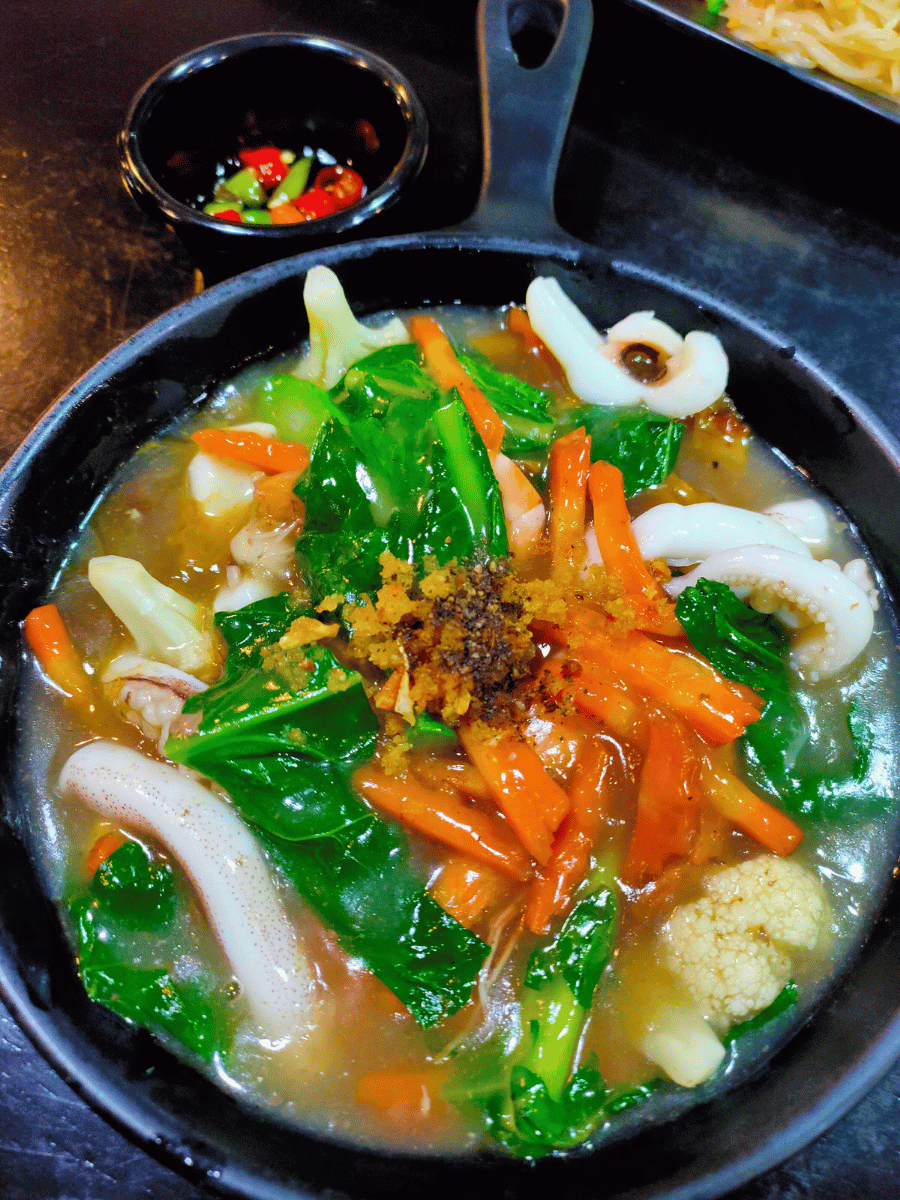
Fried rice topped with a thick, starchy gravy (ladna) loaded with chicken or seafood alongside vegetables such as carrot, baby corn, Chinese broccoli, and cauliflower. The gravy is poured directly over the rice just before serving so the bottom stays crisp while the top goes soft.
This dish is part of the broader “ladna” family in Malaysian cooking, which also includes kuey teow ladna and mee ladna. It is best eaten immediately, before the gravy soaks through completely.
Nasi Biryani (Indian)
Biryani in Malaysia draws from Indian and Indian Muslim traditions but has developed its own regional variations.
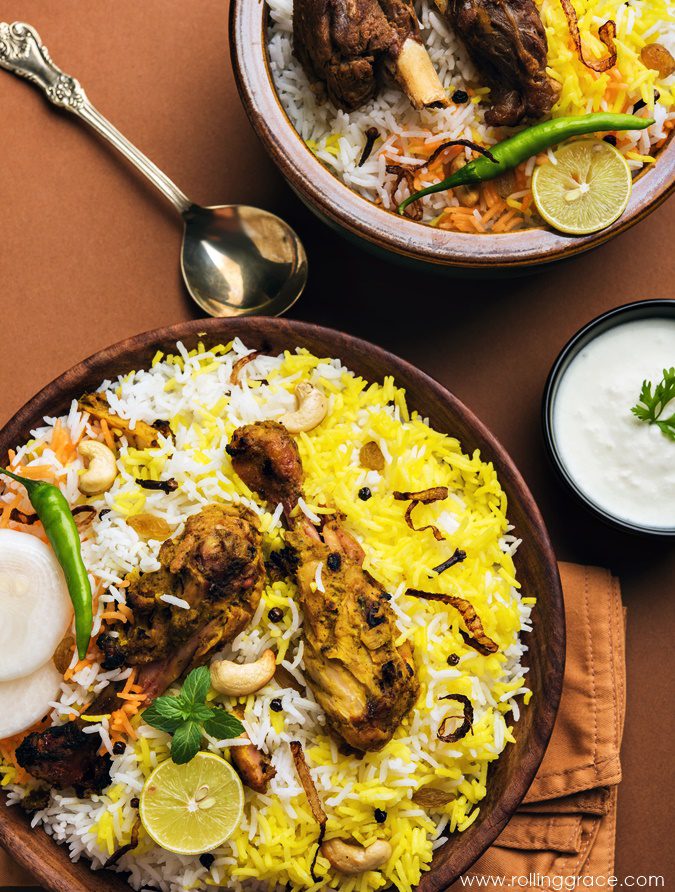
The base is long-grain basmati rice cooked with ghee, saffron or turmeric, and a mix of whole spices including cardamom, cloves, cinnamon, bay leaves, and nutmeg. It is layered with chicken, mutton, or beef and slow-cooked until the meat is tender and the rice absorbs the spice-infused steam.
Johor’s briyani gam is a distinctive local version where the rice and meat are cooked together in one pot from start to finish, producing a wetter, more intensely flavoured result. Nasi biryani is a fixture at Malay and Indian Muslim celebrations, and restaurants like Restoran Mahbub in Bangsar, Kuala Lumpur, serve it daily.
Nasi Tomato (Malay)
A festive rice dish most associated with Malay weddings and Hari Raya celebrations. Basmati rice is cooked with ghee, tomato paste, evaporated milk, and a mix of whole spices (cardamom, star anise, cloves, and cinnamon, collectively known as rempah empat sekawan). The result is a mildly tangy, slightly sweet, and deeply fragrant orange-tinted rice.
Nasi tomato is almost always paired with ayam masak merah (chicken in spicy red sauce), dhal curry, and acar (pickled vegetables). In Penang, it can be found at street vendors outside of the wedding circuit. Across most of Malaysia, it remains primarily a catered and celebratory dish.
Read also: 10 Must Try Food in Klang: Best Local Dishes in Selangor

Chicken Rice (Chinese)
Originally from China’s Hainan province, this dish arrived in Malaysia through Hainanese immigrants and has been adapted to local tastes over generations. The chicken is poached until the skin turns translucent and gelatinous, then served alongside rice cooked in chicken broth and garlic. Accompaniments include a chilli dip, a ginger-garlic sauce, and dark soy sauce.
In Melaka, chicken rice takes a different form: the rice is shaped into compact balls, giving the dish a distinct identity from the plate-served KL and Penang versions. Nam Heong in Chinatown, KL, and Boon Tong Kee-style stalls in Penang remain popular reference points. This dish consistently appears in any listing of top Malaysian rice dishes.
Read also: 10 Best Halal Restaurants in Melaka for Real Local Food

Chinese Fried Rice (Chinese)
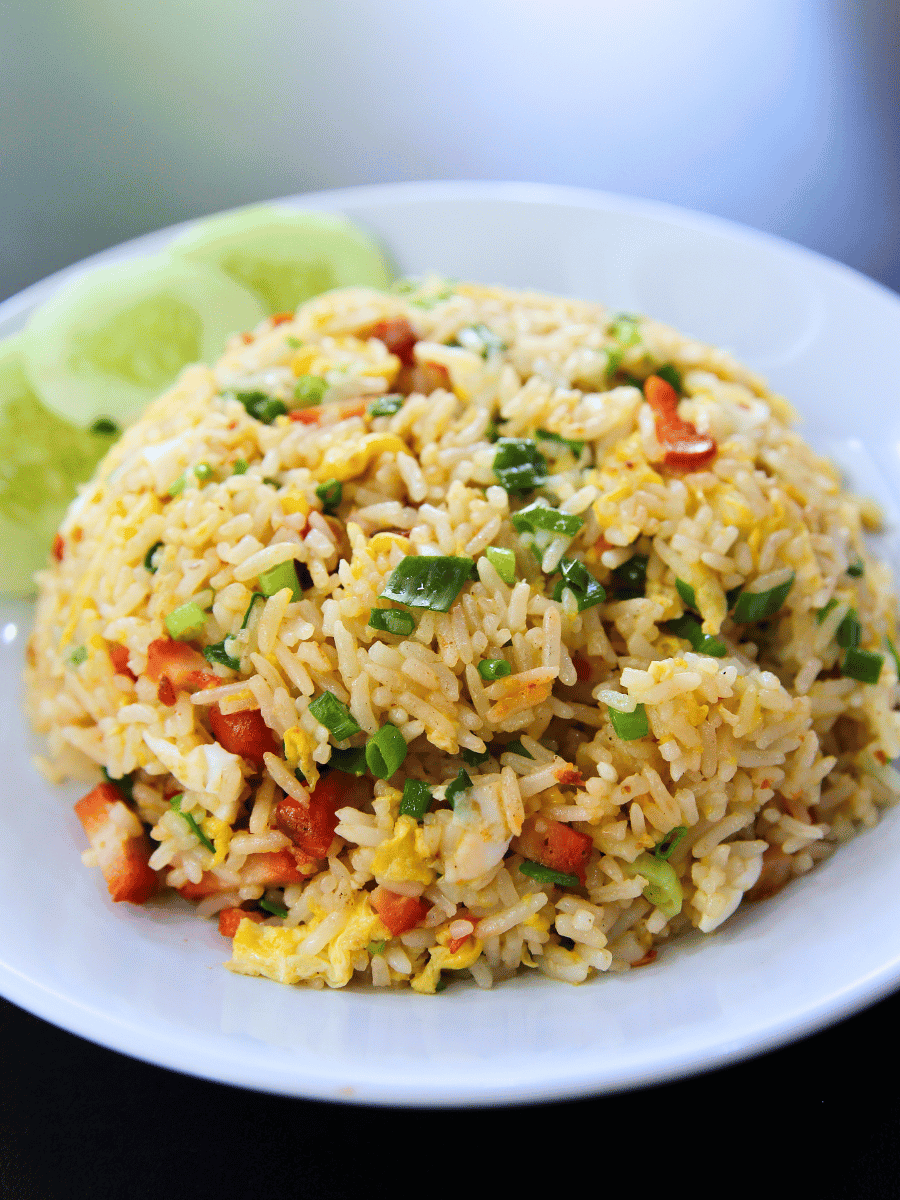
Known locally as chow fan, Chinese-style fried rice in Malaysia is made with leftover cooked rice, a rotating selection of vegetables and protein, and seasoned primarily with soy sauce, sesame oil, and white pepper. Unlike Malay nasi goreng, which leans on sweet soy and chilli, Chinese fried rice tends toward a lighter, wok hei-driven flavour profile.
There is no fixed recipe. Yang chow fried rice (with shrimp, char siu, and egg) is the most common variation at kopitiam stalls. The dish is defined by technique more than ingredients: high heat, fast tossing, and properly separated grains are what distinguish a good plate from a forgettable one.
Claypot Chicken Rice (Chinese)
A one-pot dish cooked and served inside a clay pot over a charcoal stove. The rice is layered with chicken pieces marinated in dark soy sauce, sliced lap cheong (Chinese sweet preserved sausage), and sometimes dried salted fish. As the clay pot heats, the bottom layer of rice develops a smoky, golden crust that is the entire point of the dish.
Because each pot is made to order, expect a wait of 20 to 30 minutes. Heun Kee Claypot Chicken Rice in Pudu, KL, holds a Michelin Bib Gourmand and is one of the most visited stalls in the city for this dish.

Banana Leaf Rice (Indian)
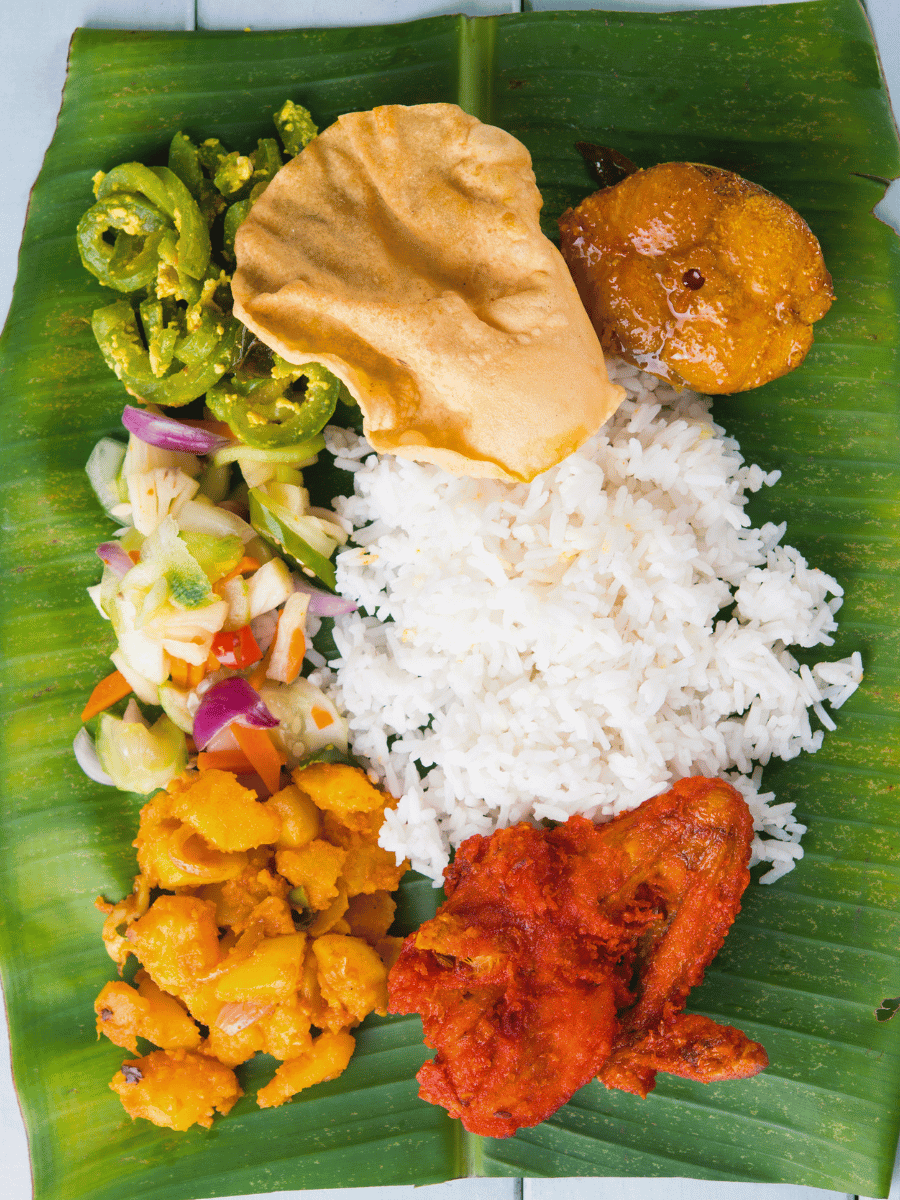
White rice served on a banana leaf alongside a spread of vegetable curries, pickles, papadum (crispy crackers), and optional meat dishes such as mutton varuval or fried chicken. The banana leaf is the plate, and the traditional custom is to eat with your right hand.
Banana leaf rice is a South Indian tradition that has become a lunchtime staple across urban Malaysia. Rasam (a sour, peppery soup) is poured over the rice at the end of the meal to aid digestion. The dish is traditionally vegetarian, though most Malaysian banana leaf restaurants now offer meat options.
Read also: 10 Best Penang Street Food You Must Try: Pulau Pinang Guide
Wrapped and Steamed Malaysian Rice Dishes
Lemang (Malay)
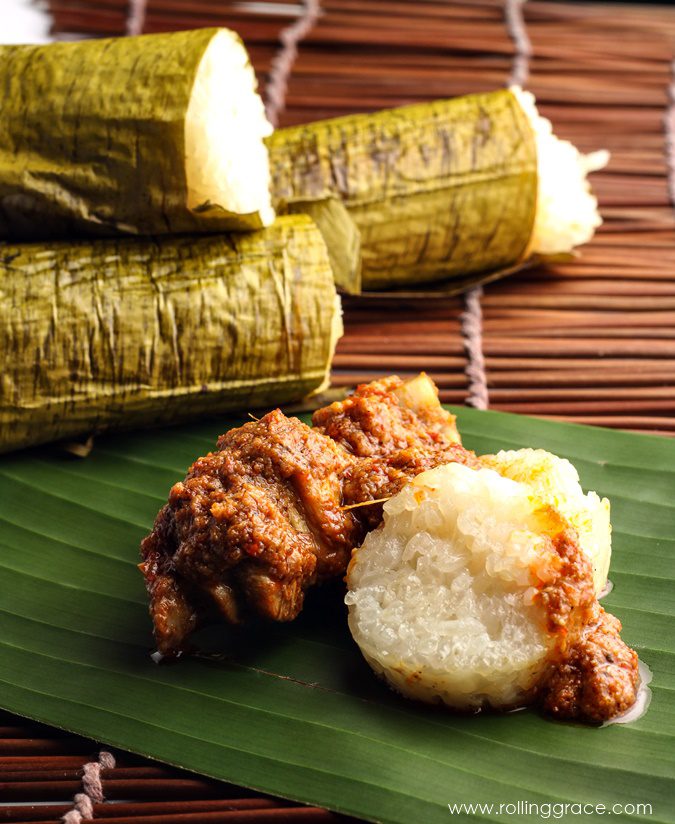
Glutinous rice and coconut milk roasted slowly inside hollow bamboo poles lined with banana leaves over an open fire. The result is a wet, sticky, and slightly smoky rice that tears apart in soft strips. Lemang is one of the most labour-intensive Malaysian rice dishes: preparing the bamboo, lining it, filling it, and tending the fire takes hours.
It is traditionally made for Hari Raya Aidilfitri and served with rendang (dry curry) or serunding (meat floss). During the festive season, roadside lemang stalls appear across Peninsular Malaysia, particularly in Pahang, Negeri Sembilan, and Johor.
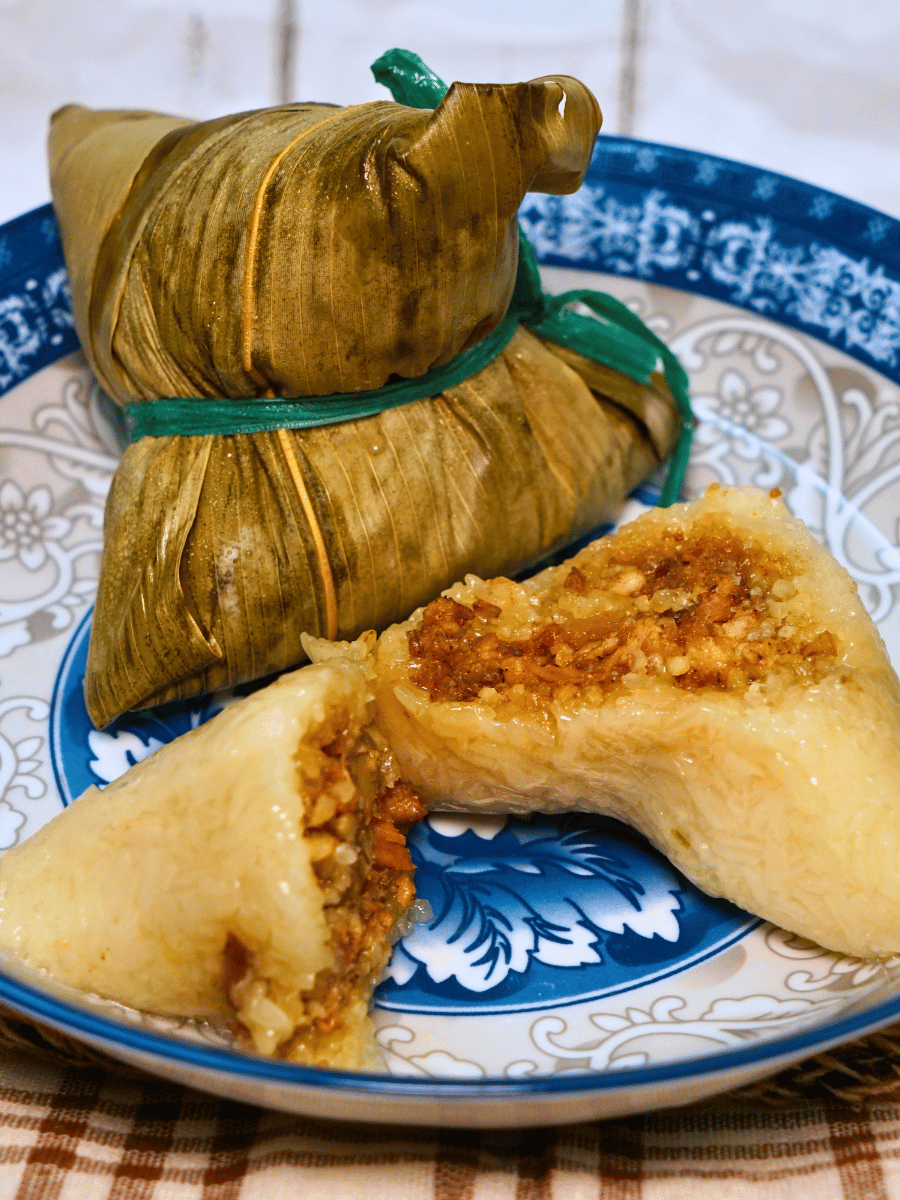
Zong Zi (Chinese)
Glutinous rice filled with a savoury mix of marinated pork or chicken, salted egg yolk, shiitake mushroom, dried shrimp, and water chestnut, wrapped tightly in bamboo leaves and steamed or boiled. The rice is seasoned with five-spice powder, white pepper, Shaoxing rice wine, and dark soy sauce.
Zong zi is closely associated with the Duanwu (Dragon Boat) Festival but is available at dim sum shops and Chinese provision stores throughout the year in Malaysia. The Nyonya version, popular in Melaka and Penang, often uses a sweeter filling with coriander-spiced pork and a blue-tinged glutinous rice.
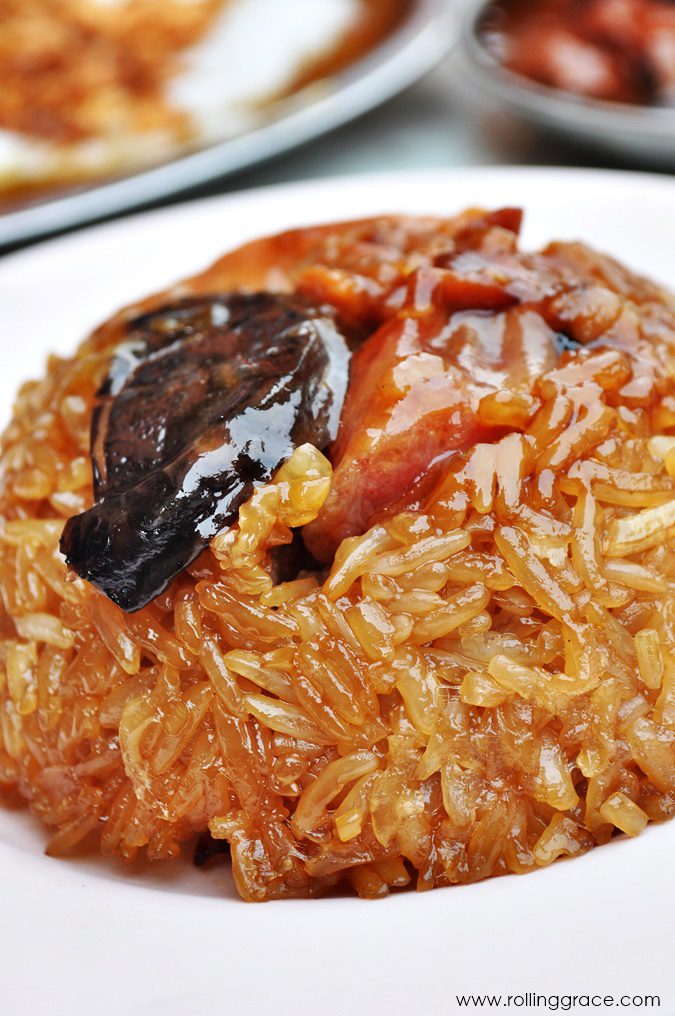
Lo Mai Gai (Chinese)
A dim sum staple consisting of glutinous rice, chicken, shiitake mushrooms, Chinese sausage, dried shrimp, and scallion, wrapped in dried lotus leaves and steamed. In Malaysia, the lotus leaf wrapping is sometimes substituted with aluminium foil bowls, particularly at higher-turnover dim sum shops.
The lotus leaf imparts a subtle, tea-like fragrance to the rice as it steams. Lo mai gai is typically ordered as one of the heavier dim sum items and is large enough to share between two people.
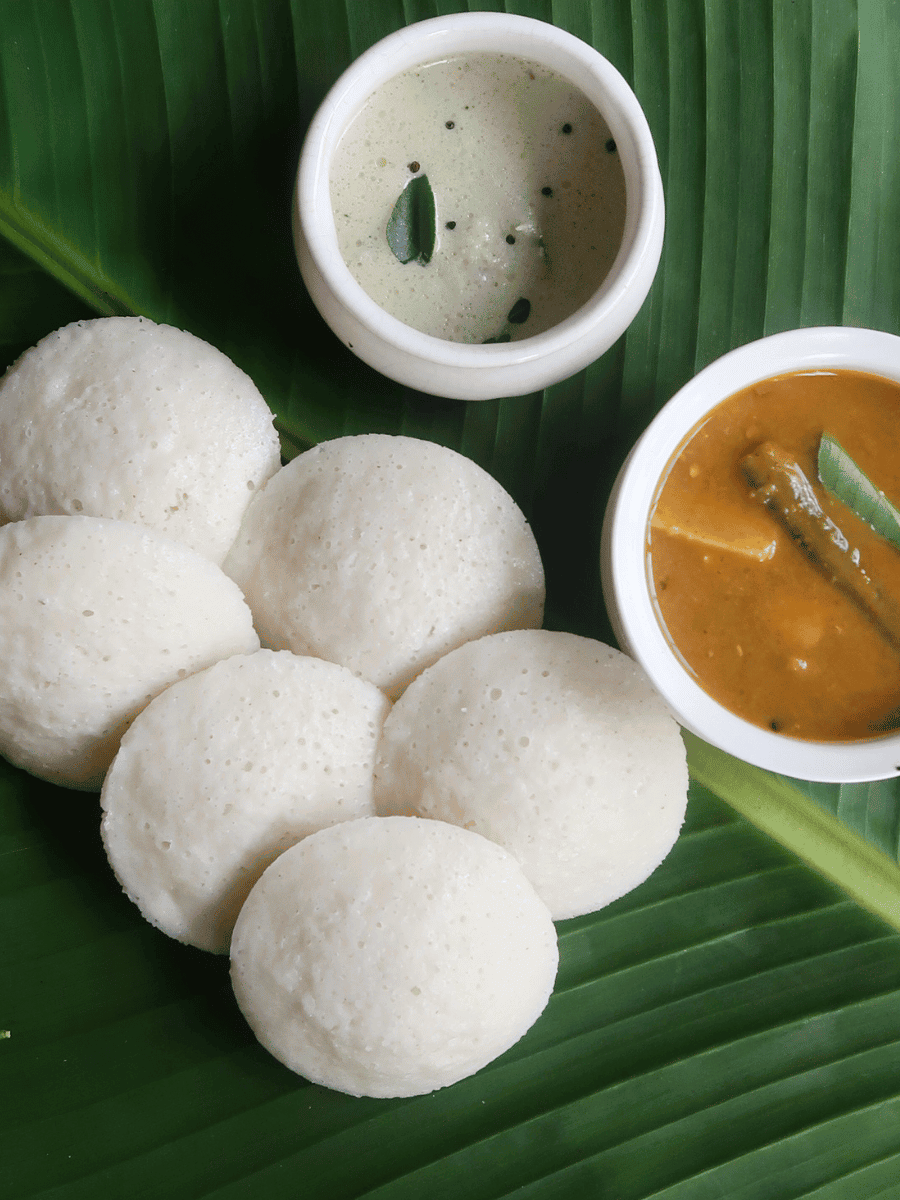
Idli (Indian)
A South Indian rice cake made by steaming a batter of fermented rice and urad dal (black gram) until it puffs into a soft, squishy disc. Idli is eaten with sambar (a lentil-based vegetable stew) and coconut chutney, and is one of the most common breakfast items at Indian restaurants across Malaysia.
The fermentation process makes idli lighter and easier to digest than most rice dishes on this list. Malaysian Indian restaurants have also developed their own variations, including rava idli (made with semolina) and masala idli (pan-fried with spices after steaming).
Sweet Malaysian Rice Dishes and Desserts
Kuih Seri Muka (Malay)
A two-layered dessert with a base of steamed glutinous rice and a top layer of pandan-infused coconut custard dyed a distinctive green. The rice layer is firm and slightly chewy, while the custard is smooth and fragrant. Kuih seri muka is one of the most popular kuih (traditional bite-sized snacks) in Malaysia.
It is sold at morning markets, pasar malam (night markets), and kuih shops across the country. The quality of the pandan extract makes or breaks this dish: fresh pandan leaves produce a deeper colour and more aromatic finish than bottled essence.

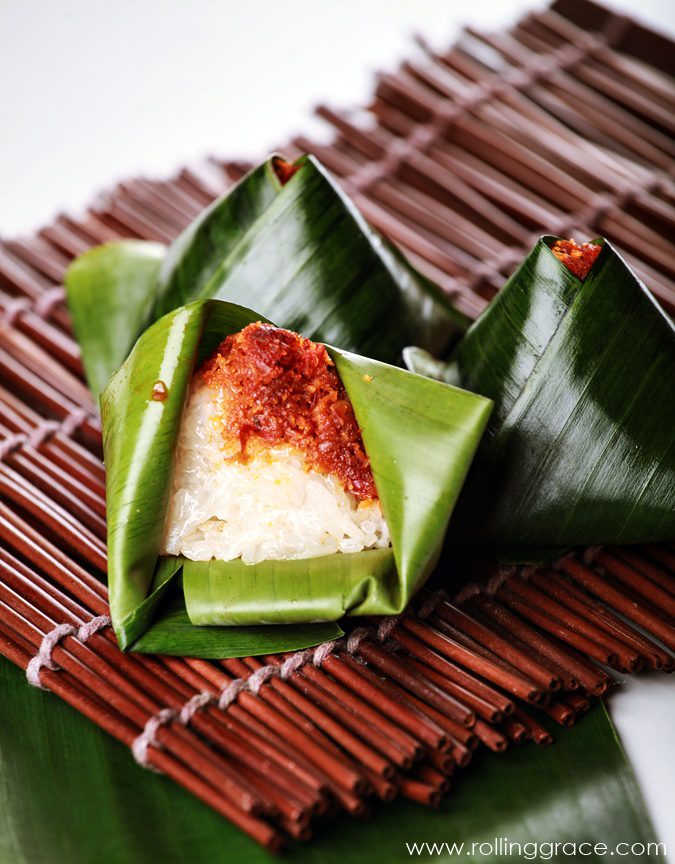
Pulut Inti (Peranakan)
A Nyonya dessert of steamed glutinous rice dyed blue with butterfly pea flower, topped with sweet grated coconut cooked in palm sugar (gula Melaka), and served wrapped in banana leaves in a triangular pyramid shape. Pulut inti is especially popular in Melaka and Penang, the two centres of Peranakan culture in Malaysia.
The contrast between the slightly savoury rice and the sweet, caramelised coconut topping is what makes the dish work. It is commonly found alongside other kuih at traditional Nyonya kuih stalls.
Bubur Pulut Hitam (Chinese)
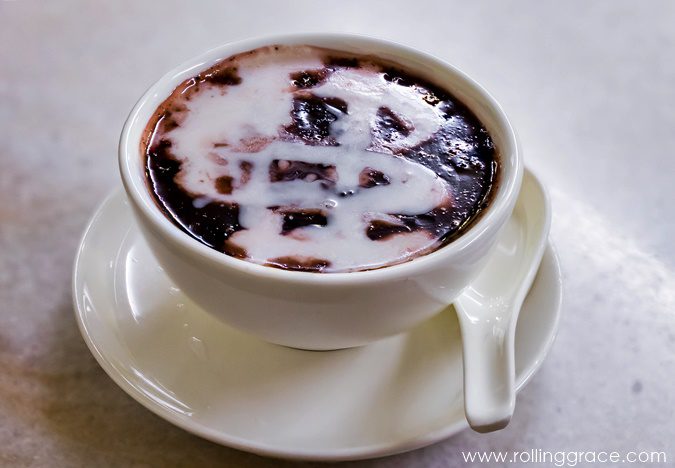
A sweet porridge made from black glutinous rice (which is the unpolished whole grain form of white glutinous rice) simmered until thick and gooey, then finished with coconut milk. The texture is heavy and starchy, and the flavour is mildly nutty with a clean sweetness.
In Malaysia, bubur pulut hitam is served both as a warm dessert and chilled. It is common at hawker stalls, dim sum restaurants, and Peranakan sweet soup shops. The dish is naturally high in anthocyanins, the same antioxidant compound found in blueberries and acai.
Payasam (Indian)
Also known as kheer, payasam is a South Indian rice pudding made by slowly boiling rice in milk and sugar until it thickens into a creamy consistency. Additions include raisins, saffron, pistachios, cardamom, and cashews.
Payasam is typically served as a dessert after banana leaf rice or at festive meals during Deepavali, Pongal, and Tamil weddings. The slow cooking process, often an hour or more, is what gives the dish its silky body. Malaysian Indian restaurants tend to serve a thicker, richer version than what is typical in South India.

Frequently Asked Questions About Malaysian Rice Dishes
What Is the National Dish of Malaysia?
Nasi lemak is the national dish of Malaysia. It is rice cooked in coconut milk and pandan leaf, served with sambal, fried anchovies, roasted peanuts, a hard-boiled egg, and cucumber. It is eaten at every meal, across all races, and is available at hawker stalls, restaurants, petrol station shops, and supermarkets.
Are Malaysian Rice Dishes Halal?
The majority of Malaysian rice dishes are halal, as Malaysia is a Muslim-majority country and most hawker stalls and restaurants serving Malay and Indian Muslim food are halal-certified.
Chinese-origin dishes like claypot chicken rice, zong zi, and lo mai gai may use pork or lard in some preparations. If halal status is a concern, look for the JAKIM halal certification logo displayed at the premises, or ask the vendor directly.
What Is the Difference Between Nasi Lemak and Nasi Kandar?
Nasi lemak uses coconut milk-infused rice and comes with a fixed set of accompaniments (sambal, anchovies, peanuts, egg, cucumber).
Nasi kandar uses plain steamed white rice and is served with a self-selected combination of curries and side dishes from a buffet-style display. Nasi lemak is a Malay dish found nationwide. Nasi kandar is an Indian Muslim dish originating from Penang.
Can You Eat Malaysian Rice Dishes as a Vegetarian?
Yes. Nasi lemak can be ordered without meat (the base accompaniments are already vegetarian). Banana leaf rice is traditionally a vegetarian meal. Nasi kerabu can be served with herbs and vegetables only. Idli is entirely plant-based.
Most kuih and desserts on this list, including kuih seri muka, pulut inti, bubur pulut hitam, and payasam, are vegetarian by default. At nasi kandar and nasi campur stalls, vegetable-only selections are always available.
What Type of Rice Does Malaysia Use?
The most common rice in Malaysian cooking is long-grain white jasmine rice imported primarily from Thailand and Vietnam. Glutinous rice (pulut) is used in dishes like lemang, lo mai gai, zong zi, and most kuih. Basmati rice is used in biryani and nasi tomato. Red rice (beras merah) is specific to Kelantanese nasi dagang.
Discovering Popular Malaysian Rice Dishes
Malaysia is one of the largest rice consumers in Southeast Asia but produces only around 70 percent of its domestic rice needs, relying on imports from Thailand, Vietnam, India, and Pakistan for the remainder.
Supporting local rice farmers, particularly in Kedah (the country’s rice bowl), Kelantan, and Sarawak, directly strengthens food security. Choosing dishes made with locally grown beras tempatan over imported varieties, where available, keeps money in the Malaysian agricultural supply chain.
Malay, Chinese, Indian, Peranakan, and indigenous kitchens have each built their own rice traditions here, and the crossover between them is what makes Malaysian rice dishes unlike anything you will find elsewhere in Southeast Asia. All of them are widely available at hawker stalls, kopitiams, and restaurants across the country.
Get the good stuff first. Join Rolling Grace for the restaurants worth crossing a city for, the stays worth the upgrade, and the places to go before everyone else. Free, straight to your inbox.
Leave a Reply