What to eat in Kuching is the question every first-time visitor asks, and the answer starts with Laksa Sarawak.
Kuching earned its place on the UNESCO Creative Cities of Gastronomy list, and one afternoon eating your way through its kopitiam alleys and night hawker stalls will tell you exactly why.
Sarawak’s capital does not share a food culture with peninsular Malaysia. The ingredients are different, the techniques are different, and several dishes here exist nowhere else on earth.
Below are the seven things to eat in Kuching, and where to find the best version of each.
Read also: What to Buy in Sarawak: 10 Best Souvenirs From Borneo

Laksa Sarawak at Mom’s Laksa Kopitiam
Laksa Sarawak bears little resemblance to its peninsular cousins. The broth is built on a base of sambal belacan, tamarind, lemongrass, and coconut milk, producing something thick, deeply spiced, and tangy in a way that no amount of description fully prepares you for. It arrives with vermicelli, shredded chicken, whole prawns, half a boiled egg, and a squeeze of calamansi that cuts through the richness at the end.
Mom’s Laksa Kopitiam has been the benchmark for halal Laksa Sarawak in Kuching for years and draws a loyal crowd of locals every morning. Arrive by 8:30 AM on weekends to avoid the queue. It is one of the most talked about answers to what to eat in Kuching, especially among first-time visitors to the city.
- Address: Ground Floor, SL-2, Jalan Astana, Ave Astana, Petra Jaya, 93050 Kuching, Sarawak
- Opening hours: Daily, 8:00 AM to 4:30 PM
- Contact: +6019-812 8587
- Halal: Yes

Linut at Barong Tinuk
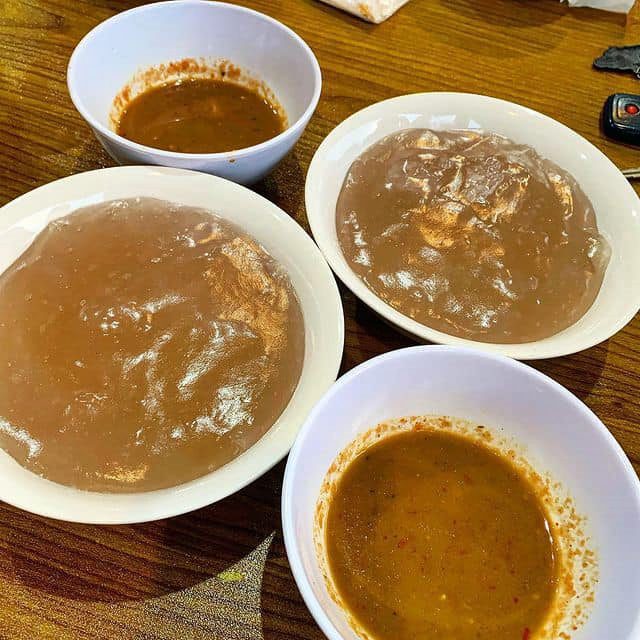
Linut is a Melanau staple, made by stirring sago starch into hot water until it becomes a smooth, glutinous paste with a consistency somewhere between thick porridge and a very soft dumpling.
On its own, it is entirely neutral in flavour. The point is the sambal it is served with: at Barong Tinuk, a sweet and spicy sambal with small anchovies that gives the dish its character. You eat it by twirling the linut around a fork or stick, pulling it into the sambal, and eating immediately.
Book Kuching Foodie Experience Guided Tour with 5 Tastings
Barong Tinuk has relocated from the Jalan Semarak address it was known for. It now operates from Riveredge Commercial Centre on Jalan Merdeka and is open for dinner service only. It remains a popular choice for what to eat in Kuching, drawing steady crowds throughout the day.
- Address: Riveredge Commercial Centre, Jalan Merdeka, 93050 Kuching, Sarawak
- Opening hours: Monday to Saturday, 4:00 PM to 10:00 PM. Closed Sunday.
- Contact: +6019-818 8145
- Halal: Yes
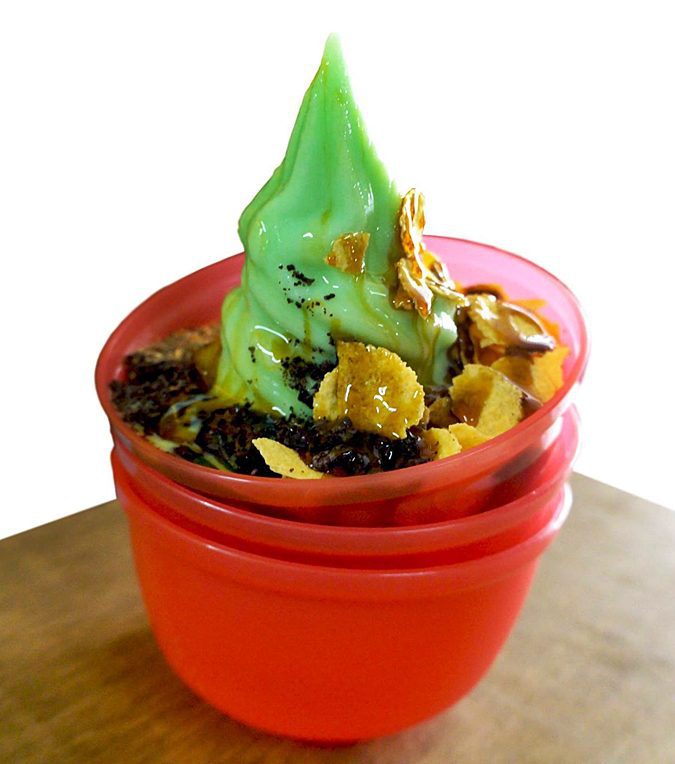
Gula Apong Ice Cream at R.G. Ais Krim Bergula Apong
Gula apong is a palm sugar native to Sarawak, darker and more complex than gula melaka, with a slightly smoky edge and a deep caramel richness.
In 2006, Richard Ting began drizzling it over soft-serve ice cream at his stall inside Tower Market, inventing a dessert that has since become synonymous with Kuching. The name of the shop, R.G., stands for Richard and Gerald, his son, who now runs the evening operation.
The original stall. Flavours rotate daily between pandan, vanilla, and chocolate. The vanilla with gula apong and peanuts is the one to get on a first visit. The queue after 8 PM can stretch beyond 20 minutes; it is still worth it. It continues to rank among favourites for what to eat in Kuching, especially for travellers seeking local specialities.
- Address: No. 11 Tower, Wet Market and Hawker Centre (Open Air Market), 93100 Kuching, Sarawak
- Opening hours: Daily, 12:30 PM to 12:30 AM
- Contact: +6016-891 0001
- Halal: Yes
Nasi Briyani Ayam Kari at Briyani World
Biryani in Kuching carries the influence of the city’s long-established Indian Muslim community. At Briyani World, the rice arrives freshly cooked and fragrant, topped with crispy fried shallots and served with a dense, spiced dhall, tomato-based sambal, and onion raita alongside your choice of protein. The ayam kari version is the most ordered. The combination of the raita cooling and the sambal heating makes it a more layered plate than most biryanis at this price point.
It is a widely recognised option within what to eat in Kuching, known for its long-standing presence in the local food scene.
- Address: GR Floor (SL66), Block, Jalan Matang Metrocity, Q309, Petra Jaya, 93050 Kuching, Sarawak
- Opening hours: Daily, 8:00 AM to 8:00 PM
- Contact: +6011-1607 7176
- Halal: Yes

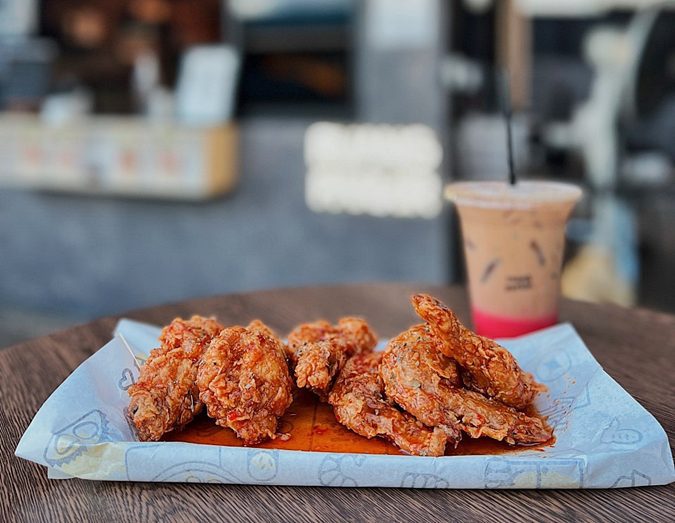
Sticky Thai Chicken Wings at Ruang Parkir
Ruang Parkir is a coffee shop on Jalan Merdeka with a short, focused menu and a loyal following for two things: its Thai-glazed chicken wings and its Congo Bars.
The wings are double-fried for maximum crunch and coated in a sticky, lightly sweet Thai sauce. The Congo Bars are a blondie-style baked square, dense and gooey in the middle, better than they sound on paper.
It is a familiar name within what to eat in Kuching, often included in casual food trails around the city.
- Address: Jalan Merdeka, Kampung Tanjung, 93050 Kuching, Sarawak
- Opening hours: Tuesday to Saturday, 1:00 PM to 11:00 PM. Closed Sunday and Monday.
- Halal: Yes
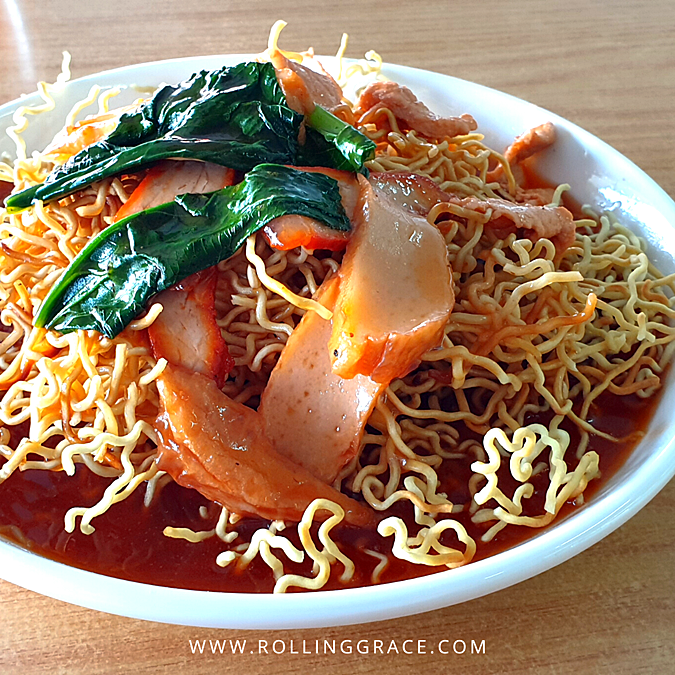
Fried Crispy Tomato Mee at Yee Ho Yan Cafe
Tomato Mee is a Kuching original. It starts with Kolo Mee noodles, deep-fried until golden and crisp, then served in a bowl of tomato-based sauce with seafood, pork, chicken slices, and fish balls. The noodles soften slightly as they absorb the sauce but retain enough texture to stay interesting.
The result is simultaneously crunchy, saucy, and deeply savoury, unlike anything else in Malaysian Chinese cooking. It is one of the more widely visited stops linked to what to eat in Kuching, particularly during peak meal hours.
Yee Ho Yan in Matang Jaya is consistently cited as the best version in the city. It is non-halal and closes early.
- Address: 685, Lot 9294, Synergy Square, Jalan Matang Batu 4, Petra Jaya, 93050 Kuching, Sarawak
- Opening hours: Daily 6:00 AM to 1:00 PM, closed Wednesday
- Contact: +6019-482 3696
- Halal: No
Kolo Mee at Oriental Park
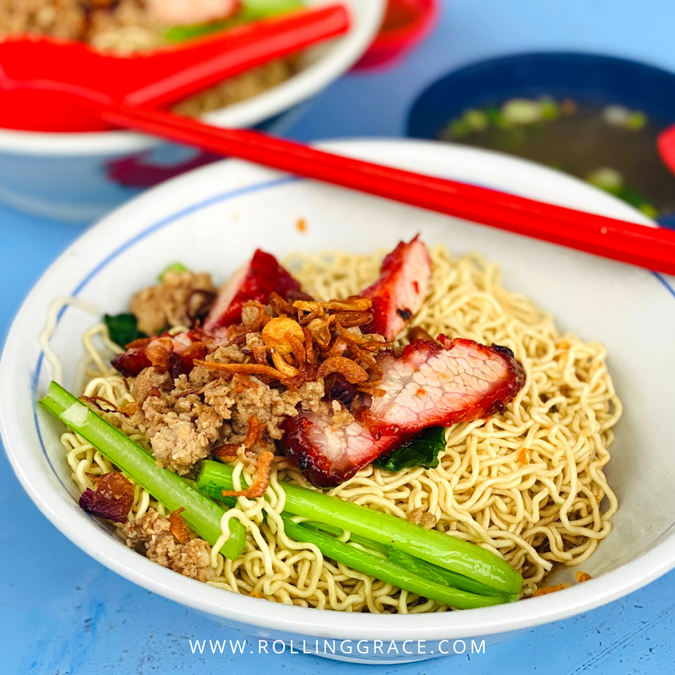
Kolo Mee is the dish Kuching is most known for and the one locals are most protective of. Springy egg noodles, blanched and tossed in lard oil and shallot oil, topped with minced pork and self-roasted char siu, finished with fried shallots. The skill is entirely in the tossing and the fat balance. A good bowl clings to the noodle without being oily. Oriental Park’s version does exactly that.
There are three variations: the original white sauce, a red-sauce version with a sweeter char siu glaze, and a black-sauce version with dark soy. On a first visit, order the original and one red to compare. Small bowl is RM6, large is RM8. It is a go-to recommendation for what to eat in Kuching, fitting naturally into most food-focused itineraries.
Hidden in an alley between Lorong Market and Lorong Gertak in the old city, Oriental Park is non-halal and sells out fast. On weekends it can be gone by 10 AM. Arrive by 7 AM to be safe.
- Address: GF, Lorong Gertak, 93000 Kuching, Sarawak
- Opening hours: Daily, 5:00 AM to 1:00 PM (closed Tuesday)
- Contact: +60 82-419 124
- Halal: No
Planning Your Kuching Food Trip
Halal and Non-Halal Options
Four of the seven dishes in this guide are halal: Laksa Sarawak at Mom’s Laksa, Linut at Barong Tinuk, Gula Apong ice cream at RG Ais Krim, and Nasi Briyani at Briyani World. Yee Ho Yan and Oriental Park are non-halal Chinese establishments. Ruang Parkir is halal.
Best Time to Visit
Most of the best breakfast spots in Kuching close by 1 PM. Oriental Park and Yee Ho Yan are morning-only. If you are covering multiple stops in one day, start at Oriental Park or Yee Ho Yan by 7 AM, move to Mom’s Laksa by 9 AM, then save the afternoon and evening for Briyani World, Ruang Parkir, and RG Ais Krim after dark.
Getting Around
Kuching is compact enough that most of these spots are reachable by GrabCar within 15 minutes of the city centre. Lorong Gertak, where Oriental Park is located, is a narrow alley not always findable on maps.Search “Oriental Park Cafe Kuching” on Waze rather than Google Maps for the most accurate pin.
Sustainability
Kuching’s food culture runs heavily on small family-run stalls, several of which have been in operation for decades. Eating at RG Ais Krim, Oriental Park, and Yee Ho Yan directly supports independent operators rather than chains. The gula apong used at RG Ais Krim is sourced from local Sarawakian palm producers, keeping that supply chain short and within the state.
Frequently Asked Questions on What to Eat in Kuching
What is the most famous food in Kuching?
Kolo Mee and Laksa Sarawak are the two dishes most associated with Kuching. Both are available at dozens of spots across the city, but the quality varies widely. Oriental Park for Kolo Mee and Mom’s Laksa for Laksa Sarawak are the most consistently recommended by locals.
Is Kuching food halal?
Kuching has a significant Muslim population and a wide range of halal food options. Several of the most iconic dishes, including Laksa Sarawak and Nasi Briyani, are available at halal establishments. Kolo Mee is traditionally a non-halal dish due to the use of lard and pork, but halal versions exist across the city.
What is Kolo Mee?
Kolo Mee is a dry noodle dish unique to Sarawak, made with springy egg noodles tossed in lard oil and shallot oil, topped with minced pork and char siu. It is served at room temperature rather than in broth and eaten mixed together at the table. It is the defining everyday dish of Chinese Kuching.
What is gula apong?
Gula apong is a palm sugar produced from the nipah palm, native to coastal Sarawak and Brunei. It has a darker colour and a more complex, slightly smoky flavour compared to coconut palm sugar or gula melaka. It is used in traditional Melanau cooking and has become widely popular in Kuching as a dessert topping.
What is Linut?
Linut is a traditional Melanau dish made from sago starch cooked into a smooth, gelatinous paste. It has almost no flavour on its own and is always served with sambal for dipping. It is closely related to ambuyat, the national dish of Brunei, which uses sago starch from a different palm variety.
How many days do you need to eat your way through Kuching?
Three days gives you enough time to hit all seven dishes in this guide without rushing, with room to revisit a favourite or explore Kuching’s excellent weekend market at Satok, which runs every Saturday evening and Sunday morning.
Is Kuching worth visiting just for the food?
Yes. Kuching was designated a UNESCO Creative City of Gastronomy in 2021, one of only a handful of cities in Southeast Asia to hold the title.
The food culture here is distinct from anywhere else in Malaysia, anchored in indigenous Dayak and Melanau traditions alongside Chinese, Malay, and Indian influences that have developed in isolation from the peninsula for generations.
This guide is compiled from personal dining experience, verified venue listings, direct social media sources, and recent visitor reports.
Get the good stuff first. Join Rolling Grace for the restaurants worth crossing a city for, the stays worth the upgrade, and the places to go before everyone else. Free, straight to your inbox.
Leave a Reply