The Rolling Grace China Travel Guide covers everything you need to plan an informed trip, from Beijing’s imperial grandeur to the karst peaks of Guilin and the highlands of Yunnan.
China stretches from subarctic steppe in the north to tropical coastline in the south, spanning five climate zones, 23 provinces, and terrain that shifts from high-altitude plateau to river delta within a single rail journey. The Gobi Desert and the rice paddies of Guangxi exist in the same country. So do the skyscrapers of Shanghai and the yak pastures of western Sichuan. Scale and contrast define nearly every aspect of travel here.
Its character shows up in the ordinary moments. Steam lifts from a bamboo basket of xiaolongbao at a neighbourhood breakfast counter. A high-speed train covers 1,300 kilometres in under five hours. Temple incense drifts across a courtyard that hasn’t changed in six centuries while, three blocks away, a cashless street vendor scans a QR code to sell you a jianbing.
This China travel guide brings together where to go, what to eat, when to visit and how to plan your route across a country where distance, geography and cultural diversity demand deliberate planning at every turn.
Where to Go in China
China’s leading destinations reflect the country’s geographic extremes and historical depth.
Beijing remains the starting point for most first-time visitors, anchored by the Forbidden City, the Summer Palace and multiple sections of the Great Wall within day-trip distance. Shanghai draws travellers for its colonial-era Bund, contemporary art spaces and one of Asia’s most dynamic food scenes. Xi’an opens a window into China’s ancient capitals, with the Terracotta Warriors and the Muslim Quarter forming the core of most itineraries.
Further south, Guilin and Yangshuo offer the karst river landscapes that have defined Chinese painting for centuries. Tibet and Xinjiang are accessible but require additional permits and, in the case of Tibet, a registered tour guide. These regions reward committed travellers with landscapes and cultures found nowhere else on the mainland.
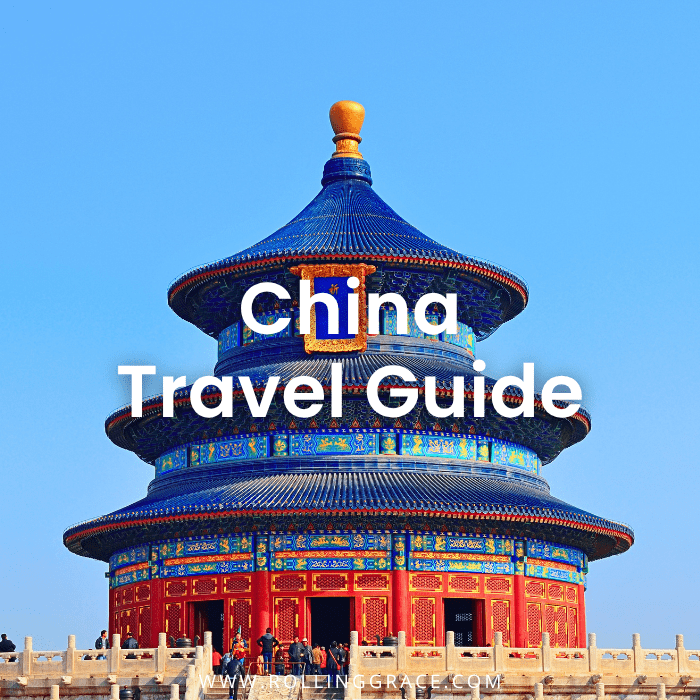
China Travel Guide: Top Destinations
China’s top destinations are not easily grouped. The country resists a single narrative, and the differences between regions can feel as pronounced as the differences between separate countries entirely.
Beijing
Imperial architecture, hutong alleyways, and proximity to several Great Wall sections including Jinshanling and Mutianyu. Best visited in spring or autumn when skies are clear and temperatures are comfortable.
Shanghai
A city built on trade and reinvention. The French Concession, the Bund, and the Pudong skyline share space with some of the best Shanghainese and regional Chinese restaurants in the country.
Xi’an
The eastern terminus of the Silk Road. The Terracotta Warriors alone justify the trip, but the walled old city and the Muslim Quarter’s food stalls add texture and depth.
Guilin and Yangshuo
Karst peaks reflected in slow-moving rivers. Cormorant fishing villages, cycling routes through rice paddies, and river cruises along the Li River define this part of Guangxi Province.
Chengdu
Capital of Sichuan and a UNESCO City of Gastronomy. Hotpot, mapo tofu, and fly restaurants line every neighbourhood. Panda breeding centres sit on the city’s outskirts, and the mountainous west of the province opens up from here.
Yunnan Province
From the tropical south near Xishuangbanna to the Tibetan plateau around Shangri-La, Yunnan holds more ethnic diversity and ecological range than most countries. Dali and Lijiang serve as the main bases, with the Tiger Leaping Gorge trek among China’s best multi-day hikes.
Zhangjiajie
The sandstone pillars of Wulingyuan became globally recognised after inspiring the floating mountains in James Cameron’s Avatar. Mist, altitude and sheer vertical scale make this one of China’s most visually striking national parks.
Best places to visit in China

7 Stunning Things to See at Du Fu Thatched Cottage Chengdu
Du Fu Thatched Cottage is a replica, built to commemorate the famous Tang Dynasty poet who lived over 1,200 years ago. And still, when…

Leshan Giant Buddha: 6 Must-visit Fascinating Attractions
The Leshan Giant Buddha is 71 metres tall. Standing at its feet, you are eye-level with its toenails. Each one is large enough to…

7 Best Things to Do in Emeishan City in Sichuan, China
Mount Emei is the obvious draw, but the best things to do in Emeishan extend well beyond the mountain itself. At 3,099 metres, the…
Something went wrong. Please refresh the page and/or try again.
Where to Eat in China
China’s food culture is shaped by climate, agriculture and deep regional identity. There is no single Chinese cuisine, only a network of traditions so distinct that a Cantonese home cook and a Sichuan street vendor would recognise almost nothing in common on each other’s tables.
The “Eight Great Cuisines” form the classical framework: Sichuan, Cantonese, Shandong, Jiangsu, Zhejiang, Fujian, Hunan and Anhui. But the reality on the ground is more granular still. Xinjiang’s lamb skewers and hand-pulled noodles owe more to Central Asian kitchens than to anything east of the Yellow River.
Yunnan borrows freely from its Southeast Asian neighbours. Dongbei cooking in the northeast leans on preserved vegetables and slow-braised pork suited to long, bitter winters.



Best Time to Visit China
China spans roughly 37 degrees of latitude and five climate zones, from tropical in the south to subarctic in the far north. There is no single best month. The right time depends entirely on where you are going.
Beijing, Xi’an and Northern China
Spring (April to May) and autumn (September to mid-October) offer the most comfortable conditions, with clear skies and temperatures between 15 and 25°C. Summers are hot and humid, often exceeding 35°C. Winters drop well below freezing, though northern cities remain fully functional and far less crowded.
Shanghai and Eastern China
Best from mid-March to May and again from September to November. The plum rain season (meiyu) hits in June, bringing heavy, persistent rainfall. July and August bring oppressive heat and humidity.
Guilin, Guangzhou and Southern China
Subtropical conditions year-round, with the driest and most pleasant windows falling between October and March. Summers are hot and wet, with typhoon season running from June through September along the southeastern coast.
Yunnan
Mild across most of the year thanks to altitude. The dry season from November to April is the strongest window. Monsoon rains arrive from June to September, particularly in Xishuangbanna and the lower valleys.
Tibet
The practical travel window runs from May to October. Winter brings extreme cold and many road closures. July and August are the warmest months but also the wettest. June and September offer the best balance of access and comfort.
Sichuan and Zhangjiajie
Best in spring (March to May) and autumn (September to November). Summer brings lush green scenery and dramatic mist in the mountains but also intense heat in the lowlands.
Dates to Avoid
Chinese New Year (late January to mid-February) triggers the largest annual human migration on earth.
Transport systems are overwhelmed, businesses close for up to two weeks, and hotel prices spike across the country. Golden Week (1 to 7 October) is the second major crunch, with domestic travel surges flooding every major attraction and route. Booking outside these two windows saves money, stress and time.



China Travel Guide and Tips
Currency
Chinese Yuan Renminbi (CNY/RMB). China is overwhelmingly cashless. Most transactions, from street food vendors to taxis, run through Alipay or WeChat Pay. Foreign visitors can now link international Visa and Mastercard to both apps via passport verification, though setup should be done before arrival.
Carry a small amount of cash (200 to 500 RMB in small notes) as a backup for rural areas and connectivity failures. International credit cards are accepted at large hotels and department stores but rarely elsewhere.
Languages in China
Mandarin Chinese (Putonghua) is the national language. English is limited even in major cities, and outside Beijing, Shanghai and parts of Guangzhou, communication will require a translation app.
Download offline language packs before arrival. Pleco is the standard dictionary app for travellers; Google Translate works only with a VPN.
Internet and the Great Firewall
Google, Gmail, WhatsApp, Instagram, Facebook, YouTube, X (formerly Twitter) and most Western news sites are blocked in mainland China. Download and install a VPN before you arrive.
VPN provider websites are blocked inside China, making it impossible to set up once you land. An international roaming eSIM can also bypass the firewall via international routing, and is worth having as a backup. WeChat is the default communication app in China and works without a VPN.
Payments setup
Download Alipay before departure. Register with your phone number, scan your passport for identity verification, and link a Visa or Mastercard. The international version of the app is in English and takes roughly 15 minutes to set up.
WeChat Pay is also supported but can be less predictable with foreign card linking. Having both apps ready covers nearly every payment scenario. If your bank’s fraud detection blocks China transactions, notify them before your trip.
Electricity
220V, 50Hz, with Type A, Type C and Type I sockets all in use. Plug formats vary even within the same hotel. A universal adaptor is the safest option.
SIM cards and connectivity
International eSIMs from providers such as Airalo or Holafly route data through overseas networks, effectively bypassing the Great Firewall without a VPN.
For a local SIM, China Mobile and China Unicom cards are available at airports, though registration requires a passport and can take time. China Mobile has the broadest coverage in rural and western regions.
Tipping
Tipping is not customary in China and is not expected at restaurants, hotels or by taxi drivers. Some high-end international hotels may accept tips, but it is not standard practice.
Tibet permits
Independent travel in Tibet is not permitted for foreign visitors. You must arrange your trip through a registered travel agency, which will obtain the Tibet Travel Permit on your behalf. Additional permits are required for travel beyond Lhasa.
Chinese Visa
Citizens of over 50 countries can enter China visa-free for up to 30 days, including holders of UK, Canadian, Australian, and most EU passports. A 240-hour (10-day) visa-free transit option is also available at 65 ports of entry for citizens of 55 countries, provided you hold a confirmed onward ticket to a third destination.
For stays longer than 30 days or nationalities not covered, an L-type tourist visa is required. Print all hotel bookings and flight confirmations before departure. Google Drive, Gmail and cloud-based document storage do not function behind the firewall, and immigration officers may request proof of accommodation and onward travel on arrival.
Travelling Responsibly in China
China’s natural and cultural heritage is vast, and much of it is under pressure from mass tourism, urban expansion and industrial development. In protected areas including Jiuzhaigou, Zhangjiajie, the Three Parallel Rivers of Yunnan, and sections of the Great Wall, follow all posted access restrictions and ranger instructions without exception.
Buddhist and Taoist temples remain active places of worship across the country. If you enter a temple during a service or ceremony, dress modestly, lower your voice, and step aside. Photography may be restricted in certain halls. Tibetan Buddhist monasteries follow their own protocols, and visitors should follow their guide’s lead on behaviour and access.
Wildlife tourism in China requires the same caution as elsewhere in the region. Avoid any operation offering direct contact with wild animals, including photo opportunities with captive species. Responsible encounters involve distance, licensed guides and no staged interactions.