You walk into Ortensia from a Zhangyuan lane and the city falls away. Inside, the light stays low and warm, and the heritage house holds the room in a hush. This was a late 19th-century Shikumen with French panelling and Japanese texture settle into the old Shanghai bones.
Ortensia opened in October 2024 as the second home of a one Michelin star Paris restaurant, and it chose this heritage house over a glass tower on purpose. The cooking runs on the same logic: French technique and Japanese precision turned on the finest regional Chinese ingredients.
Read also: Osteria Mozza Singapore Review: Divine 4-Course Tasting Menu
Inside the Restored Shikumen House
Most fine dining rooms in Shanghai are stacked inside glass towers or boutique hotel mezzanines, with skyline views that double as the night’s headline. Ortensia Shanghai chose the opposite.
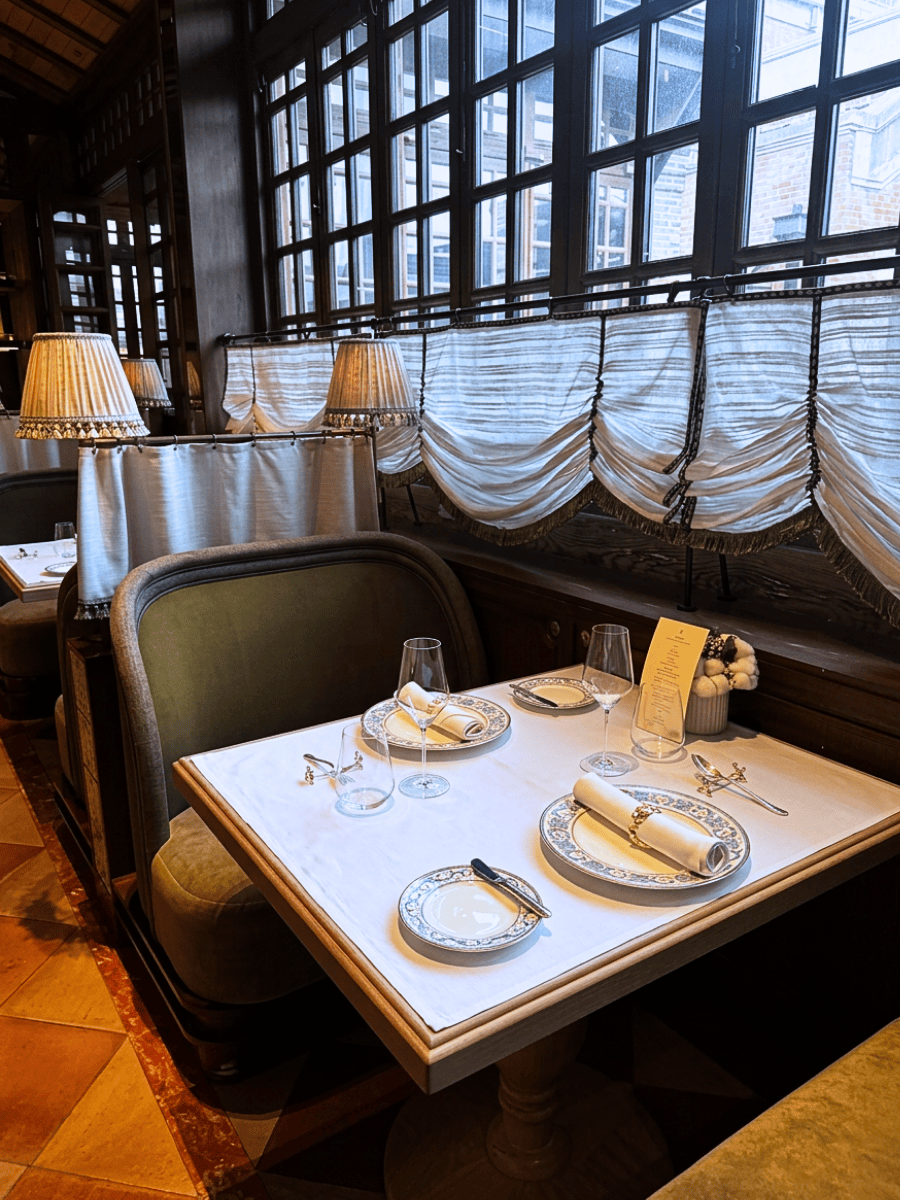
The team picked Zhangyuan, the restored heritage compound on Maoming North Road, and within it they picked Building W14, a late 19th-century Shikumen courtyard house with original wooden beams, brick courtyards, and the kind of architectural memory that a glass tower could never replicate.
Book Shanghai Palace Banquet Immersive Dining Show Experience
Located in Zhang Yuan Shanghai
The reasoning, when I asked, was specific. Zhangyuan is widely understood by Shanghainese as the birthplace of modern Shanghai culture, a district where local heritage and international cosmopolitanism first met.
A restored Shikumen carries that history physically. A minimalist contemporary venue could only ever deliver sleek modernity. The historic house, by contrast, lets them layer French-Japanese culinary storytelling into Shanghai’s local context, with the courtyard, the natural light, and the original architecture turning each dinner into a conversation between Parisian fine dining and the Shanghai it now lives inside.

Private Rooms and Spaces
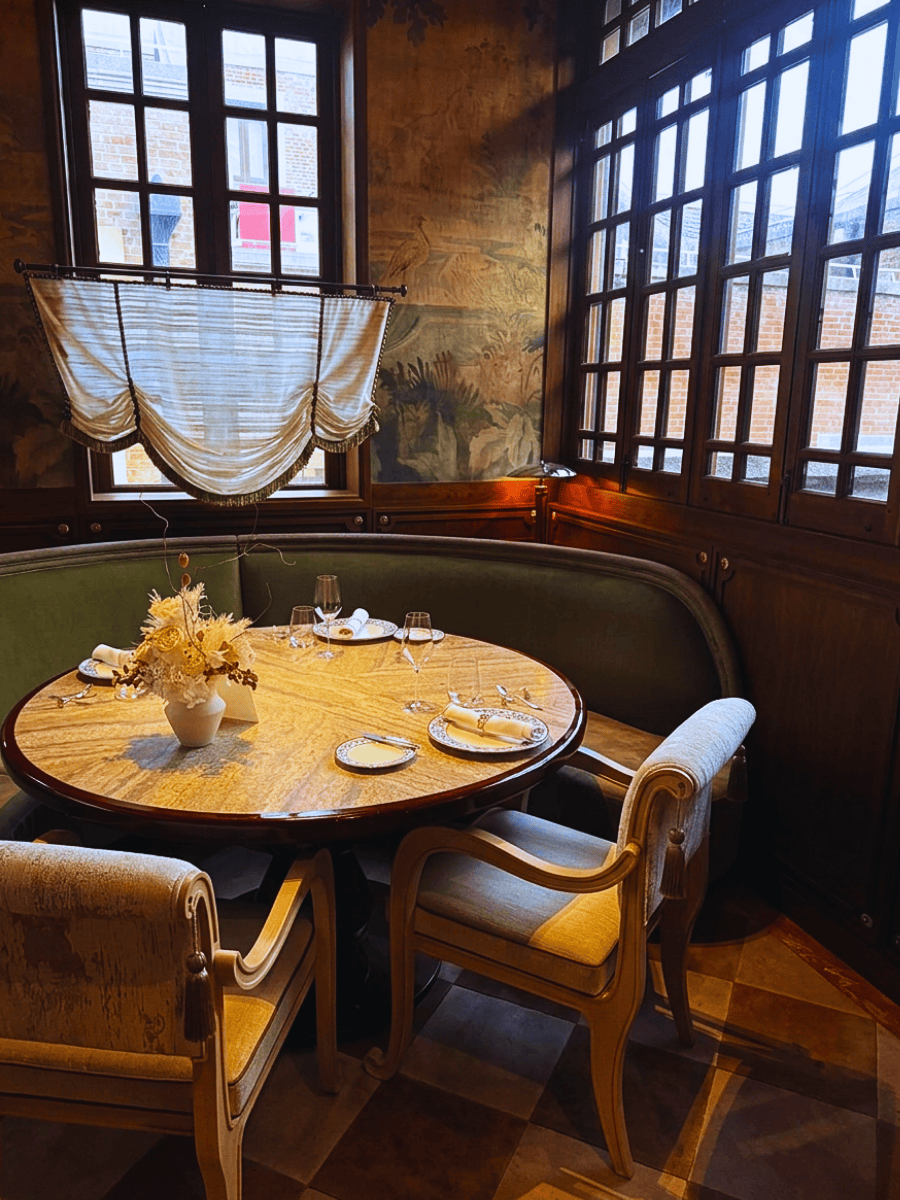
Original beams are left exposed. Soft daylight pours in from the open courtyard. The two-storey dining room seats around 40 across the main floor and private rooms, with a sister concept, Ortensia Patisserie & Café, next door for those who want to make a full afternoon of it.
There are four private rooms, and they are among the most beautifully decorated corners of the whole house, from a theatrical room with bronze mirror to the smaller five-seat rooms.
If you are booking one, expect a minimum spend, currently around 4,000 RMB for lunch and 8,000 RMB for dinner. For a special occasion in a heritage courtyard house, few rooms in Shanghai match them.

What Does “Ortensia” Mean?
The name Ortensia is the Italian and Spanish word for the hydrangea flower, hortensia in French. The restaurant’s own framing is that the flower is the point: hydrangeas shift colour with the seasons and the conditions they grow in, and the kitchen holds that its cooking does the same.
The flower shows up in the room as well as the name. At the Shanghai house, hydrangeas cluster at the entrance, the first thing you see before you step inside.
Ortensia Shanghai Tasting Menu: Prices, Dishes, and Courses
Ortensia Shanghai serves three set tasting menus at ¥1,288, ¥1,688, and ¥2,288 per person, all subject to a 10% service charge. The progression across the three tiers adds courses, premium ingredients, and rarer proteins, but the philosophical line holds throughout: French technique applied to seasonal Chinese ingredients, with Japanese precision in the cooking.
The kitchen runs a fixed set menu and, per its own dining policy, does not accommodate vegetarian, gluten-free, or lactose-free diets, and asks for any special request at least 48 hours ahead. As I found first-hand, even a pescatarian request may not be reflected on the night, so if you have a firm dietary need, weigh that carefully before booking. This is a kitchen built around a set progression, not a flexible one.
The dishes that follow are drawn from the upper tasting on the night I visited, served in order. À la carte options are also available, with the signature beef tartare with caviar at ¥188 and the two most expensive single courses, the pigeon and the seasonal fish, at ¥488 each.
Amuse Bouches and Charcoal Chicken Wing
The meal opens with a procession of small bites brought out almost ceremonially, over the first 20 minutes of service.
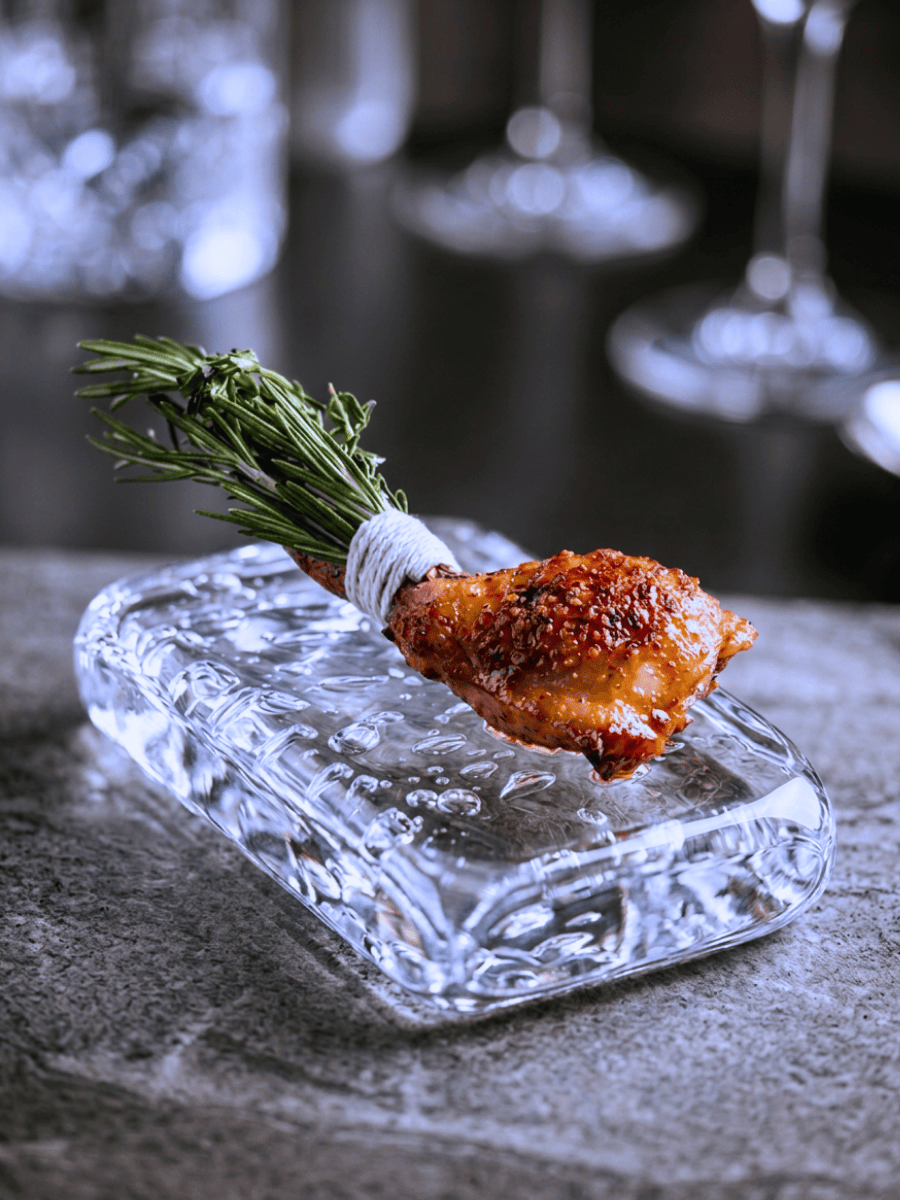
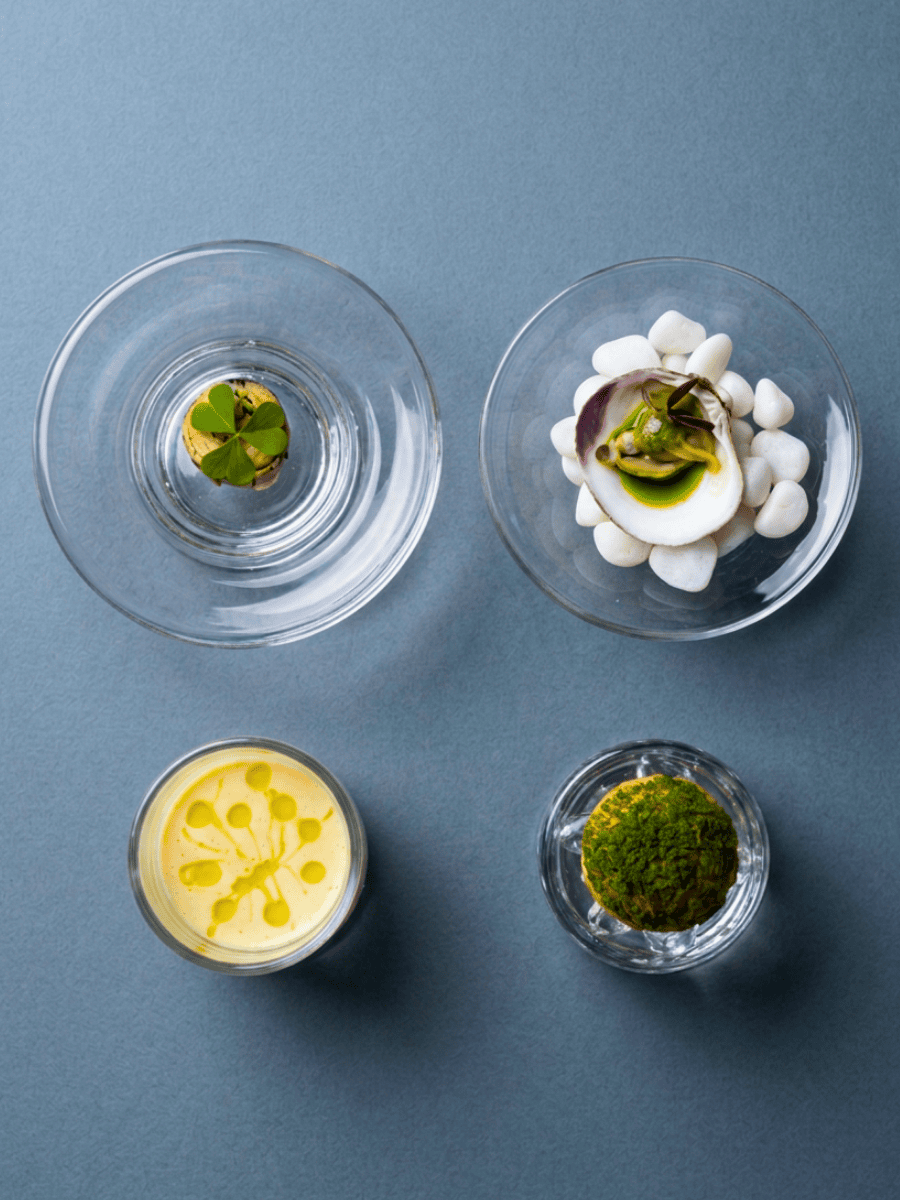
A delicate seasonal tart. A cold soup seasoned to almost zero distraction. A single clam. And, set apart from the rest, a charcoal-grilled chicken wing, lacquered to a high gloss, the bone removed and the cavity refilled with a delicate forcemeat, and, hidden inside, a soft yolk that spills on the bite. It is a true surprise, and the smoke from the grill announces itself, lingering on the tongue long after the wing has gone.
The opening is engineered to deliver all three intentions at once: it shortens the wait between courses, front-loads umami before the palate has settled, and gives the service team a sequence of moments to walk through with the table.
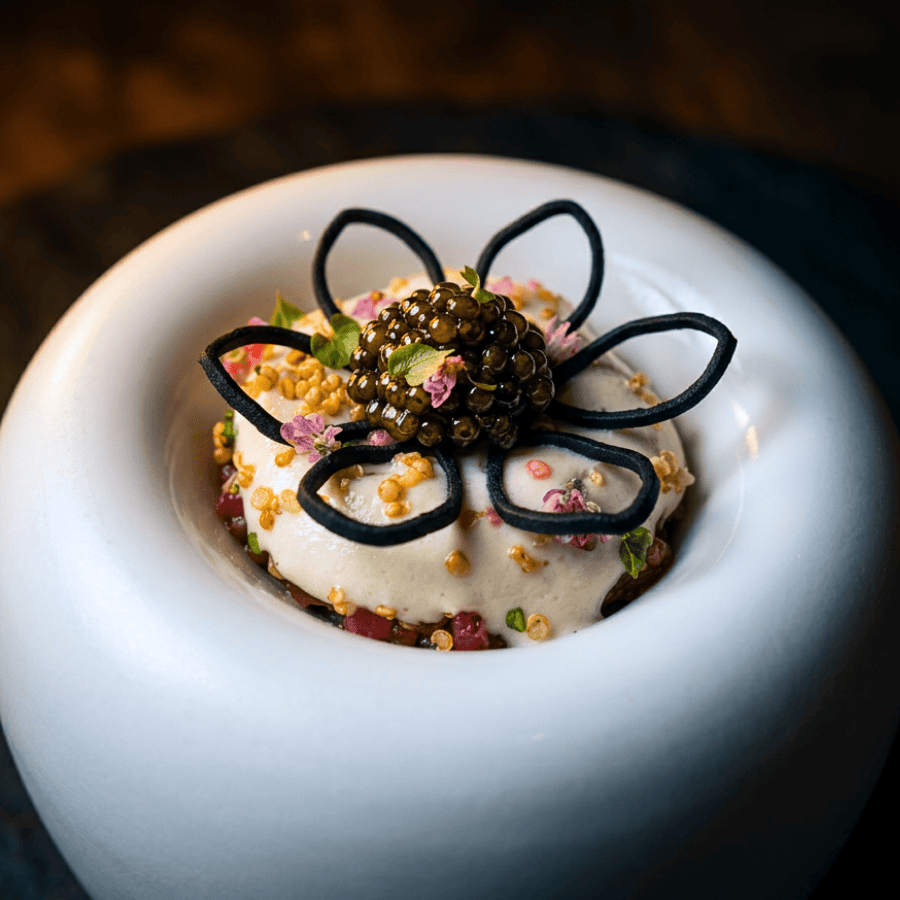
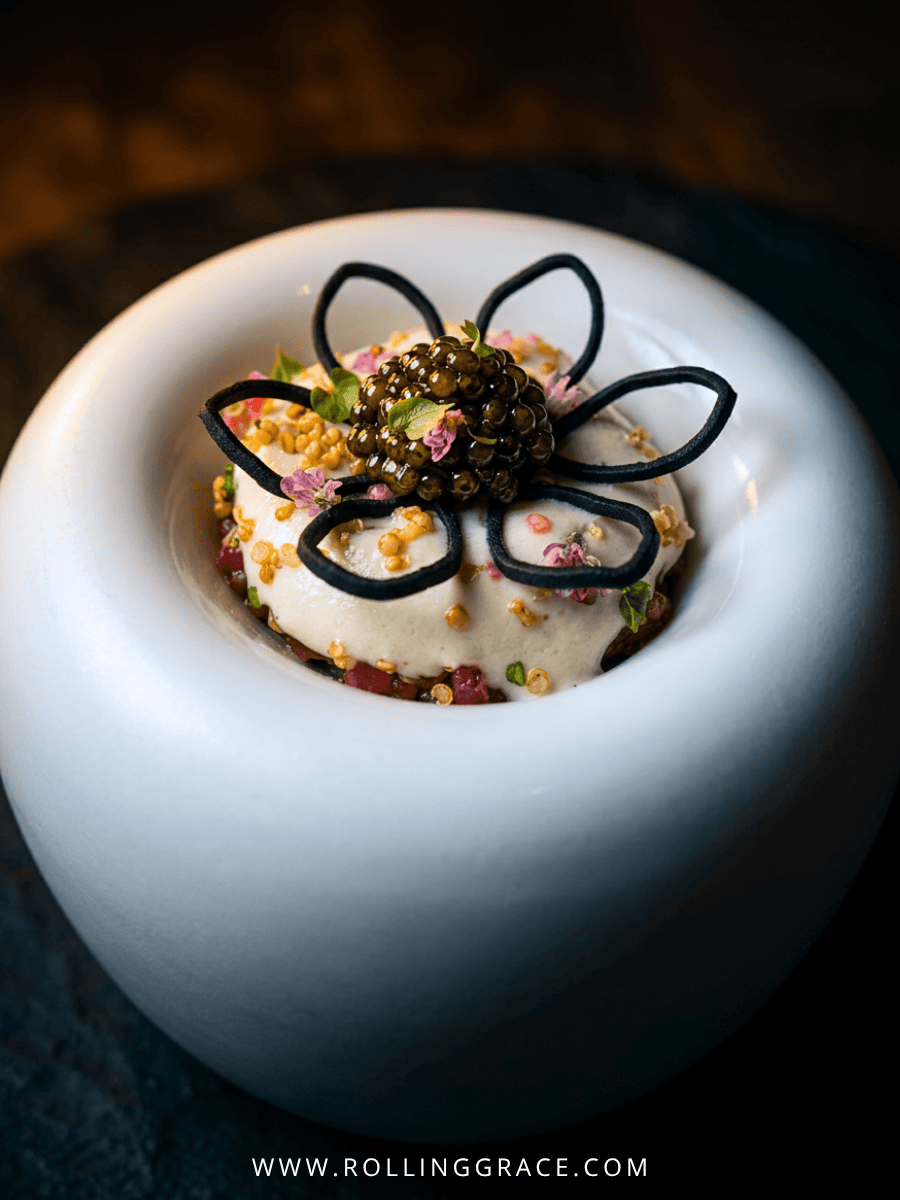
Signature Beef Tartare with Caviar (¥188)
This is the Ortensia Paris dish, brought across with the smallest possible adjustment. The beef is hand-cut tenderloin, dry-aged in-house, dressed in the Paris kitchen’s classical style: shallots, capers, mustard, a quiet thread of cognac. A generous spoon of caviar finishes the top.
What is most striking here is what the kitchen chose not to do. The easy move when opening in Shanghai would have been to swap the European cut for premium Wagyu, or to swamp the tartare in a hairy crab interpretation, or to reframe the entire plate around regional Chinese flair.
Instead, the team chose Shandong Snow Dragon beef, a grass-fed Chinese tenderloin selected specifically because its texture and fat content match the Paris original. The swap forced adjustments in ageing protocol and seasoning, but the dish on the plate tastes, deliberately and recognisably, like Paris.
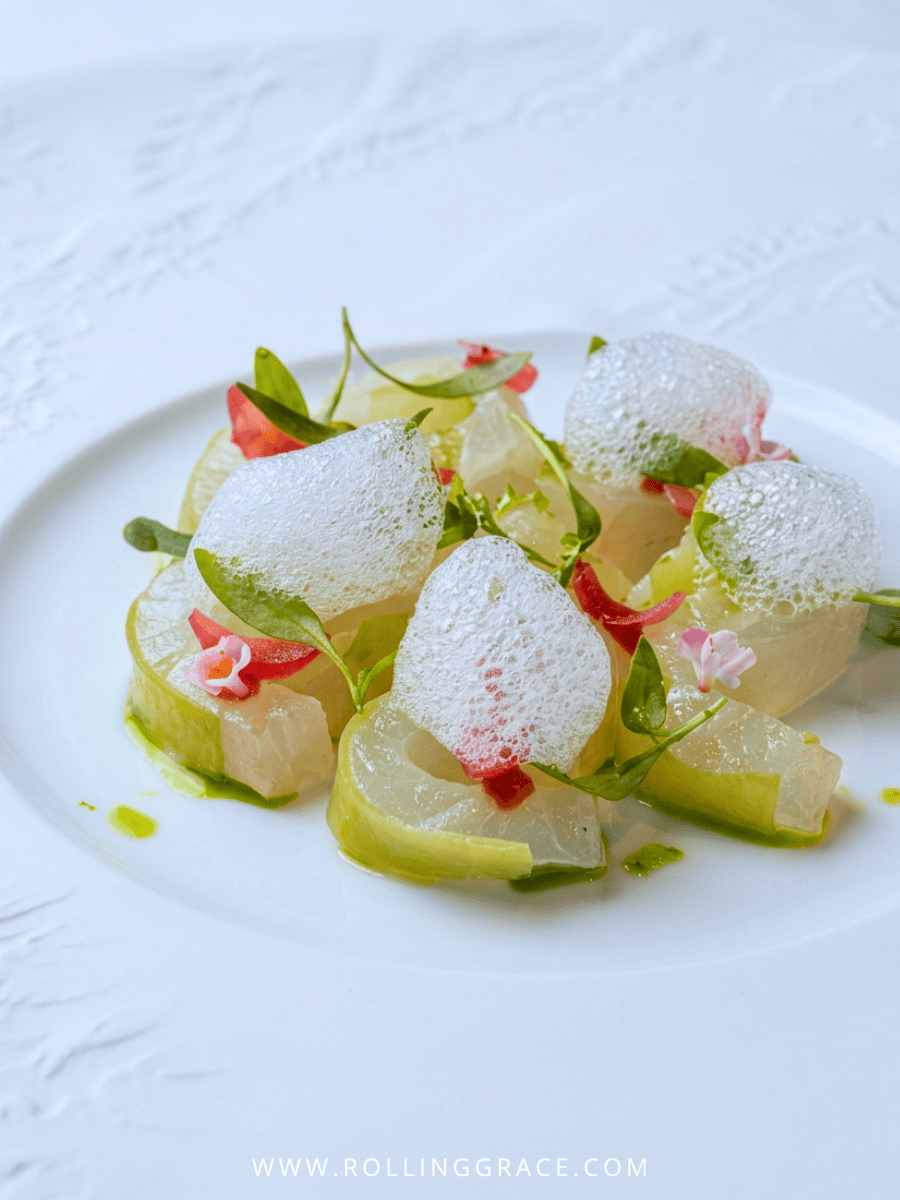
Seasonal Fish, Fish Maw, Green Pea, and Clam Bouillon (¥488)
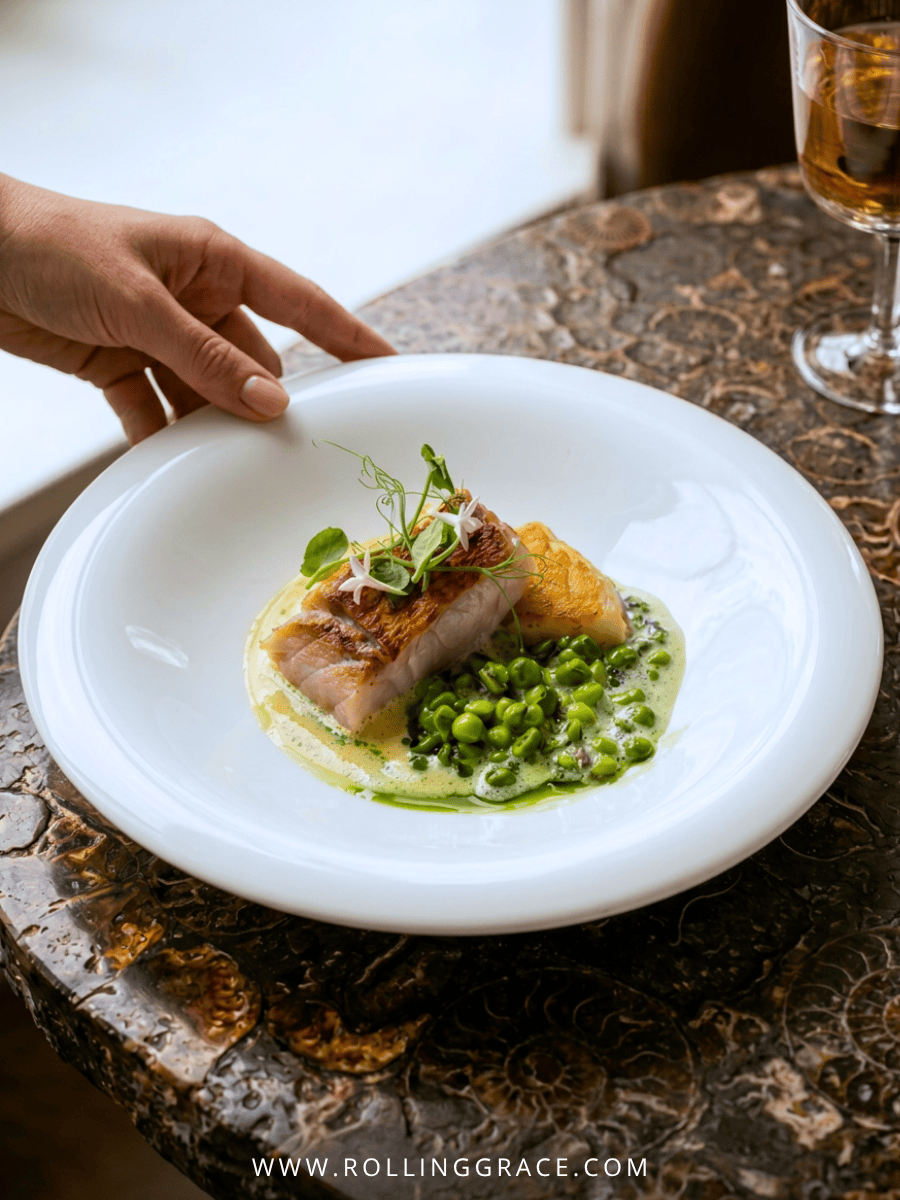
The seasonal fish course is where the Shanghai kitchen’s identity becomes legible. A delicate piece of seasonal white fish is gently poached and laid on a soft purée. Fish maw, hydrated and slow-braised, brings a luxurious gelatinous body to the plate. The composition is finished tableside with a clear clam bouillon, poured from a small glass bowl.
The bouillon is the standout. Deeply savoury with a natural sweetness that comes from long simmering rather than from added sugar. The plate reads French in its precision (the clam stock is built like a classical fumet, the pea purée is silky and buttery) but the use of fish maw is a Chinese fine-dining instinct that a Paris kitchen would not arrive at first.
The result is a course that feels indigenous to neither tradition while honouring both, which is, in many ways, the entire point of what Ortensia Shanghai is doing. As a pescatarian, this was the plate I returned to in my mind for days after.
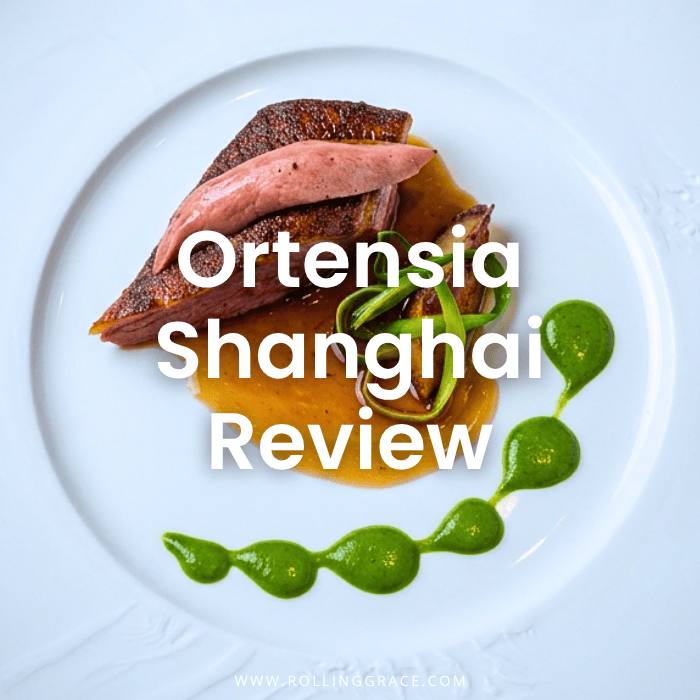
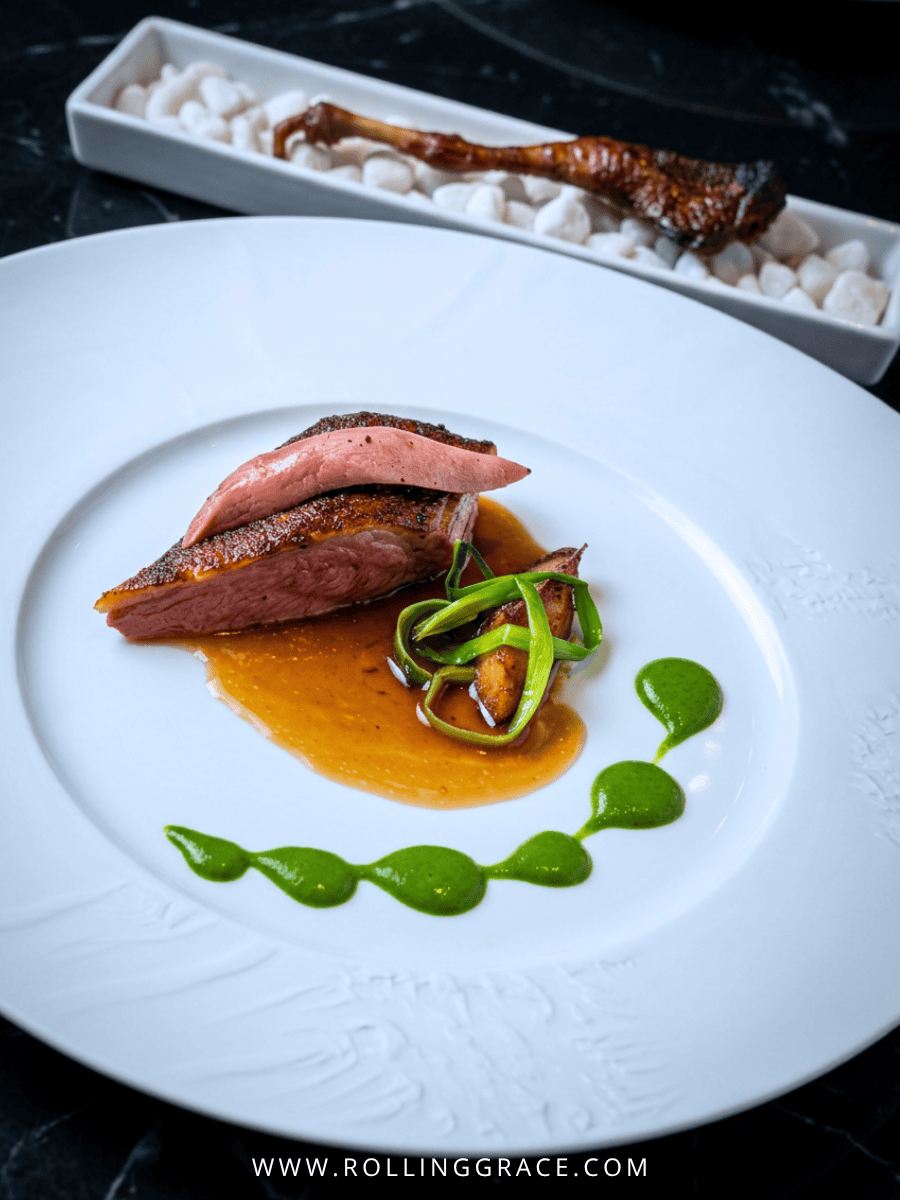
Longjing Green Tea Smoked Pigeon (¥488)
If there is one dish on the Ortensia Shanghai menu that explains the whole project, it is this. The course arrives as a three-part composition on a long ceramic plate: the breast smoked low and slow under Longjing green tea, the pigeon liver hidden inside an eggplant wedge, and the leg cooked separately over charcoal to bring out the meatier, deeper side of the bird.
The team uses Longjing leaves from Hangzhou, China’s most prestigious green tea growing region, and applies the low-temperature smoking method developed in the Paris kitchen for European game birds. The result is a flavour that is unmistakably Chinese in its tea fragrance and unmistakably French in its technical control. The breast keeps a pale pink centre. The skin crackles delicately. The smoke lingers on the palate for a full minute after the bite is gone.
When I asked the team where the Shanghai menu most clearly diverges from Paris, this was the dish they named. The low-temperature smoking technique comes from Paris, but the tea smoke and the local pigeon are pure Shanghai. If you return for one dish à la carte, make it this one.
Ikejime Sea Bream with Kombu and Bergamot (¥358)
The sea bream course is the most overtly Japanese dish on the menu, and the one where Chef Saito’s training is most legible.
The fish is killed using ikejime, the traditional Japanese spike technique that immediately destroys the brain and spinal cord to prevent stress hormones from entering the muscle. The result is firmer flesh, sweeter flavour, and longer shelf life. The kombu used to dry-cure the fish is imported directly from Japan, one of the few ingredients the kitchen flies in deliberately.
The plating is pared back. A neat fillet, a thin glaze, a bergamot reduction that reads as both citrus and floral, and a single seasonal herb garnish. The kombu cure deepens the umami of the bream itself. The bergamot lifts everything with a bright aromatic edge, almost Earl Grey-like in its top note.
This is a course built on absolute technical precision, and it also shows the philosophical case for what Ortensia Shanghai chooses to import: only ingredients that cannot be sourced of equal quality within China.
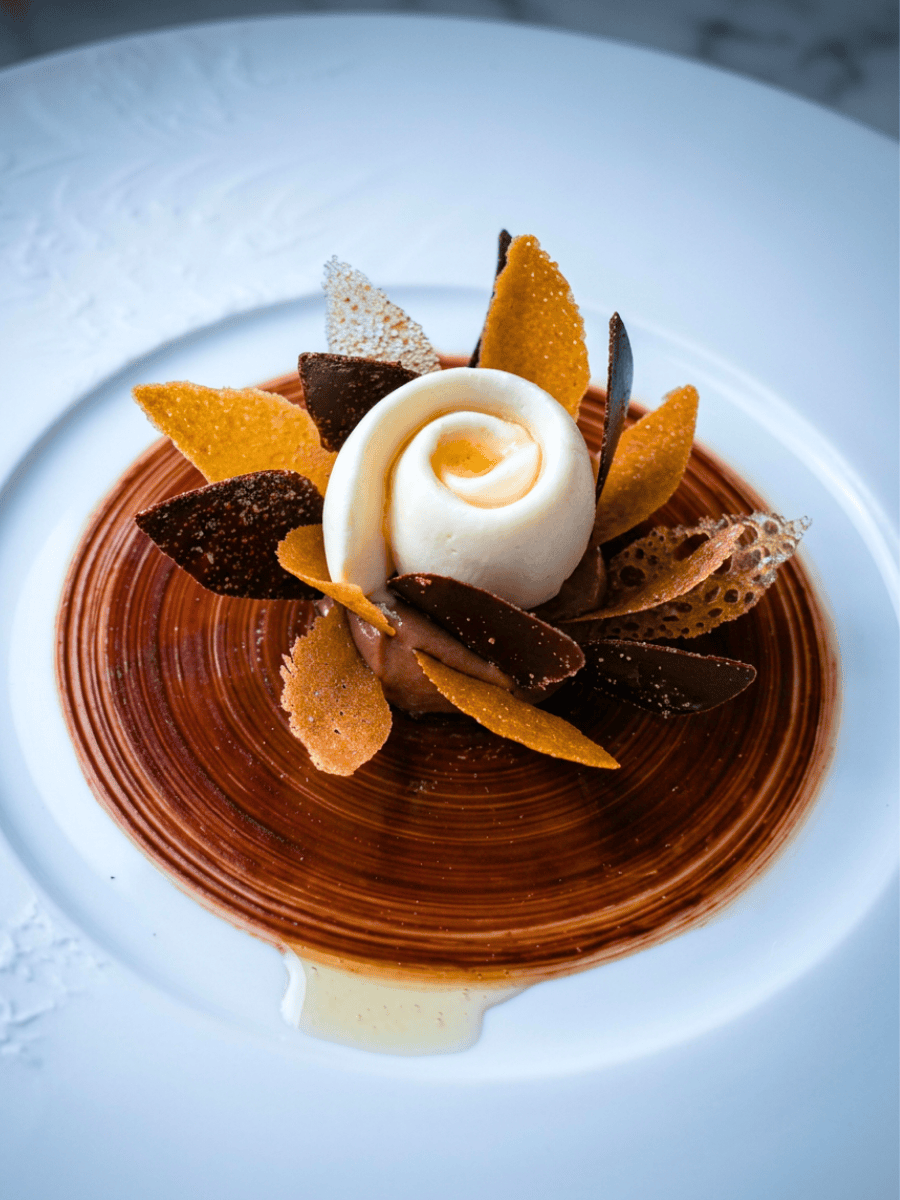
Chocolate and Yellow Wine Dessert
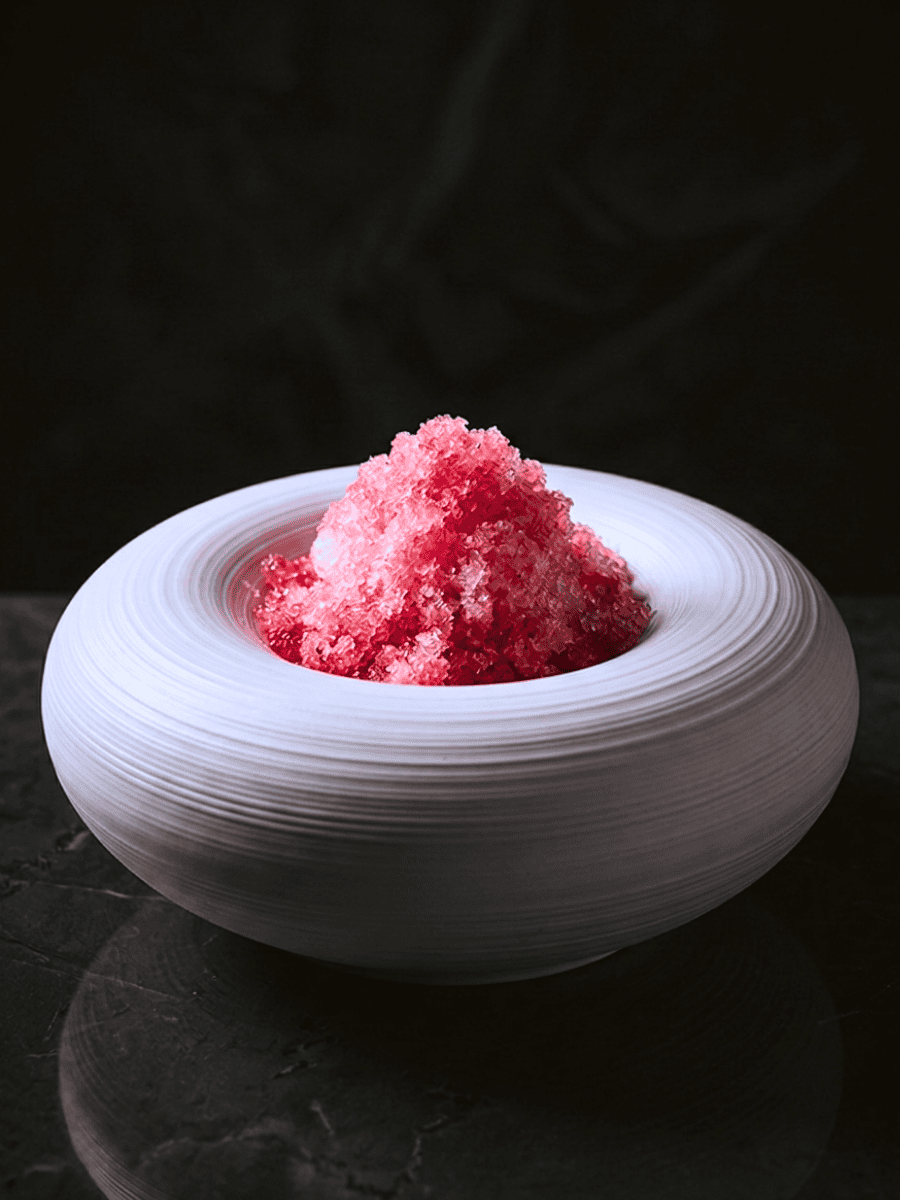
The dessert is a nod toward the drinks side of the house. A ice-cream and chocolate composition is layered with a reduction yellow wine that carries a warm, nutty, faintly caramel aromatic. A small palate-cleansing pre-dessert precedes it. It is the right note to end on after a night spent moving between Paris and China.
Wine Pairing at Ortensia Shanghai
We went in treating wine as a footnote. We left thinking the pairing is close to essential, and here is the honest, slightly complicated reason why.
Ask the Sommelier for the Mystery Box
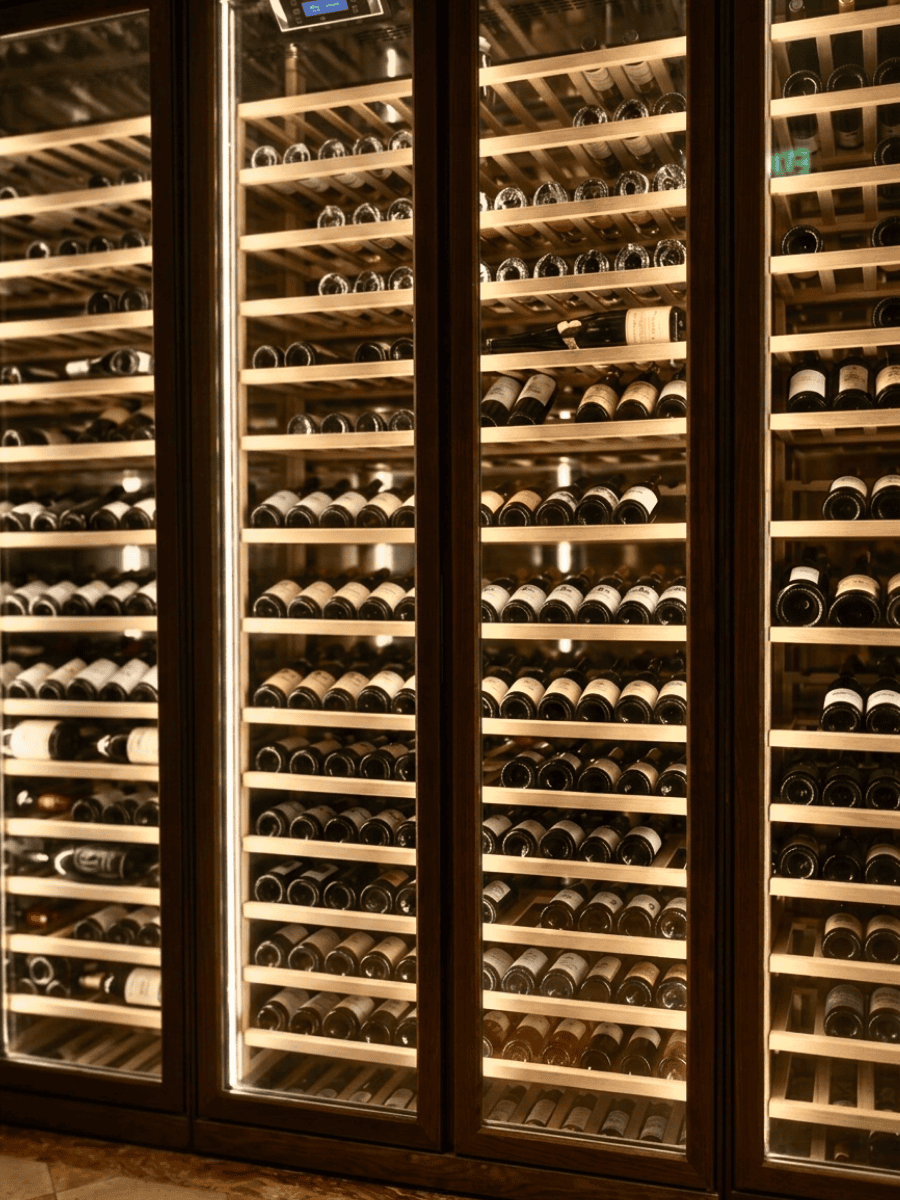
The best way to drink here is to hand over control. Ask the sommelier for the “mystery box” approach: describe your leanings, then let him choose what suits each course. He knows this 400-bottle list far better than any guest will, and the pairings he builds move with the food in a way a static by-the-glass order cannot.
A Nod to Sustainability
For readers who care where their glass comes from, and we do, ask specifically about the biodynamic bottles. The list includes an organic, biodynamic Syrah, a red made with low-intervention farming that suits the smoke of the pigeon and the depth of the beef. Choosing it is the kind of small, deliberate decision that fits a meal already built on thoughtful sourcing.
The White Burgundy Worth Understanding
The sommelier steered us toward a white Burgundy that had gone through malolactic fermentation, which is a secondary fermentation that converts the sharp malic acid in wine, the crisp green-apple bite, into softer, rounder lactic acid, the sensation closer to cream.
It is why many white Burgundies taste broad and buttery instead of tart. Against the clam bouillon and the kombu-cured bream, that rounded texture worked beautifully.
Do Not Skip the Bread
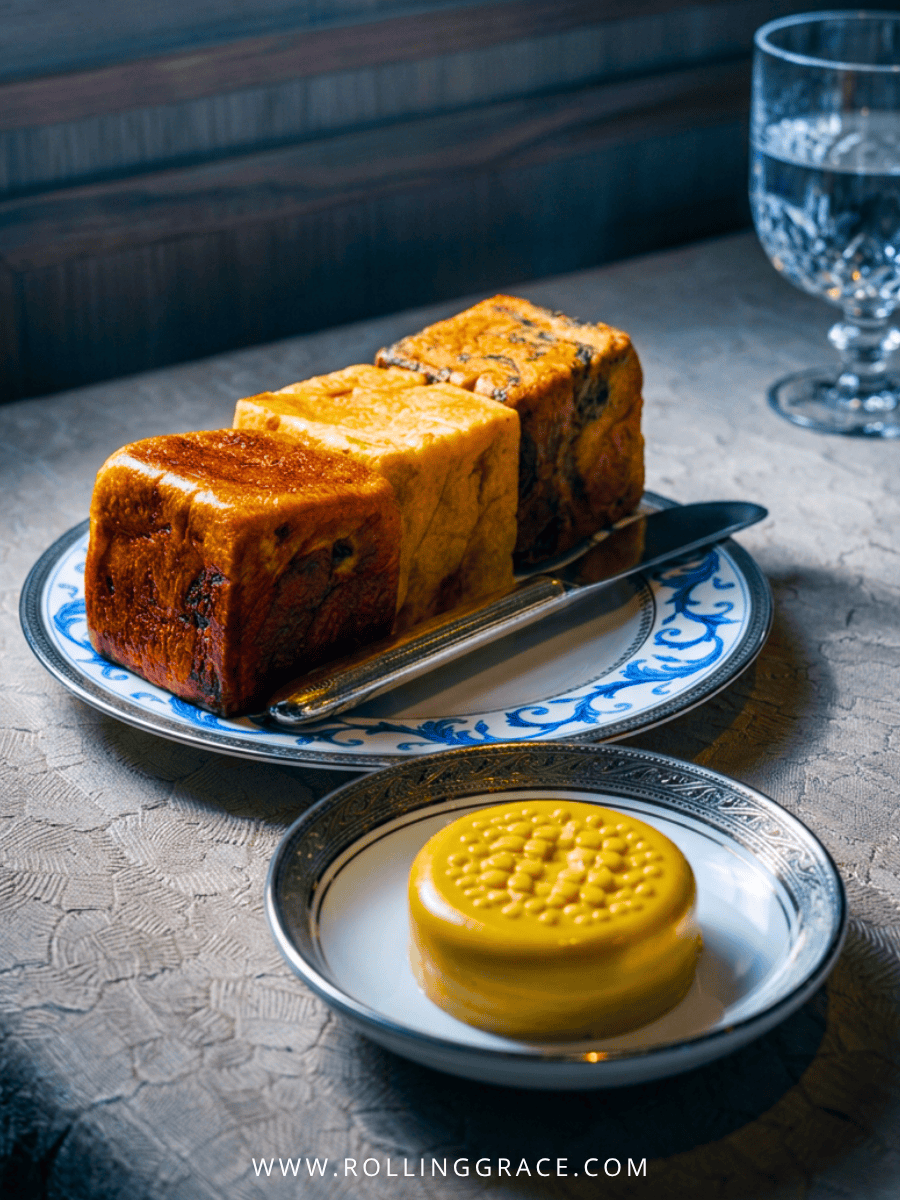
The bread service arrives as three varieties neatly lined up on a tray, each a different loaf, each with a properly crisp, burnish crust giving way to a soft, chewy centre.
Alongside comes a single round of butter, whipped and moulded, deep yellow and rich enough to make you slow down. In a meal engineered to the last amuse, this is where you feel the kitchen’s fundamentals with no theatre attached. Take more than you think you need.
Ortensia Shanghai’s Approach to Sourcing
The kitchen sources premium regional Chinese ingredients for protein, aromatics, and signature dishes, while importing only what cannot be matched within China. The team has personally visited the producers behind their headline ingredients: the caviar farm in Sichuan, the crab fisheries on Yangcheng Lake, and the cattle ranch in Shandong.
Among the local ingredients is seaweed sourced within Shanghai itself, a hyper-local touch on a menu with global reach. The exceptions that get flown in are specific and few: certain French dairy, Japanese kombu, and a short list of citrus varieties. Everything else is bought as locally as the recipe allows.
How Does Ortensia Shanghai Compare to Ortensia Paris?
A year and a half in, the Shanghai kitchen has identified its own strengths against the Paris original. Shanghai excels at ingredient diversity and Asian-flavour fusion, with broader access to seasonal Chinese produce and a tea-smoked, river-crab seasonal menu format that Paris does not run.
Paris still holds the edge in classical French foundational technique, longer-aged charcuterie, and decades of wine cellar depth that includes rare vintage Burgundy.
Executive Chef Terumitsu Saito and Chef de Cuisine Hana Zhou
The two restaurants are designed to be complementary. Executive Chef Terumitsu Saito, who is Japanese and based in Paris, oversees the culinary vision across both cities and visits Shanghai periodically, while Chef de Cuisine Hana Zhou runs the Shanghai kitchen day to day. Close communication between them keeps the brand identity coherent across both cities.
How to Book Ortensia Shanghai
- Address: Ōrtensia Shanghai, Building W14, Zhangyuan, 240 Maoming Bei Lu, Jing’an District, Shanghai
- Tasting menus: ¥1,288 / ¥1,688 / ¥2,288 per person, plus 10% service
- Private rooms: four available, minimum spend around 4,000 RMB lunch and 8,000 RMB dinner
- Booking: reserve at least one to two weeks ahead, especially for weekends and private rooms
- Dietary: fixed set menu, no vegetarian, gluten-free, or lactose-free accommodation, 48 hours’ notice for any request
- Sister concept: Ortensia Patisserie & Café, next door
Best For
Special occasion dinners, anniversaries, and travellers who want to see how French technique is being reinterpreted with Chinese ingredients right now. Go for the wine pairing, and ask the sommelier to lead.
Future of Shanghai Fine Dining
Ortensia Shanghai is part of a broader shift in Shanghai fine dining, where international kitchens are no longer simply opening outposts in the city, they are reshaping their cooking for the local context.
The Shikumen setting matters more than it first appears. By anchoring a Japanese chef’s French restaurant inside a 19th-century Chinese heritage building, the project signals that the next era of Shanghai fine dining will not be about importing European concepts wholesale. It will be about a deeper negotiation between European technique, Asian ingredient terroir, and the cultural memory of the spaces these restaurants choose to occupy.
The Michelin Guide’s expansion into Shanghai in 2017 has accelerated this conversation, with the Guide increasingly recognising kitchens that pair European technical foundations with regional Asian terroir.
Ortensia Shanghai, as the second home of a Paris one-star kitchen, stands squarely within that movement. It is one of the clearest examples of that negotiation in practice right now, and worth seeing in person while the kitchen is still in its formative years.
This review is based on a hosted tasting at Ortensia Shanghai, with insights drawn from interviews with the kitchen team in June 2026. This article focuses exclusively on the food.
Read Next
Planning more of China? Read the complete Rolling Grace China Travel Guide for every destination, food spot, and cultural experience across the country.
Get the good stuff first. Join Rolling Grace for the restaurants worth crossing a city for, the stays worth the upgrade, and the places to go before everyone else. Free, straight to your inbox.
Leave a Reply