Du Fu Thatched Cottage is a replica, built to commemorate the famous Tang Dynasty poet who lived over 1,200 years ago. And still, when you stand in the thatched hut beside Huanhua Creek, read the lines carved into wood on the wall, and look out at the bamboo and the water, something lands.
It is one of the few literary sites in China where the setting explains the work in a way nothing else can.
Read also: 7 Best Things to Do in Emeishan City in Sichuan, China

History of Du Fu Thatched Cottage in Chengdu
Du Fu Thatched Cottage is a 97,000-square-metre museum and park in the western suburbs of Chengdu, Sichuan Province. It marks the site where Du Fu, one of China’s most important poets, built a thatched hut in 759 AD after fleeing the An Lushan Rebellion with his family.
Book 1-day Chengdu Du Fu Thatched Cottage Museum + Dujiangyan Private Tour
He stayed here for nearly four years and wrote more than 240 poems during that time, many of which are now taught in every Chinese school and studied as some of the finest works in the language.
Du Fu is known as the Poet-Sage (诗圣), and his collected works are called the Poetry of History (诗史) for how directly they documented the social and political turmoil of the late Tang Dynasty.


The original cottage is long gone. The site was rediscovered in the Song Dynasty (960 to 1127) and has been rebuilt, expanded, and restored across every major dynasty since.
The two most significant reconstructions came in 1500 and 1811. In 1961, the site was designated a National Key Cultural Relics Protection Unit. It now holds National AAAA Scenic Spot status and National Top Level Museum classification.
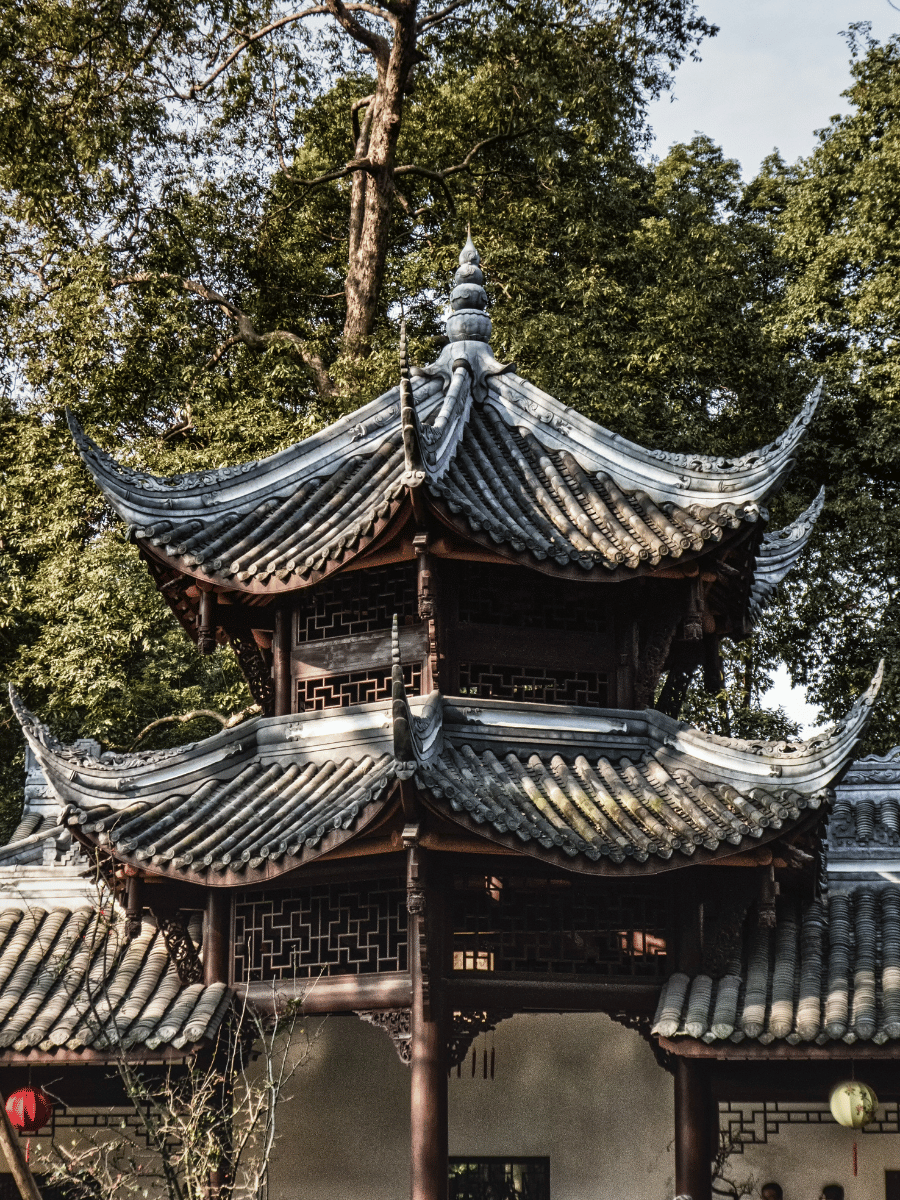
Who Was Du Fu?
Du Fu was born in 712 in Gongyi City, Henan Province. In 746, he travelled to Chang’an (modern-day Xi’an) to take the imperial examination, failed, and remained in the capital for over a decade. When the An Lushan Rebellion erupted in 755 and tore across central China, Du Fu fled southwest with his wife and children, eventually reaching Chengdu in the winter of 759.
With the help of his friend Yan Wu, a local official, Du Fu built a small thatched cottage beside the Huanhua Creek (Flower Bathing Brook) on the western outskirts of the city.
The cottage was simple. The surroundings were not. The creek, the willows, the bamboo, and the mountain light fed his writing, and the nearly four years he spent here produced the most celebrated stretch of his career.
Read also: Ortensia Shanghai: 6 Stunning Dishes at a Shikumen Table

One of his most famous poems from this period, “Song of the Thatched Cottage Broken by Autumn Wind” (茅屋为秋风所破歌), describes the roof being torn off in a storm and his anguish at having nowhere to shelter his family. It became a defining work of Tang Dynasty realist poetry. Du Fu died in 770, aged 58.


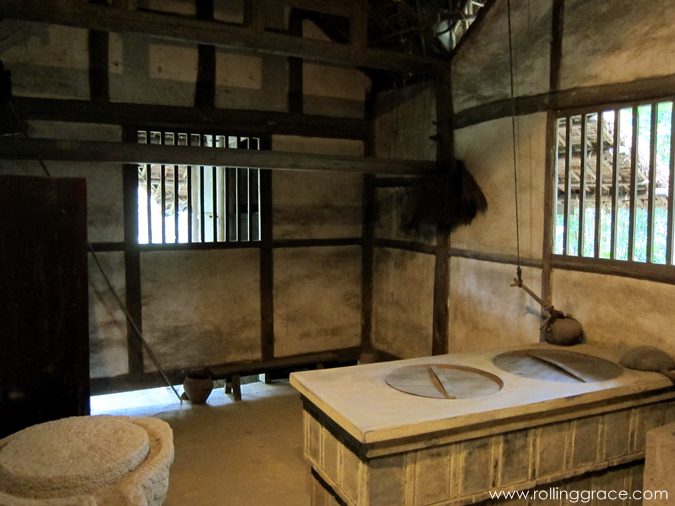
7 Things to See at Du Fu Thatched Cottage Chengdu
The Reconstructed Thatched Cottage
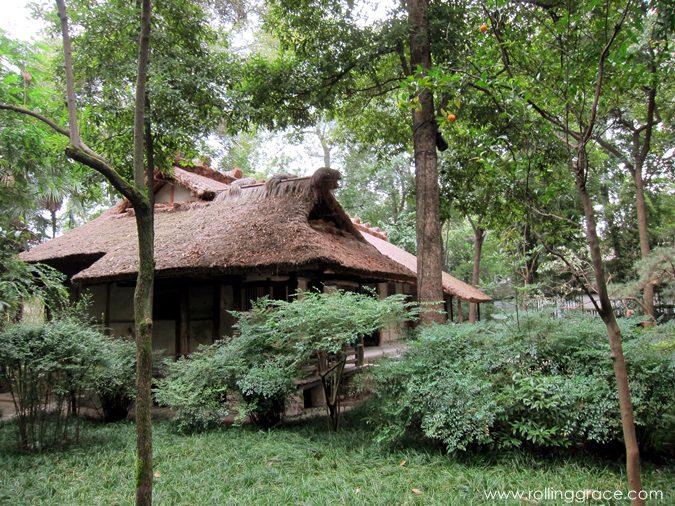
The centrepiece of the museum. The original hut no longer exists, but a reconstruction completed in 1997, based on Du Fu’s poems and Ming Dynasty layout, gives visitors a physical sense of where the poet resided, wrote, and sheltered his family.
Book 1-day Chengdu Du Fu Thatched Cottage Museum + Dujiangyan Private Tour
The cottage is built in the style of western Sichuan civilian residences: yellow mud walls, bamboo fences, and a thatched roof. It is located northeast of the Gongbu Shrine, near the Shaoling Stele Pavilion, within the inner core of the park.
Gongbu Shrine (Ministry of Works Shrine)
Named after Du Fu’s brief appointment as a staff member in the Tang Dynasty’s Ministry of Works (工部), this single-room shrine is one of the oldest surviving elements of the complex.
It features carved pillars, elevated stone steps, and lattice windows. Inside is a memorial tablet of Du Fu at the centre, flanked by statues of Southern Song poet Lu You and Northern Song poet Huang Tingjian.
Read also: Top Attractions and Food in Shangri-La Yunnan, China
Da Ya Tang Hall (Hall of Great Poets)
The main exhibition hall, arranged along the central axis of the complex. The inscribed board “Da Ya Tang” features characters collected from the calligraphy of famous Tang Dynasty calligrapher Yan Zhenqing.
Read also: What to Eat in Chengdu: 8 Great Dishes To Try in Sichuan
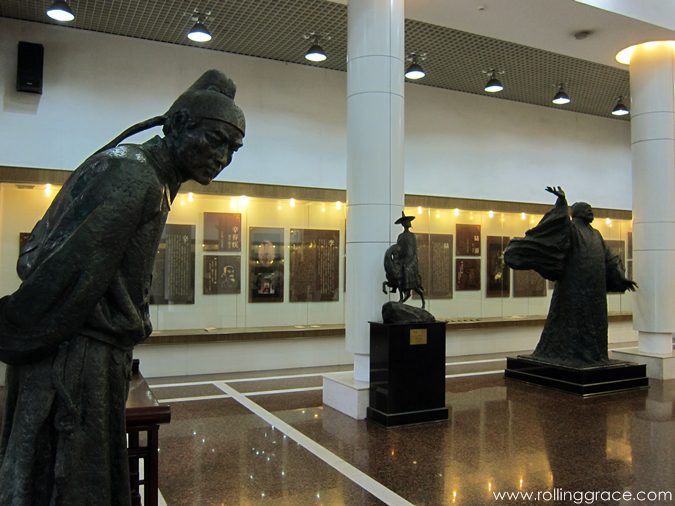
Inside are large coloured-glaze inlaid lacquer murals depicting scenes from Du Fu’s poems and twelve statues of prominent Chinese poets from across the dynasties, including Qu Yuan, Tao Qian, Li Bai, Wang Wei, Su Shi, Li Qingzhao, and Lu You. The hall opened to the public in 2002.
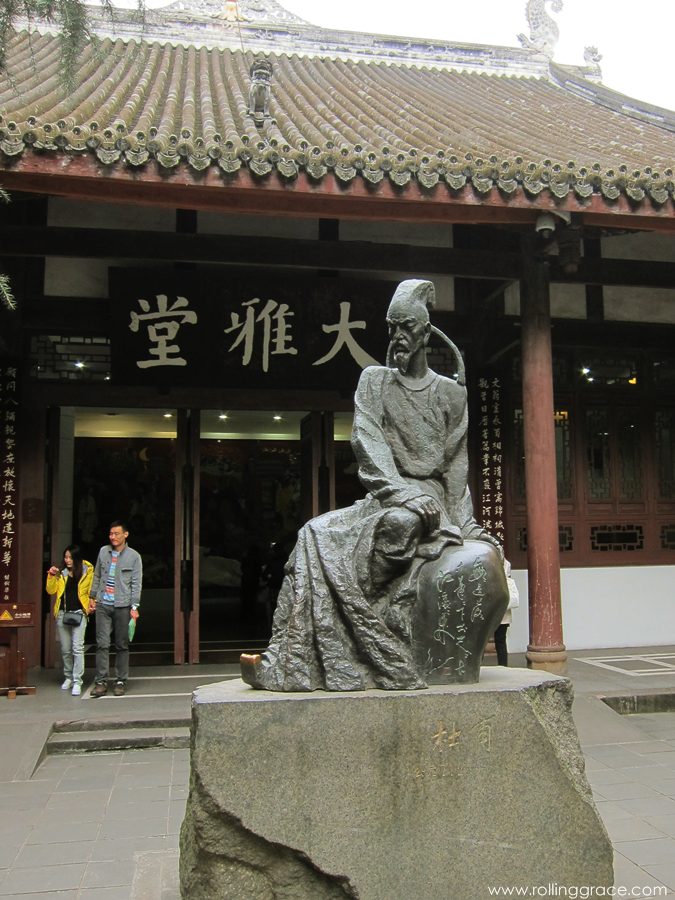
Shaoling Stele Pavilion
A pavilion housing stone stele inscriptions of Du Fu’s poems, carved across multiple dynasties. The pavilion contains a stone stele inscribed with “Shaoling Thatched Cottage” by Prince Guo Yunli and is often regarded as the symbol of the entire complex.
Book 1-day Chengdu Du Fu Thatched Cottage Museum + Dujiangyan Private Tour
The Poetry Stele Corridor adjacent to the pavilion contains additional inscriptions, couplets, and calligraphy from scholars and poets who visited the site over the centuries. This is the most textually dense section of the complex and rewards slow reading.
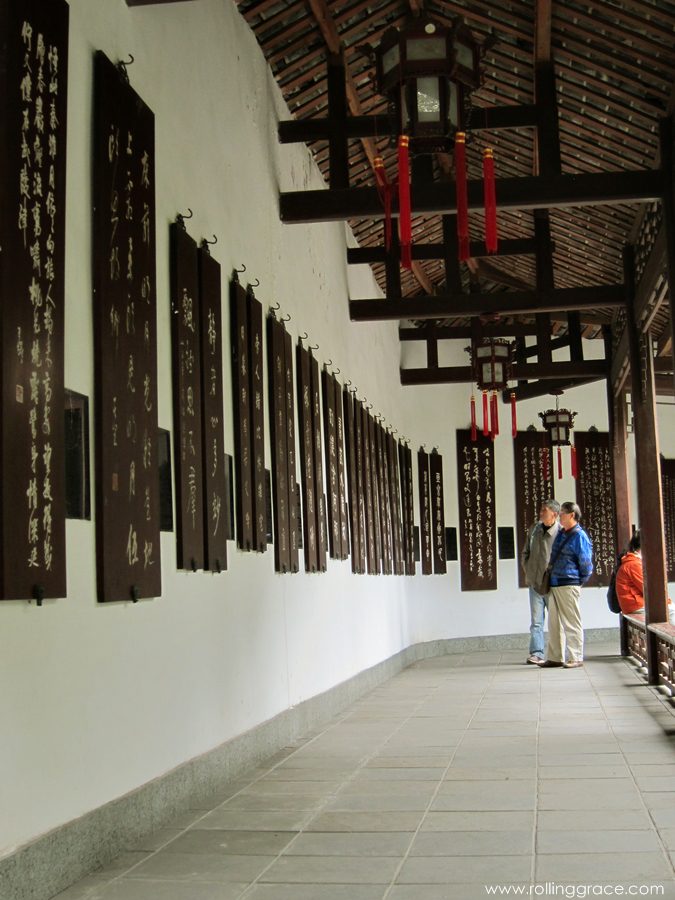
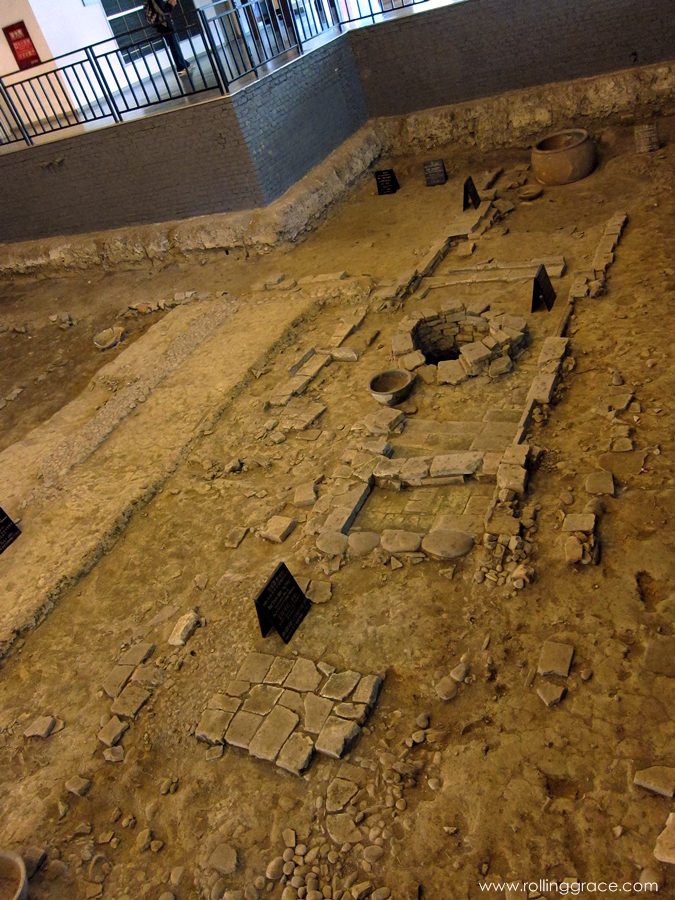
Exhibition Hall of Cultural Relics
Located in the northeast corner of the museum, this hall displays ruins and artefacts from the Tang Dynasty unearthed during excavations on the site.
The finds confirmed that the site was actively used during Du Fu’s lifetime and provided physical evidence linking the current location to the historical cottage.

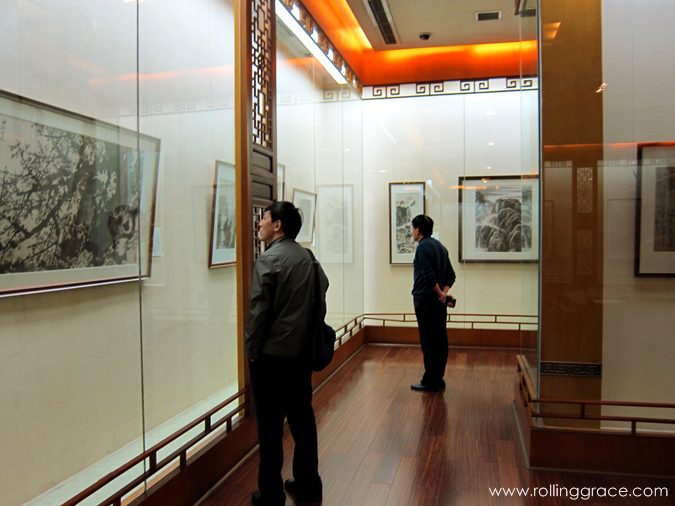
The Gardens and Huanhua Creek
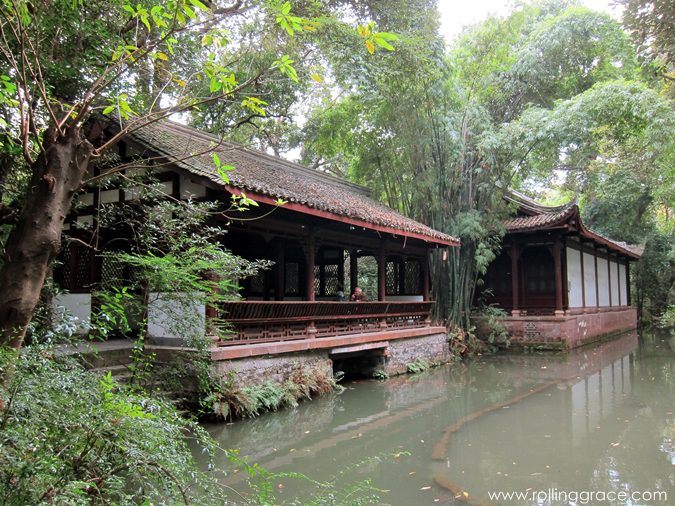
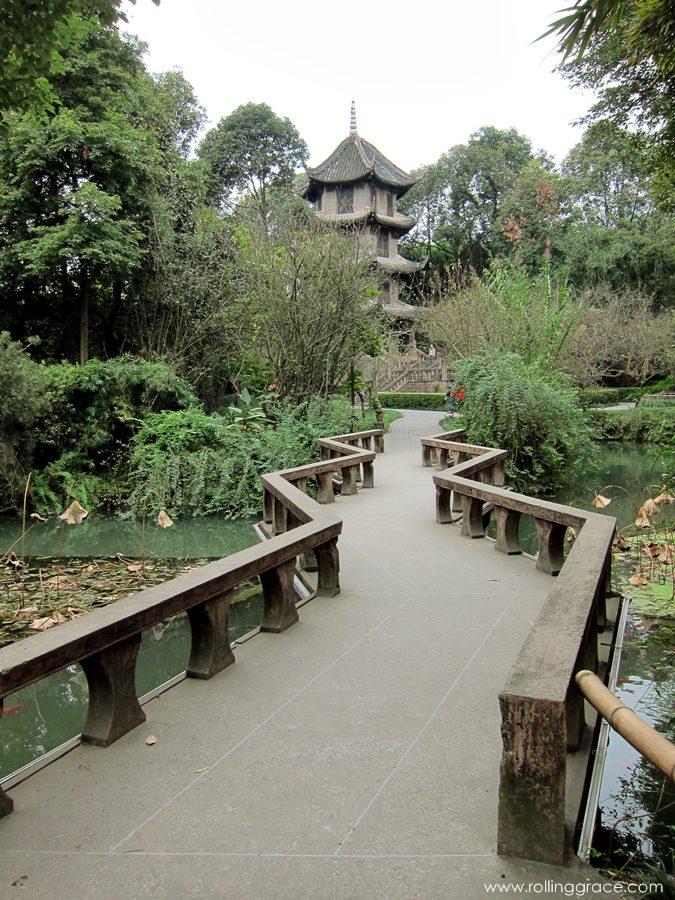
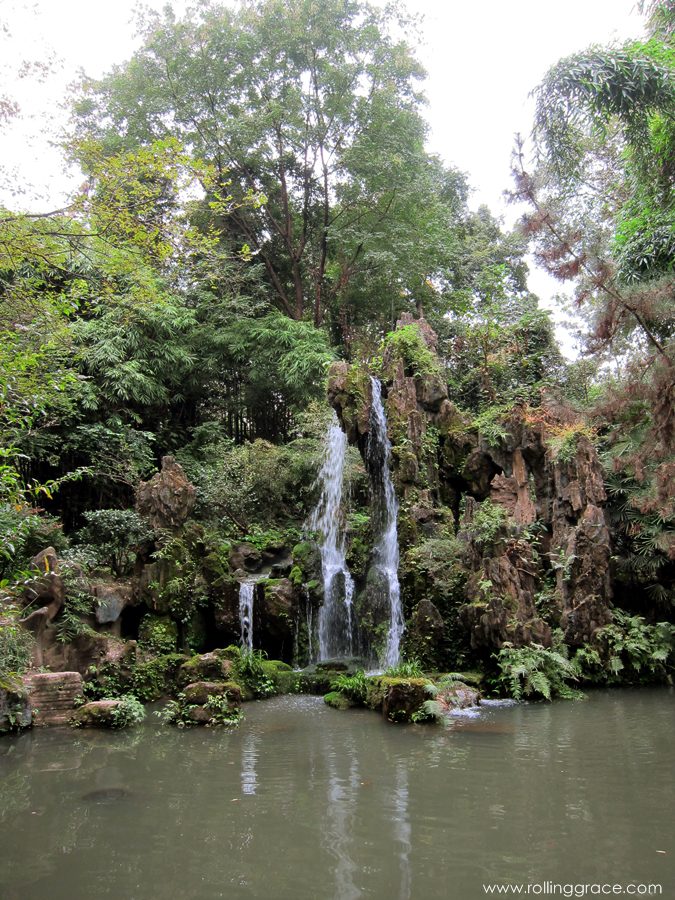
The park surrounding the museum buildings is filled with bamboo, plum trees, ponds, bridges, and pavilions, all following traditional Chinese garden design. Huanhua Creek runs through the property.
This is where Du Fu walked, and the landscape has been deliberately maintained to echo the natural surroundings described in his poems. The park is particularly striking in spring (peach blossoms), autumn (golden ginkgo trees), and winter (plum blossoms). A full loop takes roughly 40 minutes at a slow pace.
Plum Garden and Bonsai Collection
A separate garden area within the park housing a collection of plum trees and an extensive bonsai display. The plum garden is at its best in late winter and early spring when the trees bloom.
The bonsai collection is curated and labelled, and is one of the larger public bonsai displays in Chengdu.
How to Get to Du Fu Thatched Cottage Chengdu
By Metro
Metro Line 4 to Caotang North Road Station, Exit B, then a 10 to 15-minute walk south to the north gate. Metro Line 13 also stops at Du Fu Thatched Cottage Station (Exit C2), a 400-metre walk to the entrance.
Book 1-day Chengdu Du Fu Thatched Cottage Museum + Dujiangyan Private Tour
By Bus
Bus routes 19, 35, 58, 82, 151, 165, and 170 all stop at the Du Fu Thatched Cottage North Gate stop.
By Taxi
From central Chengdu, the drive is approximately 8 kilometres. A taxi or Didi ride takes 15 to 25 minutes depending on traffic.
Du Fu Thatched Cottage Entrance Fee and Opening Hours
| Detail | Information |
|---|---|
| Address | No. 37, Caotang Road (Qinghua Road), Qingyang District, Chengdu, Sichuan |
| Entrance Fee | ¥50 per adult, ¥25 for students with valid ID |
| Free Admission | Seniors aged 60 and above, children under 1.2 metres |
| Opening Hours | 9:00 am to 6:00 pm (ticket sales stop at 5:00 pm) |
| Summer Hours (July to August) | 8:30 am to 6:30 pm (extended to 8:00 pm on Fridays and Saturdays) |
| Recommended Visit Duration | 2 to 3 hours |
Is Du Fu Thatched Cottage Worth Visiting?
If you have any interest in Chinese literature, history, or traditional garden design, yes. It is one of the most important literary heritage sites in China and the single most significant poet’s residence open to the public. The park alone is worth the visit for the bamboo paths, the creek, and the stillness.
Read also: Leshan Giant Buddha: 6 Must-visit Fascinating Attractions
If your time in Chengdu is limited to one or two days and you are choosing between this and the Giant Panda Research Base or the Leshan Giant Buddha, those two are bigger draw cards for first-time visitors. But if you have a third day, Du Fu Thatched Cottage Chengdu is where to spend the morning.
How Does Du Fu Thatched Cottage Fit Into Chengdu’s Cultural Landscape?
Du Fu Thatched Cottage Chengdu is one of three major cultural attractions on the western side of the city, forming a triangle with Qingyang Taoist Temple to the north and Wuhou Shrine (the Three Kingdoms memorial) to the south.
Book 1-day Chengdu Du Fu Thatched Cottage Museum + Dujiangyan Private Tour
All three are within a few kilometres of each other and can be combined into a single day of sightseeing. The Sichuan Museum is also nearby, directly adjacent to Huanhua Stream Park.
For visitors staying in central Chengdu, the western cultural corridor offers the densest concentration of historical sites in the city.
I took Metro Line 4 to Caotang North Road Station on a weekday morning, walked in through the north gate, and did not leave until early afternoon. I had the stele pavilion to myself for ten minutes and spent that time reading poem translations on a bench beside Huanhua Creek with no one else in sight.
Get the good stuff first. Join Rolling Grace for the restaurants worth crossing a city for, the stays worth the upgrade, and the places to go before everyone else. Free, straight to your inbox.
Leave a Reply