You take your shoes off at the entrance, lower yourself onto a cushion on the floor, and a round rattan tray loaded with Burmese pork curry, chilli paste, crispy pork rinds, fried chicken, and sticky rice arrives at knee height. Then the lights drop, a classical Thai orchestra opens up from the far side of the room, and a line of dancers in full Lanna regalia takes the floor.
This is a Khantoke dinner in Chiang Mai, and it is one of those evenings that manages to be both deeply traditional and completely accessible to anyone walking in off the street.
We tried three of the best Khantoke dinner venues in the city, and this is everything you need to know before you book.
Read also: 10 Best Chiang Mai Street Food You Can’t Miss in Thailand

History of Khantoke Dinner in Chiang Mai
A Khantoke dinner is a traditional Lanna dining and performance experience that combines Northern Thai food with classical dance and live music.
The word “Khantoke” refers to the round, pedestal rattan tray on which the food is served. It is not a modern invention for tourists. It is a centuries-old way of eating that dates back to the Lanna Kingdom.
Read also: 12 Best Things to Do in Hua Hin, Thailand for a Perfect Trip
Chiang Mai, whose name translates from Thai as “New City,” was founded on 12 April 1296 by King Mengrai as the capital of the Lanna Kingdom.
Mengrai was the key figure behind the kingdom’s expansion across northern Thailand, and his contributions spanned political alliances, Buddhist patronage, and the proliferation of temples that still define Chiang Mai’s skyline. Over 300 Buddhist temples stand in and around the city today, more than any other city in Thailand.
The Khantoke tradition was a communal way of eating among the Lanna people, used during ceremonies, gatherings, and as a way for hosts to honour guests. The first Khantoke Dinner Show as a formal cultural performance for visitors was created at the Old Chiangmai Cultural Center in 1970, making it one of the longest-running cultural dinner shows in Southeast Asia.
Today, the format has spread to several venues across the city, each offering its own take on the evening.
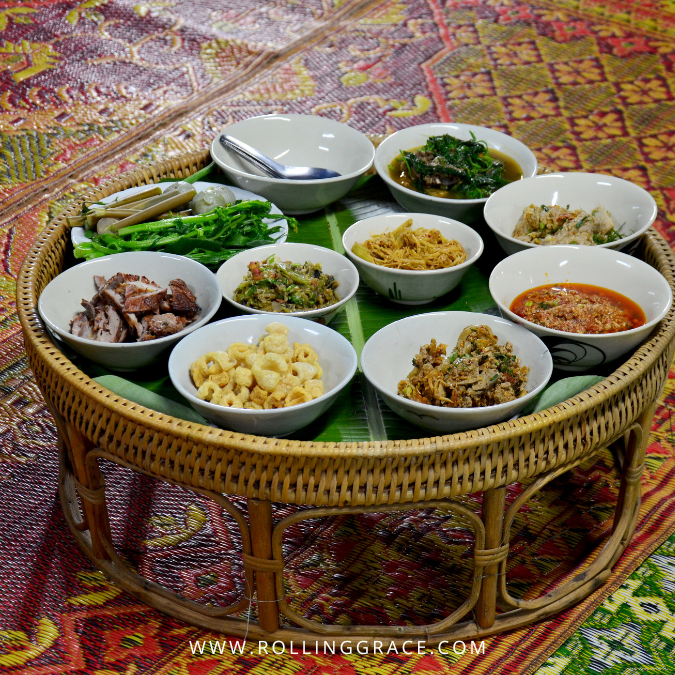
What Food Is Served at a Khantoke Dinner?
The food at a Khantoke dinner is a fixed set of Northern Thai dishes served together on the round tray. Dishes are continuously refilled throughout the evening, so you never run out.
The menu is hearty, spice-forward, and rooted in the mountainous terrain of northern Thailand, where the colder climate shaped a cuisine distinct from the curries and stir-fries of the south.
Read also: Koh Samet Thailand: 8 Best Relaxing Things to Do
Standard dishes include gaeng hung-lay (a rich Burmese-style pork belly curry with ginger, tamarind, and peanuts), nam prik ong (a thick dip of minced pork, tomato, and chilli, eaten with raw vegetables and sticky rice), gai tod (fried chicken), keb moo (deep-fried pork rinds), and paad pugg (stir-fried seasonal vegetables).
Sticky rice is the anchor of the meal and is eaten by hand in the traditional Lanna way. A fork and spoon can be provided on request if you prefer.
Lanna cuisine draws heavily from Burmese, Lao, Yunnanese, and Isan influences. Wild mushrooms, woodland herbs, and preserved meats feature strongly in the regional kitchen, and the food at a Khantoke dinner gives you a concentrated introduction to these flavours in a single sitting.
Most venues offer vegetarian and halal set menus on request. At Khum Khantoke, the halal menu carries an additional charge of THB 50 per person. Drinks, including beer, soft drinks, and whiskey, are available separately and are not included in the base price.

Traditional Fingernail Dance Performances (Fon Lep)
The performance begins after the food is served and runs for approximately 60 to 90 minutes. A classical Thai orchestra opens the evening, and the dances that follow are drawn from Lanna tradition, hill tribe culture, and broader Thai classical forms.
Read also: 6 Best Places to Watch Apsara Dance in Siem Reap, Cambodia
The Fon Lap, or Thai finger dance, is one of the most distinctive Lanna performances. Dancers wear long brass fingernails and move their hands in slow, intricate patterns that catch the light. The precision of the finger work is the point, and it takes years of training to perform at speed without losing control.
The Fon Thiean, or candle dance, sees performers balancing lit candles in both hands while moving through choreographed formations. The effect in a darkened room is striking. The Ram Dab, or sword dance, is more physical, with dancers performing choreographed combat sequences that build in speed and intensity.
The Klong Sabadchai, or Victory Drum performance, is a highlight at Khum Khantoke. Drummers play large barrel drums with increasing tempo, and the energy in the room lifts noticeably. The grand finale at most venues invites the audience to join a Rum Wong, or group dance, on the floor with the performers.
Many of the dances performed at these shows were formalised in the last 150 years, with the most recent created in 1957, but all have their roots in traditional Lanna and Thai dance forms that are centuries older.

3 Best Khantoke Dinner in Chiang Mai
Chiang Mai has several Khantoke dinner venues, but three stand out for the quality of their food, performances, and atmosphere. Each offers a slightly different experience, and all three are worth booking.
Old Chiangmai Cultural Center
The original and the longest-running. The Old Chiangmai Cultural Center created the first Khantoke Dinner Show in 1970 and has been running it continuously for over 50 years.
The venue is set in traditional Lanna architecture with a large indoor performance space, and the evening includes a full Khantoke meal, classical dance performances, hill tribe shows, and drum performances. Stalls selling hill tribe handicrafts line the entrance hall, and a display of traditional Thai house design gives context before the meal begins.
The venue is family-friendly and located roughly 10 minutes from Chiang Mai International Airport, with ample parking. Hotel pickup and drop-off can be arranged through most booking platforms.
- Book Old Chiangmai Cultural Center Lanna Show + Khantoke Set now
- Address: 185/3 Wualai Road, Haiya, Muang, Chiang Mai
Khum Khantoke
Khum Khantoke is the most visually impressive of the three venues, set in a large Lanna-themed complex beside Payap University on the Chiang Mai-Lampang Superhighway. The architecture is warm-toned, lit by candles and lanterns, and the open-air performance area gives the evening a more atmospheric feel than an indoor setting.
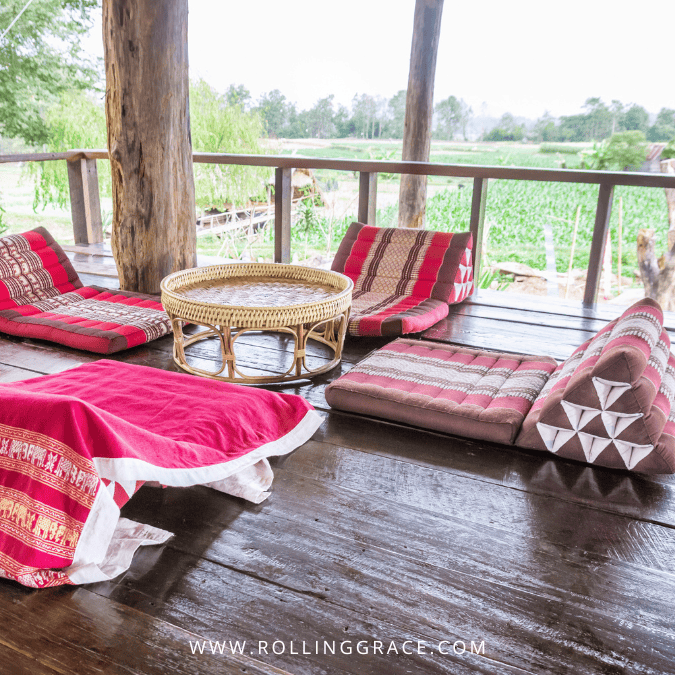
Guests can choose between traditional floor seating on cushions or standard table-and-chair seating. The food is served on the traditional Khantoke tray with continuous refills, and the performance includes dances from all four regions of Thailand alongside Northern Thai and hill tribe performances. Normal, vegetarian, and halal set menus are available.
- Book Khum Khantoke Chiang Mai Cultural Performance Show
- Address: 139 Moo 4, Superhighway Chiang Mai-Lampang Road, Nong Pah Krang, Chiang Mai
Sibsongpanna Khantoke Dinner in Chiang Mai
Sibsongpanna is the smaller, less commercial option and appeals to visitors who prefer a more intimate setting.
The venue is in the Sutep area, closer to the old town, and the atmosphere is more low-key than the larger venues. The Khantoke tray menu and traditional performances follow the same format, but the scale is smaller and the crowd thinner.
- Reserve your seat for Sibsongpanna Khantoke
- Address: 66/2 Moo 10, T. Sutep, A. Muang, Chiang Mai 50200
How Much Does a Khantoke Dinner Cost?
Prices vary by venue and booking platform. At Khum Khantoke, the standard adult ticket starts from approximately THB 690 per person for dinner and show without transport. Children’s tickets are available at reduced rates at all venues.
At the Old Chiangmai Cultural Center, show-only tickets (without food) start from approximately THB 490 per person. Full dinner-and-show packages are available through booking platforms from around THB 450 to 1,150 per person depending on inclusions and transport.
Round-trip hotel transfers are available at most venues for an additional THB 150 to 250 per person. Drinks are not included in any standard package and are purchased separately at the venue.
Show times are typically 7:00 PM to 8:30 PM or 7:30 PM to 9:00 PM depending on the venue. Doors open 30 to 60 minutes before the show.

Visitor Tips for Khantoke Dinner in Chiang Mai
Remove your shoes before entering the dining area. All venues enforce this. Wear clothing that is easy to move in, as you will be seated on the floor for up to two hours if you choose traditional seating. Table-and-chair seating is available at most venues for guests who prefer it.
Dress respectfully. While there is no formal dress code, shorts and singlets are not ideal. Light, covering clothing is appropriate.
The food is continuously refilled, so eat at your pace and ask for more of anything you want. Eating with your fingers is traditional and encouraged, particularly with the sticky rice and nam prik ong, but cutlery is available on request.
Book at least one day in advance during high season (November to February). Walk-ins are sometimes possible on weekday evenings but not guaranteed. Most venues accept both online bookings and direct reservations by phone.
Get the good stuff first. Join Rolling Grace for the restaurants worth crossing a city for, the stays worth the upgrade, and the places to go before everyone else. Free, straight to your inbox.
Leave a Reply