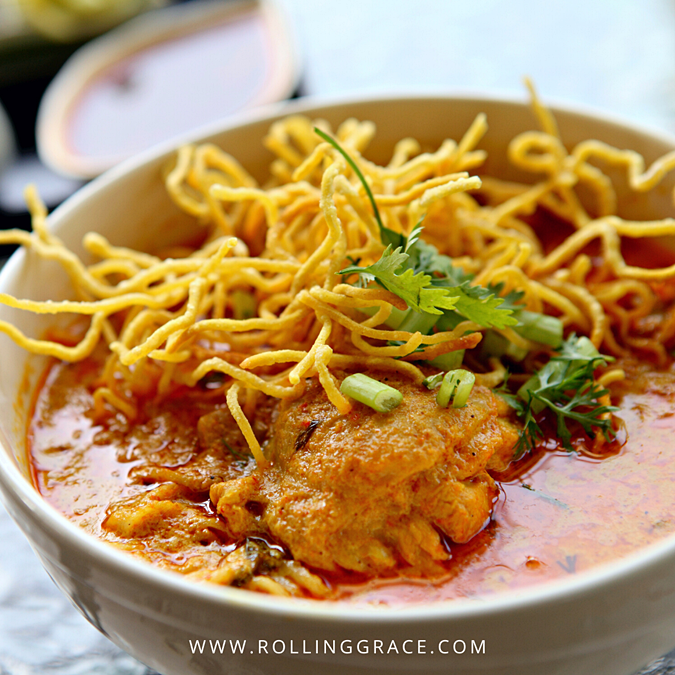
The bowl of khao soi at Khao Soi Samerjai arrived with a crown of fried noodles balanced on top, the curry underneath thick enough to coat the back of a spoon, and the drumstick so tender it pulled apart without resistance. It cost 50 baht.
That was the moment I stopped comparing Chiang Mai to Bangkok and started understanding it on its own terms.
Read also: 6 Best Vegetarian Thai Dishes You Must Try
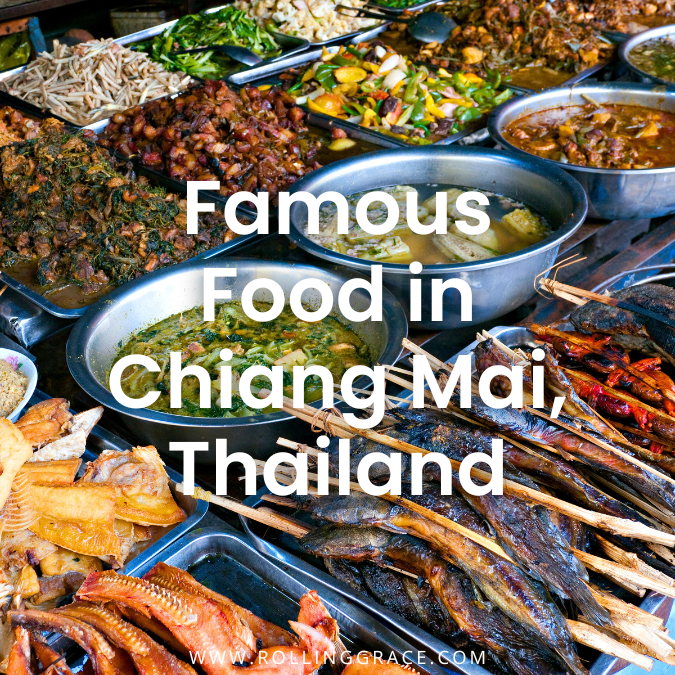
Isaan Food in Chiang Mai
Chiang Mai’s street food is not Bangkok’s street food cooked further north. It is a different kitchen entirely. The city was the capital of the Lanna Kingdom for over 700 years, and that history left behind a cuisine built on herbaceous pastes, fermented proteins, charcoal grilling, and dips that hit every flavour register at once.
The curries here are milder and more fragrant than their southern counterparts. Coconut milk appears less often. Fermented fish, dried chillies, and fresh turmeric do most of the heavy lifting.
Night markets are the main stage for Chiang Mai street food. The Sunday Walking Street along Ratchadamnoen Road, the Saturday Night Market on Wualai Road, and the Chang Puak Gate evening market are the three essential stops.
But the best stalls are scattered across the city, tucked into side streets and morning markets where the crowds are local and the prices have not adjusted for tourism.
For the full picture on planning your trip, see our Thailand Travel Guide.
Khao Soi
Khao soi is Chiang Mai’s signature dish, and the one most visitors come looking for. It is a coconut curry noodle soup built on a base of red curry paste, coconut milk, chilli, and soy sauce. The curry is thick, rich, and slightly sweet, ladled over soft egg noodles with a portion of crispy fried noodles placed on top for contrast. The protein is usually a slow-cooked chicken drumstick, though beef and pork versions exist.
The combination of soft noodles, crunchy fried noodles, and the creamy, spiced curry gives you three textures in every bite. Pickled mustard greens, sliced shallots, and a squeeze of lime are served on the side to cut through the richness. It is heavy, warming, and deeply satisfying.
Khao Soi Samerjai (91 Charoenrat Road, near Wat Fa Ham) is a local favourite. Khao Soi Khun Yai in the Old City is another strong option. Expect to pay 40 to 60 baht per bowl. It is one of the most sought after Chiang Mai street food experiences, known for its steady appeal among locals and visitors.
Sai Oua
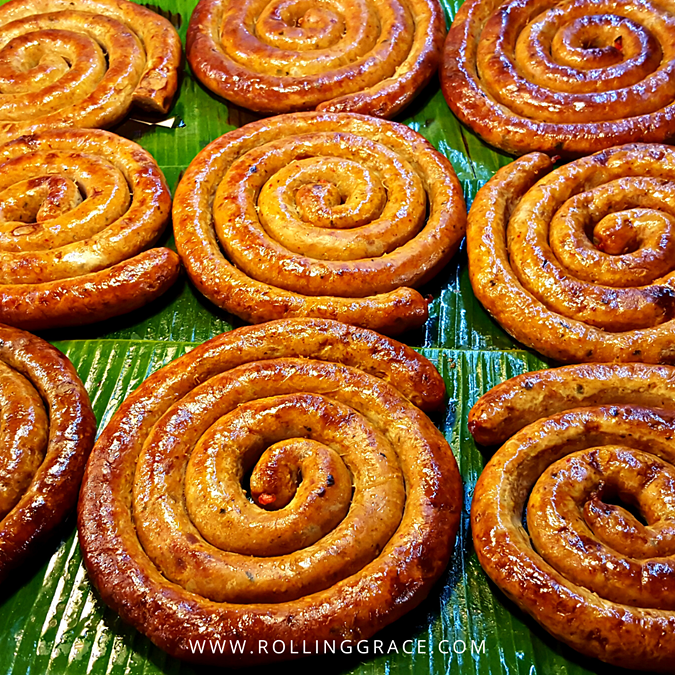
Sai oua is a grilled northern Thai sausage made from ground pork mixed with a paste of lemongrass, coriander root, shallots, chilli, galangal, kaffir lime leaves, and fresh turmeric. The sausage is stuffed into a natural casing, coiled, and grilled over charcoal until the skin blisters and the fat renders.
Every bite delivers a concentrated hit of the Lanna spice palette. The herbs are not subtle. Lemongrass and galangal dominate the foreground, with kaffir lime and turmeric filling in behind. The sausage is sold sliced into rounds at market stalls and is best eaten warm, straight off the grill, with sticky rice and a cold beer.
Warorot Market (Kad Luang) and the Saturday Night Market on Wualai Road both have reliable sai oua vendors. It stands out within Chiang Mai street food as a popular stop, often included in evening food trails.
Nam Prik Noom
A northern Thai green chilli dip made from roasted green chillies, garlic, and shallots, pounded together and seasoned with fish sauce, palm sugar, and lime juice. The chillies are charred over an open flame before being peeled and pounded, which gives the dip a smoky depth beneath the heat.
Nam prik noom is a condiment and a main event at the same time. It is typically served with kaeb moo (crispy pork rinds), raw vegetables, and sticky rice. The combination of the dip’s smoky heat, the crunch of the pork rinds, and the neutral stickiness of the rice is one of the most complete flavour experiences in Chiang Mai street food.
It is a well-frequented name in Chiang Mai street food, drawing consistent foodies from around the world.

Sai Krok Isan
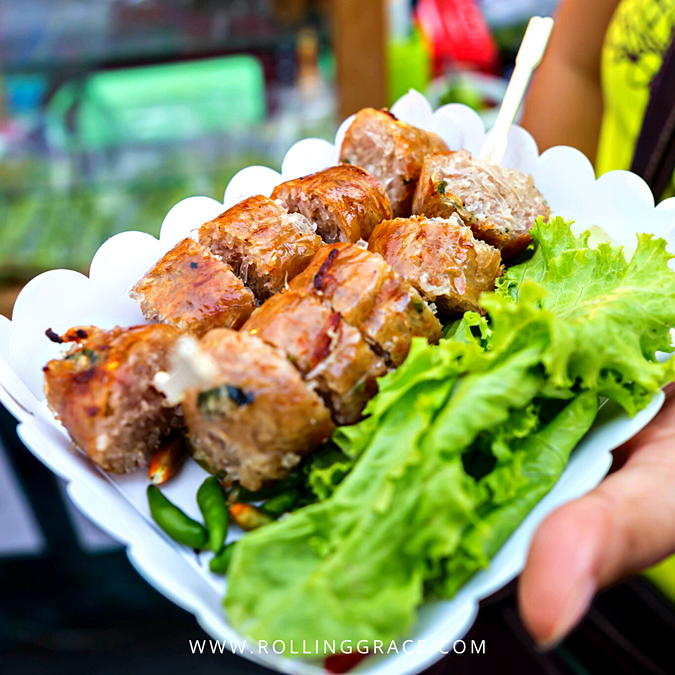
Fermented sausages from Thailand’s northeast (Isan region), made from a mixture of pork and cooked rice that is left to ferment for several days until the sausage develops a sour, tangy flavour. The sausages are grilled over charcoal until the casing is crisp and the inside is warm and slightly funky.
The sourness of the fermented rice combined with the garlic and salt in the pork creates a flavour profile that is addictive and unlike any other sausage. Sai krok isan is served with raw bird’s eye chillies, slices of fresh ginger, and raw cabbage leaves. It is the kind of snack that pairs dangerously well with beer.
Kaeb Moo
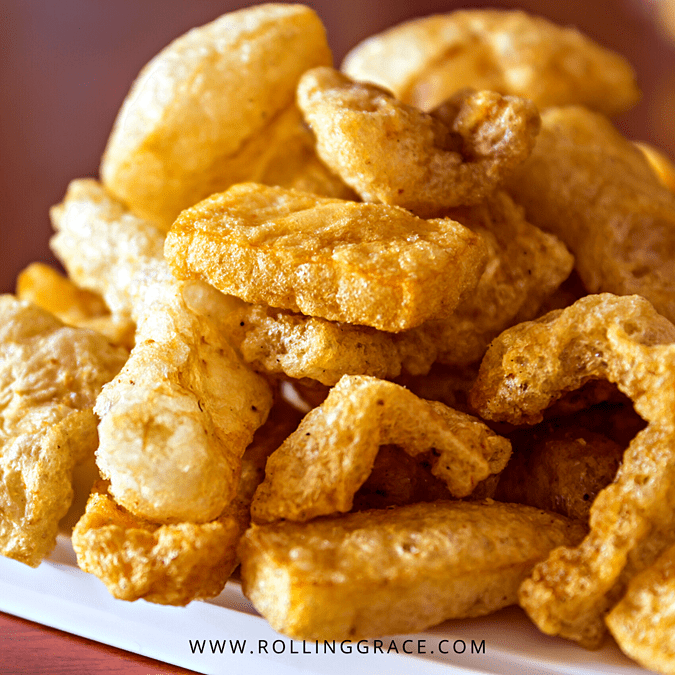
Deep-fried pork rinds. The skin is seasoned with salt, garlic, and sometimes cloves before being submerged in hot oil until it puffs into golden, aerated shards of crispy fat.
Kaeb moo is Chiang Mai’s most versatile snack. Eat it plain as a bar snack with beer. Dip it into nam prik noom or nam prik ong (a minced pork and tomato relish). Crumble it into soups for textural contrast. It is sold by weight at market stalls, scooped into bags, and is cheap enough to buy on impulse. The best kaeb moo is still warm from the fryer, with a thin layer of fat clinging to the underside of the skin.
It remains a trusted choice within Chiang Mai street food, especially for those exploring the old city.
Kaeng Khanun
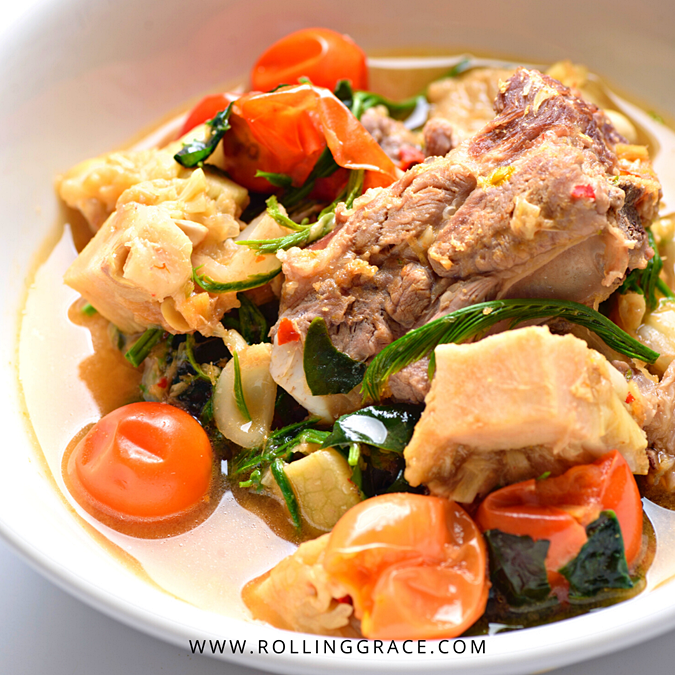
A northern Thai curry made with young, unripe jackfruit cooked in a spiced broth with pork, cherry tomatoes, and kaffir lime leaves. The jackfruit is used before it ripens, when its flesh is firm and savoury rather than sweet.
Kaeng khanun is a dish that surprises people who associate jackfruit with sweetness. The unripe fruit absorbs the curry paste and takes on a meaty, fibrous texture that works alongside the pork. The broth is lighter than a coconut curry, with a tamarind tang and herbal backbone.
It is not widely known outside of Chiang Mai and is worth seeking out at local restaurants and market stalls that specialise in Lanna food. The dish is regarded as a favourite within Chiang Mai street food, appreciated for its familiarity and ease.
Miang Kham
A one-bite wrap made by filling a wild betel leaf (cha plu) with a selection of ingredients: diced shallots, roasted peanuts, dried shrimp, chillies, toasted coconut, cubes of lime (skin and all), and sliced ginger. A sweet, salty, fishy sauce is drizzled over the top before the leaf is folded and eaten in a single mouthful.
Miang kham delivers sweet, sour, salty, spicy, bitter, and crunchy all at once. It is one of the most texturally complex bites in Thai cuisine. Each ingredient is distinct, and the betel leaf ties them together with a peppery, slightly bitter note. It is typically sold at markets with the ingredients pre-arranged on a tray, ready for you to assemble your own wraps.
It is a widely visited highlight in Chiang Mai street food, often recommended by those familiar with the local scene.

Kaeng Hang Lei
A Burmese-influenced pork belly curry cooked with turmeric, garlic, ginger, tamarind, and a paste of dried spices. The pork belly is cut into thick chunks and braised until the fat is soft and yielding, and the sauce is dark, rich, and slightly sweet from the tamarind.
Kaeng hang lei is a bridge between Burmese and Thai cooking traditions, which makes sense given Chiang Mai’s proximity to Myanmar. The curry has a warmth and depth that is different from standard Thai curries. It is less sharp, more aromatic, and rewards slow eating. Serve it over steamed jasmine rice and let the sauce do the talking.

Aeb Pla
Fish fillets mixed with a paste of fresh herbs and spices, wrapped tightly in banana leaves, and grilled over hot charcoal. The banana leaf package traps the steam and the aromatics inside, and the parcel is opened at the table.
The grilling method is the whole point. The banana leaf chars on the outside while the fish steams in its own juices and the herb paste inside. The result is moist, fragrant, and deeply smoky. Unwrapping the parcel is part of the experience. Aeb pla is common at evening markets and local restaurants, and holds a strong reputation within Chiang Mai street food, attracting both repeat and first-time visitors.

Kaeng Pak Wan Kai Mode Daeng
An ant egg soup. The broth is built from pak wan (a local leafy vegetable with a mild, sweet flavour), glass noodles, and red ant eggs, which burst gently between the teeth and release a faintly sweet, almost nutty flavour. The soup is seasoned lightly and served hot.
This is the dish that separates the adventurous from the cautious. The ant eggs are not a gimmick. They add a genuine textural element, popping softly and contributing a clean, protein-rich flavour that is difficult to compare to anything else. The soup itself is mild and herbaceous, and the ant eggs elevate it into something memorable. It is not available at every stall, but specialist Lanna food vendors at markets and local restaurants in the Old City carry it.
It is a go-to option within Chiang Mai street food, particularly popular with travellers visiting the region for the first time.

Where to Find the Best Chiang Mai Street Food
Night Markets
The Sunday Walking Street along Ratchadamnoen Road is the largest and busiest, stretching from Tha Pae Gate to Wat Phra Singh. The Saturday Night Market on Wualai Road is smaller but less crowded, with a stronger focus on local food. Chang Puak Gate evening market is the most food-focused of the three, with stalls opening from around 5pm.
Morning and Day Markets
Warorot Market (Kad Luang) is the city’s oldest and most established market, with a ground floor dedicated to cooked food, dried goods, and fresh produce. Ton Lamyai Market, next door, sells flowers and fruit. Both are best visited before noon.
Street Stalls
The best individual stalls are scattered across the city. Look for crowds of locals, high turnover, and food cooked to order. Side streets around Chiang Mai University and the Nimmanhaemin area have strong clusters of affordable stalls.
Frequently Asked Questions on Chiang Mai Street Food
What is the most famous Chiang Mai street food?
Khao soi. It is the dish most closely associated with the city and the one most visitors prioritise. Sai oua (grilled sausage) and kaeb moo (pork rinds) are close behind. It is a recognised name within Chiang Mai street food, known for its consistent presence in local recommendations.
Is Chiang Mai street food spicy?
Northern Thai food is generally milder than southern Thai cuisine. The curries and soups tend to be fragrant and herbaceous rather than aggressively spicy.
However, the chilli dips (nam prik) and fermented sausages can carry significant heat. Most dishes come with condiments on the side, so you can adjust to your preference.
How much does street food cost in Chiang Mai?
Most dishes cost between 30 and 70 baht (roughly USD 0.85 to USD 2). A full meal with a drink rarely exceeds 100 baht. Chiang Mai is one of the most affordable cities in Southeast Asia for eating out.
Is Chiang Mai street food safe to eat?
Yes, provided you apply standard precautions. Eat at stalls with high turnover and food cooked to order. Avoid dishes that have been sitting out for extended periods. Drink bottled water. Most travellers eat street food in Chiang Mai without any issues.
What night market is best for street food in Chiang Mai?
Chang Puak Gate evening market is the most food-focused. The Sunday and Saturday night markets are larger but split between food, crafts, and shopping. For a pure eating experience, Chang Puak Gate is the best starting point.
This guide is based on multiple visits to Chiang Mai between 2023 and early 2026, with all dishes tried at street stalls, markets, and local restaurants across the city.
Get the good stuff first. Join Rolling Grace for the restaurants worth crossing a city for, the stays worth the upgrade, and the places to go before everyone else. Free, straight to your inbox.
Leave a Reply