The best things to do in Yogyakarta, known to Indonesians as Jogja, span two UNESCO World Heritage Sites, a royal court that has run since 1755 and the slopes of Mount Merapi, one of the most active volcanoes in Indonesia.
This guide covers nine places worth your time, from the city centre to the temple plains and the volcano, with directions, opening hours and entrance fee for each.
Read also: Nasi Campur in Indonesia: 4 Facts On This Culinary Classic
Things to Do in Yogyakarta City Centre
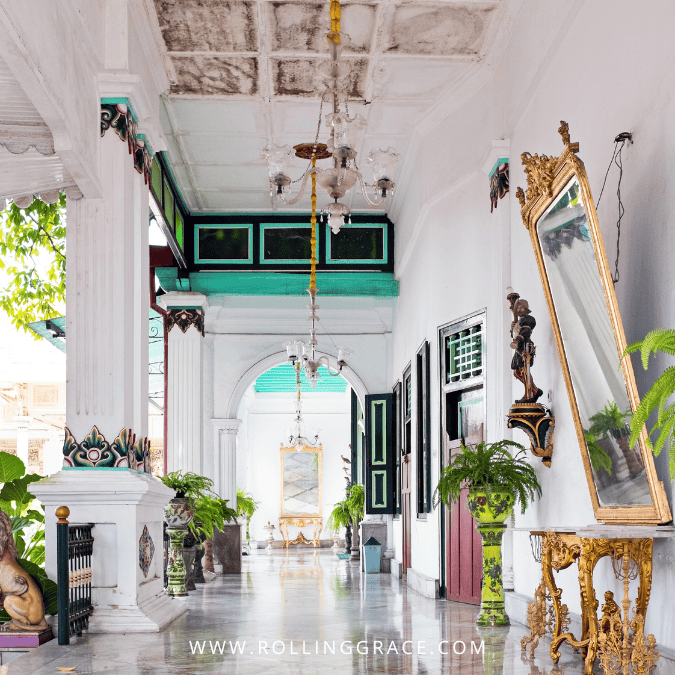
Kraton Ngayogyakarta Hadiningrat
The Kraton is the palace of the Sultan of Yogyakarta, built from 1755 after the Treaty of Giyanti split the kingdom of Mataram in two.
It remains the home of the royal family, and the Sultan also serves as governor of the Yogyakarta Special Region, the only hereditary head of a province in Indonesia.
Buy tickets to Keraton Ngayogyakarta Hadiningrat
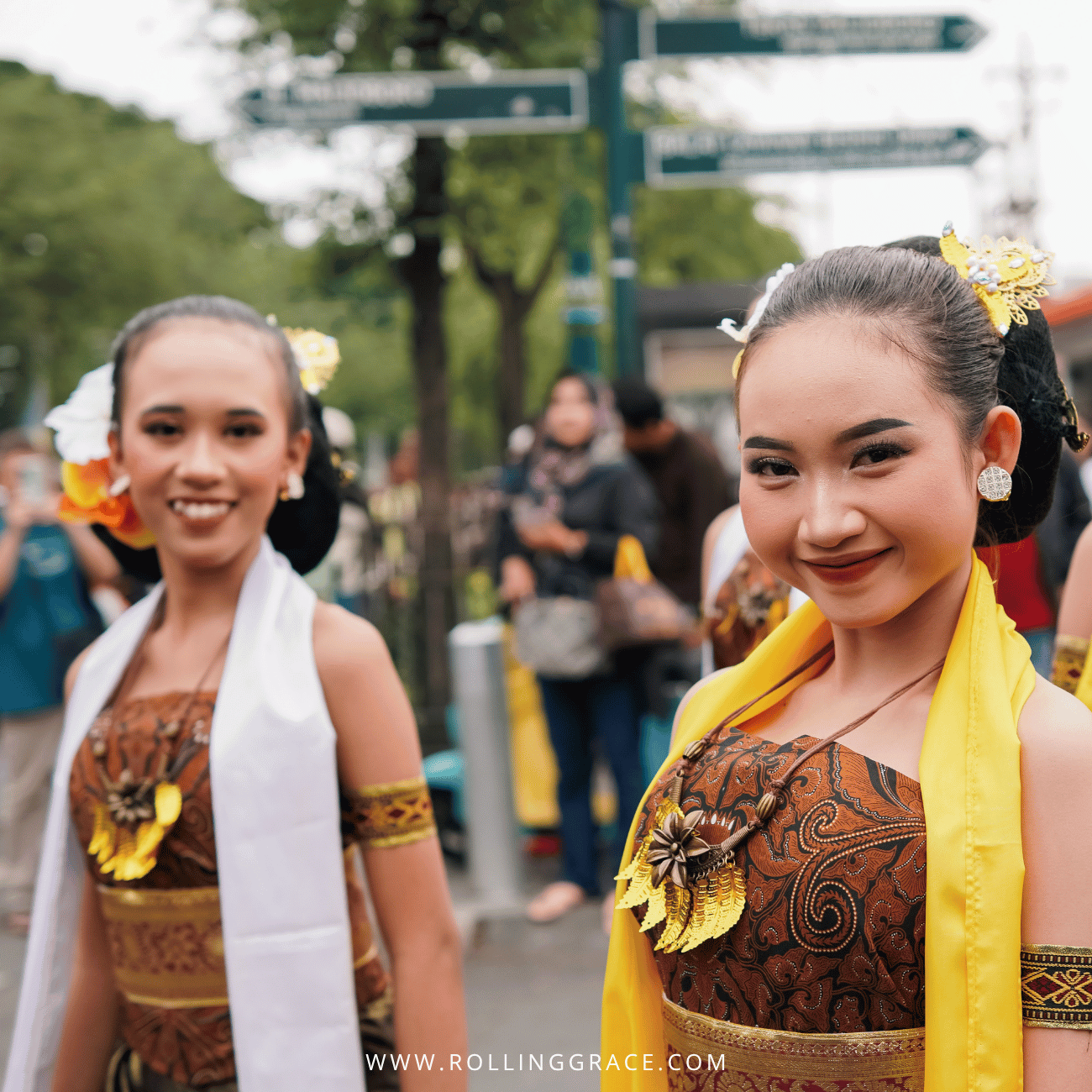
Inside the open pavilions, displays cover royal heirlooms, gamelan sets, batik and gifts from foreign rulers, with palace staff in traditional dress on duty. The Wahanarata Carriage Museum, with the royal carriages, needs a separate ticket.
- Address: Jl. Rotowijayan Blok No. 1, Panembahan, Kraton, Yogyakarta
- Opening hours: Tuesday to Sunday, 08:00 to 14:00. Closed on Mondays and on 17 August.
- Entrance fee: IDR 25,000 for foreign adults and IDR 15,000 for Indonesian adults. Wahanarata Carriage Museum, IDR 30,000 for foreign adults.
Taman Sari Water Castle
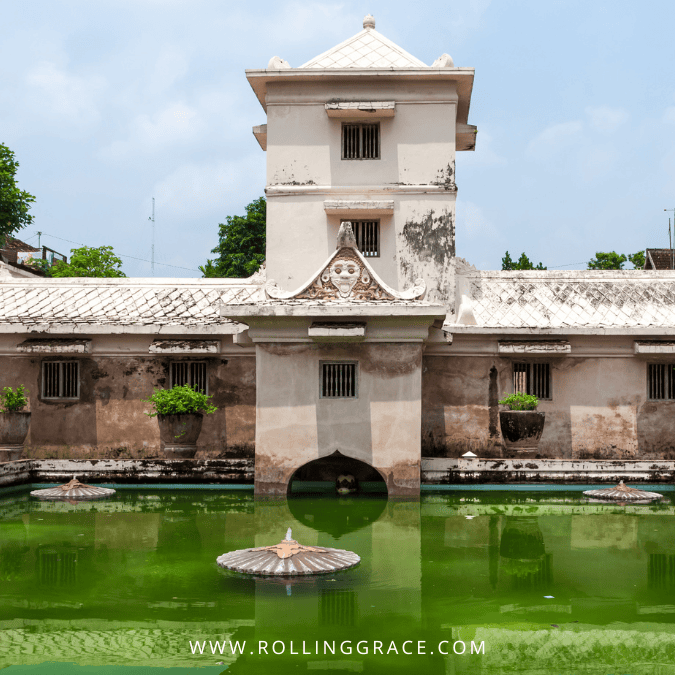
A short walk south-west of the Kraton, Taman Sari was built in 1758 for Sultan Hamengkubuwono I as a royal garden, with bathing pools, pavilions and a mosque.
Buy tickets to Taman Sari Tourist Village
The best-preserved part is the Umbul Pasiraman bathing complex, where the Sultan and the women of the court bathed in three pools behind high walls.
Beyond it, the Sumur Gumuling, a circular underground mosque with staircases meeting in the centre, is reached through tunnels from the surrounding kampung, where families now live among the ruins.
- Address: Jl. Taman, Patehan, Kraton, Yogyakarta
- Opening hours: Daily, 09:00 to 15:00
- Entrance fee: IDR 25,000 for foreign adults and IDR 15,000 for Indonesian adults
Malioboro Street
Malioboro is the main street of Yogyakarta, running from Tugu railway station south towards the Kraton. By day, its pavements fill with batik, leather and souvenir stalls; by night, street food sellers and buskers take over.
Read also: 5 Breathtaking Things to Do at Tanah Lot Bali, Indonesia
Halfway down, Beringharjo Market is the main traditional market of the city, with batik on the ground floor and spices and snacks upstairs.
Come in the evening for gudeg, the young jackfruit stew Jogja is known for, at the lesehan stalls where you eat on mats by the road.
- Address: Jl. Malioboro, Yogyakarta
- Opening hours: Open access. Shops and stalls trade from morning until late evening.
- Entrance fee: Free
Things to Do in Prambanan and the Temple Plains
Prambanan Temple
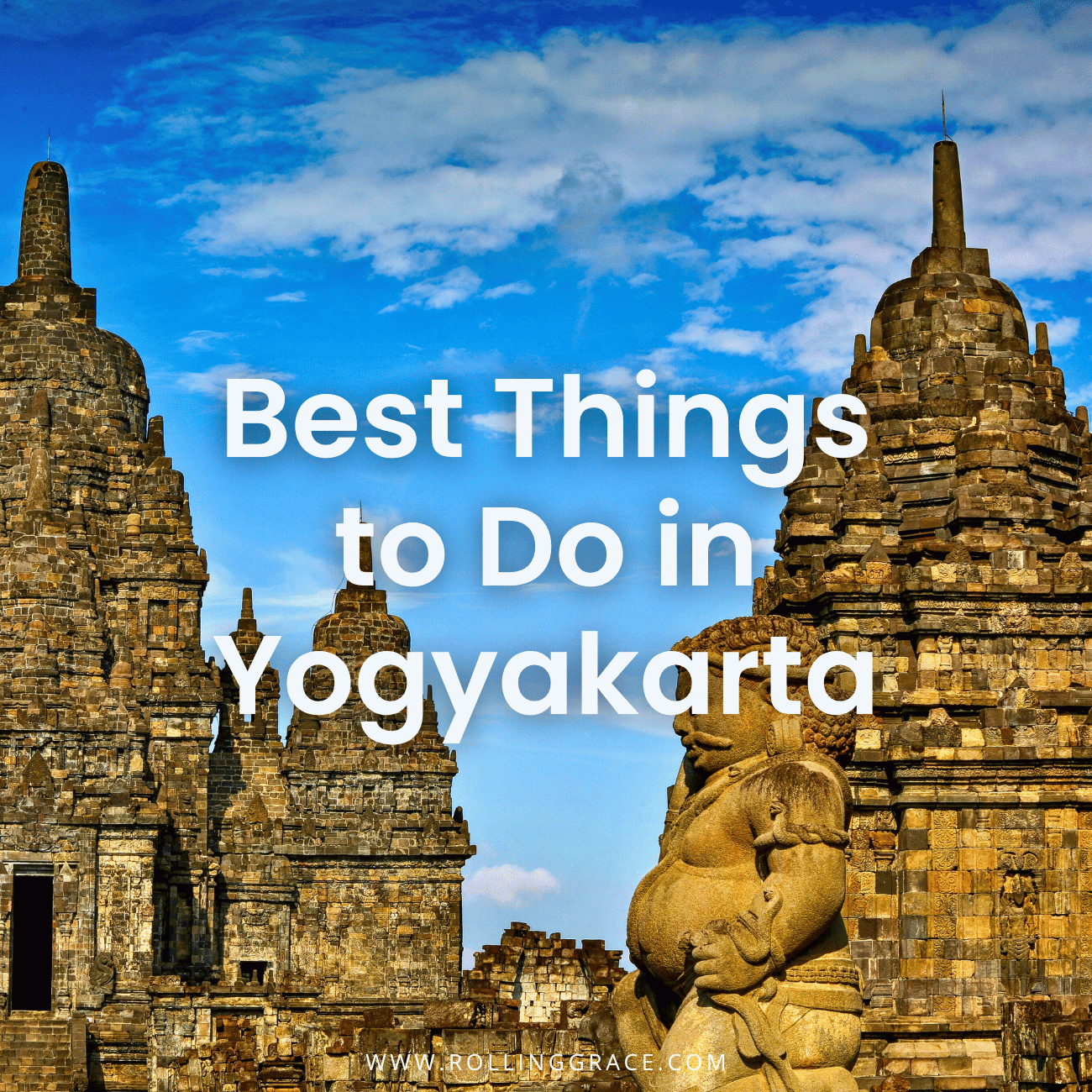
Built in the 9th century, Prambanan is the largest Hindu temple compound in Indonesia and a UNESCO World Heritage Site since 1991.
Its central Shiva temple rises 47 m, flanked by temples to Brahma and Vishnu, and the walls carry stone reliefs of the Ramayana.
Buy tickets to Prambanan Temple
On selected evenings, the Ramayana Ballet plays out the same story with dancers and a gamelan orchestra, in an open-air theatre with the temples lit up behind it in the dry season, and indoors in the rains.
Shows usually run from 19:30 on Tuesdays, Thursdays and Saturdays, so check the schedule before you book.
- Address: Jl. Raya Solo–Yogyakarta No. 16, Kranggan, Bokoharjo, Prambanan, Sleman, about 17 km east of Yogyakarta
- Opening hours: Daily, 06:00 to 17:00, with last entry at 16:00
- Entrance fee: About US$25 (IDR 375,000) for foreign adults and US$15 for children aged 3 to 10. Ramayana Ballet from IDR 150,000.
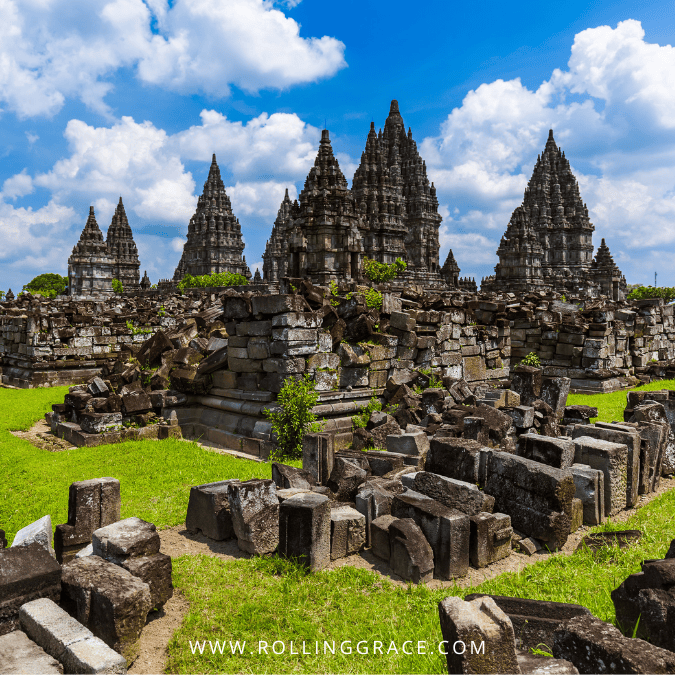
Sewu Temple
About 1 km north of the main Shiva temple, Sewu is the second-largest Buddhist temple site in Indonesia after Borobudur.
Read also: 10 Must Try Dishes in Bali Indonesia You Should Actually Eat
Built in the 8th century, it once had 249 temples arranged around a central shrine dedicated to Manjusri, the bodhisattva of wisdom, guarded at each gate by pairs of giant stone dvarapala statues. Far fewer visitors make it this far, so walk or hire a bicycle inside the park to reach it.
- Address: Inside the Prambanan Temple park, Bokoharjo, Prambanan, Sleman
- Opening hours: Daily, 06:00 to 17:00, the same as Prambanan
- Entrance fee: Included in the Prambanan ticket
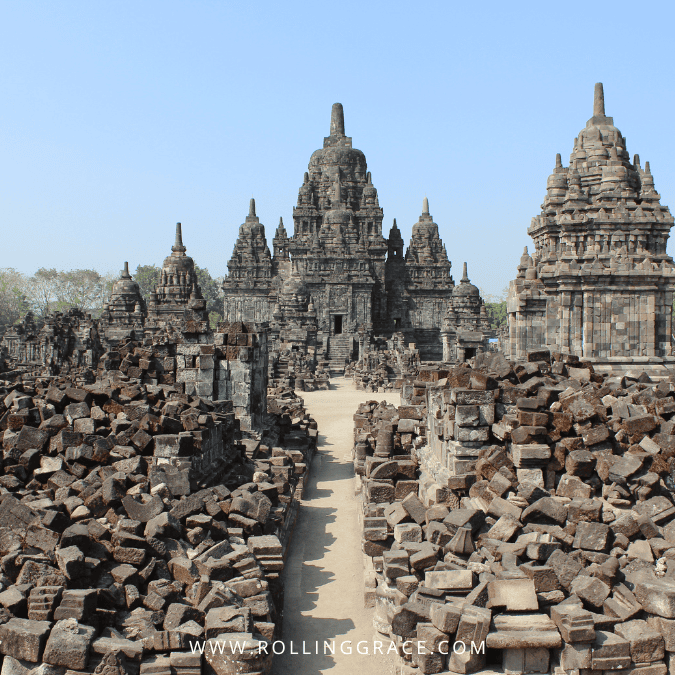
Ratu Boko
On a hilltop about 3 km south of Prambanan, Ratu Boko dates back to at least the 8th century and is believed to have begun as a retreat built by King Rakai Panangkaran before becoming a fortified palace.
Buy tickets to Keraton Ratu Boko
Today, you walk through its double stone gateway to terraces, bathing pools, pavilion foundations and the remains of the old walls.
It is one of the best places near Yogyakarta to watch the sun go down, with the Prambanan plain and, on clear days, Mount Merapi on the horizon.
Read also: Aceh Tsunami Museum: 7 Most Important Attractions to See
- Address: Jl. Raya Piyungan–Prambanan KM 2, Bokoharjo, Prambanan, Sleman
- Opening hours: Daily, about 07:00 to 17:30, with last entry around 16:30
- Entrance fee: About IDR 275,000 for foreign adults and IDR 200,000 for children aged 3 to 10
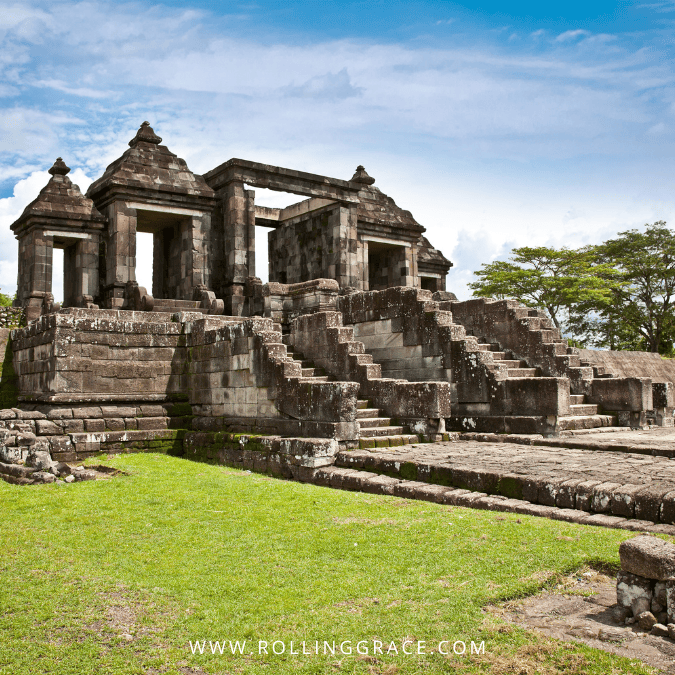
Day Trips to Borobudur and Merapi
Borobudur Temple Tour from Yogyakarta
About 40 km north-west of Yogyakarta, in Magelang, Central Java, Borobudur is the largest Buddhist temple in the world and a UNESCO World Heritage Site since 1991.
Buy tickets to Borobudur Temple
Built in the 9th century, it rises in nine stacked terraces, decorated with 504 Buddha statues and more than 2,600 relief panels, to a great central stupa at the top.
Climbing the temple now requires a timed ticket with a certified guide, and climbers wear special upanat sandals to protect the stone. Daily climbing slots are limited, so book online a week or two ahead.
- Address: Jl. Badrawati, Borobudur, Magelang, Central Java
- Opening hours: Grounds, daily, 06:30 to 17:30. Guided climbs, 08:30 to 15:30 in timed sessions, usually not on Mondays.
- Entrance fee: About IDR 412,500 for the grounds and about IDR 455,000 with a guided climb, for foreign adults. A Borobudur and Prambanan combined ticket costs about US$45.
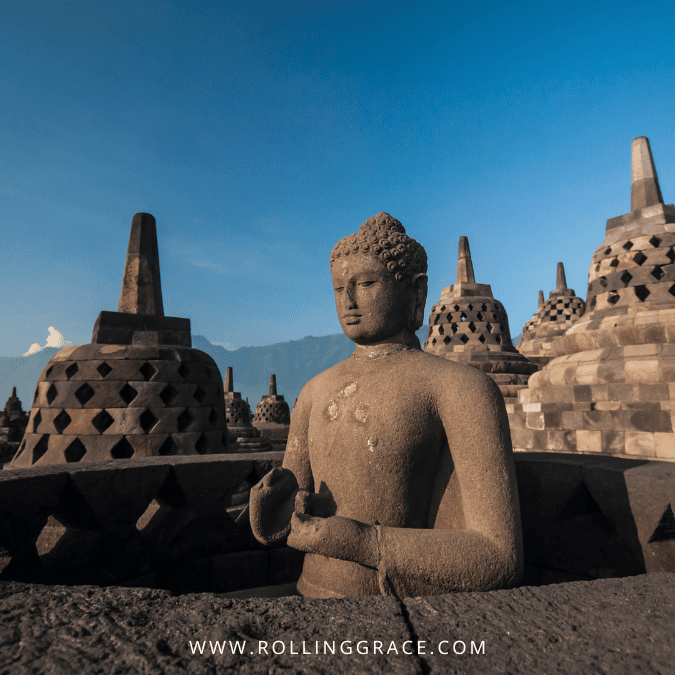
Mount Merapi Lava Tour
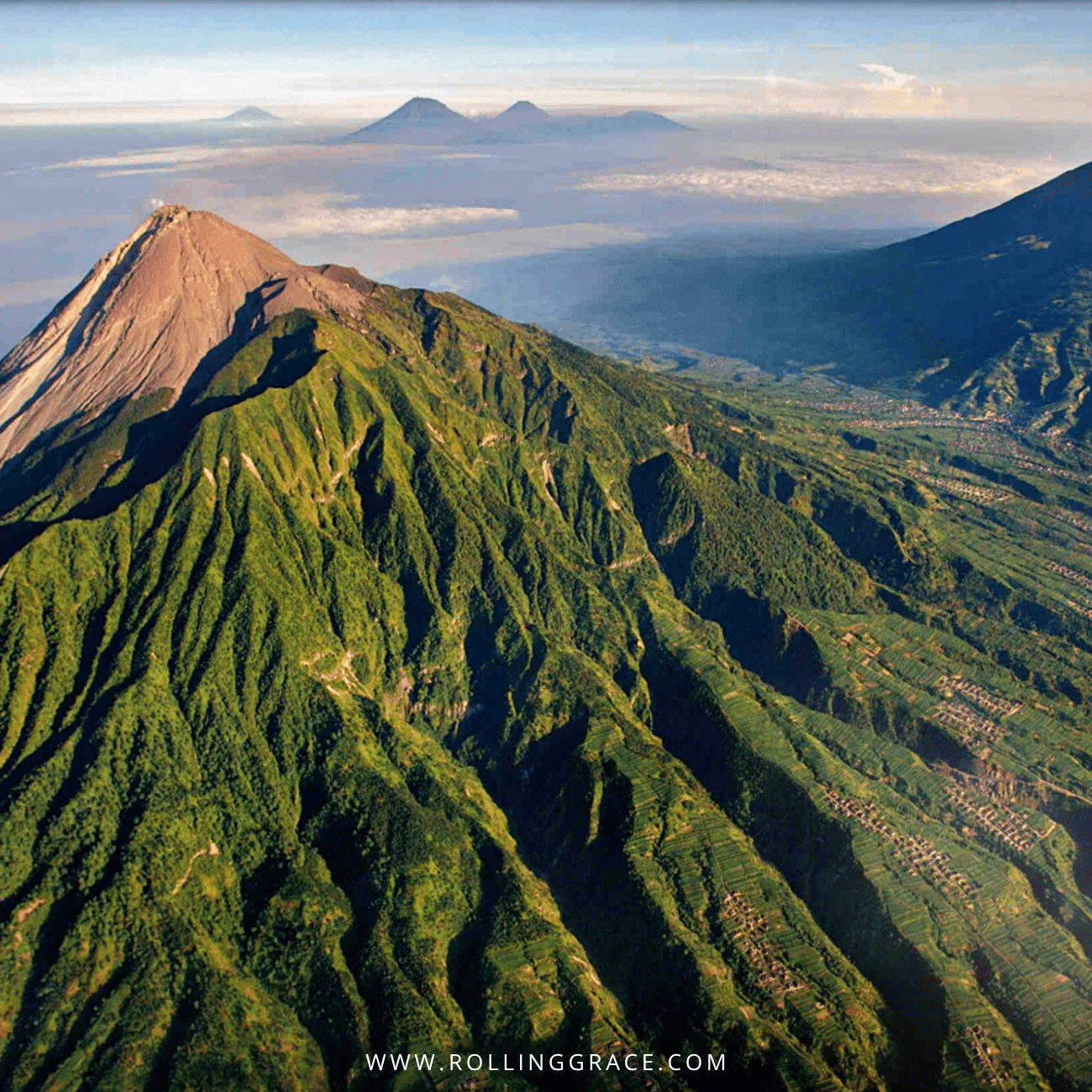
Mount Merapi rises about 2,900 m on the northern edge of Yogyakarta, and its 2010 eruption buried villages on its southern slopes.
Open-top jeeps now take visitors along the lava flows from Kaliurang and Cangkringan, stopping at the Kaliadem bunker and the Sisa Hartaku museum, a house left as the eruption found it. Go early in the morning for the clearest view of the summit.
- Address: Jeep tours start from Kaliurang and Cangkringan, Sleman, about 25 to 30 km north of Yogyakarta
- Opening hours: Tours run daily, mostly from early morning to late afternoon
- Entrance fee: Jeep hire from about IDR 400,000 to 600,000 per jeep for up to four people, depending on the route
Museum Ullen Sentalu
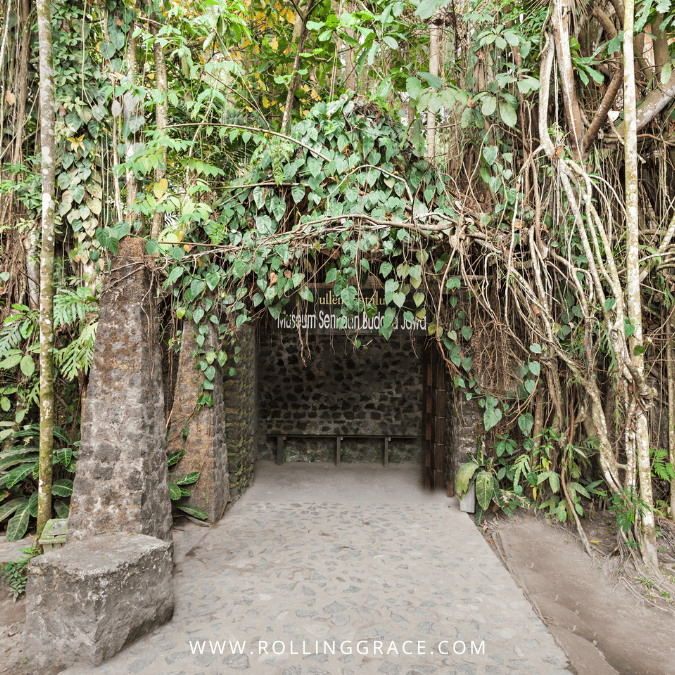
In the cool hills of Kaliurang, on the slopes of Merapi, Ullen Sentalu tells the story of the Javanese royal courts of Yogyakarta and Surakarta.
The galleries, set in stone buildings and gardens, hold portraits of princesses, batik in court patterns, letters and poems, shown on a guided tour of about an hour.
Read also: 12 Best Shisha in Bali: Hookah in Canggu, Seminyak & Ubud
Photography is not allowed in most of the galleries, and the tour ends with a glass of the house herbal drink.
- Address: Jl. Boyong KM 25, Kaliurang Barat, Hargobinangun, Pakem, Sleman
- Opening hours: Tuesday to Sunday, 08:30 to 16:00, with the last tour at 15:15. Closed on Mondays.
- Entrance fee: About IDR 100,000, including the guided tour
How Many Days Do You Need in Yogyakarta?
Three days cover the best things to do in Yogyakarta: one for the Kraton, Taman Sari and Malioboro, one for Prambanan, Sewu and sunset at Ratu Boko, and one for Borobudur, arriving at opening time to beat the heat and the crowds.
Book Complete Yogyakarta 1-day Tour
Add a fourth day for the Merapi lava tour and Ullen Sentalu, which pair well on the same trip north.
3-Day Yogyakarta Itinerary
A 3-day Yogyakarta itinerary gives one day to the city and two to the temples. On day one, tour the Kraton in the morning, walk to Taman Sari before it closes at 15:00, and end on Malioboro Street with gudeg at a lesehan stall.
On day two, head east to Prambanan and Sewu, then watch the sunset from Ratu Boko and, on a Tuesday, Thursday or Saturday, catch the Ramayana Ballet at Prambanan.
On day three, reach Borobudur at opening time with a climbing slot booked ahead, and return to the city by afternoon. The Kraton is closed on Mondays, so don’t start on one.
Can You Visit Borobudur and Prambanan in One Day?
Yes, but it makes for a long day. Borobudur is about 40 km north-west of Yogyakarta and Prambanan about 17 km east, so plan on two to three hours of driving in total. Start at Borobudur in the morning, then reach Prambanan for the afternoon and stay for the Ramayana Ballet.
Best Time to Visit Yogyakarta
The best time to visit Yogyakarta is the dry season, from April to October, when skies are clearer for temple views and the Ramayana Ballet plays in its open-air theatre.
From November to March, heavy afternoon rain is common, so plan temple visits for the morning.
Read also: Discover the 10 Most Sustainable Travel Destinations in Asia
How to Get Around Yogyakarta
Grab and Gojek cover the city and the temples, and private drivers can be hired by the day for Borobudur, Prambanan and Merapi. Within the centre, becak cycle rickshaws and the Trans Jogja bus link Malioboro with the Kraton and Taman Sari.
Book Complete Yogyakarta 1-day Tour
Yogyakarta International Airport is in Kulon Progo, about 45 km west of the city, and the airport train runs to Tugu Station, next to Malioboro.
Get the good stuff first. Join Rolling Grace for the restaurants worth crossing a city for, the stays worth the upgrade, and the places to go before everyone else. Free, straight to your inbox.
Leave a Reply