Champasak Province is the slow, deep breath that the rest of Laos takes for granted.
Sitting at the southern tip of the country where the Mekong widens into a labyrinth of 4,000 islands, it holds a UNESCO World Heritage temple older than Angkor Wat, Southeast Asia’s largest waterfall, one of the most biodiverse protected forests on the subcontinent, and coffee plantations on a volcanic plateau where the air is cool enough to need a jacket after dark.
The range of things to do in Champasak is wider than most travellers expect from a province this far off the main tourist trail.
We explored Champasak Province across multiple trips, by motorbike from Pakse, by boat through the Mekong islands, and on foot through jungle trails in Xe Pian. What struck us was how much ground there is to cover and how few visitors we ran into along the way. Here are the 11 best things to do in Champasak.
Read also: 6 Best Places to Watch Apsara Dance in Siem Reap, Cambodia
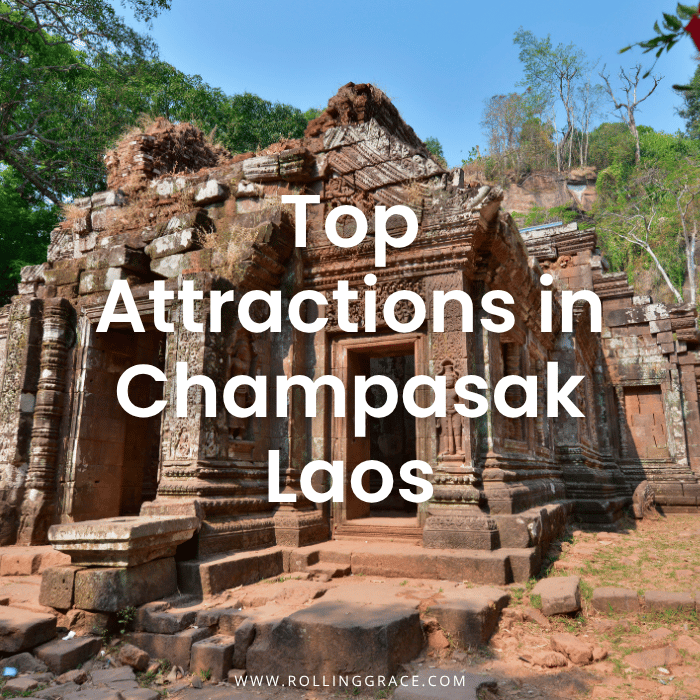
Vat Phou Temple
Vat Phou is the reason most people come to Champasak, and it delivers on every level. This ancient Khmer temple complex sits at the base of Phou Kao Mountain, with terraced levels climbing toward a spring sanctuary at the summit.
The views from the upper terraces sweep across the Mekong River and the flat plains of Champasak town below. The complex holds structures built between the 5th and 15th centuries, and the site is a designated UNESCO World Heritage Site.
Read also: Thanaka in Myanmar: 7 Fascinating Facts on Traditional Paste
What makes Vat Phou historically significant is its age. The earliest foundations here predate Cambodia’s Angkor Wat by several centuries, making it one of the oldest surviving Khmer religious complexes in Southeast Asia.
The on-site museum holds well-preserved sandstone carvings of Hindu deities, lingas, and stone tablets, alongside detailed information about the Khmer civilisation’s expansion into the Mekong region. Among the things to do in Champasak, Vat Phou is the non-negotiable first stop.
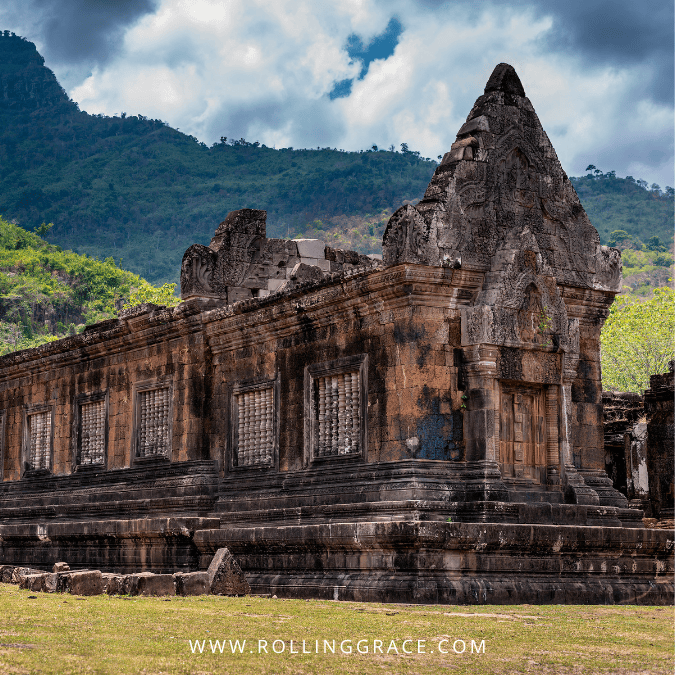
Hong Nang Sida Temple
Hong Nang Sida is the lesser-known temple in the Vat Phou cultural landscape, and it deserves more attention than it gets. Located roughly half an hour from the main Vat Phou complex across open meadows, this largely collapsed 12th-century temple was built around the same period as Angkor Wat. The remaining stone walls feature intricate carvings that are, in places, better preserved than those at the main site.
The temple is part of the broader UNESCO-listed Champasak cultural landscape, and the walk across the grasslands to reach it is one of the more peaceful experiences in the province.
Most visitors to Vat Phou skip Hong Nang Sida entirely, which means you are likely to have the ruins to yourself. For anyone with an interest in Khmer history, this is one of the most rewarding things to do in Champasak.
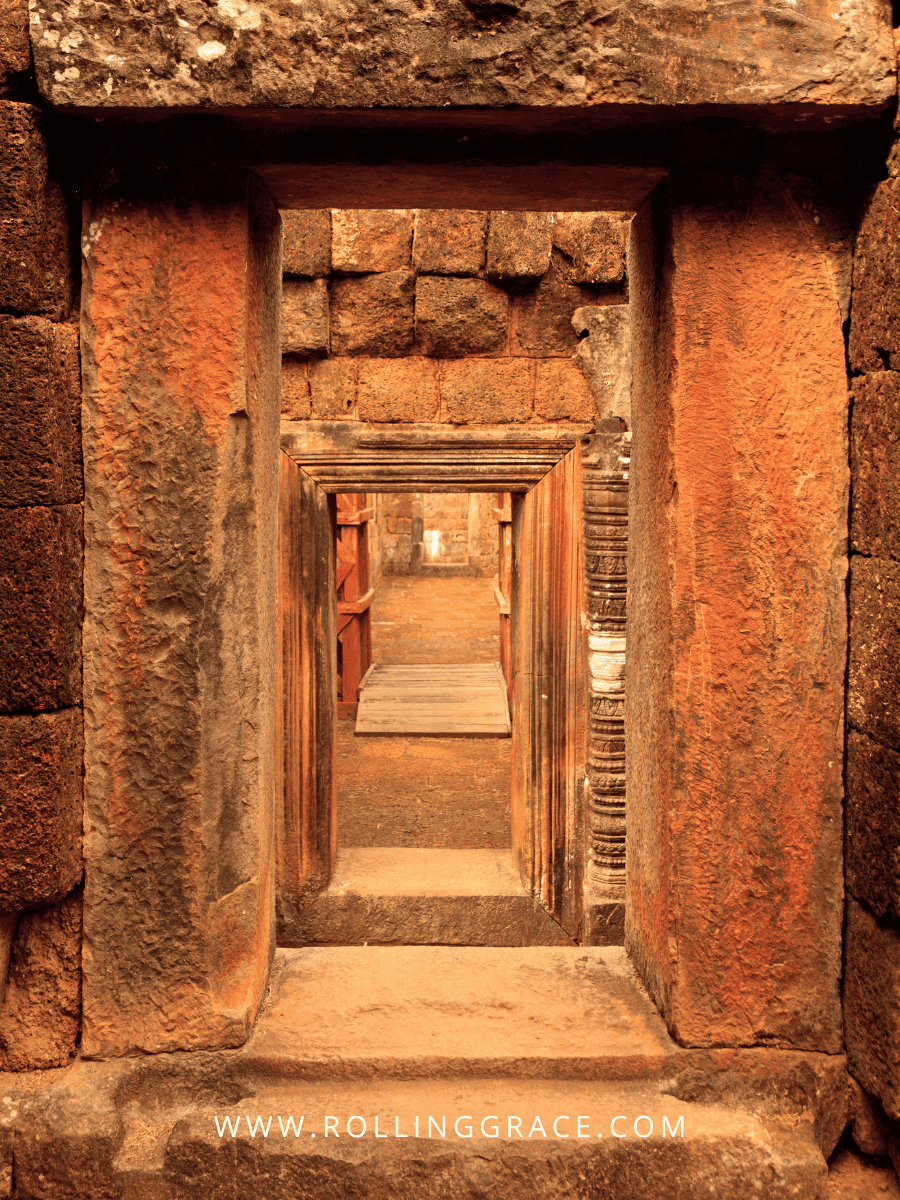
Bolaven Plateau
The Bolaven Plateau rises above the lowlands of southern Laos and delivers a completely different climate, landscape, and pace. The volcanic soil here supports some of the finest coffee plantations in Southeast Asia, and the cooler temperatures (bring a jacket for the evenings) make it a welcome escape from the Mekong Valley heat.
The waterfalls are the headline: Tad Fane drops 120 metres into a gorge flanked by dense jungle, Tad Yuang cascades in wide tiers surrounded by greenery, Tad Tayicseua is the most remote and arguably the most beautiful, and Tad Champee offers a swimming hole at the base.
Read also: 8 Best Dishes to Try in Myanmar: Traditional Burmese Dishes
The plateau is also home to several ethnic minority villages, including Laven, Alak, and Katu communities, each with distinct traditions. Trekking and motorbike loops through the plateau are popular, and a day trip from Pakse is possible, though an overnight stay gives you time to see the waterfalls without rushing.
The Bolaven Plateau is one of the most visually dramatic things to do in Champasak.

Si Phan Don (4,000 Islands)
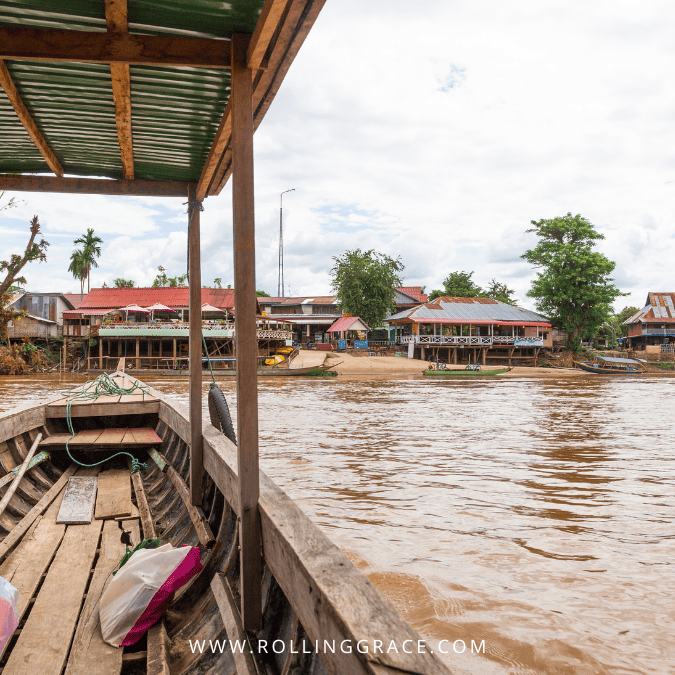
Si Phan Don translates to “4,000 Islands” in Lao, and the name is barely an exaggeration. This stretch of the Mekong near the Cambodian border fragments into a maze of channels, rapids, sandbars, and islands, some no larger than boulders and others big enough to support entire villages.
The largest island is Don Khong, but Don Det and Don Khon are the most popular with travellers, offering bungalow accommodation, cycling routes, and a pace of life that runs almost entirely on river time.
Don Khon also holds the remnants of a French colonial narrow-gauge railway, built in the late 19th century to bypass the impassable Khone Phapheng Falls. The old locomotive and the railway bridge connecting Don Khon to Don Det are among the most photographed sites in the province.
One important update: the Irrawaddy dolphin, once a major draw for visitors to Si Phan Don, was declared extinct in Laos in 2022 after the last known individual died. Dolphin sightings are no longer possible on the Lao side of the border. Despite this loss, Si Phan Don remains one of the most essential things to do in Champasak.

Don Khong
Don Khong is the largest and northernmost of the 4,000 Islands and functions as the administrative capital of Khong District. The island stretches 24 kilometres long and 8 kilometres wide, with 19 villages, 15 temples, and 99 mountain peaks.
The main market at Ban Kang Don is at its best in the early morning, when Mekong fish varieties fill the stalls alongside palm sugar, palm leaf hats, and Lao Kao Gum, a potent local spirit.
Read also: How to Apply for Myanmar Visa Online: 5 Easy Steps for eVisa
Two of the island’s mountains, Phou Kyo and Phou Kew, have sacred caves and offer forest walks with panoramic views. The paved ring road makes a full loop of the island by bicycle or motorbike possible in a morning.
The Historical Museum of Don Khong in the centre of the island provides context on local culture and daily life. Among the things to do in Champasak, Don Khong is the most accessible island and the logical base for exploring the rest of Si Phan Don.
Khone Phapheng Waterfall
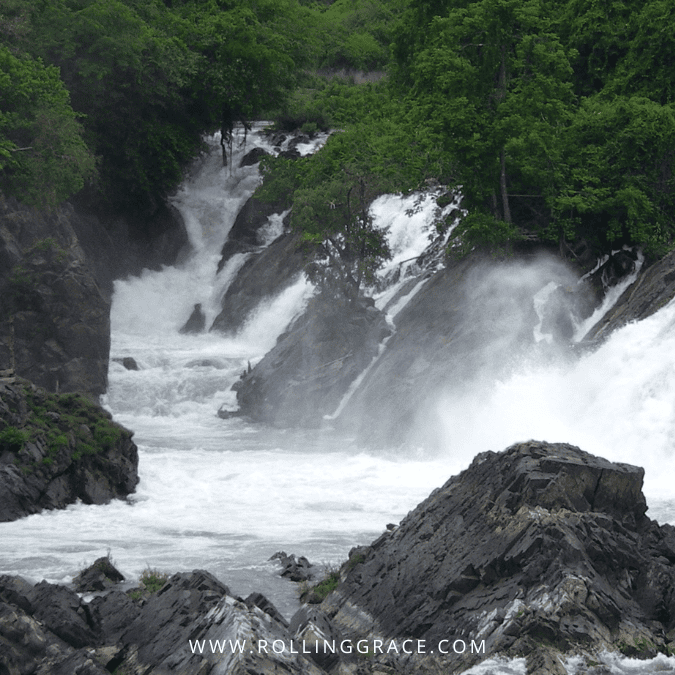
Khone Phapheng is Southeast Asia’s largest waterfall by volume, and the force of it is something you feel before you see it. Millions of litres of Mekong water pour over a series of cascading rock shelves, throwing up mist and noise that can be heard from the car park. The locals call it the Mekong’s pearl, and during the wet season the power of the falls is staggering.
The site’s entrance once featured the Manikoth tree, a tree that stood on a rock in the middle of the waterfall and held mythical significance linked to a Lao adaptation of the Ramayana. The tree collapsed during flooding in 2012 and was eventually airlifted to safety by helicopter after several failed rescue attempts.
Khone Phapheng is located just 13 kilometres from the Cambodian border, making it one of the most southerly things to do in Champasak.
Don Daeng Island
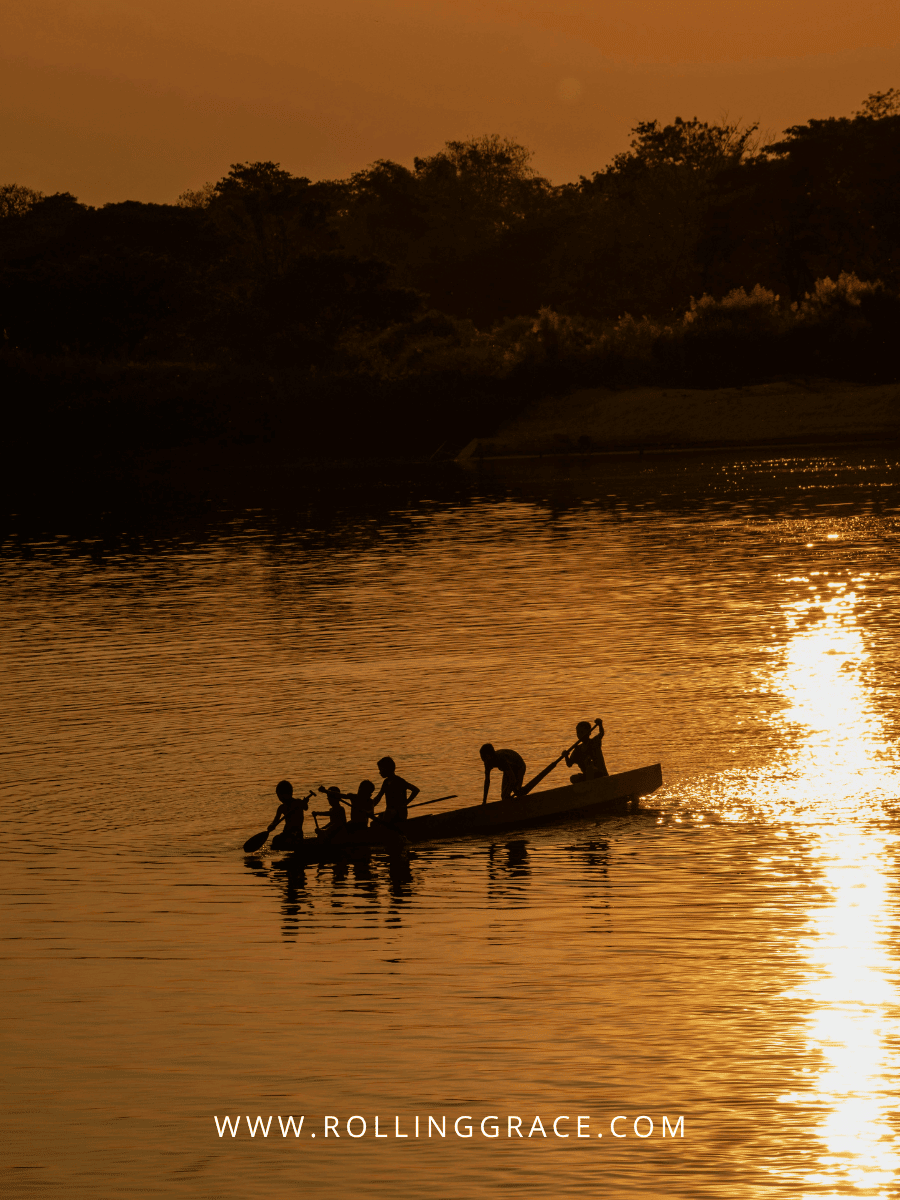
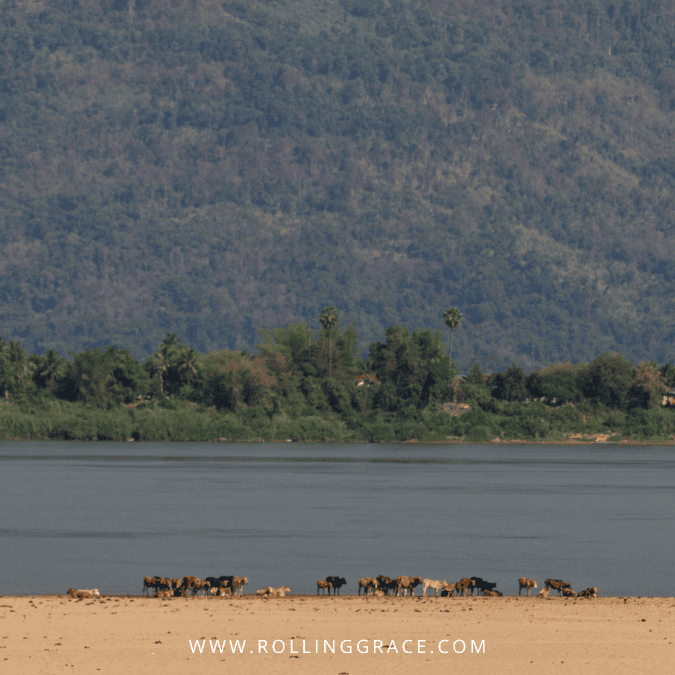
Don Daeng is the antidote to everything that moves fast. This island in the Mekong, directly opposite Champasak town, is best explored by bicycle or on foot along tree-lined paths. Fresh fruit, coconut, and sugar cane juice are available from small roadside stands.
The island holds several Buddhist temples, an ancient forest stupa at its centre, and rice paddies where you will come across buffalos, cows, and goats moving at their own pace.
The beaches along the riverbank are swimmable, and the lack of motorised traffic makes the entire island feel suspended in a different decade. Don Daeng is accessible by boat from Champasak town, and a half-day visit is enough to loop the island comfortably. For the most tranquil of the things to do in Champasak, this is the one.

Don Kho Island
Don Kho is a small Mekong island 17 kilometres north of Pakse, accessible only by boat from the village of Ban Sa Phai on the mainland. The island is home to roughly 450 people who depend on fishing, rice farming, and a silk-weaving tradition that has earned a reputation well beyond the province.
The weaving is done by hand using traditional looms, and the quality of the silk and the intricacy of the patterns are considered among the finest in Laos.
What most visitors do not know is that Don Kho served as the first French colonial administrative centre of Champasak Province for a decade before the capital was moved to Pakse. A surprisingly dramatic temple built by the French still stands on the island, alongside a large bell tower used by the monks.
Ban Sa Phai itself is also worth exploring, with weaving workshops marked by small signs throughout the village and a handicraft centre at the jetty. For the things to do in Champasak that feel untouched by tourism, Don Kho is one of the most authentic.
Xe Pian National Protected Area
Xe Pian is one of the most biologically important protected forests in mainland Southeast Asia. Covering 2,400 square kilometres, it is home to 51 key bird species (including the Giant Ibis and Sarus Crane) and 36 species of mammals.
The national protected area is one of Champasak’s premier ecotourism destinations, with nature walks, bird watching, trekking, and day trips to the Phou Asa archaeological site all departing from Kiet Ngong Village.
The Ta Ong Trail is one of Xe Pian’s more remote and demanding treks, leading deep into the jungle far from the village. Camping along the trail is becoming increasingly popular with independent travellers. For anyone drawn to wildlife and forest trekking, Xe Pian is one of the most rewarding things to do in Champasak.
Phou Xieng Thong National Protected Area
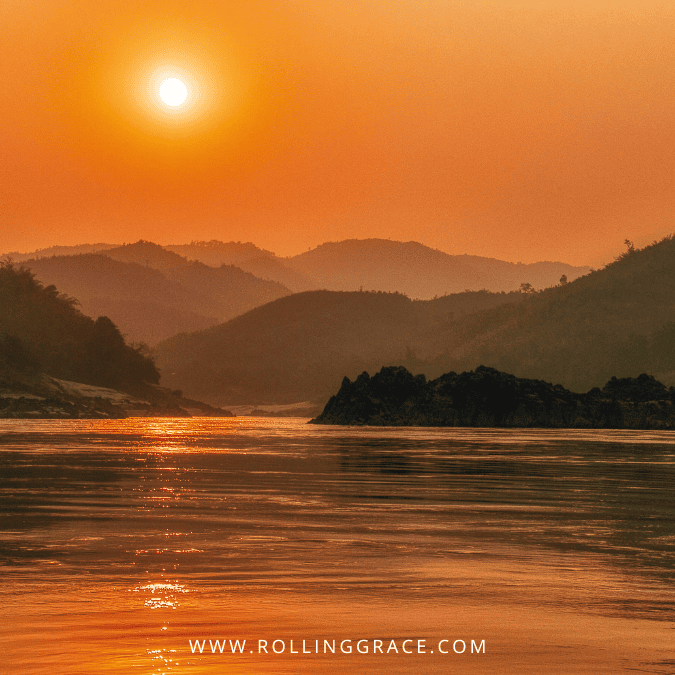
Phou Xieng Thong is a national protected area known for its wild orchid conservation zone, rocky outcroppings, and views that stretch from the summit of Kong Mountain across the border into Ubon Province in Thailand.
The trek to the summit passes through orchid habitats, ancient ruins of a former Khmer kingdom, and a cave where two nuns live in peaceful seclusion. At the top, Hin Khong (Fish Basket Rock) overlooks the Mekong valley, and on a clear day the view into Thailand is uninterrupted.
Local guides and tours can be arranged from the village of Ban Mai Sing Sam Phan, or through the Pakse Tourist Information Centre. The orchid season varies, but the forest is at its most lush during and just after the wet season.
For the things to do in Champasak that combine jungle trekking with panoramic border views, Phou Xieng Thong is the strongest pick.
Ban Nong Bueng Village
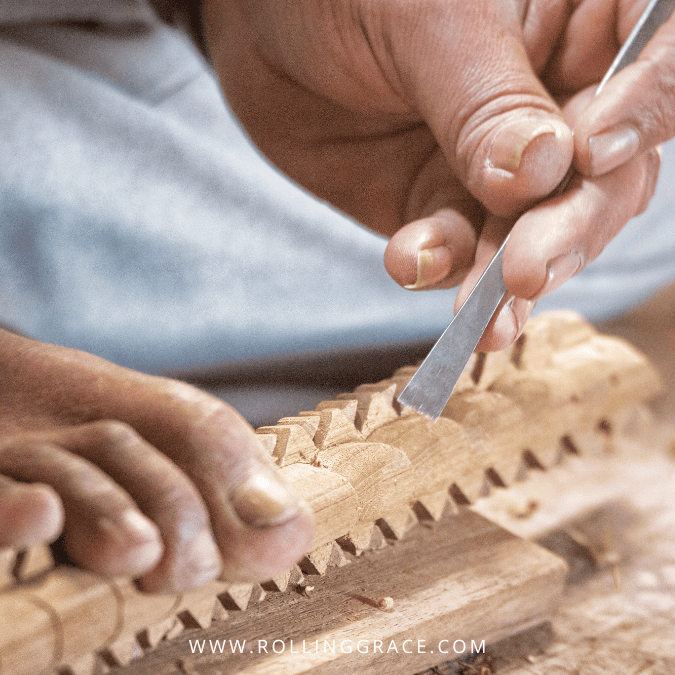
Ban Nong Bueng is a traditional village where ancient woodcarving skills have been passed down through the Ta Oy ethnic group for generations. The Ta Oy originally lived in the highlands of southern Laos, and their woodcarving techniques are practised here by families who produce works for both the domestic and international markets. Visitors are welcome to walk through the village and watch the carvers at work.
The pieces range from small decorative items suitable as souvenirs to larger sculptural works. Take your time looking through the workshops and support the local economy by purchasing directly from the makers. For the cultural side of the things to do in Champasak, Ban Nong Bueng offers one of the most hands-on ethnic experiences in the province.
How to Get to Champasak, Laos
Public transport from Pakse to Champasak town runs between 8:00 AM and 4:00 PM from the KM 2 and KM 8 bus terminals.
For more flexibility, hire a tuk-tuk for the direct trip or rent a motorbike in Pakse and ride there yourself. The road follows the Mekong for much of the way and is one of the more scenic drives in southern Laos. Pakse International Airport receives flights from Vientiane and has limited seasonal connections from regional hubs.
For the islands and more remote sites, boats can be arranged from Champasak town, Ban Sa Phai (for Don Kho), or the various ferry points along the Mekong. During the wet season, some routes may be affected by water levels, so check locally before planning river trips.
Get the good stuff first. Join Rolling Grace for the restaurants worth crossing a city for, the stays worth the upgrade, and the places to go before everyone else. Free, straight to your inbox.
Leave a Reply