Thanaka in Myanmar endures where almost every comparable tradition in Asia has slipped into memory, worn not for ceremony but as the ordinary business of a Tuesday morning.
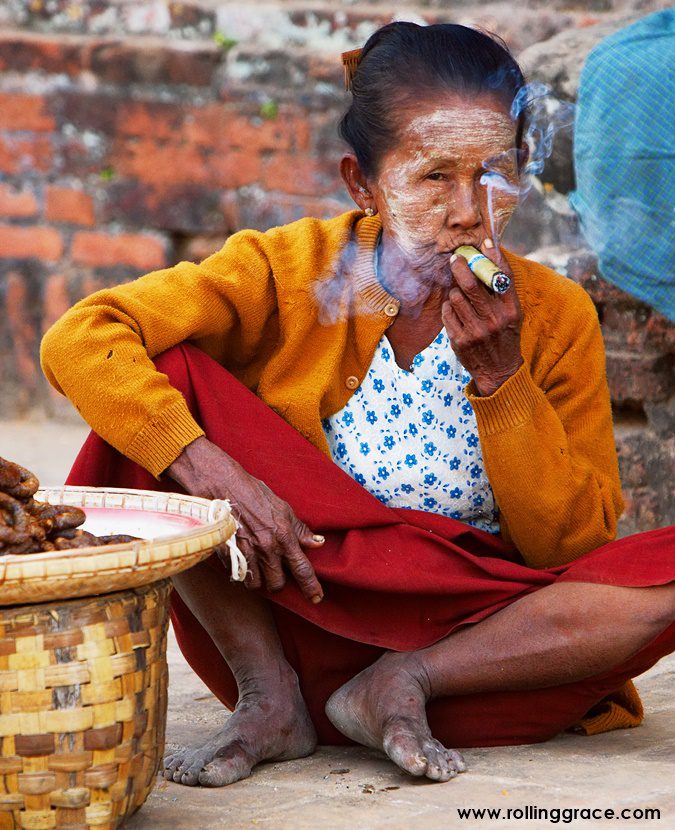
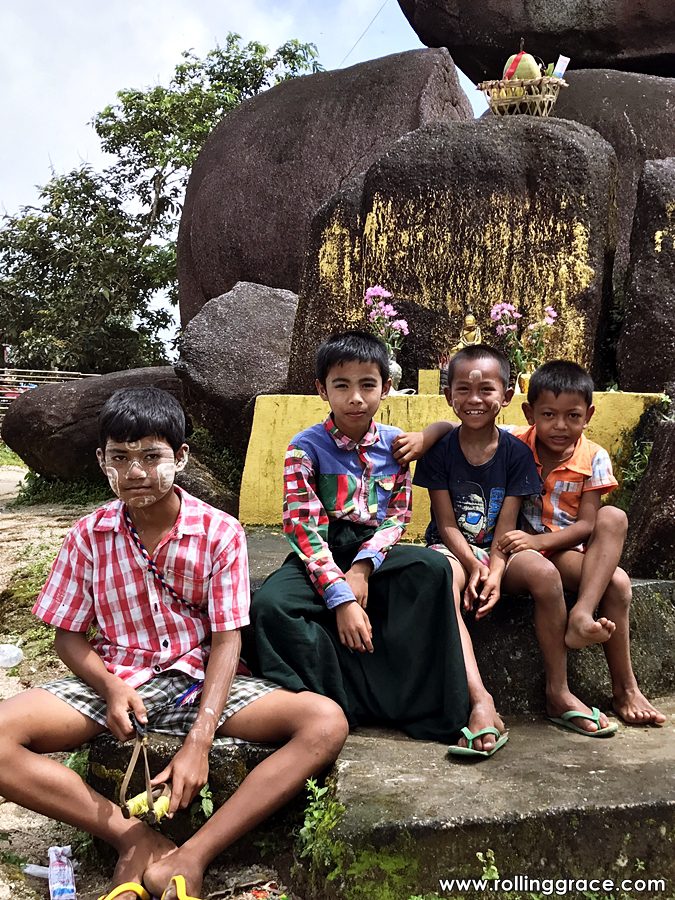
Step off a bus anywhere in Mandalay, Bagan or Yangon and the first thing you notice is the faces. Pale yellow paste swept across cheeks in circles, stripes and leaf shapes, on women selling vegetables, on schoolchildren, on grandmothers smoking cheroots in doorways.
This is thanaka, and it is the single most recognisable feature of daily life in Myanmar. It has been worn here for more than 2,000 years, and unlike most ancient cosmetic traditions across Asia, it has not faded into ceremony or souvenir. It remains part of how the country looks at itself every morning.
Heading to Myanmar? Thanaka is only the beginning of what makes Burmese culture worth slowing down for.
Read also: 8 Best Dishes to Try in Myanmar: Traditional Burmese Dishes

What Is Thanaka?
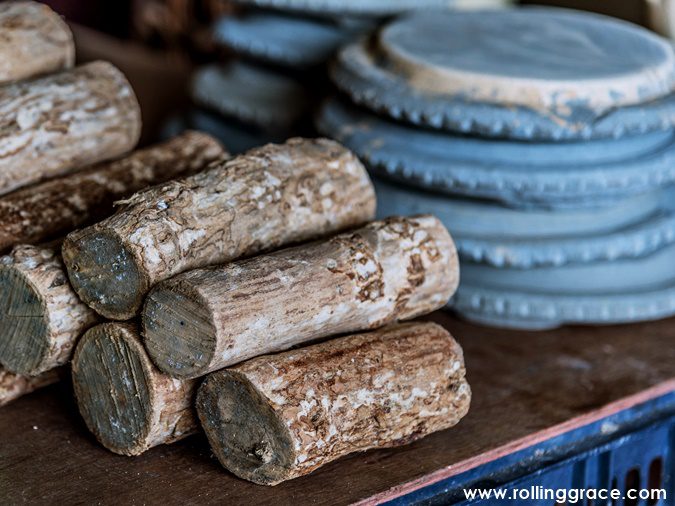
Thanaka is a pale yellow cosmetic paste made from the ground bark of thanaka trees, small flowering hardwoods that grow across the dry central plains of Myanmar. The bark is ground with a little water on a flat stone disc to produce a smooth paste, which is then applied directly to the skin. The result is both decorative and functional, a cosmetic that doubles as skincare, which goes a long way to explaining why it has never gone out of use.
The paste carries a soft sandalwood scent and dries to a cooling matte finish. It is worn by women and children most visibly, but a large number of men wear it too, particularly those working long hours outdoors.
In a region where most traditional cosmetics have been replaced by imported brands, thanaka has held its ground, and it does more than any flag or monument to distinguish Myanmar from its neighbours.
History of Thanaka in Myanmar
Thanaka’s recorded history reaches back more than 2,000 years, with mentions in ancient Burmese lyrics and grinding equipment used by early royalty preserved in museums.
Archaeological traces have been found in pagoda ruins, and the tradition flourished under the Bagan kingdom, the powerful Buddhist dynasty that rose on the banks of the Irrawaddy from the 9th century onwards, where it was worn by queens and farmers alike.
That universality is part of why it survived. Thanaka was never the preserve of royalty or the elite. It grew freely, cost almost nothing and worked in the punishing heat of central Myanmar, so it stayed in everyday use through centuries of political upheaval that erased softer traditions elsewhere.
Today it is worn by the overwhelming majority of women and girls in Myanmar, across Buddhist and Muslim communities alike, a continuity almost unheard of for a cosmetic tradition of this age.

How Thanaka Is Made
The traditional method has changed very little. A short length of thanaka bark is rubbed in small circles against a kyauk pyin, a round stone slab with a shallow channel around the edge to catch the paste. A few drops of water are added during grinding, and within a minute or two a thick cream forms in the channel, ready to apply with the fingers.
The grinding usually happens at home, often first thing in the morning, and a single stick of bark lasts a household a long time. The best-known varieties are Shwebo thanaka from the Sagaing Region and Shinmadaung thanaka from the Magway Region, both prized for their fragrance and quality.
Pre-ground thanaka in tubes, compacts and creams is now widely sold in markets and pharmacies as convenience takes over, but many families still keep a kyauk pyin and grind their own, holding that the fresh paste is cooler and more fragrant than anything bottled.

How Thanaka Is Applied
There is no single correct way to wear thanaka, and the variation is part of its appeal. The most common application is a smooth circular patch on each cheek, sometimes extended across the bridge of the nose or the forehead. From there, personal style takes over.
Circular patches
The everyday default, a clean disc on each cheek, practical and quick to apply.
Stripes and bars
Broad vertical strokes down the cheeks, favoured for sun coverage on long working days outdoors.
Leaf and floral patterns
The most intricate styles, pressed using a leaf stencil or drawn freehand into stylised leaf shapes, seen most often on children and at festivals. These patterns turn a daily routine into something closer to personal expression.

Is Thanaka Good for Your Skin?
Thanaka’s reputation rests on more than appearance. Burmese tradition treats it as sun protection, a cooling agent and a remedy for acne and oily skin, and modern analysis has given some of those claims a scientific footing.
The bark contains active compounds including coumarin and marmesin, and laboratory studies have pointed to antioxidant, anti-tyrosinase and antibacterial properties, the last of which supports its long use against acne.
Its role as a sunscreen is more nuanced. Thanaka does absorb some ultraviolet light and provides a degree of physical shielding, which makes it useful in the Burmese climate, but it should not be read as a substitute for a modern broad-spectrum SPF.
What it offers is a mild, natural, multipurpose skincare layer that has worked well enough for two millennia in one of the hottest inhabited regions of Southeast Asia.
Where Else Is Thanaka Worn?
Thanaka is overwhelmingly a Myanmar tradition, but it is not sealed inside its borders. The trees grow across South and Southeast Asia, and the bark, leaves and roots are used in various ways in India and beyond.
The practice itself has spread in lighter forms to neighbouring communities in Thailand, Laos and Vietnam, and Thailand has begun cultivating and commercialising thanaka for cosmetics.
Nowhere else, though, does it carry the everyday cultural weight it holds at home, where the Burmese remain the only people who wear it as a daily skincare practice.
Where to See and Buy Thanaka in Myanmar
Thanaka is impossible to miss anywhere in the country, but a few places bring the tradition into sharper focus.
The dry zone around Shwebo, Sagaing, Magway and Mandalay is the heart of thanaka country, where the best bark is graded and sold by weight. In Bagan and Yangon, market stalls sell bark sticks, kyauk pyin slabs and ready-made paste, and many vendors will happily grind a sample and paint a pattern on your hand.
Buying a stick of bark and a small grinding stone is one of the more useful souvenirs you can carry out of Myanmar, and one of the few that you will actually use.

Sustainability of Thanaka Trees
A thanaka tree must grow for at least 35 years before its bark is mature enough to yield good-quality paste, which ties the supply directly to long-term cultivation. Rising demand and the growth of pre-packaged thanaka products have put pressure on older stands, and growers in the dry zone increasingly farm thanaka deliberately alongside crops like sesame and beans.
Sustainable harvesting, where bark is shaved rather than the tree felled, allows regrowth and keeps that balance intact, so buying from established sellers who source responsibly makes a real difference.
Frequently Asked Questions about Thanaka in Myanmar
Why do Burmese use thanaka in Myanmar?
For three reasons at once: beauty, sun protection and skincare. Thanaka is worn as a cosmetic, as a natural shield against the harsh Burmese sun and as a treatment for acne and oily skin. For most people in Myanmar it is simply part of getting ready in the morning.
Why do Burmese women wear thanaka?
Burmese women wear thanaka as a daily beauty marker and a practical defence against the sun. The pale yellow paste cools the skin, protects it from UV exposure and is considered a sign of well-groomed, healthy skin across generations.
What is the purpose of thanaka?
Thanaka serves three purposes simultaneously: decoration, sun protection and skin treatment. It is one of the few traditional cosmetics that is also functional skincare, which is why it has stayed in everyday use for more than 2,000 years.
What is thanaka in Myanmar?
Thanaka is a pale yellow paste made from the ground bark of thanaka trees, applied to the face in circular patches, stripes or leaf patterns. It is the most recognisable feature of daily life in Myanmar, worn by women, children and many men.
Is thanaka and sandalwood the same?
No, though they are often confused. Thanaka comes from Limonia acidissima, a tree commonly nicknamed sandalwood or wood-apple in English, but it is botanically distinct from true sandalwood (Santalum). Thanaka shares a similar fragrance, which is where much of the confusion comes from.
What are the benefits of thanaka for skin?
Thanaka contains antioxidant and antibacterial compounds, including coumarin and marmesin, which support its traditional use for acne, oily skin and general skin conditioning. It also has a cooling effect and offers mild sun protection.
Does thanaka whiten skin?
Thanaka has mild anti-tyrosinase activity, which can help even out skin tone over time, and it is traditionally valued for a brightening effect. It is not a bleaching agent, and its results are gentle rather than dramatic.
What is thanaka powder and thanaka cream?
These are modern, pre-processed forms of thanaka sold for convenience. Powders and creams skip the home-grinding step while keeping the bark’s active ingredients, making the tradition easier to use and to export.
Does thanaka have any side effects?
Thanaka is generally well tolerated and has been used safely for centuries. As with any natural product, those with sensitive skin or known allergies should patch-test first, particularly with processed creams that may contain added ingredients.
What is the thanaka tree?
The thanaka tree is a small hardwood native to Myanmar’s dry zones, principally Limonia acidissima, also known as Hesperethusa crenulata. It must grow for at least 35 years before its bark is mature enough to produce good-quality paste.
This guide is compiled from cultural, botanical and dermatological sources, ethnographic records and recent visitor accounts, written to explain what thanaka in Myanmar is, where it comes from and why it has outlasted almost every comparable tradition in the region.
Get the good stuff first. Join Rolling Grace for the restaurants worth crossing a city for, the stays worth the upgrade, and the places to go before everyone else. Free, straight to your inbox.
Leave a Reply