The first glass of air nira arrived still cold from the tap, poured straight from nipah sap collected that morning from one of the 2,000 palms surrounding our table.
Ladang Nipah Kipli is a working nipah palm farm in Kampung Tanah Timbul, Kuala Sanglang, where the tables are set between the trees and the menu reads like a northern Malaysian grandmother’s kitchen.
I visited on a weekend afternoon, ordered too much, and left with sticky fingers, a full stomach, and the kind of contentment that only comes from eating the right food in the right place. Here is everything you need to know before you go.
Read also: 5 Best Reasons to Visit Pesta Angin Timur Perlis Festival

What Is Ladang Nipah Kipli?
Ladang Nipah Kipli is a nipah palm farm turned open-air restaurant in Kuala Sanglang, Perlis.
It grows over 2,000 nipah trees, taps them daily for fresh nira sap, and serves traditional northern Malaysian food at prices that barely touch your wallet. The entire dining area is built among the palms, with handmade huts, swings, and wooden benches spread throughout the farm.
Read also: Ladang Nipah Kipli: 6 Best Dishes at This Perlis Nipah Farm
The setup is self-service. You pick your spot, note your table number, and order at the counter. Staff bring the food to you, and you pay at the cashier when you leave. Bring cash, as card payments may not be accepted. The farm also doubles as a campsite for groups, with designated camping areas available on request.
Beyond the food, the farm borders paddy fields on one side and thick mangrove greenery on the other. Late afternoon is the best time to visit, when the heat eases off and the light between the palms turns golden.
Arrive early if you are visiting on a weekend, as tables fill up fast and some dishes sell out before closing.

What Is Nipah Palm?
Nipah palm (Nypa fruticans) is the only palm species in the world naturally adapted to mangrove environments. It grows in brackish, tidal waters across Southeast Asia and has been found in fossil records dating back approximately 75 million years, making it one of the oldest known palm species on Earth.
Unlike most palms, the nipah has no visible trunk above ground. Its fronds grow directly from a horizontal stem buried in the mud, and the plant reproduces clonally, meaning a single root system can sustain new growth for decades.
Read also: Best Guide to Nat Pokok Getah: Perlis Morning Market
The real value of the nipah palm, particularly in Perlis, is its sap. Known locally as air nira, the sap is tapped from the flower stalk and collected fresh. It is naturally sweet and can be consumed raw as a cooling drink, or processed into palm sugar (gula nipah), vinegar (cuka nipah), and traditional fermented beverages.
At Ladang Nipah Kipli, the nira is served fresh and chilled, straight from the trees surrounding your table, with nothing added.


What Should You Eat at Ladang Nipah Kipli?
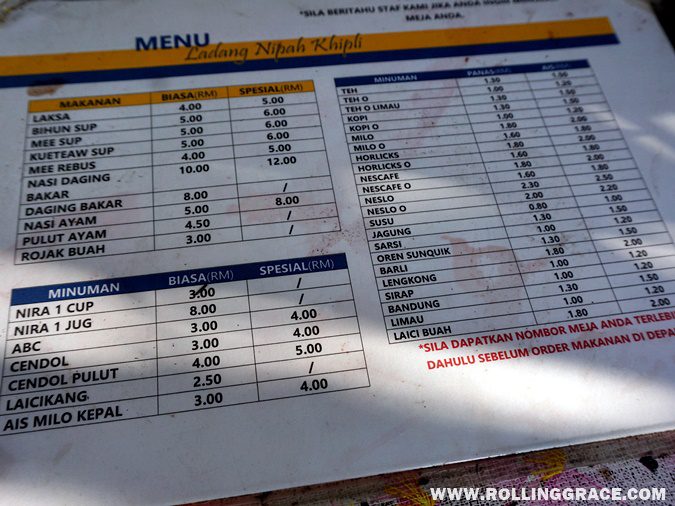
The menu at Ladang Nipah Kipli covers northern Malaysian staples at kampung prices.
The six things worth ordering are the fresh air nira, a bowl of laksa utara, charcoal-grilled pulut udang, nasi ayam, cendol, and kuih karas. Most dishes cost under RM5, and a full meal for two with drinks will rarely break RM30.
Air Nira Nipah
This is the reason Ladang Nipah Kipli exists, and it is the first thing you should order. Air nira is the raw sap of the nipah palm, tapped fresh from the trees on the farm and served cold over ice in a jug.
The flavour is lightly sweet, somewhere between sugarcane juice and young coconut water but thinner and more refreshing. It tastes like nothing you will find bottled or packaged anywhere else.
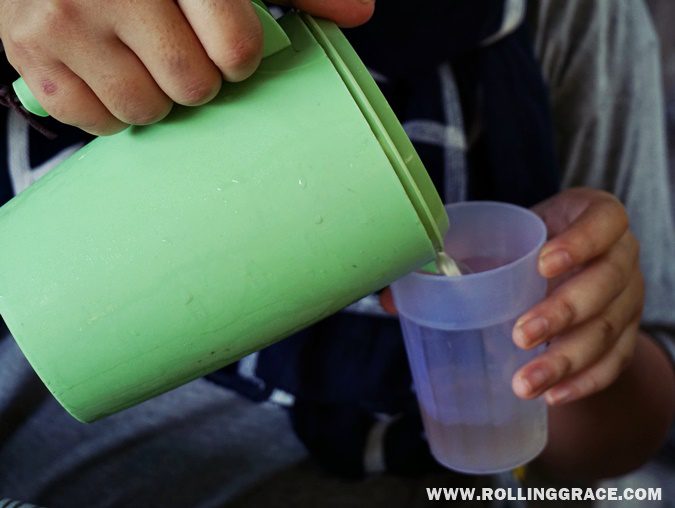
A jug costs RM8 and is enough for two to three glasses. Drink it quickly. Nira oxidises fast in the heat, and the flavour shifts within hours of tapping. What you get at Ladang Nipah Kipli is as fresh as it comes, pulled from the palms steps from your table.
Read also: Warung Tepi Sawah Perlis: Unique Breakfast by Paddy Fields
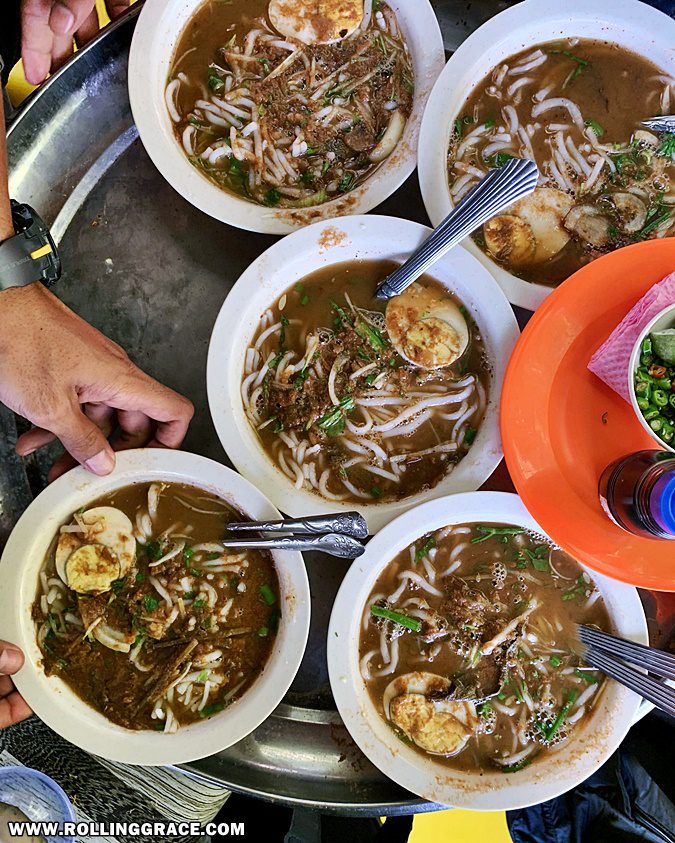
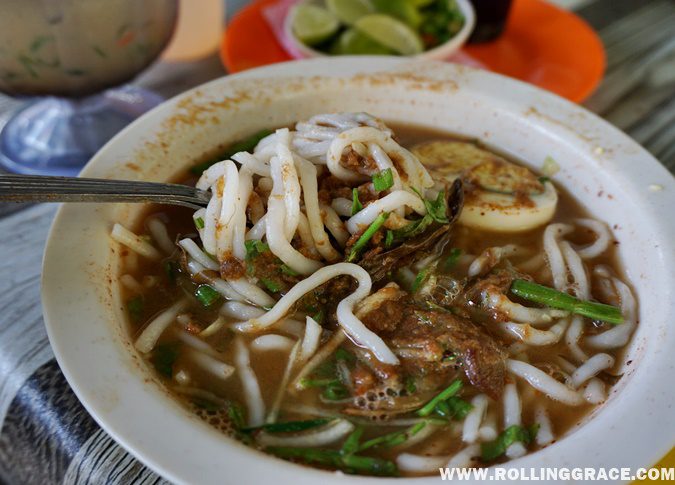
Laksa Utara
The laksa here is northern-style, specific to Perlis and Kedah, and different from the Penang or Sarawak versions most travellers know.
Thick rice noodles come in a fragrant, sour fish broth with shredded vegetables, torch ginger, and a hit of tamarind that lifts the whole bowl. It is sharper and lighter than southern laksa, and it works perfectly in the heat.
A bowl costs RM4. For that price, it is one of the best laksa deals in northern Malaysia. The broth is made in-house, and on busy weekends it can sell out by mid-afternoon, so order it first.
Pulut Udang Panggang
Pulut udang is glutinous rice stuffed with a spiced prawn and coconut filling, wrapped tightly and grilled over charcoal until the outside is lightly charred and the rice turns sticky-dense.
Read also: Masjid Al Hussain Kuala Perlis: Floating Mosque of Perlis
At Ladang Nipah Kipli, each piece costs RM0.50, which means you can order five or six without thinking about it. The smoky char from the grill gives it an edge that microwaved or steamed versions never have.
These are best eaten as a snack alongside a jug of nira. They sell fast, and the charcoal grill is not always running, so grab them when you see them on the counter.

Nasi Ayam
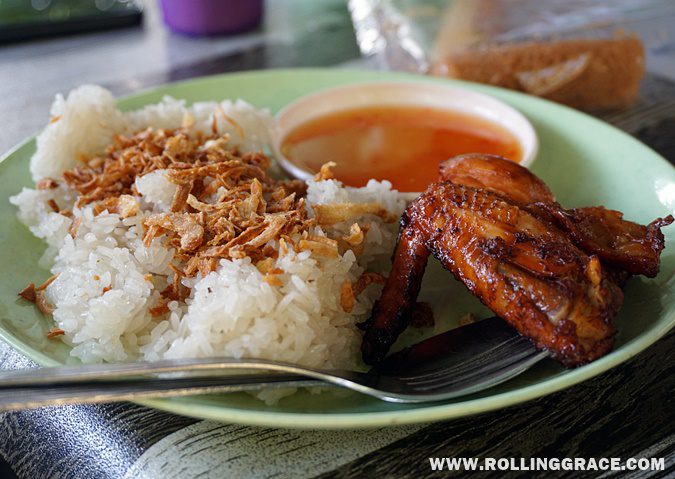
The nasi ayam is straightforward: grilled chicken served over oily, flavoured rice with a simple dipping sauce on the side. No frills, no elaborate plating.
It costs RM5, and it is the kind of plate that disappears in five minutes because every component does exactly what it should. The chicken has a good char, the rice is rich without being greasy, and the portion is generous for the price.
If you are hungry enough for a proper meal and the laksa is not filling enough on its own, the nasi ayam rounds things out.
Cendol
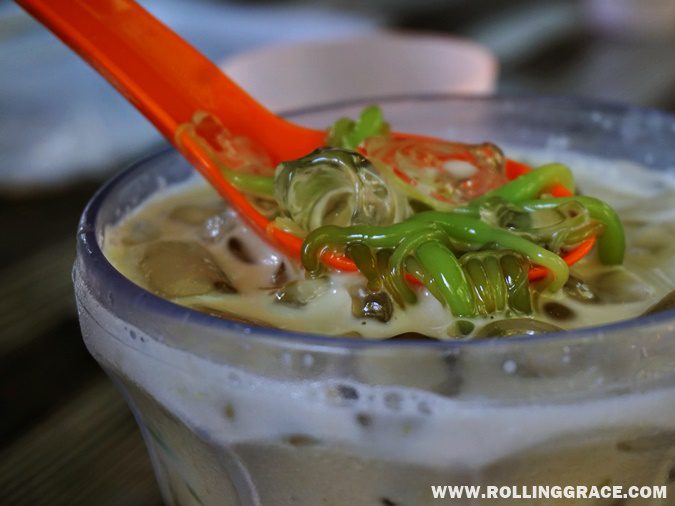
Cendol is Malaysia’s definitive sweet dessert, and the version at Ladang Nipah Kipli is solid. Shaved ice over green rice flour jelly strips, palm sugar syrup, and coconut milk, served in a bowl that drips condensation the moment it hits your table.
Nothing unusual in the recipe here, but the coconut milk is thick and the gula melaka syrup is the real thing, dark and deeply caramelised. A bowl costs RM3. Order it at the end of your meal as a cooldown, or halfway through if the heat is getting to you.
Kuih Karas
Kuih karas is a traditional fried coconut snack from northern Malaysia, made from a thin batter of rice flour and coconut milk drizzled in a spiral pattern into hot oil and fried until golden and crisp.
The result is a lacy, shatteringly crunchy disc that breaks apart in your hands. It is sweet, coconutty, and dangerously easy to eat five in a row without realising.
At Ladang Nipah Kipli, kuih karas is sold by the piece at the counter. It pairs well with the nira or a black coffee, and it is one of those snacks that is increasingly hard to find made by hand outside of northern Malay kampungs.

How Do You Get to Ladang Nipah Kipli?
Ladang Nipah Kipli is in Kuala Sanglang, near the Kedah-Perlis border, south of Kangar. The easiest way to reach it is by car.
From Kangar, head south toward Alor Setar on Route 1 and look for the Kuala Sanglang signboard on your left. Follow the signs into the village and toward the farm. If you are coming from Alor Setar or Kedah, the signboard appears shortly after you cross the state border into Perlis. Free parking is available at the farm.
There is no practical public transport to the farm. If you are staying in Kangar or Kuala Perlis without a car, a Grab or local taxi is the simplest option. The location is easiest to find using Waze or Google Maps by searching “Ladang Nipah Kipli.”
- Address: 282, Kampung Tanah Timbul, Kuala Sanglang, 02800 Perlis
- Opening hours: 12.30 pm to 6.30 pm, Tuesday to Sunday. Closed on Mondays.
- Contact number: 017-430 6245
Get the good stuff first. Join Rolling Grace for the restaurants worth crossing a city for, the stays worth the upgrade, and the places to go before everyone else. Free, straight to your inbox.
Leave a Reply