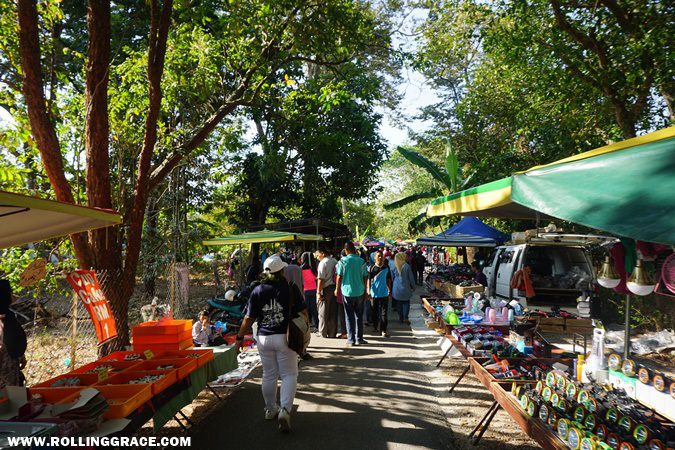
The first thing you notice is the light. Or rather, the lack of it. Rubber trees close overhead on both sides of the dirt path, their canopy filtering the morning sun into dappled patches that shift across rows of vendors, carts, and tarpaulin-covered stalls. It is barely eight o’clock, the air is still cool, and the smell of mee sup and freshly ground coffee moves through the trees like smoke.
This is Nat Pokok Getah, a morning market held inside a working rubber estate in Arau, and it is unlike any pasar pagi you will find elsewhere in Malaysia.
Read also: Warung Tepi Sawah Perlis: Unique Breakfast by Paddy Fields

Why Visit Perlis for Nat Pokok Getah
Perlis is Malaysia’s smallest state, tucked at the northernmost tip of the peninsula where it borders Thailand’s Satun province. It is not a state that makes many travel itineraries, and that is precisely what makes it rewarding to visit.
Time passes differently here. Conversations are unhurried, the countryside is flat and green with paddy fields, and the pace of life favours the present tense. Nat Pokok Getah captures all of this in a single morning.
For the full picture on planning your trip, see our Malaysia Travel Guide.


History of Nat Pokok Getah
“Nat” is a Thai loanword used in the Perlis and Kedah dialects to mean a day market. “Pokok getah” translates to rubber tree. The name is literal: this is a market held beneath rubber trees.
Located in Kampung Kubang Paya on the outskirts of Arau, Nat Pokok Getah operates every Friday and Sunday from 7am to 1pm. The market was started in 2009 by the family of Che Halijah Abbas, reportedly inspired by the pasar karat (flea market) culture across the border in Thailand.
What began as a small cluster of vendors trading beneath the shade has grown into one of Perlis’ most popular attractions, drawing locals and visitors from across the northern states.

The shared culinary and cultural heritage between Perlis and Kedah runs deep. Perlis was part of Kedah until 1842, and later fell under Siamese rule before being ceded to the British under the 1909 Anglo-Siamese Treaty. That layering of Malay, Thai, and Kedahan influence is visible in the food, the language, and the goods sold at Nat Pokok Getah.
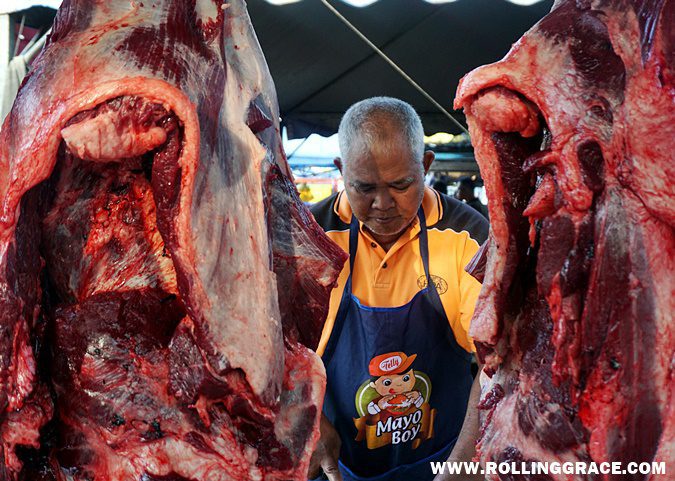
The market is split into two sections. One side of the road focuses on fresh produce, meats, and cooked food. The other side is a sprawling flea market of secondhand clothing, antiques, traditional remedies, live animals, plants, and electronics. The rubber trees provide natural shade across most of the site, and the canopy is filled with birdsong and cicada noise from the moment the market opens.


What to Eat at Nat Pokok Getah
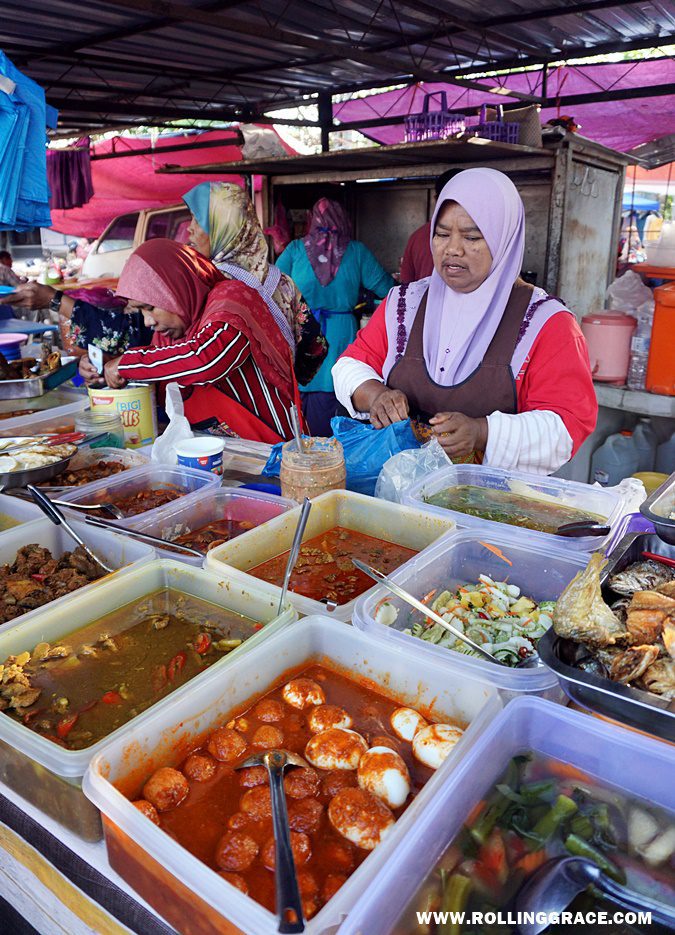
The cooked food section is where Nat Pokok Getah earns its reputation, and RM10 will buy you a full breakfast with a drink and something sweet on the side.
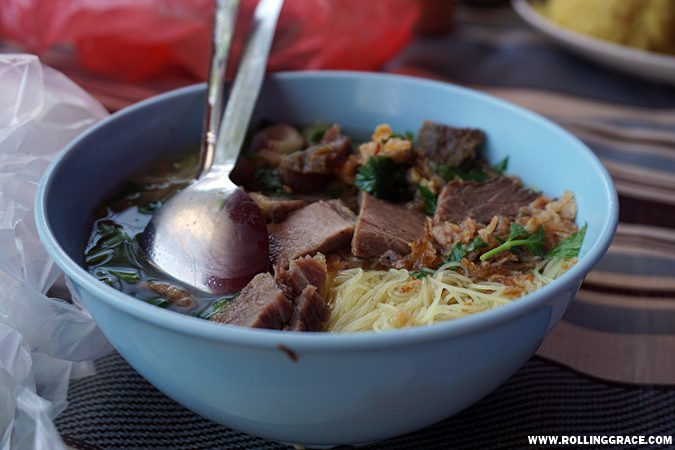
The dishes here are rooted in northern Malay cooking, which leans heavier on Thai and Kedahan influences than what you find in KL or the southern states. Mee sup daging (beef noodle soup) is a staple, served steaming from large pots. Nasi ayam is another common order, plated simply with rice, a piece of fried or roasted chicken, and a bowl of broth on the side. Economy rice stalls let you point and choose from trays of curries, vegetables, sambals, and fried dishes, all served over rice for a few ringgit.
The kuih (traditional cakes and sweets) deserve special attention. Vendors sell them from trays lined with banana leaves: layered kuih lapis, steamed kuih talam, sticky rice parcels, and deep-fried pisang goreng still warm from the oil. Portions are generous and prices are honest. A full spread of kuih for a family of four rarely exceeds RM10.

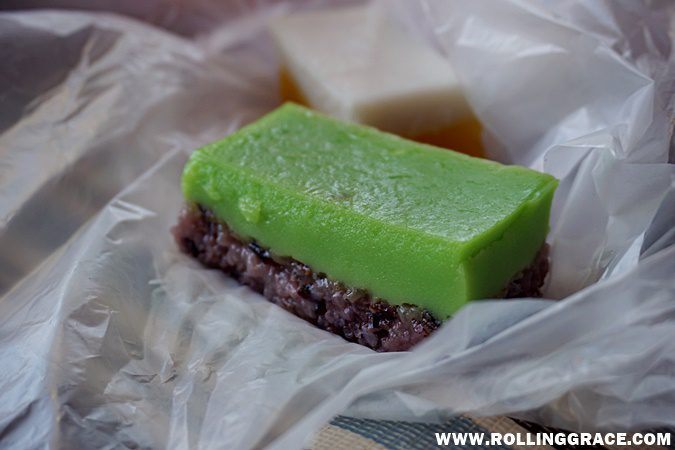
Two items worth seeking out. The first is tapai pulut daun getah, fermented glutinous rice wrapped in rubber tree leaves collected from abandoned estates nearby. The rubber leaves are favoured for their size, pliability, and the faint earthiness they add to the fermented rice.
The second is agar kering, a sun-dried seaweed jelly candy with a crusty, crystalline exterior that is popular across the northern Malay states. At Nat Pokok Getah, some vendors make a version infused with Harumanis mango extract, giving the candy a striking orange colour and the mango’s distinct sweetness.
Fresh goat’s milk is also sold at the market, alongside beautifully decorated doughnuts that are far better than they need to be.
Local Perlis Produce
Nat Pokok Getah is a particularly good place to encounter ingredients and products specific to Perlis and the northern region. The state’s position on the Thai border means the produce here draws from both sides.
Perlis Harumanis mangoes
Also known as Sunshine Gold, these are seasonal, highly sought after, and available at the market during mango season (roughly April to July). The fruit is sweet, fiberless, and considered among the best mango varieties grown in Malaysia.

Pekasam
Freshwater fish preserved in salt, tamarind, brown sugar, and roasted rice. Pekasam is a traditional Malay preservation method, and the versions sold here use fish sourced from local rivers and paddy fields.
It is an acquired taste, pungent and deeply savoury, but a staple in northern Malay kitchens.

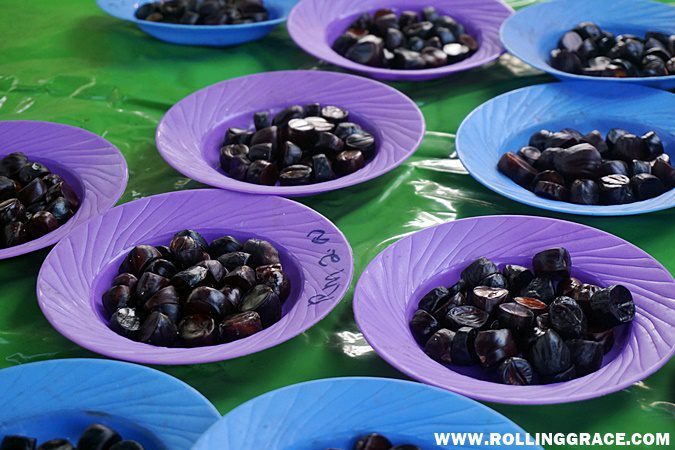
Buah kerdas (Genuak)
A stinky fruit that most Malaysians outside of the north have never encountered. It looks unremarkable and smells strong, but it is eaten as a snack and considered a delicacy in Perlis.
Urap jagung and emping padi
Steamed corn with grated coconut and young green rice with grated coconut, respectively. Both are traditional snacks found almost exclusively in the northern states.

Pre-made spice pastes and condiments
Vendors sell ready-made rempah (spice pastes) for popular Malay dishes, packaged in plastic bags and priced per portion. These are homemade, not factory-produced, and worth buying if you want to cook northern Malay food at home without sourcing every individual ingredient.

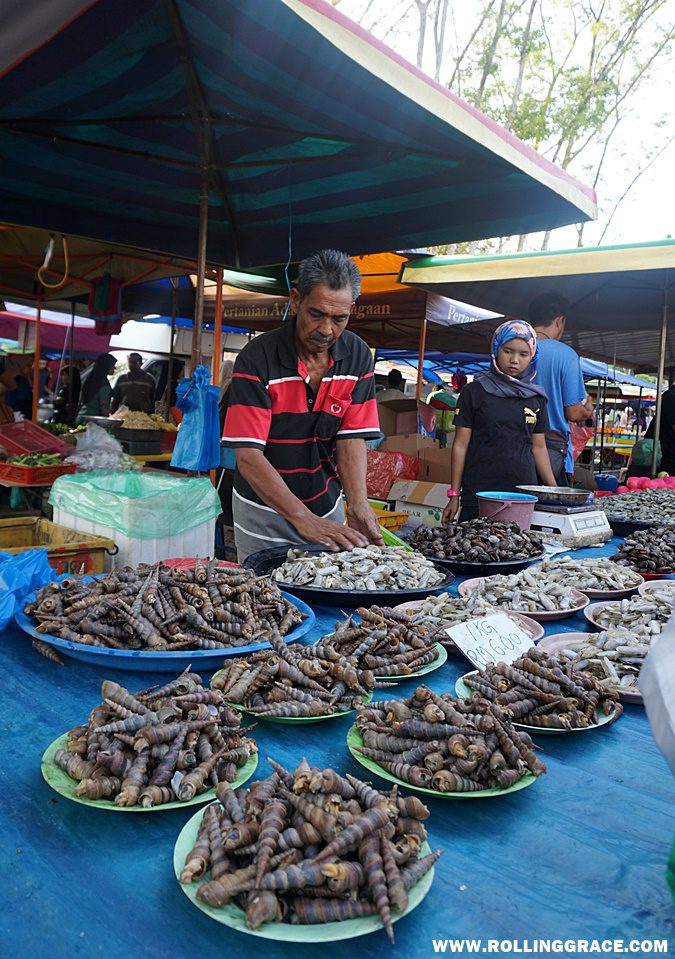
Fresh seafood
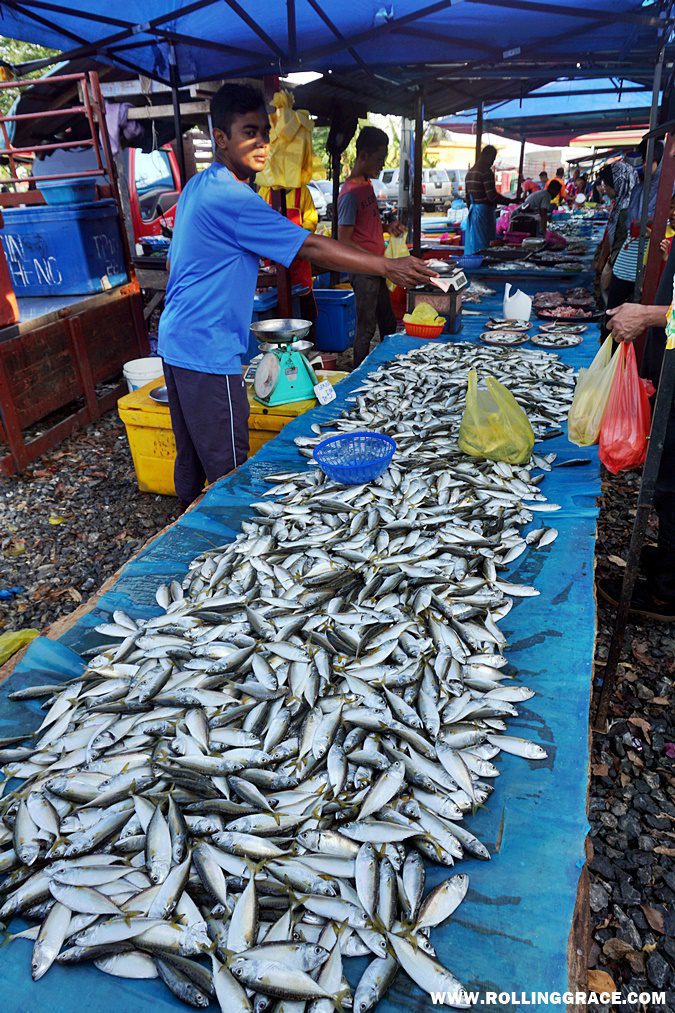
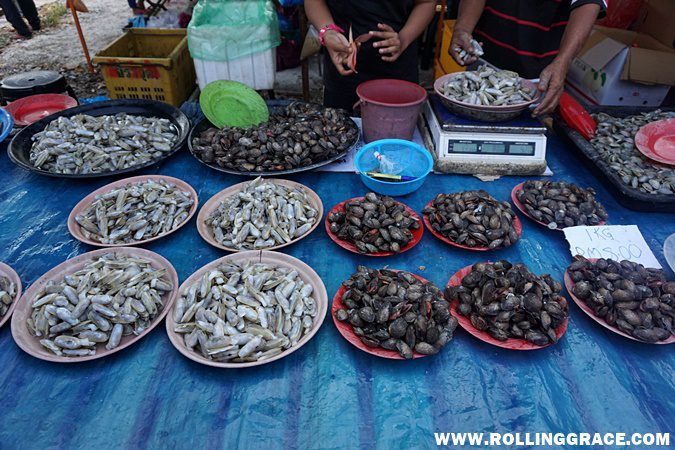
Mollusks, freshwater shellfish, and fresh fish are also sold at the wet market section, displayed on ice or in shallow trays. Prices are lower than what you would pay in the cities.

Nat Pokok Getah Flea Market
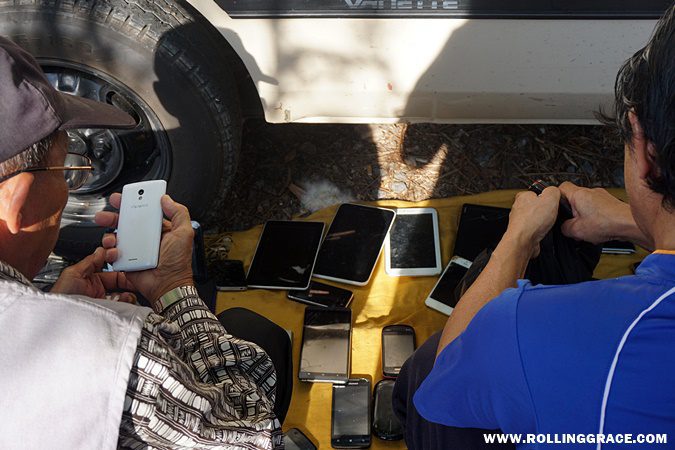
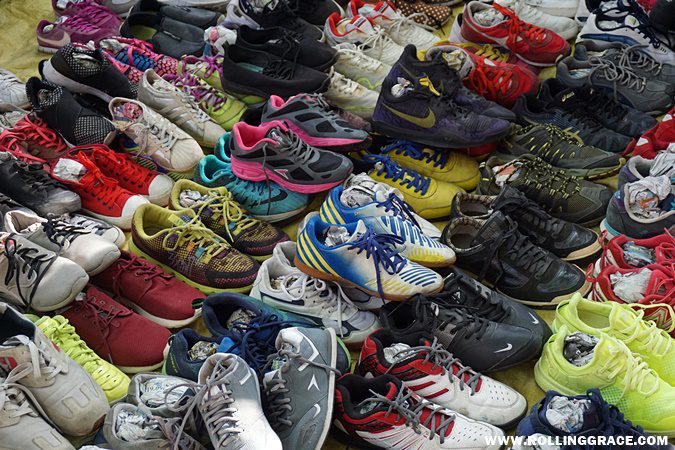
Cross the road from the food section and you enter a different world. The flea market side of Nat Pokok Getah is a sprawl of stalls selling everything from used phones and shoes to antique brassware and traditional Malay medicine.
- Bundle stalls. “Bundle” is the Malaysian term for secondhand clothing, and the selection here is vast. Shirts, trousers, dresses, shoes, and bags are piled on tables or hung from racks between the rubber trees. Prices are low, and digging through the piles occasionally turns up genuine finds.
- Antiques and collectables. Several vendors specialise in old coins, vintage kitchenware, brass oil lamps, ceramic pots, and other artefacts from the region. Some of it is genuinely old. Some of it is not. But the browsing is part of the pleasure.
- Traditional Malay remedies. Herbal oils, root medicines, and folk remedies are sold by vendors who can talk at length about what each product does. This is traditional alternative medicine rooted in Malay and Thai folk practice.
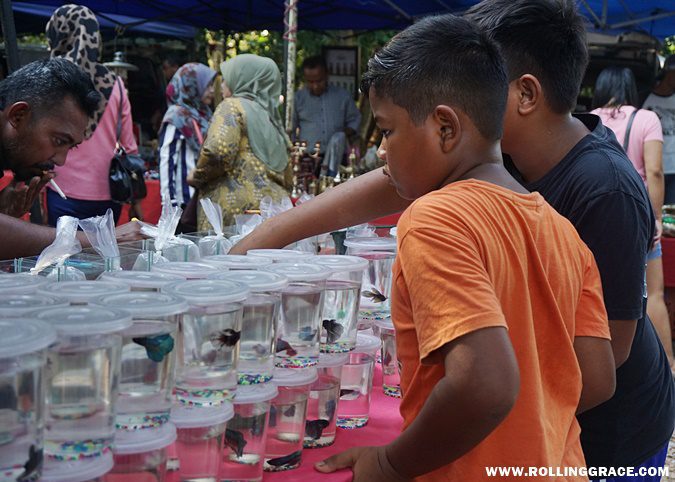
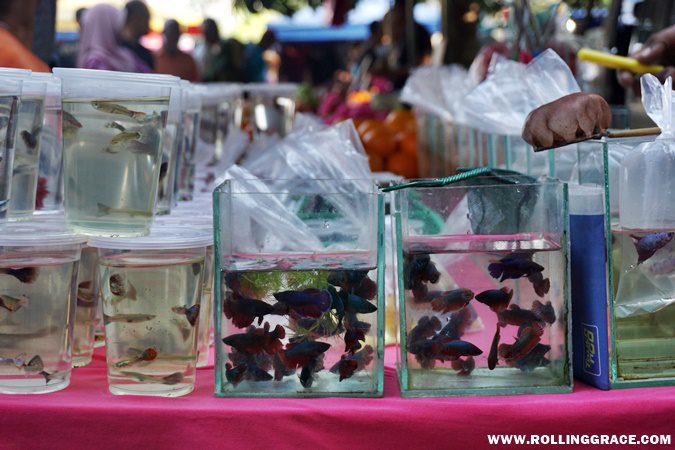
- Animals. Fish, birds, rabbits, and quails are sold in the animal section. It is a working market, and the livestock section is functional rather than decorative.
- Plants and gardening. From fruit tree seedlings to ornamental houseplants, the plant section is well stocked and competitively priced. Cuttings are available for those who do not want to carry a full pot home.




Kopi Timbang Perlis Coffee
One of the more distinctive items at Nat Pokok Getah is kopi timbang, locally roasted coffee sold by the gram. The beans are ground on site using a mechanical grinder, and the coffee is available in two variations: black and white, both with sugar already blended in.
You buy it by weight and take it home to brew yourself. The flavour is strong, sweet, and distinctly different from commercial coffee. It is one of the better souvenirs you can carry out of Perlis.


Rokok Daun Tembakau: Local Tobacco in Perlis
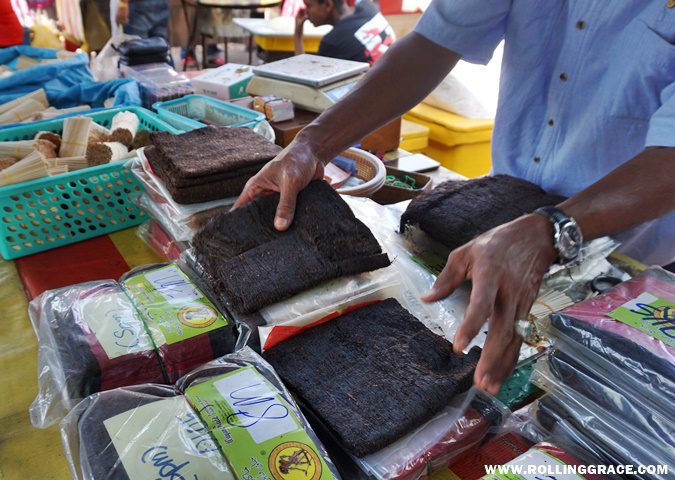
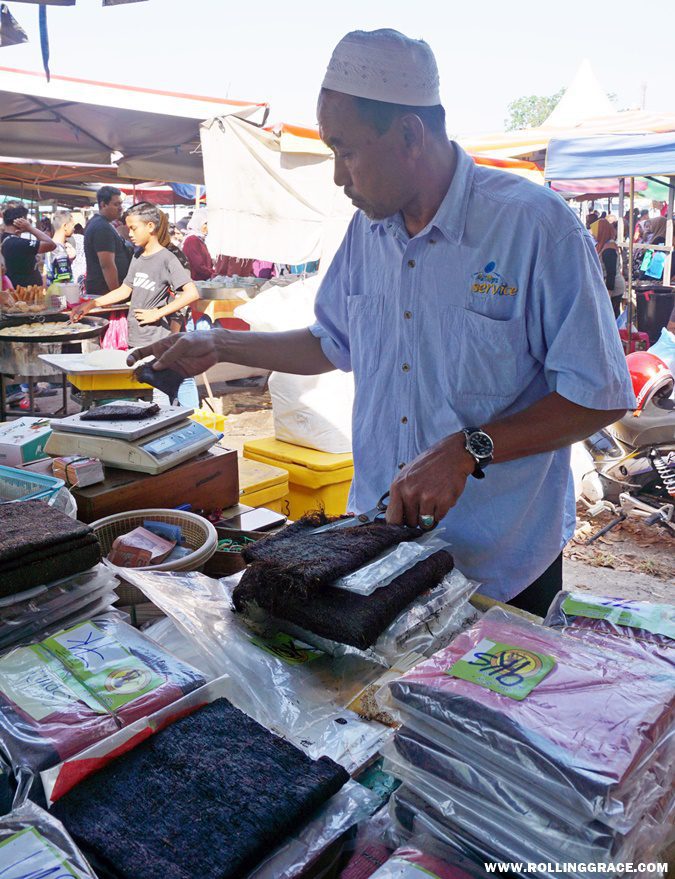
Perlis has a long history with tobacco, and at Nat Pokok Getah you will find vendors selling locally produced tobacco in sheet form, sold by the gram. Buyers cut and weigh their preferred amount and use it to roll their own cigarettes.
It is significantly cheaper than commercial tobacco products and considered part of the region’s cultural heritage. The sheets come in varying strengths and flavours, and the vendors are happy to explain the differences.
How to Get to Nat Pokok Getah
Nat Pokok Getah is roughly 20km from Kuala Perlis and 12km from Kangar. If you are coming from KL, take the ETS train to Arau station (roughly 5 to 6 hours from KL Sentral). From Arau, a Grab or taxi to the market takes about 10 minutes. By car, the drive from KL takes approximately 5 to 6 hours via the PLUS highway.
The market is located close to the Changloon-Kuala Perlis Expressway, making it an easy stop if you are driving through the region.
- Address: Jalan Nat Pokok Getah, Kampung Kubang Paya, 02600 Arau, Perlis
- Opening days: Friday and Sunday only
- Opening hours: 7am to 1pm
- Contact number: +6017-559 6751
- Parking fees: RM3 per vehicle. Arrive before 9am on Sundays for the best spaces. Activity peaks around 9am and thins out considerably by noon.
Tips for Visitors
- Wear comfortable shoes. The ground is uneven dirt and gravel beneath the rubber trees. Closed shoes are better if it has rained recently.
- Bring cash. There are no card machines or e-wallet terminals at the stalls. Small denominations are useful.
- Bring a bag. You will buy more than you planned. A reusable shopping bag saves you from carrying multiple plastic bags.
Frequently Asked Questions on Nat Pokok Getah
What days is Nat Pokok Getah open?
Friday and Sunday only, from 7am to 1pm. Sunday is the busier of the two days.
Is Nat Pokok Getah worth visiting?
Yes, particularly if you are interested in local food, northern Malay culture, and markets that have not been sanitised for tourists. It is one of the most authentic morning markets in Malaysia.
How much should I budget for Nat Pokok Getah?
A full breakfast for two costs well under RM20. Budget another RM30 to RM50 if you plan to browse the flea market and buy produce. Parking is RM3.
What should I eat at Nat Pokok Getah?
Start with mee sup daging or nasi ayam from the cooked food section, add a selection of kuih from the banana leaf trays, try the tapai pulut daun getah if available, and finish with a bag of kopi timbang to take home.
Are there other markets in Perlis?
Yes. Perlis also hosts Nat Tambun Tualang (Monday), Kuala Perlis Night Market (Tuesday), Nat Balai Baru (Wednesday), Pasar Malam Batu Bertangkup (Thursday), and Kangar Farmers’ Market (Saturday). However, Nat Pokok Getah is the largest and most popular.
This guide is based on a personal visit to Nat Pokok Getah, with all details verified at the time of writing.
Get the good stuff first. Join Rolling Grace for the restaurants worth crossing a city for, the stays worth the upgrade, and the places to go before everyone else. Free, straight to your inbox.
Leave a Reply