This recipe is one I return to every few weeks, tested across different stove types and bean batches, and cross-referenced with hawker stall versions in Penang, Melaka, and Singapore.
Read also: Creamy and Easy Hummus Recipe at Home in 15 Minutes

What Makes Mung Bean Soup One of Southeast Asia’s Best Kept Desserts?
Mung bean soup, known as tong sui in Cantonese or bubur kacang hijau across Malaysia and Indonesia, is a sweet dessert soup built on just four ingredients: dried mung beans, rock sugar, pandan leaf, and water. The dish takes 25 minutes from stove to table, requires zero soaking, and works both hot and cold. Across Southeast Asia, it is one of the most widely eaten sweet soups, showing up at hawker stalls, dim sum restaurants, and home kitchens with equal regularity.
What sets this mung bean soup recipe apart from most versions circulating online is how little you actually need to do. There is no overnight soak. No coconut milk required (though it is a welcome addition). No complicated layering of spices.
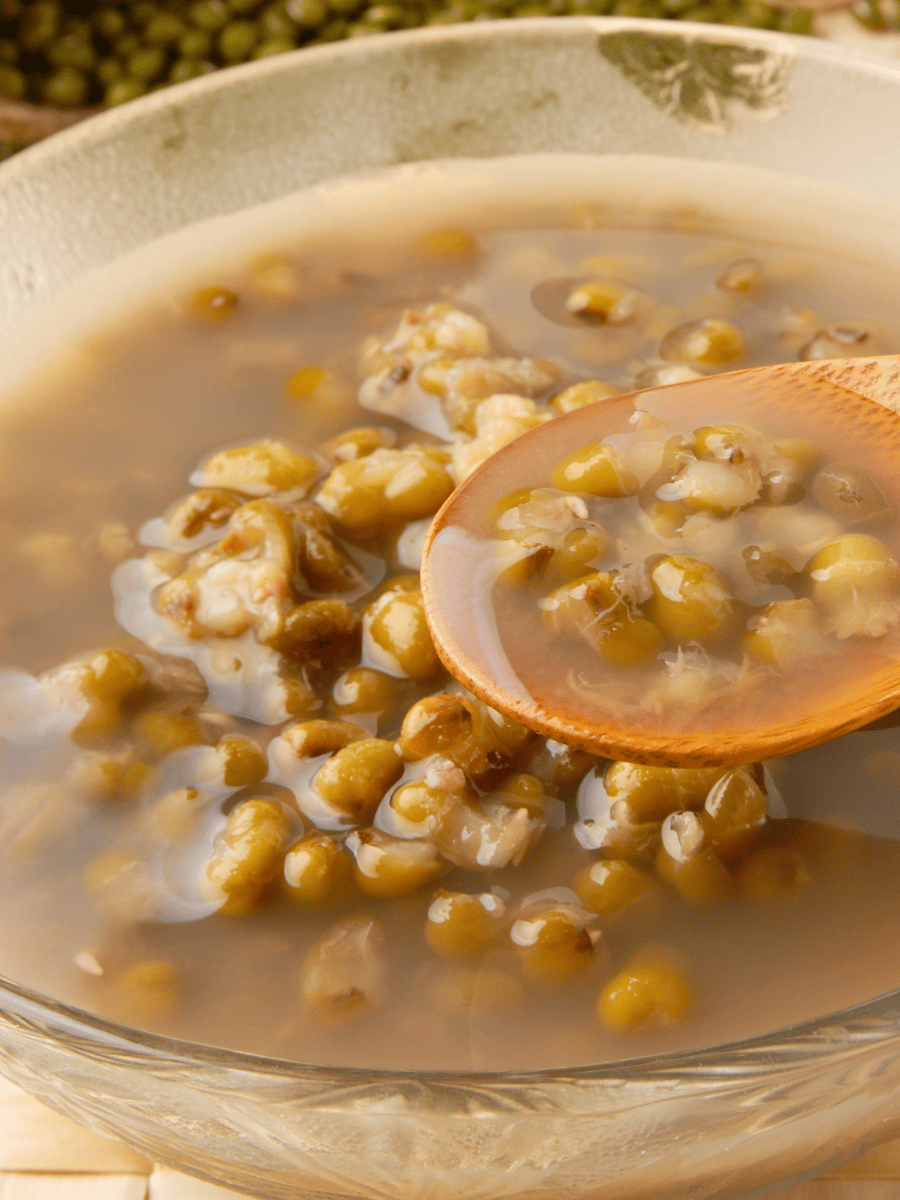
The beans go straight into the pot with water, reach a rolling boil, and break down into a thick, porridge-like consistency within half an hour. Rock sugar dissolves slowly through the final minutes, producing a clean sweetness that does not cloy, and a single knotted pandan leaf lends a grassy, vanilla-adjacent fragrance that lifts the entire bowl.
How to Make Mung Bean Soup at Home
The simplest version of mung bean soup takes one pot, four ingredients, and 25 minutes of cooking time. No soaking is needed. Rinse the beans, boil them, sweeten, and serve. This recipe serves two to three people and scales easily.
Ingredients
- 1 cup dried mung beans (approximately 200g), rinsed and drained
- 2 cups water (adjust for thinner or thicker consistency)
- 3/4 cup rock sugar (reduce to 1/2 cup for a less sweet version)
- 1 pandan leaf, tied into a knot (optional but strongly recommended)
Method
- Combine the rinsed mung beans, pandan leaf, and water in a medium pot. Bring everything to a boil over high heat.
- Reduce heat to medium-low. Let the beans simmer for 25 minutes, or until they have softened and begun to split open. Stir occasionally to prevent sticking.
- Add the rock sugar. Stir until fully dissolved, about 2 to 3 minutes.
- Remove the pandan leaf. Serve hot immediately, or let the soup cool to room temperature before refrigerating for a chilled dessert.
Tips from Testing This Recipe Multiple Times
- Bean freshness matters. Older dried mung beans (stored for over a year) take longer to break down. If your beans are still firm after 25 minutes, add a splash more water and continue simmering for another 10 minutes.
- Rock sugar vs white sugar. Rock sugar produces a cleaner, more rounded sweetness. White sugar works in a pinch but tends to make the soup taste sharper and more one-dimensional.
- Consistency control. For a thinner soup, add an extra half cup of water before boiling. For a thicker, porridge-style version (closer to Cantonese luk dau sa), use less water and cook for 30 to 35 minutes until the beans collapse entirely.
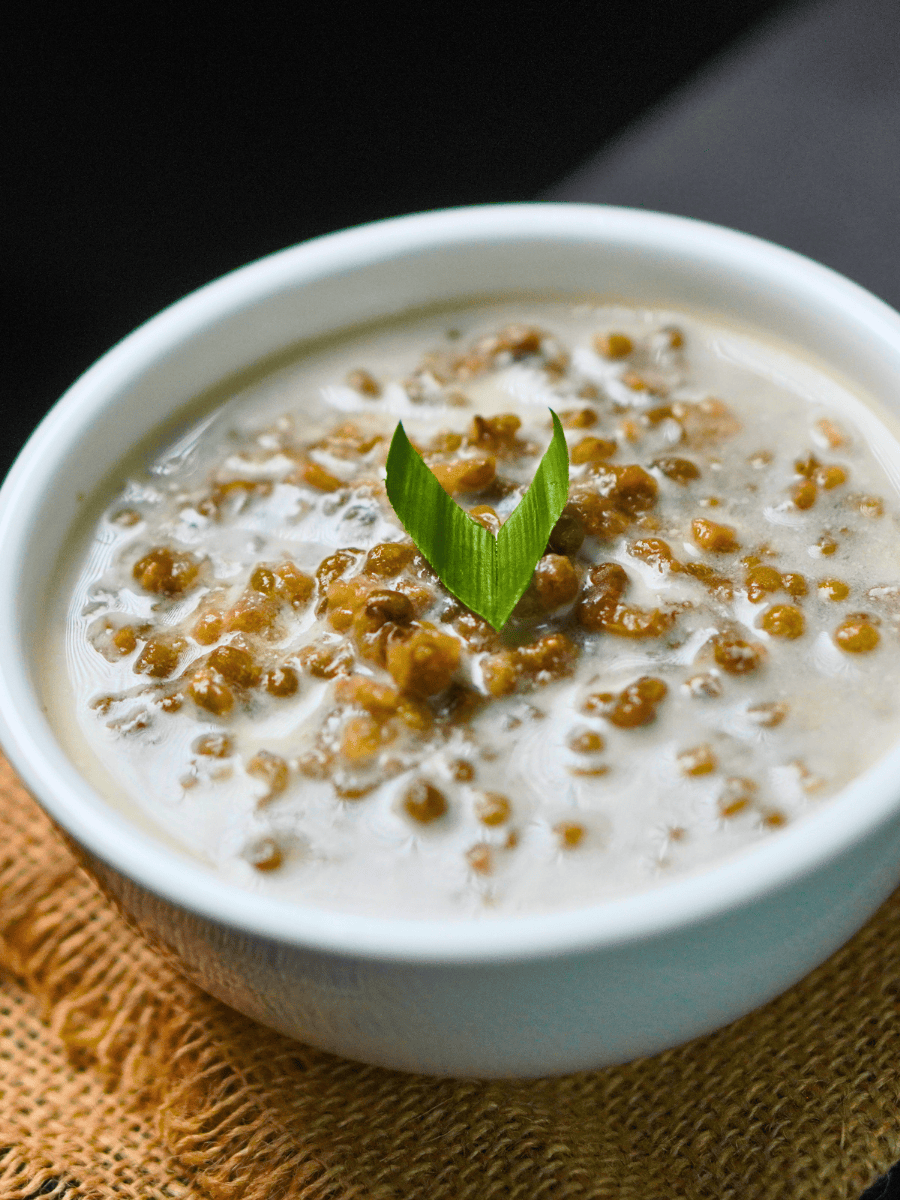
- Add-ons. Sago pearls, coconut milk, or a few slices of fresh ginger are common across different regional versions. In Malaysia and Indonesia, gula Melaka (palm sugar) often replaces rock sugar for a deeper, caramel-edged sweetness.
What Are the Health Benefits of Mung Beans?
Mung beans are high in plant-based protein, dietary fibre, and a broad range of vitamins and minerals including iron, magnesium, potassium, and folate. Below are seven specific, research-supported benefits worth knowing about..
Read also: 4-Ingredient Kuih Cek Mek Molek Recipe: Best Kelantan Snacks
High Fibre Content Supports Gut Health
One cup of cooked mung beans delivers approximately 15g of dietary fibre, which is significantly more than the same serving of cooked red beans. That fibre feeds beneficial gut bacteria and supports regular digestion.
The fermentation of mung bean fibre in the colon releases short-chain fatty acids that reinforce mucosal integrity and reduce low-grade inflammation.
Low Glycaemic Index Helps Regulate Blood Sugar
Mung beans have a naturally low glycaemic index, meaning they release glucose into the bloodstream slowly. The starch granules within the beans are packed tightly in a fibre matrix, which slows digestion and prevents sharp blood sugar spikes. This holds true for whole, sprouted, and milled forms of the bean.
Traditional Cooling Properties Backed by Modern Research
In Traditional Chinese Medicine (TCM), mung beans are classified as a “cooling” food, used for centuries to reduce body heat and treat symptoms of heatstroke. A 2023 in vitro study identified specific antioxidants in mung beans, including orientin, vitexin, and caffeic acid, as effective at regulating stress caused by elevated body temperatures.
Cardiovascular Support
Mung bean protein is found to improve endothelial function in middle-aged adults over six weeks, alongside enhanced antioxidant enzyme activity and reduced inflammatory markers. Earlier animal studies showed reductions in total and LDL cholesterol after consistent mung bean consumption.
Rich in Essential Vitamins and Minerals
Mung beans contain vitamins A, B1, B2, B3, B5, B6, C, E, and K, along with iron, folic acid, magnesium, potassium, and zinc. The protein content ranges from 21 to 32 percent by dry weight, making them one of the most protein-dense legumes available.
Antioxidant Profile Increases When Sprouted
Sprouted mung beans contain up to six times more antioxidants than their unsprouted counterparts, according to data reviewed by Healthline. While much of this research is based on test-tube studies and more human trials are needed, the antioxidant uplift from sprouting is well documented.
Low Calorie, High Satiety
A single cup of cooked mung beans contains roughly 210 calories while delivering substantial protein and fibre. That combination promotes fullness and makes mung bean soup a practical option for anyone managing their caloric intake without sacrificing nutrition.
Why Is Mung Bean Soup Recipe Popular in Southeast Asia?
Mung bean soup has been a daily staple across China, Malaysia, Singapore, Indonesia, Vietnam, and Thailand for generations. Its popularity comes down to three things: it is cheap to make, fast to prepare, and effective at cooling the body in tropical heat.
Read also: 5 Easy Vegan Smoothie Recipes You Can Make in 2 Minutes
In Malaysia and Singapore, sweetened mung bean soup is a standard item at kopitiam breakfast spreads and post-dinner dessert stalls. In Indonesia, bubur kacang hijau often includes coconut milk and palm sugar, giving it a richer, more custard-like character.
In southern China, particularly Guangdong, the Cantonese version (luk dau sa or 綠豆沙) is one of the most beloved tong sui desserts, served at dedicated sweet soup shops alongside red bean soup, black sesame paste, and taro sago.
The Chinese records mung bean as a medicinal ingredient used for detoxification, mental recovery, heatstroke relief, and digestive regulation. That classification has kept the bean central to both home cooking and traditional medicine across East and Southeast Asia for centuries.
Can You Serve Mung Bean Soup Cold?
Yes. Mung bean soup works equally well chilled or at room temperature, and many people across Southeast Asia prefer it cold during hotter months.
Let the soup cool after cooking, transfer to a sealed container, and refrigerate for at least two hours. The texture thickens slightly once cold, which gives it a more pudding-like consistency. Some hawker stalls in Singapore and Penang serve it over crushed ice as an afternoon snack.

How Does Mung Bean Soup Recipe Fit Into a Sustainable Kitchen?
Mung beans are one of the most resource-efficient crops in tropical agriculture. They fix nitrogen in the soil, reducing the need for synthetic fertilisers, and they mature in 60 to 75 days, making them viable as a rotation crop between rice harvests across Southeast Asia.
Choosing locally grown mung beans, which are widely available at wet markets throughout Malaysia, Singapore, and Indonesia, keeps the ingredient footprint small. The recipe itself produces zero food waste: the beans cook whole, the pandan leaf is compostable, and leftovers keep in the fridge for up to four days.
Get the good stuff first. Join Rolling Grace for the restaurants worth crossing a city for, the stays worth the upgrade, and the places to go before everyone else. Free, straight to your inbox.
Leave a Reply