The smell hits you before you have reached the kitchen. Shallots already in oil, ginger pounded down to a paste, and the bright herbal note of daun kesum coming up underneath.
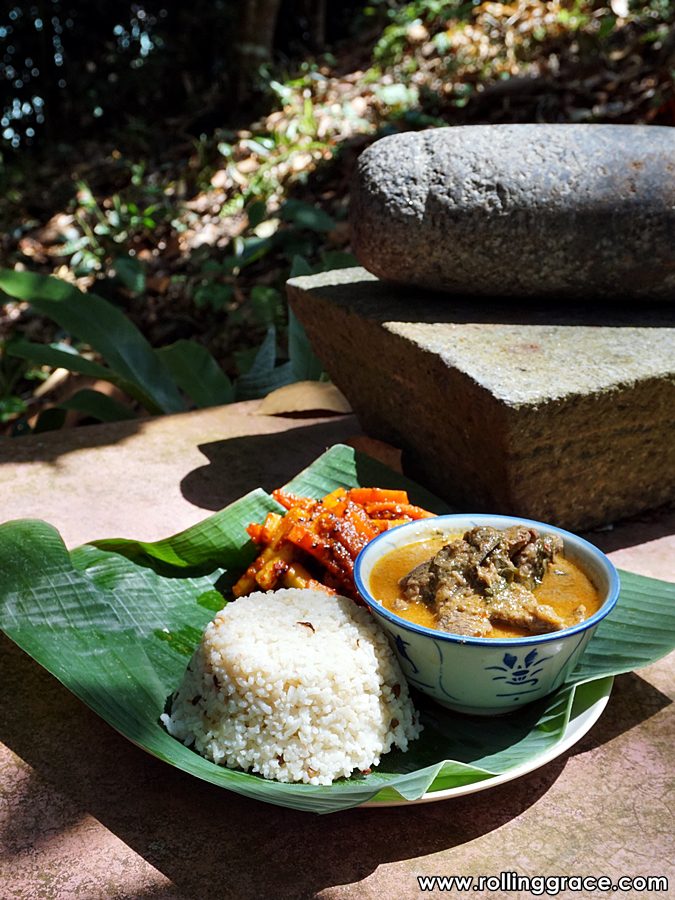
This is how a morning begins at Tropical Spice Garden Cooking School in Penang, on the northwest coast at Teluk Bahang. Two of the most-requested classes ahead of Ramadan are Gulai Daging Daun Kesum, a fragrant beef curry built around daun kesum or Vietnamese coriander, and Acar Rampai, a sweet-sour pickled salad that almost every Malay household will have on the table during the fasting month.
Read also: Zesty Thai Spicy Noodle Salad Recipe: Ready in 30 Minutes
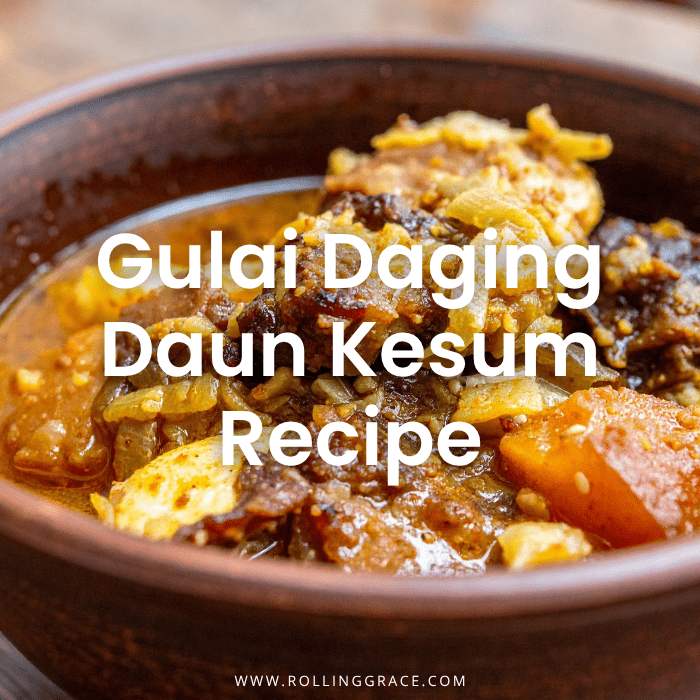
What Is Daun Kesum?
Daun kesum is the local Malay name for Vietnamese coriander (Persicaria odorata), a fragrant herbaceous plant with long, narrow leaves and a sharp, peppery aroma somewhere between mint and coriander.
It is used in Malay cooking for laksa, asam pedas, and curries like gulai daging. It is also a traditional remedy for digestion, flu symptoms, and skin issues, thanks to its anti-bacterial properties.
If you cannot find daun kesum at your local market, a mix of mint and coriander gets you close, but the real leaf has a distinct sharpness that finishes the curry properly.
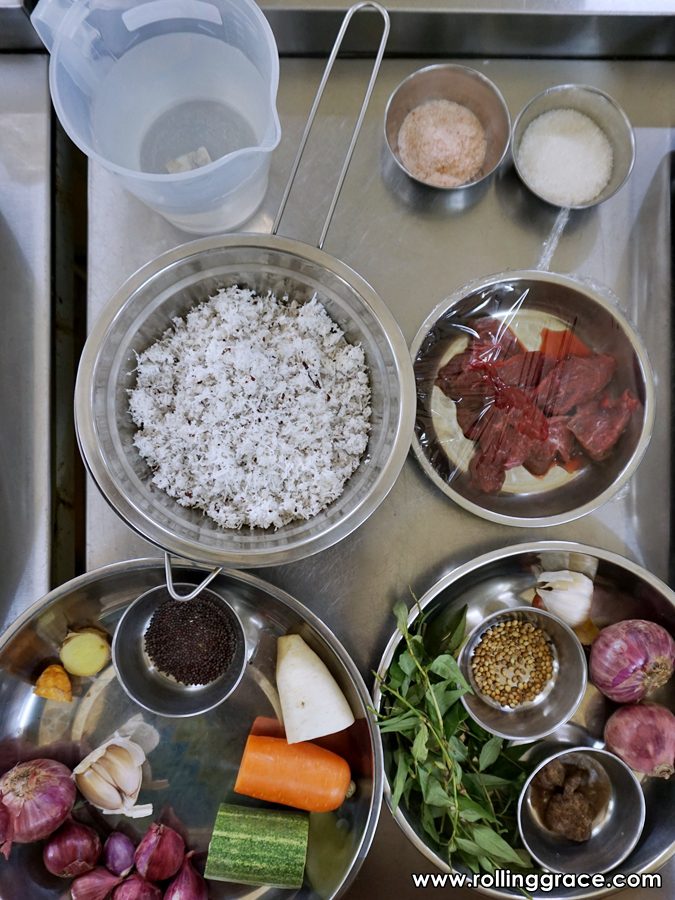
Gulai Daging Daun Kesum Recipe
This traditional Malay beef curry is simple to put together. The daun kesum is what lifts it, the leaves added near the end of cooking so the aromatics stay bright. The dish comes together in about 40 minutes and serves 2 as a main with rice.
- Prep time: 10 minutes
- Cook time: 30 minutes
- Serves: 2
- Difficulty: Medium
Ingredients
- 150g beef, cut into bite-sized chunks
- 2 tablespoons cooking oil
- ¼ teaspoon coriander powder
- 3 tablespoons chilli paste
- 2 red onions
- 1 clove garlic
- ¼ inch galangal
- 1 cup beef stock
- ½ cup coconut cream
- 1 tablespoon toasted coconut
- 1 small bunch daun kesum (Vietnamese coriander)
- Salt to taste
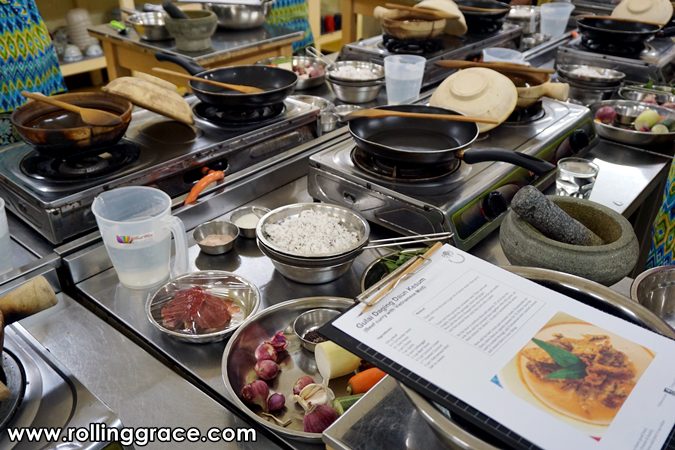
Method
- Peel and chop the galangal, onion, and garlic. Blend in a food processor or pound with a pestle and mortar into a fine paste.
- Heat the oil in a wok over medium flame. Add the blended paste, coriander powder, and chilli paste. Simmer for 7 minutes to caramelise the onion and bloom the spices.
- Add the beef stock, coconut cream, and salt to taste. Stir occasionally for 15 minutes until the beef is cooked through and the gravy has thickened.
- Add the daun kesum leaves and toasted coconut. Stir for 5 more minutes so the herb releases its aroma but does not lose its colour.
- Serve hot with steamed rice.
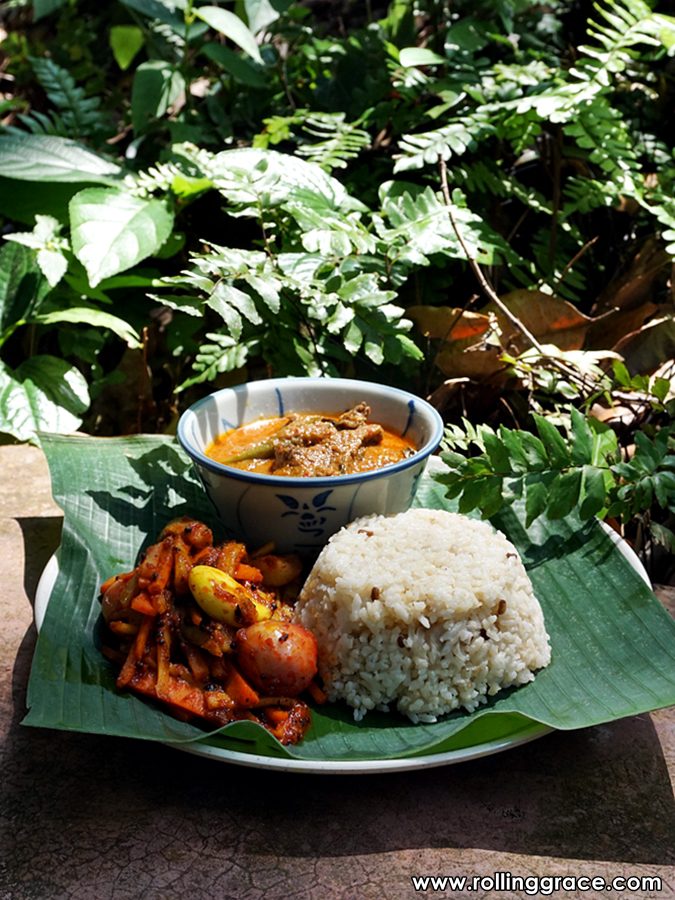
Acar Rampai Recipe
Acar Rampai is the kind of pickle that earns its place at the Ramadan table by doing the opposite of everything else on it. Sweet, sour, salty, spicy, cold against the heat of the gulai. It can be served immediately, but it is typically refrigerated overnight so the flavours deepen and the vegetables soak up the brine properly.
- Prep time: 15 minutes
- Cook time: 15 minutes
- Serves: 4 to 6 as a side
- Difficulty: Easy
Ingredients
Spice paste (A)
- 6 shallots
- 2 cloves garlic
- ½ inch ginger
- ½ inch fresh turmeric
- 3 tablespoons chilli paste
Vegetables (B)
- ½ cucumber
- ½ carrot
- ½ daikon radish
- 1 red onion
- 4 cloves garlic
Pickle base (C)
- 2 teaspoons mustard seeds
- 3 tablespoons cooking oil
- ½ cup white vinegar
- 2 tablespoons sugar
- Salt to taste
- 1 tablespoon roasted sesame seeds, to finish
Method
- Blend all the ingredients from group (A) into a fine paste.
- Peel and chop all the vegetables from group (B) into small, uniform pieces. Keep the cucumber aside.
- Heat the oil in a pot. Add the mustard seeds and let them pop. Add the blended paste, vinegar, sugar, and salt. Sauté until the oil separates from the paste.
- Add the vegetables from group (B), except the cucumber. Stir for 5 minutes until just softened.
- Turn off the heat. Add the cucumber, season with salt, and toss through.
- Sprinkle with roasted sesame seeds. Serve at room temperature or chilled. Best after a night in the fridge.
How Long Does Acar Rampai Keep?
Acar Rampai keeps in an airtight container in the fridge for 4 to 5 days, and the flavour deepens with each day. The vinegar and sugar do the preservation work, so as long as the dish stays sealed and cold, it holds well.
Beyond 5 days, the texture of the cucumber starts to soften and the pickle loses its bite.
Popular Ramadan Dishes: Gulai Daging and Acar Rampai
These two dishes work together because they balance each other on the plate. The gulai is hot, rich, and herbal. The acar is cold, sour, and sharp. At a typical Ramadan iftar table, both will land alongside rice, sambal, and a soup or salad, and each guest builds their own balance from there.
For larger gatherings, double the gulai recipe and prepare the acar a day ahead. The acar improves overnight, and the gulai reheats well, which makes both ideal for entertaining without losing the morning to cooking.
Read also: Best Ramadan Food in Malaysia: 10 Must-Eat Bazaar Favourites

How to Book a Class at Tropical Spice Garden
Classes at the Tropical Spice Garden Cooking School run with morning and afternoon sessions daily, capped at 10 participants. Book through tsgcookingschool.com, email info@tropicalspicegarden.com, or call +604-881 1797.
The school is located inside the larger Tropical Spice Garden in Teluk Bahang on the northwest coast of Penang, about 30 minutes by car from George Town. By public transport, take Rapid Penang bus 101 or 102 from George Town. Reservations a week ahead are recommended during Ramadan, school holidays, and Chinese New Year.

Local Spices in Malaysia
Both of these recipes are good examples of how Malay home cooking leans on what grows locally. Daun kesum thrives in the wet tropical climate of the peninsula. Turmeric, galangal, lemongrass, and chilli are all grown across Malaysia year-round.
Choosing the freshest possible herbs and spices, ideally from a wet market or your own garden, brings the dishes closer to the way they are meant to taste and supports the smaller farms that supply them.
Tropical Spice Garden Cooking School Penang
TSG Cooking School is one of the longest-running cooking schools in Penang and one of the few in Malaysia to teach Malay, Nyonya, Indian Muslim, Penang street food, Thai, and Asian vegetarian cooking under one roof. Sessions are capped at 10 people, which means real one-to-one time at the wok with the instructor, not a demo lecture from a distance.
Buy Penang Tropical Spice Garden Ticket
The garden setting matters too. The school is located inside the larger Tropical Spice Garden, an 8-acre former rubber plantation that opened in the early 2000s and now grows more than 500 species of spices, herbs, and tropical plants.
Most morning classes begin with a quick walk through the spice trails so students can see, smell, and bruise the leaves of what is about to go into the wok.
This guide is based on a hands-on cooking class taken at the Tropical Spice Garden Cooking School in Penang, with recipes verified against the original cards distributed in class.
Get the good stuff first. Join Rolling Grace for the restaurants worth crossing a city for, the stays worth the upgrade, and the places to go before everyone else. Free, straight to your inbox.
Leave a Reply