There are 29 countries that don’t recognise Israel as of 2026, but only three print that position directly inside their passports, and Malaysia is one of them.
Read also: What Is the Sarajevo Safari: 5 Shocking Facts

What Does the Inscription Inside a Malaysian Passport Actually Say?
Every Malaysian passport carries a printed line on its information page: “This passport is valid for all countries except Israel.” It is not a stamp, not an addendum, and not discretionary.
It is built into the document at the point of issue. Malaysia has never recognised the State of Israel, does not maintain diplomatic relations, and officially prohibits its citizens from travelling there, with limited exceptions for approved religious pilgrimages.

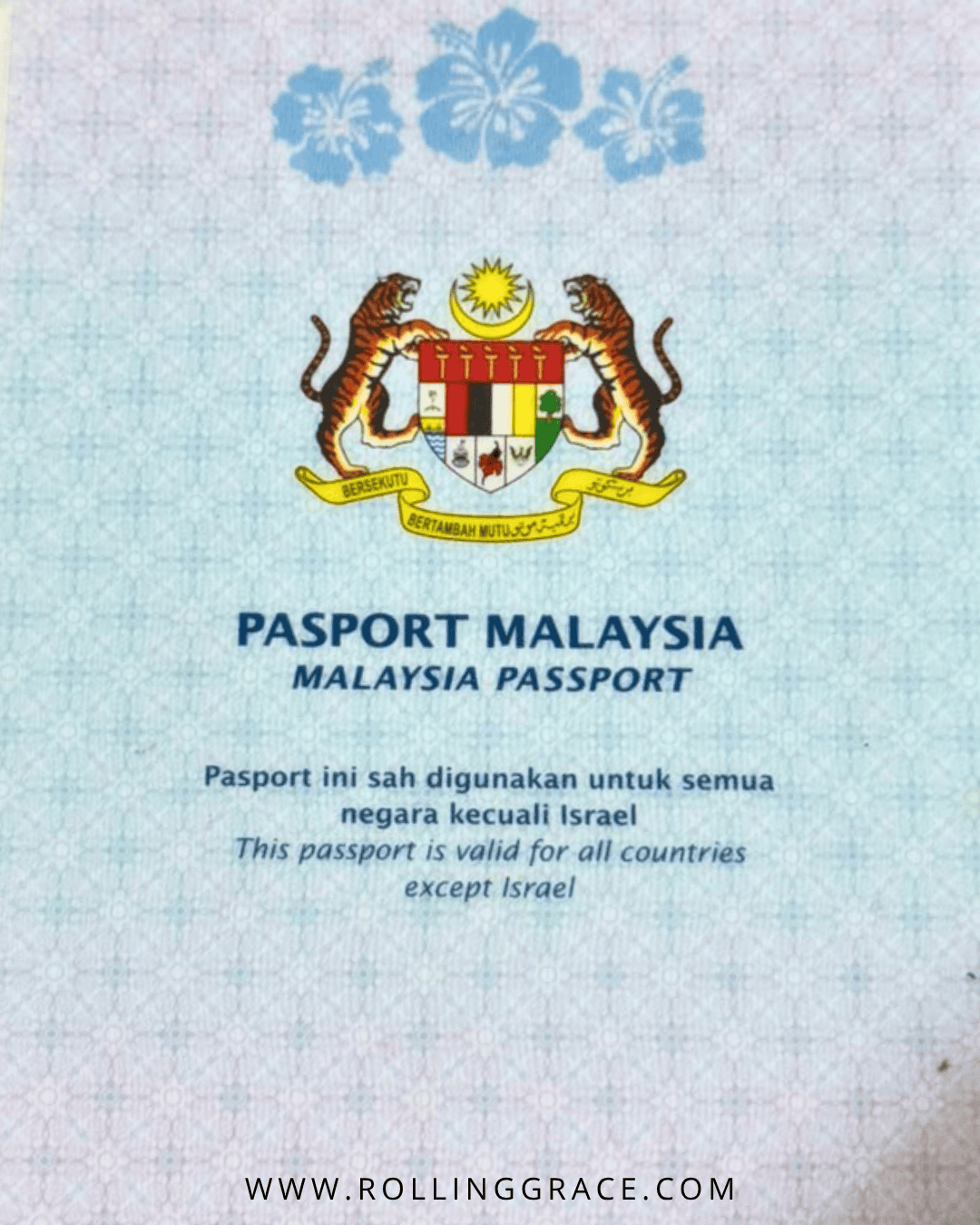
Malaysia is not the only country that does this. Pakistan prints near-identical wording inside its passports. Bangladesh carried the same inscription for years, dropped it when it introduced electronic passports in 2020, then reversed course: in April 2025, the Home Ministry issued a directive to reinstate the sentence “This passport is valid for all countries of the world except Israel.” across all official travel documents.
These three countries, Malaysia, Pakistan, and Bangladesh, are the only ones known to print the restriction directly inside the passport itself. But they are far from alone in the broader picture.
A total of 29 countries that don’t recognise Israel hold that position as of February 2026, and the number of nations blocking Israeli passport holders at their borders has grown in the last two years.

Complete List of Countries That Do Not Recognise Israel
As of February 2026, Israel is recognised as a sovereign state by 163 of the 192 other UN member states.
That leaves 29 that have either never formally recognised Israel or have withdrawn their recognition. The majority are members of the Organisation of Islamic Cooperation or the Arab League.
Arab Countries That Don’t Recognise Israel
Fifteen members of the Arab League do not recognise Israel: Algeria, Comoros, Djibouti, Iraq, Kuwait, Lebanon, Libya, Oman, Qatar, Saudi Arabia, Somalia, Sudan, Syria, Tunisia, and Yemen.
Iraq and Syria technically remain in a state of war with Israel. Lebanon had been in the same position since 1948, but on 26 June 2026, Israel and Lebanon signed a trilateral framework agreement with the United States declaring their intent to formally end the state of war between them.
The agreement’s implementation remains contested: Hezbollah rejected the deal outright and warned that enforcement could push Lebanon toward civil war.
Sudan’s position is also notable. It was included in the 2020 Abraham Accords normalisation process alongside the UAE, Bahrain, and Morocco, but the normalisation was never completed. Sudan remains on the non-recognition list as of February 2026.
Non-Arab OIC Members That Don’t Recognise Israel
Eleven non-Arab members of the Organisation of Islamic Cooperation do not recognise Israel: Afghanistan, Bangladesh, Brunei, Indonesia, Iran, Malaysia, Maldives, Mali, Mauritania, Niger, and Pakistan.
Read also: History of Puputan War in Bali: 5 Important Things to Know
Iran is a particular case. It granted de facto recognition in 1948 and was among the first countries to acknowledge the provisional Israeli government. It severed all ties after the 1979 Islamic Revolution and has maintained that position since. Mali broke off relations during the 1973 Arab-Israeli War and has not restored them.
Non-Muslim States That Don’t Recognise Israel
Three non-Muslim-majority countries complete the list: Cuba, North Korea, and Venezuela. Cuba originally voted in favour of Israel’s admission to the United Nations in 1949 but withdrew recognition during the 1973 Arab-Israeli War.
Venezuela withdrew recognition after the 2008-2009 Gaza conflict. North Korea has never recognised Israel.
Which Countries Severed or Suspended Ties After October 2023?
The Gaza conflict that began on 7 October 2023 triggered a wave of diplomatic breakdowns, most visibly across Latin America. Several countries that had previously maintained full relations with Israel cut or suspended them in protest.
Bolivia
Bolivia severed diplomatic relations in October 2023, the first Latin American country to do so after the conflict began. Bolivia had only restored ties with Israel in 2019, a decade after cutting them over previous military operations in Gaza.
As of February 2026, Bolivia appears in Wikipedia’s International recognition of Israel table with a “severed” status, suggesting it ended diplomatic relations without explicitly withdrawing formal recognition.
Belize
Belize suspended diplomatic ties in November 2023. Like Bolivia, Belize remains in the recognition table with a “suspended” note, indicating it has not formally withdrawn recognition.
Colombia
Colombia severed relations in May 2024, making it the largest and most economically significant country to cut ties during this period. The decision disrupted deep military contracts: Colombia’s fighter jets are all Israeli-built. Colombia had already suspended arms purchases from Israel on 29 February 2024 following the killing of over 100 Palestinians waiting for humanitarian aid in Gaza.
Nicaragua
Nicaragua broke diplomatic relations in October 2024, after its Congress passed a resolution calling for action on the one-year anniversary of the conflict. The move was largely symbolic, as Israel did not have a resident ambassador in Managua.
Maldives
The Maldives ratified an amendment to its Immigration Act in April 2025, formally banning Israeli passport holders from entering the country. The Maldives had suspended diplomatic ties with Israel back in 1974 and is already among the 29 non-recognising states. The 2025 legislation added an explicit entry ban on top of the existing non-recognition.
Other Diplomatic Shifts
South Africa brought a genocide case against Israel at the International Court of Justice. Brazil recalled its ambassador to Israel in May 2024. Honduras recalled its ambassador in November 2023. Chile recalled its ambassador in November 2023 and referred the situation in Palestine to the International Criminal Court in January 2024.
Malaysia imposed a ban on Israeli-flagged vessels and Israeli-registered companies docking at its ports, and blocked any ship heading to Israel from loading cargo at Malaysian ports.
Which Countries Ban Israeli Passport Holders at Their Borders?
Thirteen countries impose longstanding bans or near-total restrictions on Israeli passport holders attempting to enter: Algeria, Bangladesh, Brunei, Iran, Iraq, Kuwait, Lebanon, Libya, Malaysia, Pakistan, Saudi Arabia, Syria, and Yemen. The Maldives became the fourteenth when it ratified its passport ban in April 2025.
Exceptions Worth Knowing
Not every ban is absolute. Oman permits Israeli nationals for transit only. Saudi Arabia allows entry under special permits for business and religious purposes. In Iraq, the ban does not extend to Iraqi Kurdistan. Malaysia will allow Israeli citizens to enter if they hold a clearance permit from the Ministry of Home Affairs, though this is rarely granted.
Which Countries Deny Entry Over Evidence of Israel Travel?
This is a separate category that affects travellers of any nationality, not just Israeli citizens. If your passport contains Israeli visas, stamps, or border crossing evidence from neighbouring entry points, certain countries will turn you away at immigration.
Eight Countries Known to Refuse Entry
Iran, Kuwait, Lebanon, Libya, Pakistan, Saudi Arabia, Syria, and Yemen are all documented as denying entry to travellers whose passports show evidence of a visit to Israel. The restriction extends beyond direct Israeli stamps.
Egyptian or Jordanian stamps from land border crossings into Israel are treated as proxy evidence in several of these countries, particularly stamps from the Taba crossing (Egypt) or the King Hussein Bridge (Jordan), since there is nowhere else those specific crossings lead.
How Israel Responded
Since early 2013, most travellers entering Israel via Ben Gurion Airport on a standard tourist visa no longer receive a stamp in their passport. Instead, they are issued a separate entry card, a paper slip that stays in the passport for the duration of the visit and is discarded on departure. Israel introduced this system specifically because a passport stamp could lock travellers out of dozens of other countries.
The workaround is not foolproof. Jordanian and Egyptian border officials may still stamp your passport at the land crossing points, and those stamps alone are enough to trigger refusal in the eight countries listed above.
Malaysia’s Stance Compared to Other Southeast Asian Nations
Malaysia holds the most explicit position in the region. The passport inscription, the shipping ban on Israeli-flagged vessels, and the absence of any diplomatic channel make it one of the most consistently non-recognising states globally.
Brunei also does not recognise Israel and bars Israeli passport holders from entry. Indonesia, the world’s most populous Muslim-majority country, does not recognise Israel but has historically maintained some informal contact. No formal diplomatic relations exist.
Singapore, Thailand, the Philippines, and Myanmar all maintain full diplomatic relations with Israel.
Malaysia’s non-recognition has had no visible impact on its inbound tourism. The country recorded just over 25 million international tourist arrivals in 2024, a 24 percent increase from 2023, and has set a target of 31.4 million for 2025. The restriction applies outward, to where Malaysians can go, not inward.
What Should Travellers Know Before Booking?
If you hold a passport from Malaysia, Pakistan, or Bangladesh, your government has already printed the restriction for you: travel to Israel is formally off-limits without special permission.
If you hold a passport from another country and plan to visit Israel alongside destinations in the Middle East or North Africa, the stamp issue is the primary thing to manage.
Tips for Multi-Destination Travellers
Fly into Israel via Ben Gurion Airport where possible, as entry cards are issued by default with no passport stamp. If crossing overland from Jordan via the King Hussein Bridge, request that border officials stamp a separate sheet of paper. Some travellers carry two valid passports (where their citizenship allows) to keep Israel-related stamps entirely separate from the passport used in restrictive countries.
Countries that do not recognise Israel but still function as popular tourist destinations, including Oman, Saudi Arabia, and Indonesia, each have different thresholds for enforcement. Check the latest entry requirements directly with embassy or consulate contacts before booking.
Which Countries Refuse to Recognise Israel, and Is the List Growing?
The list of 29 non-recognising states has shifted over the decades and continues to move now.
The 2020 Abraham Accords brought the UAE, Bahrain, and Morocco into formal relations with Israel. Guinea re-established ties in 2016 after Israel supported the country during its Ebola crisis. Bhutan became the most recent country to recognise Israel, establishing diplomatic relations in December 2020.
The post-October 2023 period has pushed in the opposite direction. Bolivia, Colombia, Belize, and Nicaragua have all severed or suspended relations. The Maldives moved from open tourism to a full passport ban within 18 months. Bangladesh reinstated the “except Israel” inscription on its passports after briefly removing it.
The June 2026 trilateral framework between Israel, Lebanon, and the United States marks the most significant diplomatic development in years, with both countries declaring intent to end their 78-year state of war. But with Hezbollah rejecting the deal and implementation uncertain, the outcome is far from settled.
These positions are not permanent. For travellers planning trips across the Middle East, North Africa, or Southeast Asia, the practical takeaway is simple: verify current entry rules close to your departure date. The diplomatic map is being redrawn in real time, and enforcement at immigration counters does not always match the official position on paper.
Get the good stuff first. Join Rolling Grace for the restaurants worth crossing a city for, the stays worth the upgrade, and the places to go before everyone else. Free, straight to your inbox.
Leave a Reply