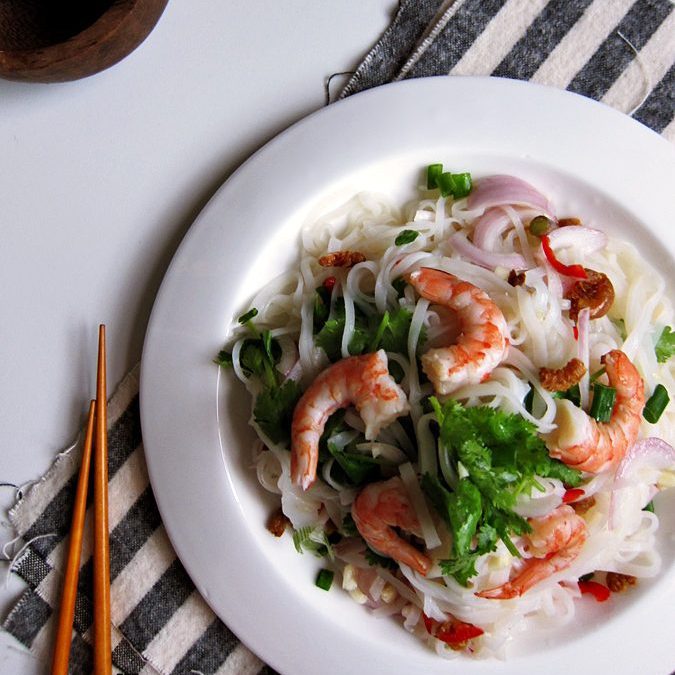
The fish sauce hits first, then the lime, then the heat. This Thai spicy noodle salad recipe is proof that the best bowls are almost always the simplest ones.
The dressing is the whole point. Fish sauce, fresh lime juice, and a spoonful of sugar stirred together until the sugar dissolves, then loaded with garlic, chilli, and sliced onion. It is sharp, savoury, and punchy, and it costs almost nothing to make. Everything else in this dish, the shrimp, the noodles, the crispy dried shrimp on top, exists to carry that dressing from the bowl to your mouth as efficiently as possible.
This Thai spicy noodle salad, known in Thailand as Yum Sen Mee, is one of the lightest and most flavour-forward noodle dishes in Thai cuisine. It is not a stir-fry. It is a salad, eaten at room temperature, and the distinction matters. The noodles are blanched, not fried. The shrimp are poached quickly in boiling water and pulled out the moment they turn white. The dressing is mixed first, the ingredients are tossed through it, and the dish is served immediately. Total time from starting the stove to sitting down is 30 minutes.
Read also: Creamy and Easy Hummus Recipe at Home in 15 Minutes

What Is Yum Sen Mee?
Yum (ยำ) is a Thai term for a salad dressed with a balance of sour, salty, spicy, and sweet. Sen Mee refers to the thin rice vermicelli noodles used as the base. The dish belongs to the same family as Yum Woon Sen, which uses mung bean glass noodles instead, and Yum Mama, made with instant noodles. All three share the same core dressing and are assembled in the same way. The version you make depends almost entirely on which noodle you have in your pantry.
The dish is light enough to eat on a hot afternoon and satisfying enough to serve as a main with a bowl of steamed jasmine rice alongside. It keeps well for a few hours in the fridge if you hold back some of the dressing and toss it through just before serving.
Tips for Getting This Right
Do not overcook the shrimp
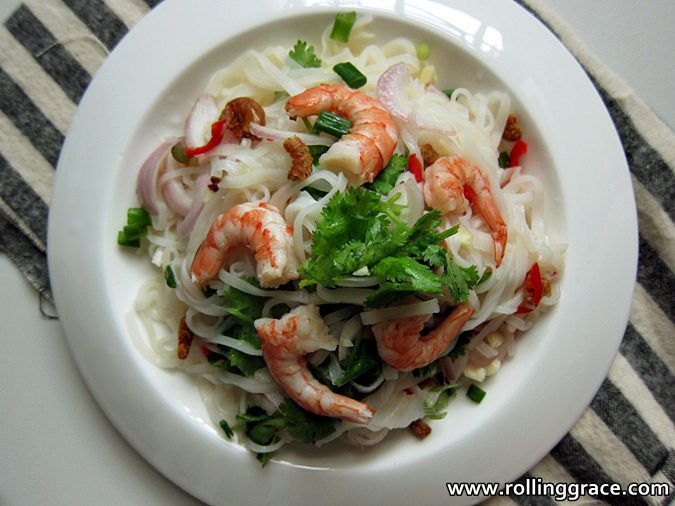
Sixty seconds in boiling water is enough. The moment the flesh turns white and opaque, pull the shrimp out. Overcooked shrimp turns rubbery and loses the sweetness that makes this dish work.
Make the dressing first
This seems like a small thing, but mixing the fish sauce, lime, and sugar before adding anything else allows the sugar to dissolve properly and the flavours to combine. Adding the aromatics (chilli, garlic, onion) into a pre-made dressing coats them more evenly than adding everything at once.
Use fresh lime, not bottled
Bottled lime juice tastes flat and slightly metallic. Fresh lime makes a significant difference in a dish where the acidity is doing most of the work. Five limes sounds like a lot, but Thai noodle salads are built on that brightness.
Rinse the noodles under cold water
After draining the blanched rice sticks, rinse them immediately under cold running water. This stops the cooking, removes surface starch, and keeps the noodles from clumping into a solid mass by the time you are ready to toss them.
Serve immediately
The noodles absorb the dressing quickly. This is not a dish to sit on the stove while you set the table. Toss and serve.

How to Make Yum Woon Sen
Yum Woon Sen is the glass noodle version of this dish and arguably the more famous of the two. The glass noodles (also called mung bean vermicelli or cellophane noodles) are sold dried and need a brief soak before cooking. The process is simple: soak in cold water for 10 minutes to soften, then blanch in boiling water for 1 to 2 minutes. Drain and rinse under cold water as you would the rice sticks. Everything else in the recipe stays the same.
Glass noodles have a slightly more slippery, chewy texture than rice sticks and absorb the dressing a little more aggressively. Some people prefer them for exactly that reason. Both versions are worth trying.
Where to Buy the Ingredients in Malaysia
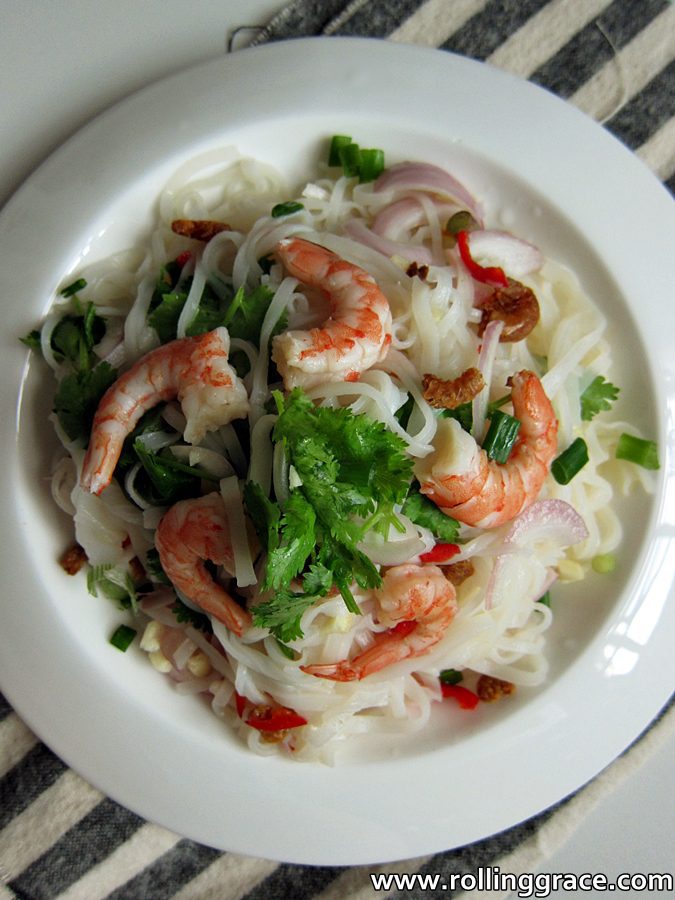
Making the preparation for this Thai spicy noodle salad recipe? Rice sticks and dried shrimp are available at most supermarkets, including Jaya Grocer, Village Grocer, and Mydin.
Mung bean glass noodles can be found at any Asian grocery store and most Chinese supermarkets. Fish sauce brands widely available in Malaysia include Tiparos, Mega Chef, and Tra Chang, all of which work well in this recipe. Fresh shrimp is available at wet markets and supermarket seafood counters.
Frequently Asked Questions on Thai Spicy Noodle Salad Recipe
What is the difference between Yum Sen Mee and Yum Woon Sen?
The dressing and assembly are identical. The only difference is the noodle: Yum Sen Mee uses thin rice vermicelli, while Yum Woon Sen uses mung bean glass noodles. Both are served at room temperature as a salad.
Can I make this dish without shrimp?
Yes. The dish works well with poached, thinly meat, or tofu as a protein alternative. For a vegetarian version, replace the fish sauce with soy sauce or a vegetarian fish sauce substitute.
How spicy is this dish?
One deseeded red chilli gives a mild to medium heat that most people can handle. Leave the seeds in or add a second chilli for more heat. Remove the chilli entirely if you are cooking for children or people who cannot eat spicy food.
Can I prepare this in advance?
You can prepare all the components separately (cook the noodles, poach the shrimp, make the dressing) and refrigerate them. Toss everything together just before serving to prevent the noodles from absorbing the dressing and becoming waterlogged.
Is this dish healthy?
Yes. It is high in protein from the shrimp, low in fat, and uses no oil beyond the small amount used to fry the dried shrimp. The lime juice provides vitamin C and the garlic and chilli are both anti-inflammatory. Fish sauce is high in sodium, so those watching their salt intake can reduce the quantity and adjust to taste.
This recipe has been tested in a home kitchen using ingredients available at most supermarkets and Asian grocery stores across Malaysia and Southeast Asia.
Get the good stuff first. Join Rolling Grace for the restaurants worth crossing a city for, the stays worth the upgrade, and the places to go before everyone else. Free, straight to your inbox.
Leave a Reply