Haenyeo means sea women. The word is two syllables. What it describes has taken a thousand years to build and may take one generation to lose.
On Jeju Island, 50 miles off the southern tip of the Korean Peninsula, a community of women has been diving into the ocean without breathing equipment for over a millennium.
They descend up to 20 metres below the surface, hold their breath for up to three minutes, harvest abalone, sea urchins and octopus from the ocean floor, and surface with a sharp whistling exhale before diving again. They do this for up to six hours a day. They have done it throughout pregnancy.
The oldest active haenyeo are in their eighties. There are fewer than 4,000 of them left, and over 90% are older than 60. This is a guide to who they are, what makes them extraordinary, and what visiting their world actually looks like.
Read also: Your Guide to Naganeupseong Folk Village, Suncheon

What Does Haenyeo Mean?
Haenyeo translates directly from Korean as sea women: 해 (hae, sea) and 녀 (nyeo, woman). On Jeju Island, they are also called jomsu, jomnyeo and jamsu in the local dialect. The pronunciation is roughly hae-nyuh, with the first syllable rhyming with the English word hay.
They are not mythical creatures, though that is how they have frequently been described by outsiders. They are professional divers and fisherwomen who happen to have been doing something physically extraordinary for longer than most countries have existed.

History of Haenyeo
Jeju’s diving tradition dates back to 434 AD. The first mention of female divers specifically does not appear in literature until the 17th century, when a monograph of Jeju geography describes them as haenyeo. By the 18th century, female divers outnumbered male divers entirely.
Book Jeju Haenyeo Diving Half-Day Small Group Experience
For most of that history, diving on Jeju was not exclusively women’s work. Men originally harvested abalone for the Joseon royal court. The shift happened gradually: men were lost to war and sea disasters, heavy taxes were levied on male labour, and women stepped into the water to support their families.
Over generations, the knowledge passed from mother to daughter until the practice became entirely matrilineal and entirely female.
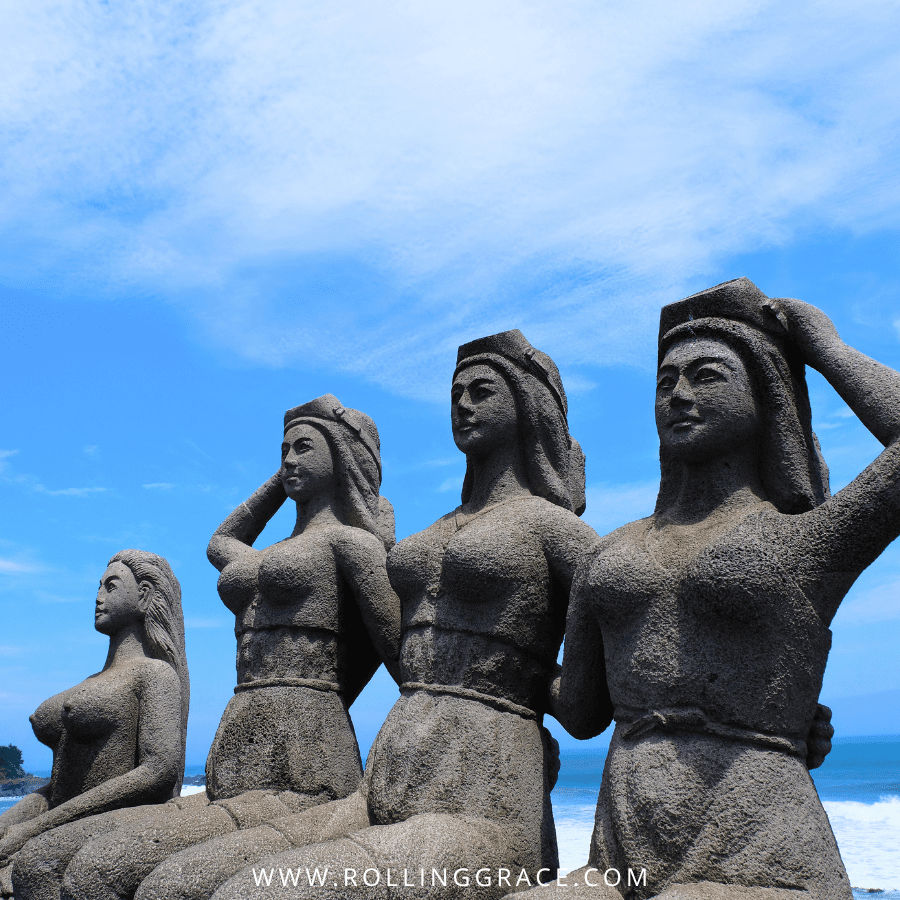
How the Haenyeo Dive
A working day involves up to six hours in the water, diving repeatedly to depths of 5 to 20 metres. Each breath-hold lasts between one and three minutes. Surface intervals between dives last only seconds before the next descent. A study published in Current Biology found that haenyeo spend a higher proportion of their time underwater than any other human population ever measured, exceeding even some semi-aquatic mammals.
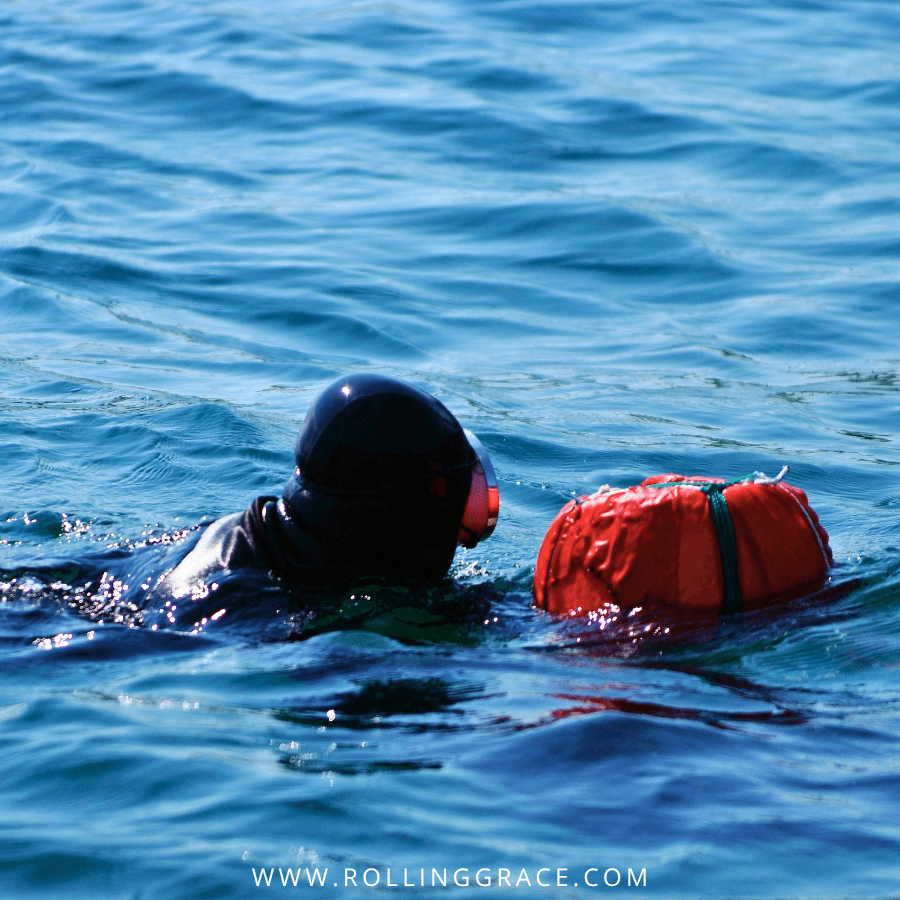
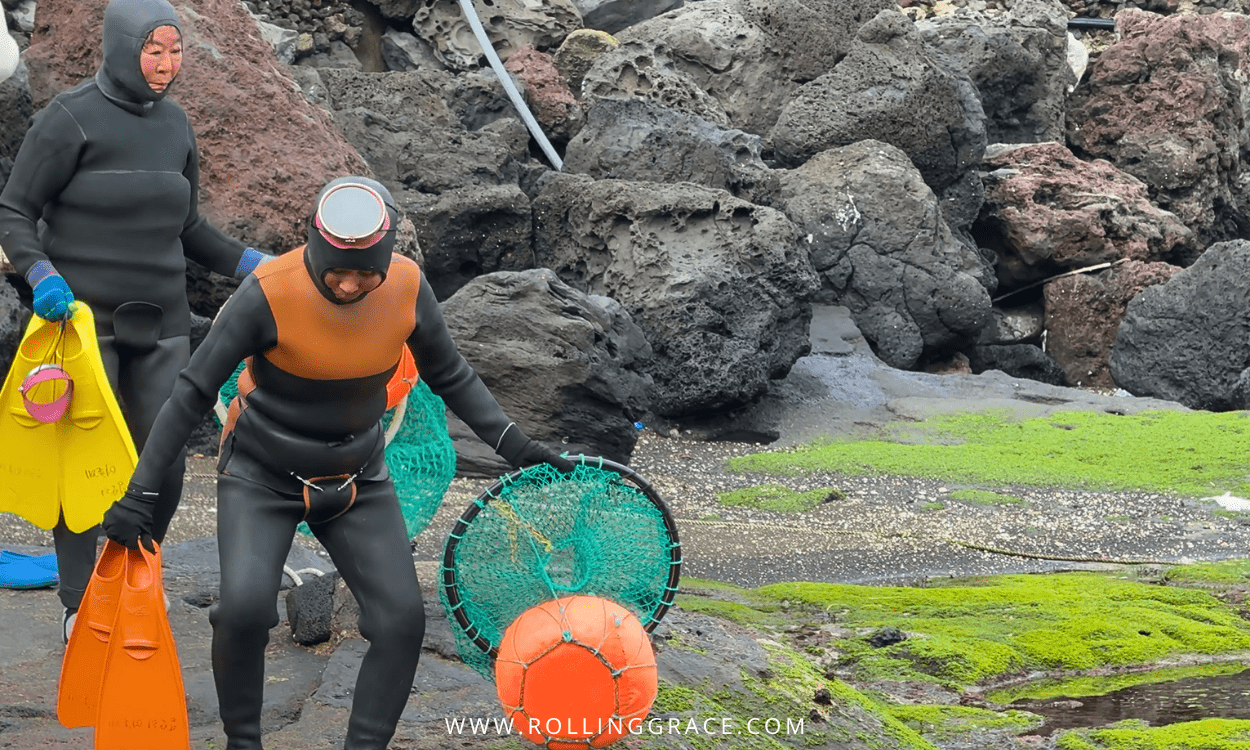
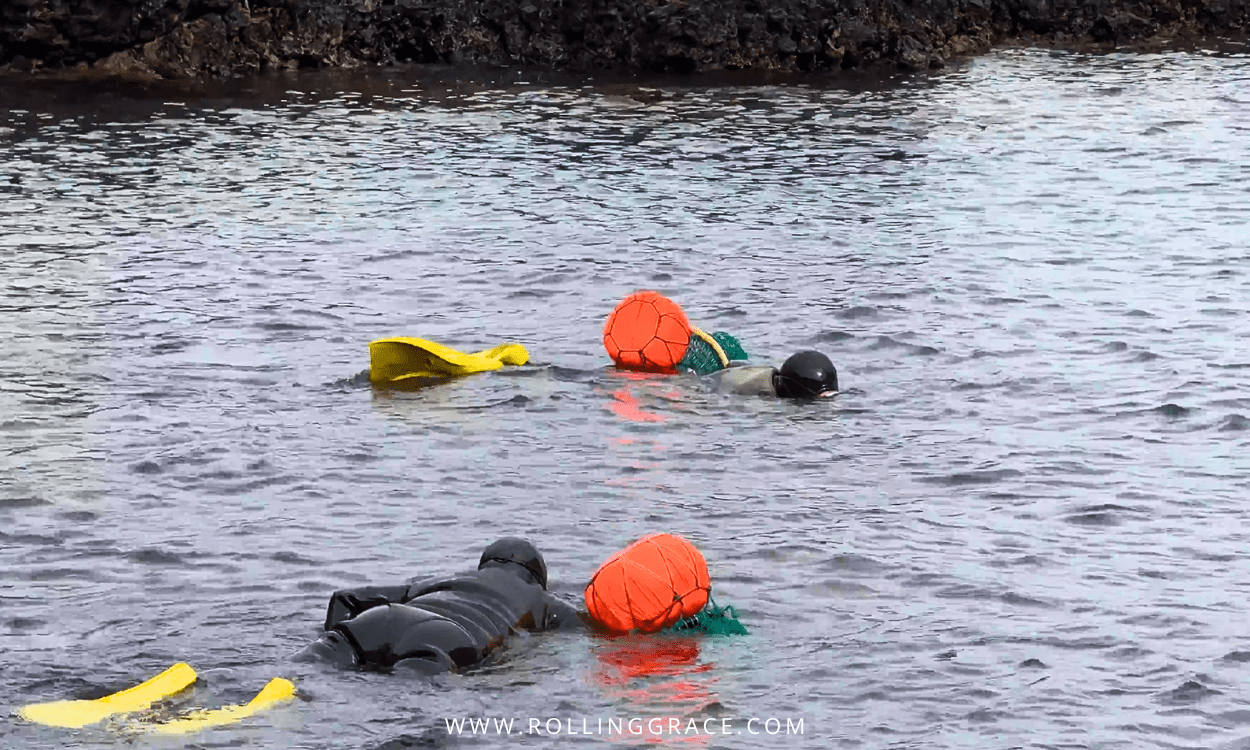
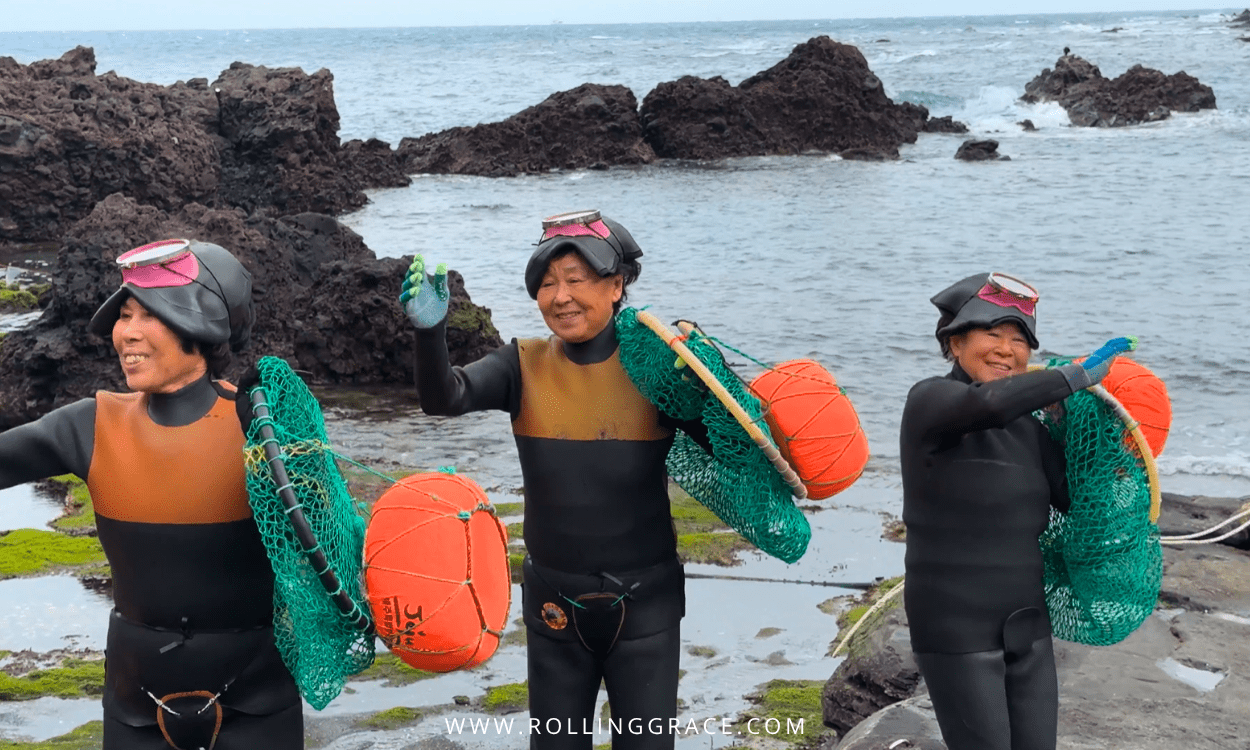
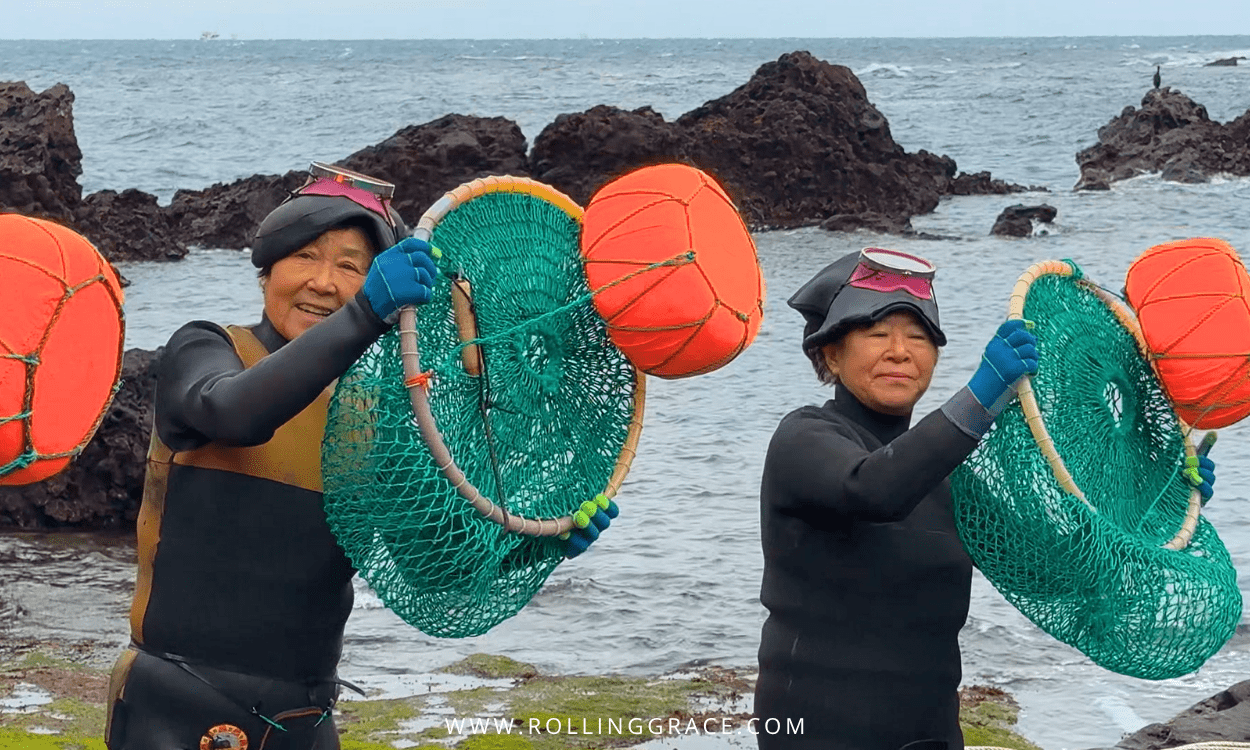
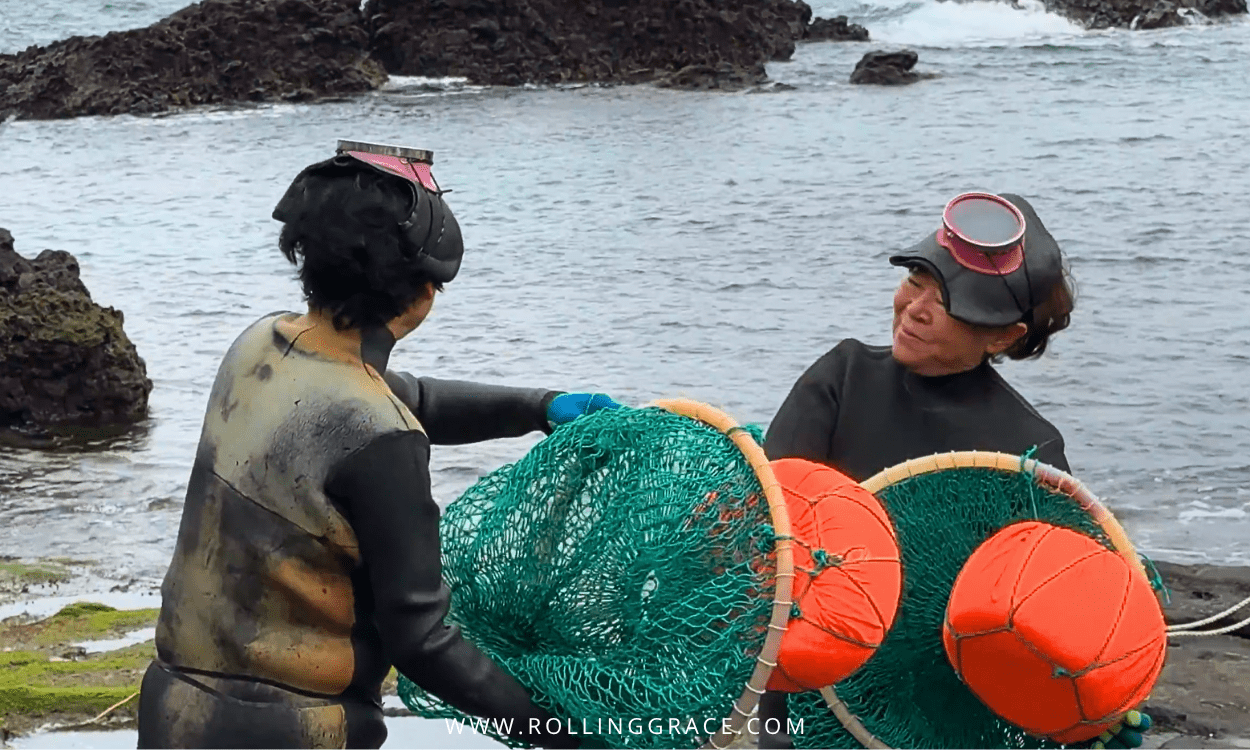
The equipment is minimal: a wetsuit, a diving mask, fins, gloves, a lead weight belt and a tewak, the bright orange float that marks the diver’s location on the surface and holds the net where the catch is stored. Until wetsuits became available in the 1970s, they did all of this in thin cotton clothing. In winter, in water temperatures of around 10 degrees Celsius, in snow.
The most distinctive sound on the Jeju coast is the sumbisori: the sharp whistling exhale a haenyeo makes the moment she surfaces. It is not incidental. The sumbisori is a precise breathing technique that rapidly expels carbon dioxide and draws in fresh oxygen, allowing the diver to recover and descend again within seconds.
UNESCO has documented it as one of the defining elements of haenyeo culture.


What Haenyeo Actually Harvest
Abalone, sea urchins, conch, octopus, turban shells, sea cucumber, hijiki and edible seaweed. The catch is seasonal and strictly self-regulated. Each coastal village on Jeju has its own cooperative with rules governing fishing boundaries, permitted species, quantities and seasonal closures.
Haenyeo actively manage the marine ecosystem: they cull invasive starfish, release juvenile abalone and sea cucumbers back into the water, and avoid harvesting vulnerable species. They describe themselves as caretakers as much as foragers, which is not rhetoric. It is how they have kept the ocean productive enough to sustain their communities for a millennium.
The Science Behind Their Bodies
A study published in Cell Reports confirmed that haenyeo have evolved specific genetic adaptations to the physical stress of free diving, making them only the second known population of traditional breath-hold divers in history to have done so. The other is the Bajau sea nomads of Southeast Asia.
Jeju residents, both divers and non-divers, are more than four times more likely than mainland Koreans to carry a genetic variant associated with lower blood pressure during diving stress. Blood pressure rises when humans dive. Among Jeju residents, it rises significantly less. Researchers believe this may have evolved specifically to protect unborn children, since haenyeo dive throughout pregnancy and often until the day they give birth.
A second genetic variant, linked to cold and pain tolerance, also appears at higher rates among Jeju participants. Centuries of diving in sub-10-degree water in cotton clothing will do that to a gene pool.
During simulated dives, the haenyeo’s heart rates dropped approximately 50% more than those of non-divers. One participant’s heart rate fell by over 40 beats per minute in 15 seconds. Researchers confirmed this is a physiological adaptation earned through decades of training, not something you inherit.
How Haenyeo Culture Created a Matriarchal Society in South Korea
Because haenyeo were the primary breadwinners, Jeju developed a social structure unlike anywhere else in Korea. Women controlled household finances, paid for their children’s education and made key community decisions.
Fathers often stayed home while mothers went to sea. The Jeju language itself, shorter and more clipped than mainland Korean, is partly attributed by researchers to the need for divers to communicate quickly at the surface.
Book Jeju Diving Women Haenyeo Experience
Haenyeo are ranked by skill and experience into three levels: sanggun, the most senior divers who provide guidance and safety oversight; junggun, mid-level divers; and hagun, the least experienced. It takes approximately 30 years to reach sanggun level. No haenyeo dives alone. Community diving is both a safety requirement and a cultural obligation.
The bulteok is the open-air stone windbreak where haenyeo rest between dives, change clothes, warm themselves by a communal fire and exchange knowledge. Disputes are resolved here through open discussion until every member accepts the outcome. It is where the community’s institutional memory lives.
Why Haenyeo Is One of the Most Dangerous Jobs in Korea
The physical toll of decades of breath-hold diving in cold water is real. Chronic back pain, arthritis, headaches and dental problems are common. Lead weight belts, sometimes exceeding 10 kilograms, add to the strain on every dive.
Between 2020 and 2024, there were 102 reported accidents involving haenyeo, averaging more than 22 per year. Cardiac arrest accounts for 37.2% of cases. Over 80% of victims are in their seventies or older. A safety app introduced in early 2025 monitors divers in real time and alerts nearby divers in medical emergencies. Around 300 haenyeo have adopted it since launch, and in its first ten months of operation, no fatalities were recorded among users.
Climate change has compounded the danger by removing what the divers are going into the water for. Sea surface temperatures around Jeju have risen measurably over recent decades. Native species have been displaced. Invasive predators have moved in.
One haenyeo described a harvest of only seven sacks of agar seaweed in a recent year compared to thirty in a good one, despite having more diving experience than ever before. The ocean is not rewarding the work the way it used to.
Is Haenyeo Culture Dying Out?
The haenyeo population peaked at 23,081 in 1965. By 1970 it had already fallen to 14,143 as industrialisation drew women away from the sea. Today fewer than 4,000 remain, with over 90% older than 60. Only 99 active haenyeo are under 50. Six are under 30.
The Jeju provincial government offers a monthly settlement fund to women aged 40 to 44 who decide to become haenyeo. UNESCO recognition and a FAO agricultural heritage designation have raised the international profile of the tradition.
The Netflix series When Life Gives You Tangerines, which features haenyeo culture prominently, drove a 17.5% jump in foreign visitors to Jeju, and the Jeju Haenyeo Museum saw a significant surge in visits as a direct result.
Whether any of it produces more divers is a different question. Lee Bok-soo, who has been diving since she was 17, does not encourage her own daughters to follow her. “It’s a mix of emotions,” she has said. “I hope the haenyeo tradition continues, but I also know how tough it is.”
Her colleague Lee Han-ok puts it more plainly: “Younger people see it as too hard, too dangerous, and not paying enough money.”
Where to See Haenyeo on Jeju Island
Jeju Haenyeo Museum
Located at 26 Haenyeobangmulgwan-gil, Gujwa-eup, Jeju, the museum covers the full history of the tradition through exhibitions donated by haenyeo themselves, including diving equipment, rank structure, the bulteok, the anti-Japanese resistance movement haenyeo led, and their food culture.
A documentary plays daily in the video room. Open Tuesday to Sunday, 9am to 6pm. Closed Mondays and public holidays. Admission is 1,100 won for adults, 500 won for youth, free for children.
Seongsan Ilchulbong
Daily haenyeo diving performances take place at Seongsan Ilchulbong, also known as Sunrise Peak, on Jeju’s eastern coast.
This is the most accessible way to watch haenyeo at work without arriving at a working dive site uninvited. Performances follow fixed schedules and are cancelled in bad weather. Confirm times on the Jeju tourism website before visiting.
Coastal Villages Around Seongsan and Hallim
To see haenyeo outside a performance context, the villages around Seongsan and Hallim offer the best chance, particularly in the early morning when diving work begins.
The bright orange tewak floats are often visible drying at the water’s edge. No ticket is required. Approach with respect and without pointing a camera at people who have not indicated they are comfortable being photographed.
Haenyeo Experiences
Programmes certified by the Jeju Tourism Organisation allow visitors to wear traditional haenyeo suits, receive safety instruction and try free-diving and seafood harvesting in shallow, controlled water.
No programme permits tourists to join actual harvest dives. Haenyeo Kitchen offers meals alongside haenyeo and a genuine look at the food culture connected to the tradition.
Haenyeo in Film and on Screen
The Last of the Sea Women
Produced by Malala Yousafzai for Apple TV+ and directed by Sue Kim, it premiered at the Toronto International Film Festival and won the NETPAC Award. It is the definitive documentary portrait of the haenyeo and the most visceral way to understand what is being lost.
When Life Gives You Tangerines
A Korean television series available on Netflix, features haenyeo culture as a central theme and has introduced the tradition to audiences who had never heard the word.
Deep Dive Korea
A BBC and JTBC co-production, follows an actor as she trains to become a haenyeo. Lisa See’s novel The Island of Sea Women remains the strongest literary entry point into the world of Jeju’s sea women.
Frequently Asked Questions about Haenyeo
Do haenyeo still exist?
Yes. Fewer than 4,000 active haenyeo remain on Jeju Island. Over 90% are older than 60. The tradition is in serious decline but has not ended.
How long can haenyeo hold their breath?
Between one and three minutes per dive, at depths of up to 20 metres, diving repeatedly across a working day of up to six hours.
How do you pronounce haenyeo?
Roughly hae-nyuh. The first syllable rhymes with the English word hay. The second is a soft syllable similar to the ny in canyon followed by a short uh.
Is haenyeo culture recognised by UNESCO?
Yes. Jeju haenyeo culture was inscribed on UNESCO’s Representative List of the Intangible Cultural Heritage of Humanity in 2016. The Jeju Haenyeo Fisheries System was additionally designated as a Globally Important Agricultural Heritage System by the FAO in 2023.
Can tourists dive with haenyeo?
No certified programme permits tourists to join actual haenyeo harvest dives. Experiential programmes allow visitors to try free-diving in shallow, supervised conditions using traditional equipment.
What is the death rate of haenyeo?
Between 2020 and 2024, there were 102 reported accidents involving haenyeo, averaging more than 22 per year. Cardiac arrest accounts for the largest share at 37.2%. Over 80% of victims are in their seventies or older.
Get the good stuff first. Join Rolling Grace for the restaurants worth crossing a city for, the stays worth the upgrade, and the places to go before everyone else. Free, straight to your inbox.
Leave a Reply