The first one always tears. The second one comes out lopsided. By the third, something clicks, and the dough starts behaving. By the fifth, the chapati puffs on the pan like a small balloon, the surface spotted with brown blisters, and you understand why this is the bread that millions of people make from scratch every single day.
Read also: How to Cook Sticky Rice at Home in 5 Simple Steps

What Is Chapati?
Chapati is an unleavened Indian flatbread made from whole wheat flour, water, salt, and a small amount of oil or ghee. It is a staple across India, Pakistan, Bangladesh, Nepal, and East Africa, and appears under various names depending on the region: roti, phulka, rotli.
The terms are often used interchangeably, though there are subtle differences. Chapati is typically cooked on a flat pan (tawa) with a touch of oil, while roti or phulka is traditionally puffed over an open flame without fat.
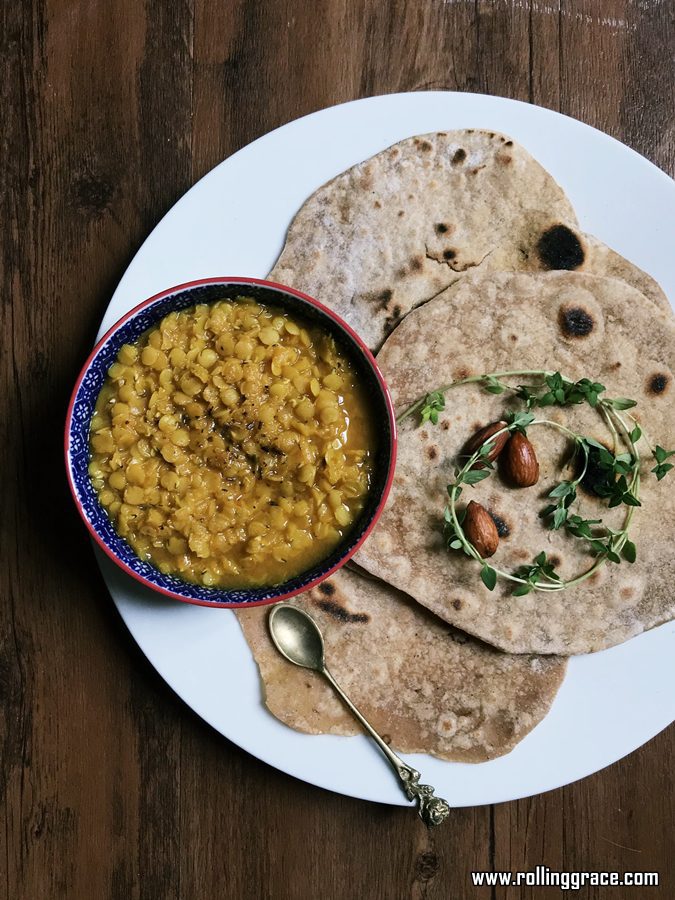
The texture of a well-made chapati is soft, slightly chewy, and pliable enough to tear by hand and use as a scoop for curries, dals, and stir-fried vegetables. It is lighter and thinner than naan (which uses yeast and is baked in a tandoor) and less flaky than paratha (which is layered and uses more oil).
In Malaysia, chapati is widely available at mamak restaurants and Indian banana leaf rice shops, but the homemade version is worth the effort. It takes minutes, it costs almost nothing, and the difference in taste between a fresh chapati and a store-bought one is significant.

Easy Chapati Recipe
This chapati recipe uses four ingredients, takes 25 minutes from bowl to plate, and requires no oven, no yeast, and no proving time. It is one of the simplest breads you can make at home, and once you have the method down, it becomes the kind of thing you do on autopilot while a curry simmers on the next burner.
This chapati recipe makes 5 pieces.
Ingredients
1 cup whole wheat flour (atta), 1/2 cup water (warm, not boiling), 1 teaspoon salt, 1 tablespoon vegetable oil or ghee, extra flour for dusting
A note on flour
Atta is a finely milled whole wheat flour used specifically for Indian flatbreads. It produces a softer, more pliable dough than standard wholemeal flour. Atta is available at most Indian grocery stores and larger supermarkets in Malaysia. If you cannot find atta, a 50/50 mix of wholemeal flour and plain flour works as a substitute, though the result will be slightly denser.
- Preparation time: 15 minutes (including resting)
- Cooking time: 10 minutes
- Total time: 25 minutes
- Difficulty: Easy
How to Make Chapati: Step by Step
Step 1: Mix the Dough
Place the flour, salt, and oil in a large bowl. Add the water gradually, mixing with your hands as you go. You may not need all of the water, or you may need a splash more, depending on your flour. The dough should come together into a soft, slightly tacky ball that is not sticky and not dry.
Step 2: Knead the Dough
Turn the dough out onto a lightly floured surface and knead for 3 to 5 minutes until it is smooth, soft, and elastic. If the dough feels tough or dry, wet your hands and continue kneading. The oil in the recipe helps keep the dough pliable, but kneading is what develops the texture. A well-kneaded dough will press back gently when you push your finger into it.
Step 3: Rest the Dough
Place the dough back in the bowl, cover with a damp cloth or cling film, and set aside for 10 minutes. Resting allows the gluten to relax, which makes the dough easier to roll and produces a softer chapati. If you have more time, resting for 20 to 30 minutes will give an even better result.
Step 4: Divide and Roll
Divide the dough into 5 equal pieces and roll each one into a ball. Take one ball at a time, dust it generously with flour on both sides, and roll it out on a flat surface using a rolling pin until it forms a circle roughly 5 to 6 inches wide and about 2mm thick. Roll evenly; uneven thickness will cause the chapati to cook unevenly and resist puffing.
Keep the remaining dough balls covered while you work to prevent them from drying out.
Step 5: Cook on a Hot Pan
Heat a flat pan (tawa, cast iron skillet, or heavy-based frying pan) over medium-high heat. Do not add oil to the pan. Place the rolled chapati onto the dry, hot surface and wait 20 to 30 seconds until small bubbles begin to form on top. Flip the chapati. Cook the second side for another 30 seconds until brown spots appear on the underside.
Flip once more. Using a clean cloth or spatula, gently press around the edges and surface of the chapati. If the dough has been rolled evenly and the pan is hot enough, the chapati will puff up. This is the moment that makes it worth the effort.
Remove from the pan and brush with a thin layer of ghee or butter if desired. Serve immediately or stack in a clean towel-lined container to keep warm.
Tips for Soft Chapati Every Time
- Use warm water. Warm (not boiling) water helps the flour absorb liquid more evenly and produces a softer dough.
- Do not skip the resting time. Even 10 minutes makes a noticeable difference. The dough will be easier to roll and the finished chapati will be softer.
- Roll evenly and thinly. Thick or uneven chapati will not puff and will cook unevenly. Aim for roughly 2mm thickness across the entire disc.
- Get the pan hot before you start. Place your hand a few inches above the pan surface. If you feel strong heat, it is ready. A pan that is not hot enough will produce dry, stiff chapati.
- Flip only twice. Constant flipping dries out the bread. First side: 20 to 30 seconds. Second side: 30 seconds. Third flip: press to puff, then remove.
- Store in a towel-lined container. Stack cooked chapati in a container lined with a clean cotton towel and cover to trap steam. This keeps them soft for 20 to 30 minutes.
What to Serve with Chapati
Chapati is a carrier. Its job is to scoop, wrap, and soak up whatever you put beside it.
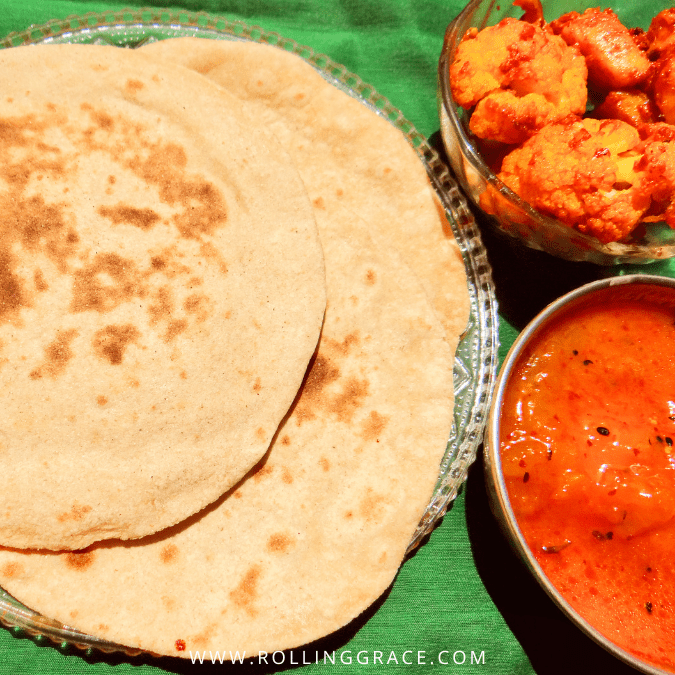
- Classic pairings: dal (lentil curry), paneer butter masala, palak paneer, chicken curry, chana masala, bhindi masala (okra stir-fry), aloo gobi (potato and cauliflower), and raita.
- Quick weeknight options: scrambled eggs with onion and chilli, tinned chickpea curry, or simply dipped in yoghurt with pickle on the side.
- As a wrap: leftover chapati works well as a wrap for kebabs, grilled vegetables, or egg rolls. Spread with chutney or mayo, add your filling, and roll tightly.
How to Store Chapati
Cooked chapati keeps in the fridge for up to 2 days in an airtight container or wrapped tightly in foil. To reheat, place on a hot dry pan for 15 to 20 seconds per side until warm and pliable.
Uncooked chapati dough can be refrigerated for up to 24 hours. Bring it to room temperature for 30 minutes before rolling and cooking. You can also roll out the chapati, stack them between sheets of parchment paper, and freeze in a zip-lock bag for up to one month. Cook directly from frozen on a hot pan, adding an extra 10 to 15 seconds per side.
Frequently Asked Questions on Chapati Recipe
Why is my chapati hard?
The most common causes are insufficient kneading, not enough water in the dough, skipping the resting period, or rolling too thick. Make sure the dough is soft and pliable before you start rolling, and rest it for at least 10 minutes.
Why does my chapati not puff up?
Uneven rolling is usually the cause. If the dough is thicker in some spots than others, steam cannot distribute evenly and the chapati will not inflate. Make sure the pan is properly hot and press gently around the edges on the third flip.
Can I make chapati without oil?
Yes. The chapati will still cook and puff, but it will be slightly less soft and will dry out faster. A small amount of oil or ghee in the dough keeps it pliable.
Is chapati the same as roti?
In most of South India and Western India, chapati refers to flatbread cooked on a tawa with a touch of oil, while roti (or phulka) is puffed over a direct flame without fat. In everyday conversation, the terms are often used interchangeably.
Can I use regular wholemeal flour instead of atta?
You can, but the result will be denser. Atta is milled more finely than standard wholemeal flour, which gives chapati its characteristic softness. A 50/50 blend of wholemeal and plain flour is the closest substitute.
How many chapati does this recipe make?
This recipe makes 5 chapati. To make more, scale the ingredients proportionally. Two cups of flour with one cup of water will give you roughly 10.
This chapati recipe has been tested repeatedly in a home kitchen using equipment and ingredients available at standard supermarkets in Malaysia and across Southeast Asia.
Love stories like this? Subscribe to the Rolling Grace newsletter for thoughtful travel notes, hidden dining gems, and slow discoveries from across Asia.
Leave a Reply