Five steps, no rice cooker, and fifteen minutes of steam is all it takes to learn how to cook sticky rice that is soft, chewy, and holds together exactly the way it should.
The first time I steamed sticky rice properly, the difference was so obvious it was almost embarrassing. Every attempt before that had produced either a soggy, waterlogged clump or a tray of hard, chalky grains that fell apart on contact. The fix turned out to be the simplest thing: soak it long enough, steam it instead of boiling it, and stop opening the lid.
The good news is that cooking sticky rice is not complicated. It requires no rice cooker, no bamboo steamer (though one helps), and no special technique beyond patience. Five steps, roughly 15 minutes of active preparation, and a soaking period that does all the heavy lifting while you do something else.
Read also: 5 Easy Vegan Smoothie Recipes You Can Make in 2 Minutes
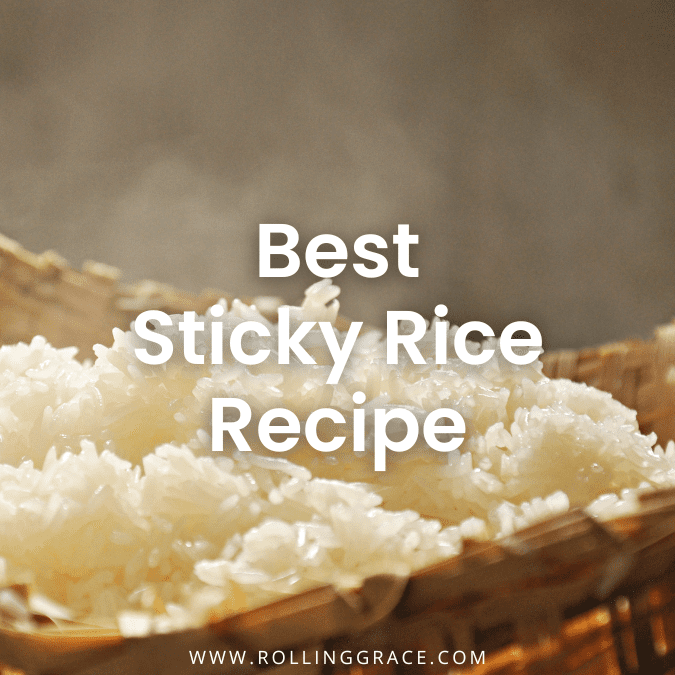
What Is Sticky Rice?
Sticky rice is a specific variety of rice with a high amylopectin starch content, which is what gives it its characteristic chewy, sticky texture when cooked. It is not the same as regular white rice that has been overcooked into a mushy consistency. The stickiness is built into the grain itself.
At the store, it is typically labelled as glutinous rice, sweet rice, or sticky rice. Despite the name, it contains no gluten and is not noticeably sweet. Long-grain sticky rice is the variety used across Thailand, Laos, Vietnam, and Malaysia. Short-grain sticky rice is used in Japan and parts of China. For the purposes of this guide, we are working with long-grain sticky rice, ideally grown in Thailand.
One important distinction: sticky rice is not sushi rice. Sushi rice is a short-grain Japanese variety seasoned with vinegar, sugar, and salt after cooking. Sticky rice is unseasoned and has a denser, chewier texture.
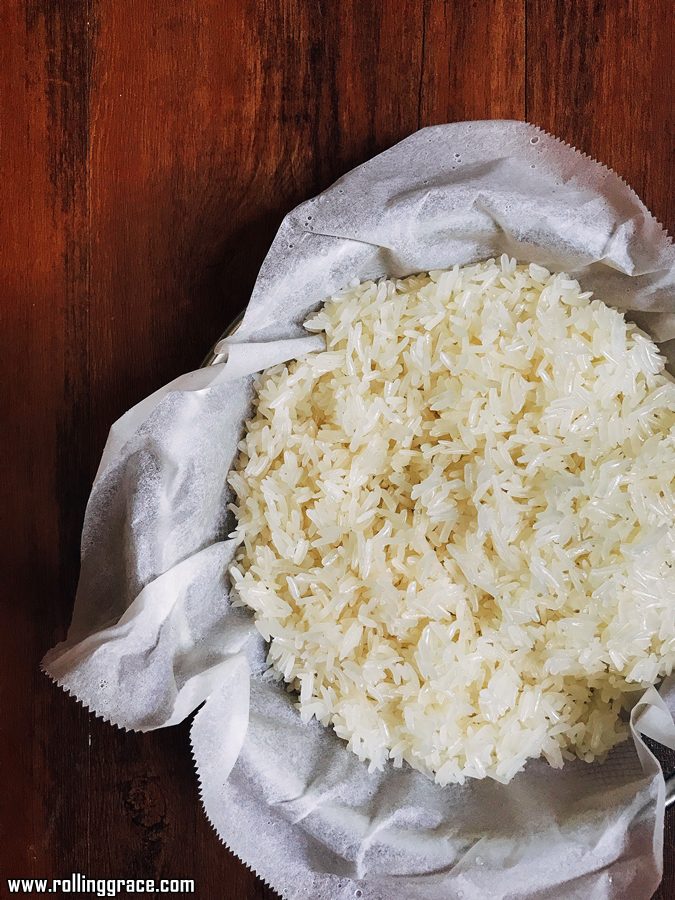
How Sticky Rice Is Used Across Asia
Sticky rice, also called glutinous rice or sweet rice, is a staple across Southeast and East Asia.
In Thailand, it is eaten daily with grilled meats and papaya salad. In Laos, it is rolled into small balls by hand and dipped into sauces. In Malaysia, it appears as pulut in dishes like pulut kuning, lemang, and a wide range of kuih. In China, it fills zongzi and lo mai gai. In Japan, it becomes mochi.
The grain itself is the common thread across all of these traditions, and learning how to cook it well opens the door to all of them.
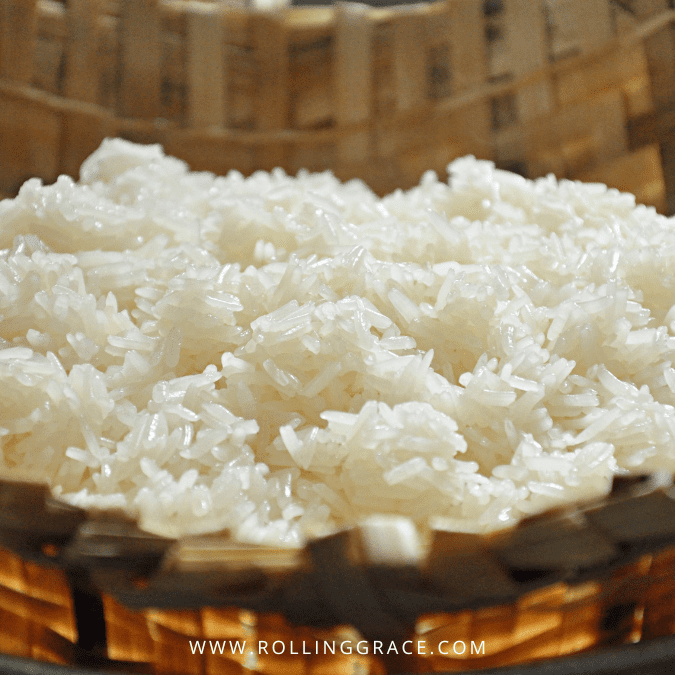
What You Need
Ingredients (serves 2 to 3)
- 1 cup sticky rice (long-grain, Thai-grown)
- Water for soaking and steaming
- 1/2 teaspoon salt (optional)
Equipment
A large bowl for soaking, a steamer (bamboo, metal, or improvised), parchment paper or a clean muslin cloth to line the steamer.
If you do not own a steamer, you can improvise one with a deep pot, a heatproof plate or metal rack raised above the water line, and a tight-fitting lid. The key is keeping the rice above the water, not submerged in it.
How to Cook Sticky Rice: Step by Step
Step 1: Rinse the Rice
Place the sticky rice in a large bowl and cover with cold water. Swirl the grains gently with your hand, then drain.
Repeat this three to four times until the water runs mostly clear. This removes the surface starch that would otherwise make the cooked rice gummy rather than properly sticky.
Step 2: Soak the Rice
Cover the rinsed rice with fresh water, making sure the water level sits at least three inches above the rice (the grains will expand as they absorb water). Leave to soak for a minimum of 3 hours. It is one of the common approaches to how to cook sticky rice.
For a softer, more pliable result, soak for 6 hours or overnight. If soaking overnight, cover the bowl and place it in the fridge.
This step is not optional. Skipping or shortening the soak will result in hard, unevenly cooked rice. The soaking allows the grains to absorb enough water so that they cook through evenly during steaming.
Step 3: Drain the Rice
Drain the soaked rice thoroughly. There is no need to shake off every last drop of water, but the rice should not be sitting in a pool of liquid when it goes into the steamer.
Step 4: Steam the Rice
Line your steamer with parchment paper or a damp muslin cloth to prevent the rice from falling through or sticking. Spread the drained rice evenly across the surface in a thin, even layer. Do not pack it too tightly, as steam needs to circulate through the grains.
Set the steamer over a pot of boiling water, making sure the rice does not touch the water below. Cover with a lid and steam over medium heat for 15 to 20 minutes. Do not lift the lid during the first 15 minutes. Releasing steam extends the cooking time and can result in uneven texture.
After 15 minutes, check the rice. It should be translucent, soft, and chewy. If any grains are still opaque or hard in the centre, cover and steam for another 3 to 5 minutes.
Step 5: Serve Immediately
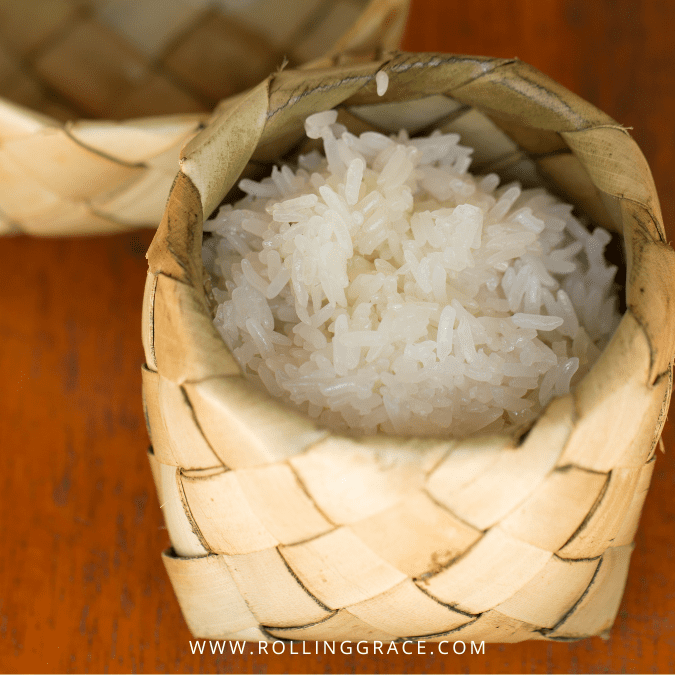
Sticky rice dries out and hardens quickly once it cools. Transfer the cooked rice to a serving plate or a traditional bamboo container and keep it covered until you are ready to eat.
If you need to handle the rice, wet your hands or utensils first to prevent sticking.
Common Mistakes and How to Avoid Them
- Not soaking long enough. This is the most common error. Three hours is the minimum. Six hours produces a better result. Overnight is ideal. There is no shortcut. It is one of the simple ways to understand how to cook sticky rice.
- Boiling instead of steaming. Sticky rice should never be submerged in boiling water during cooking. The grains absorb too much water and turn mushy. Steaming is the correct method.
- Opening the lid too often. Every time you lift the lid, you release steam and drop the temperature inside the steamer. Leave it alone for the first 15 minutes.
- Using the wrong rice. Regular jasmine or basmati rice will not produce sticky rice no matter how long you soak or steam it. You need rice specifically labelled as glutinous, sweet, or sticky. Check the packaging for Thai origin if possible.
- Letting it cool uncovered. Cooked sticky rice hardens rapidly at room temperature. Keep it covered and warm until serving. It is one of the methods used in how to cook sticky rice.
What to Serve with Sticky Rice
Sticky rice is a base, not a standalone dish. Its neutral flavour and chewy texture pair well with both sweet and savoury accompaniments.
Savoury pairings
Grilled meat, som tam (green papaya salad), larb (minced meat salad), rendang, satay with peanut sauce, or any curry with a thick, concentrated gravy. In Laos and northern Thailand, sticky rice is rolled into small balls and dipped into jaew (chilli dipping sauce).
Sweet pairings
Mango sticky rice (khao niao mamuang) is the most famous, made by drizzling cooked sticky rice with warm coconut cream and serving with ripe mango slices.
Pulut inti, a Malaysian kuih, wraps sticky rice in banana leaves with a sweet coconut topping. Sticky rice also forms the base of many Chinese and Vietnamese desserts.
Malaysian dishes using sticky rice
Pulut kuning (turmeric sticky rice served at celebrations), lemang (bamboo-cooked sticky rice, traditional during Hari Raya), and various kuih including kuih koci, onde-onde, and tepung pelita.
How to Store and Reheat Sticky Rice
Cooked sticky rice keeps in the fridge for up to two days in an airtight container. Beyond that, the texture deteriorates noticeably.
To reheat, sprinkle a few drops of water over the rice, cover with a damp paper towel, and microwave in 30-second bursts until warm and pliable. Alternatively, re-steam it for 5 minutes.
Do not leave cooked rice at room temperature for extended periods, as bacteria can develop quickly on cooked grains.

Frequently Asked Questions on How to Cook Sticky Rice
How long do you need to soak sticky rice?
A minimum of 3 hours, ideally 6 hours or overnight. Longer soaking produces a softer, more evenly cooked result. If soaking overnight, cover and refrigerate.
Can you cook sticky rice in a rice cooker?
You can, but the results are less consistent than steaming. If using a rice cooker, reduce the water to a 1:1 ratio (equal parts rice and water) and run one full cooking cycle. Some rice cookers have a glutinous rice setting. Results vary by model.
Is sticky rice gluten-free?
Yes. Despite the name “glutinous rice,” sticky rice contains no gluten. The term refers to the glue-like stickiness of the cooked grain, not the presence of gluten protein.
Can you freeze cooked sticky rice?
Yes. Wrap individual portions tightly in cling film and freeze for up to one month. Reheat directly from frozen by steaming or microwaving with a damp paper towel.
Why is my sticky rice too hard?
The most likely cause is insufficient soaking time. Make sure the rice soaks for at least 3 hours. Also check that you are using the correct type of rice (glutinous/sweet rice, not regular long-grain).
Why is my sticky rice too mushy?
This usually happens when the rice is boiled in water rather than steamed above it, or when too much water is added during cooking. Steaming is the correct method and remains one of the key parts of how to cook sticky rice.
This guide is based on years of cooking sticky rice at home using the traditional soaking and steaming method, tested with equipment found in any standard kitchen.
Get the good stuff first. Join Rolling Grace for the restaurants worth crossing a city for, the stays worth the upgrade, and the places to go before everyone else. Free, straight to your inbox.
Leave a Reply