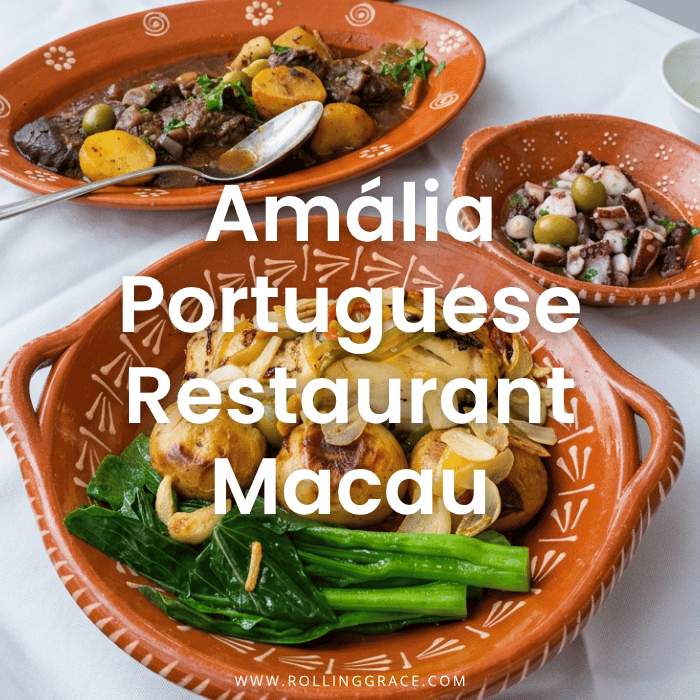
You walk into a Portuguese restaurant in Macau expecting a menu full of borrowed recipes. What you get instead at Amália Portuguese Restaurant is produce grown on the restaurant’s own farm in Alentejo, octopus dressed so simply it makes you angry at every overworked version you have eaten before, and a bottle of vinho verde good enough to take home.
Their farm is 11,000 km away, yet the food tastes like it arrived this morning. That gap between distance and freshness is what makes Amália one of the best farm-to-table Portuguese restaurants in Taipa, and one of the strongest reasons to eat in Old Vila Taipa right now.
Read also: What to Eat in Macau: 10 Best Macanese Food to Try
Amália Portuguese Restaurant Reviews
We visited on a live music night for a food tasting. As a pescatarian who fell hard for Portuguese seafood during a trip to Portugal last year, finding something to eat here was never the problem.
Portuguese cuisine runs deeper on fish and shellfish than almost any cuisine in Europe, and Amália’s menu leans into that. My partner handled the meat, and between us we worked through seven dishes across starters, mains, and sharing plates.
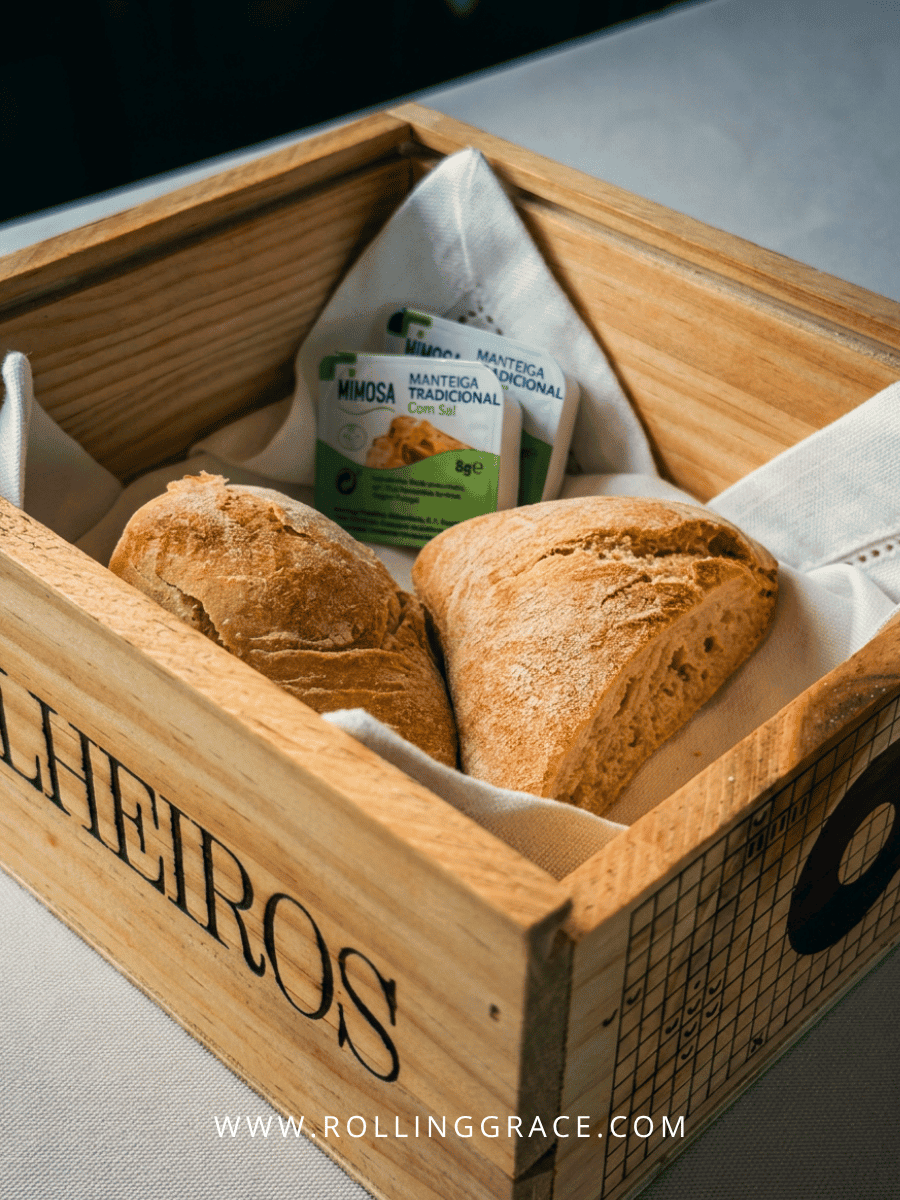
The bread arrived with salted Portuguese butter and was gone before the starters landed. The welcome drink, a Per Se aperitivo of sparkling water with orange and ice, was light, slightly sweet, and did exactly what a palate opener should do. Then the real food arrived, and it did not stop.

Best Farm-to-Table Portuguese Restaurant in Macau
Amália is the only Portuguese restaurant in Macau that sources meat from its own farm. The farm is in Portugal’s Alentejo region, over 11,000 km away, and rears Iberian pigs, goats, and lamb free-walking and naturally fed. Every shipment is a cold-chain operation that crosses two continents before it reaches the kitchen.
The restaurant is located in Old Vila Taipa, on the same strip as António, A Petisqueira, and O Santos. It has been open for just over a year and is already one of the most talked-about Portuguese tables in the area.
Read also: 8 Best Casinos in Macau You Must Visit
The kitchen is run by Portuguese chef Fernando Rodrigues, who cooks Alentejo recipes without adapting them for trends or local tastes. What lands on your plate is what you would eat in southern Portugal.
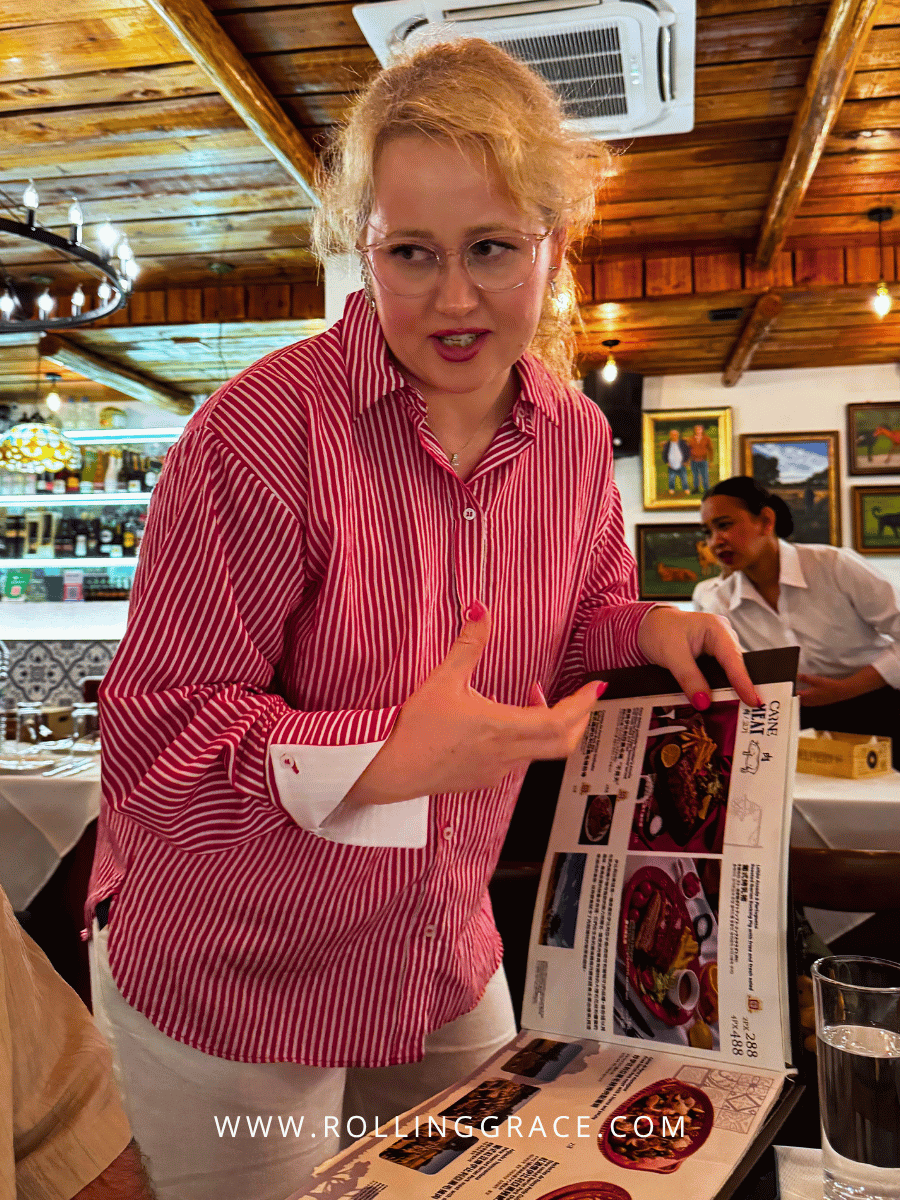
The owner, Tatiana, runs the floor personally and brings a warmth to the room that turns first-time visitors into regulars. She will talk you through the farm, the wine, and the menu. Being in her presence is the kind of experience you do not forget.
The wine list runs past 100 labels. We tried the vinho verde, a young Portuguese wine from the Minho region in the north of Portugal, light-bodied, slightly sparkling, and perfect alongside seafood.
We liked it enough to buy a bottle and bring it home. Green olives turn up in almost everything on the menu, and the portions across the board are enormous, built for the table to share.
The space is family-friendly, spacious, and cosy. There is room for kids to move without disturbing anyone, and the atmosphere sits just as easily for a casual date as it does for a birthday celebration. We know this because we watched one happen live.
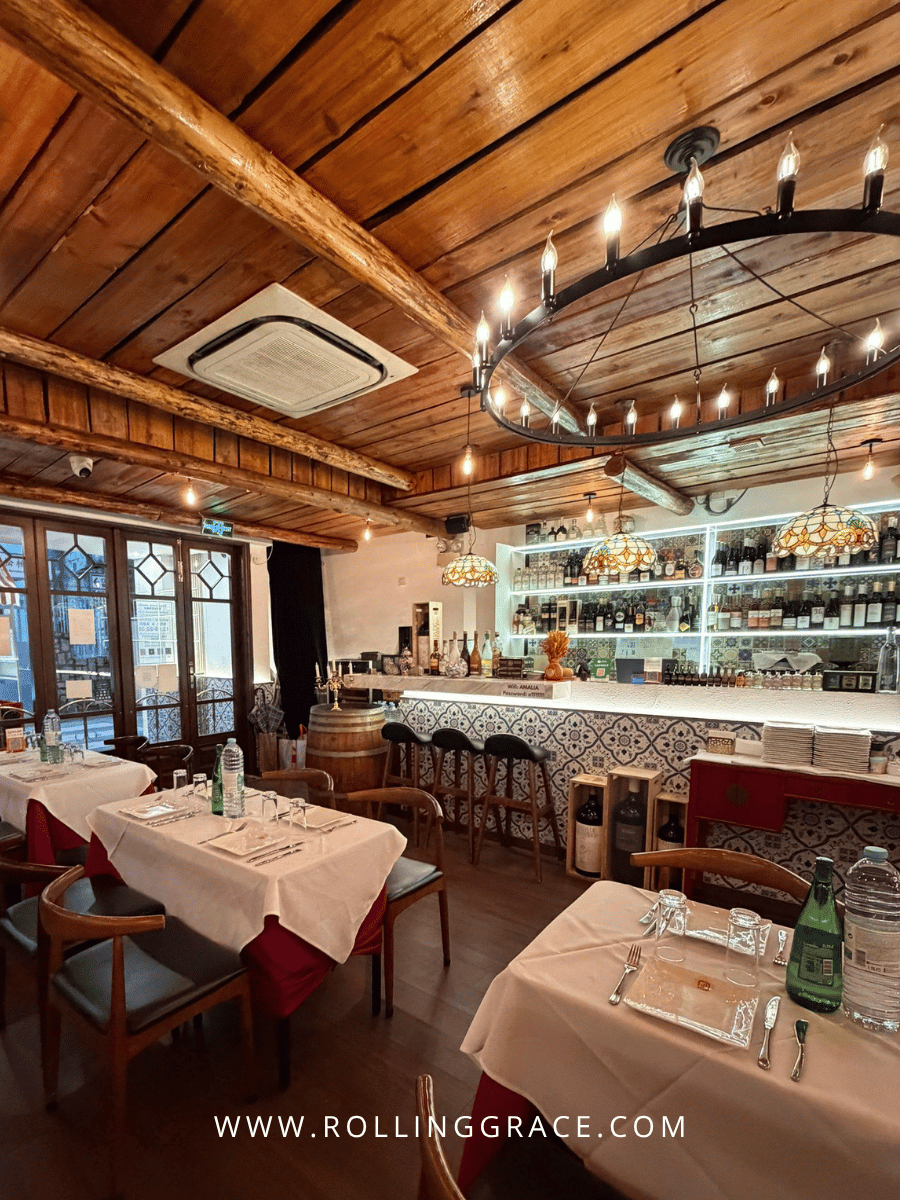
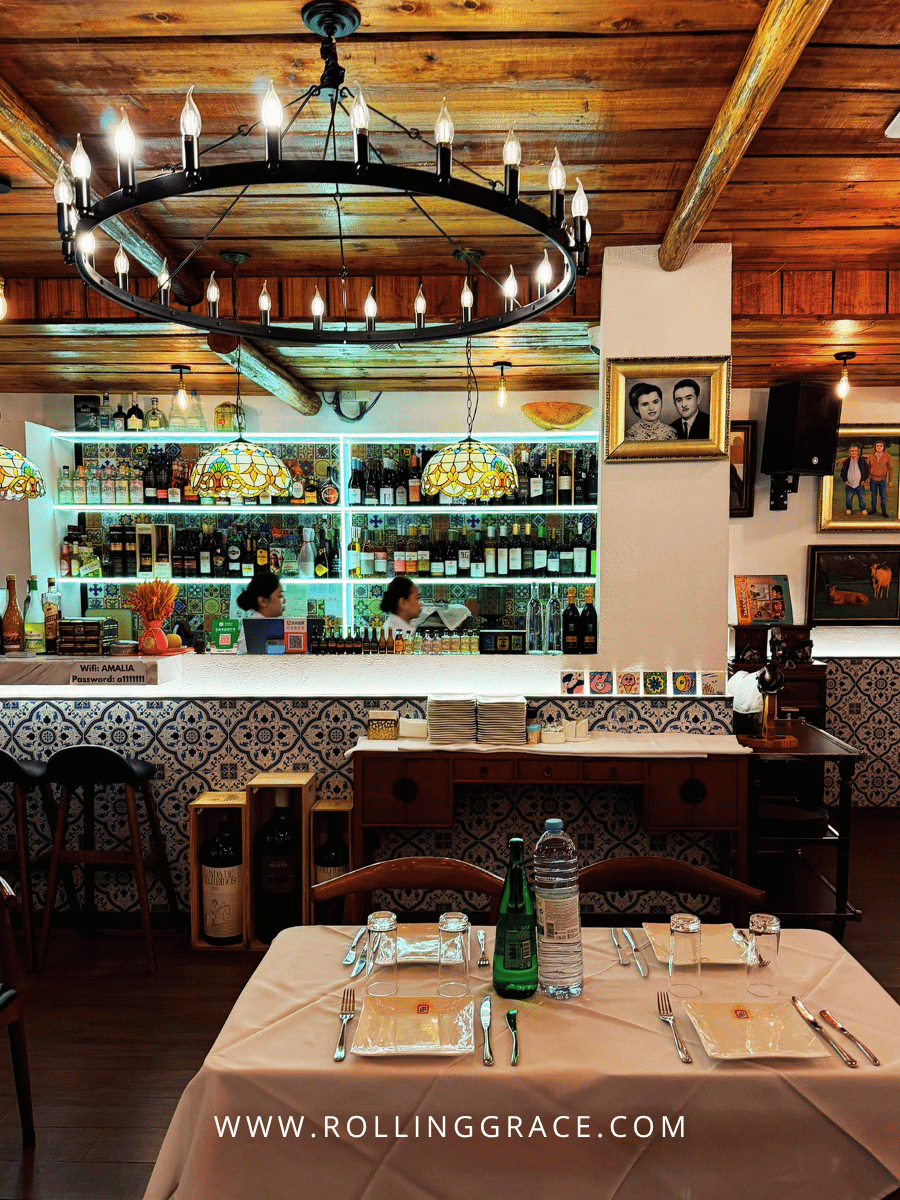
What to Order: Amália Portuguese Restaurant Menu
Everything here is built to share. The portions are generous and the menu rewards a table that orders wide. Five of the seven dishes below are seafood and shellfish. My partner took on the meat, and not a single bite made it back to my side of the table.
Read also: Top 2 Shisha in Macau: Hookah Lounges and Rooftop Bars
Pastéis de Bacalhau (MOP 60 for 3 / MOP 88 for 6)
Fried codfish cakes, golden on the outside, soft and flaky with shredded salt cod on the inside. Bacalhau is the backbone of Portuguese cuisine and Amália’s version holds up to anything we had in Lisbon last year. The cakes are dense without being heavy, and the salt balance is right.

Amêijoas à Chef (MOP 188)
Sautéed clams in a creamy sauce, prepared to Chef Fernando’s own recipe. The clams were plump, the sauce was rich and buttery, and the whole dish disappeared in minutes. We tore off chunks of bread to mop up the last of it, which is the only way to finish a dish like this.

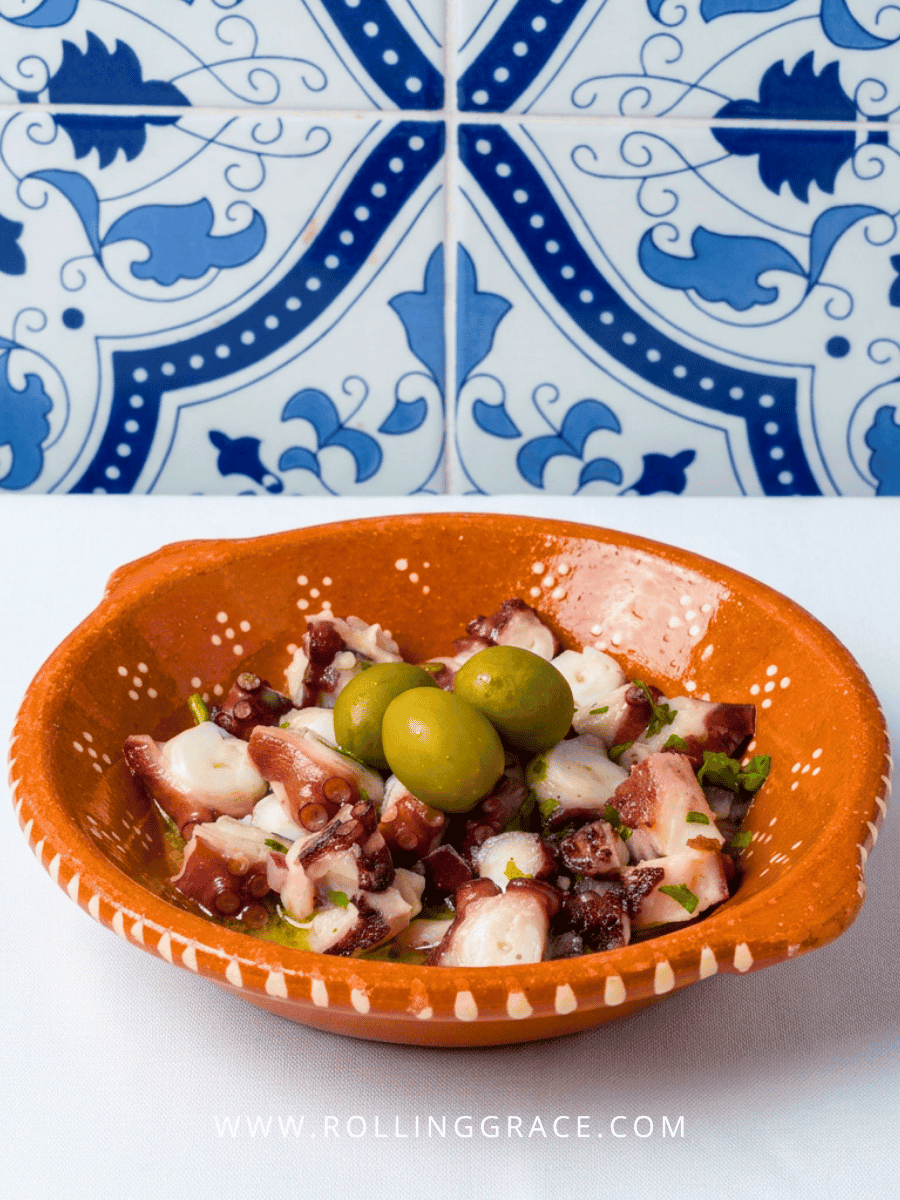
Salada de Polvo (MOP 198)
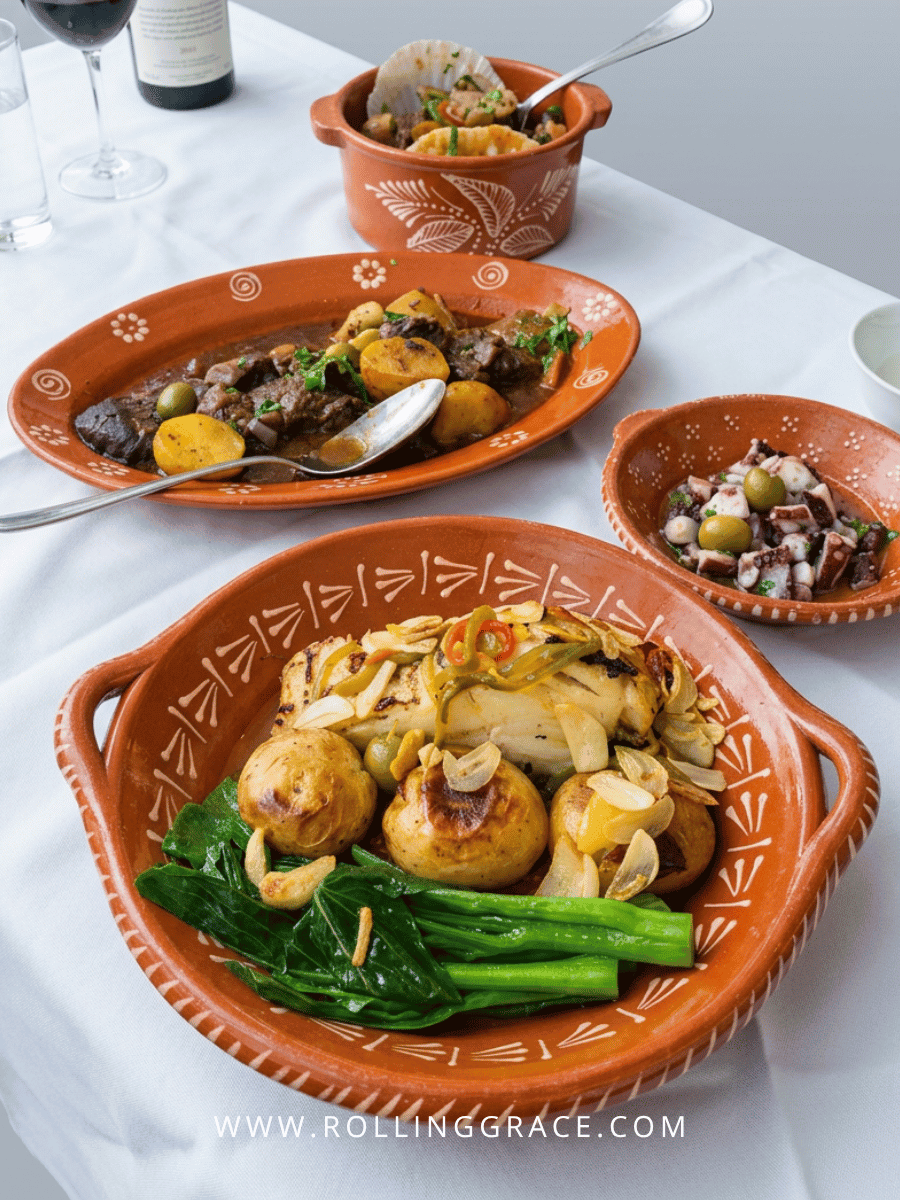
Portuguese octopus salad, served cold with olive oil, onion, and fresh herbs. The octopus was tender, well-seasoned, and dressed simply.
It worked as a palate cleanser between the heavier plates and proved that the best Portuguese cooking often comes down to a few good ingredients treated properly. This was the dish we kept reaching back to between the richer courses. One of the strongest plates of the evening.
Bacalhau Assado Lagareiro (MOP 298)
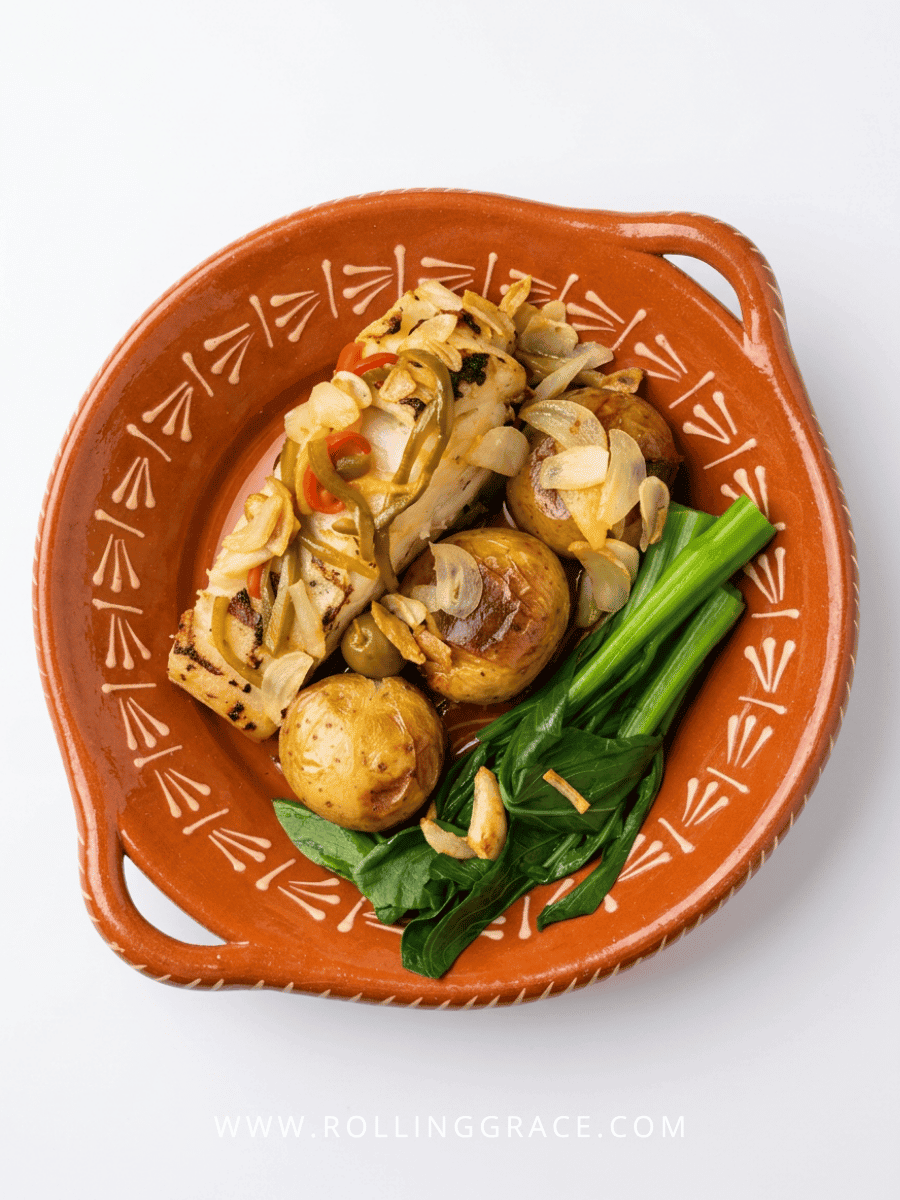
Roasted cod in the Lagareiro style: with hot olive oil, garlic, and vegetables. The name “Lagareiro” comes from the olive press workers of Portugal who would drench their food in freshly pressed oil after a day’s work, and that tradition carries directly to the plate.
The cod was firm, flaky, and wearing a coat of garlic-infused oil that soaked into the roasted vegetables underneath. For a pescatarian in a Portuguese restaurant, this is the main event.
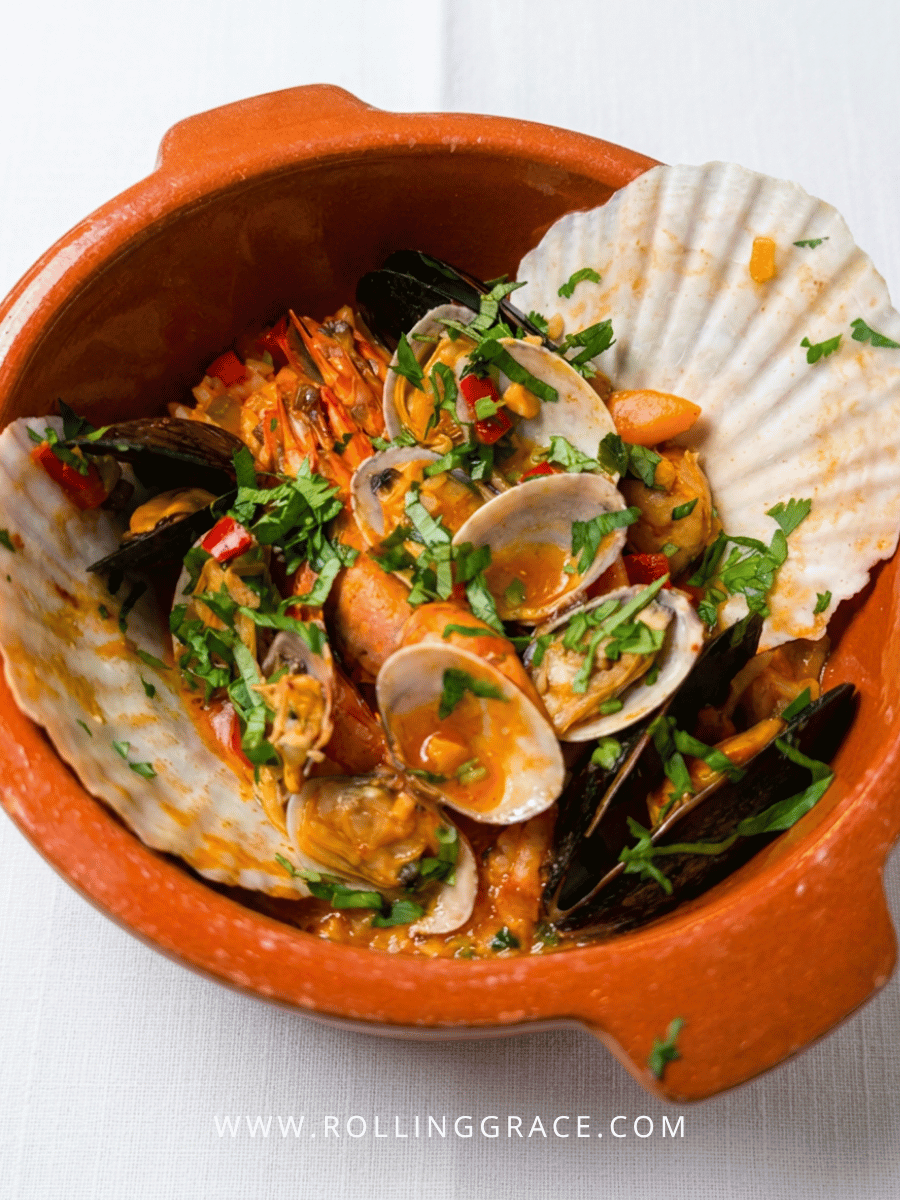
Arroz de Mariscos Malandrinho (MOP 328 for 2 / MOP 518 for 4)
Wet Portuguese-style seafood rice with jumbo prawns, scallops, mussels, clams, and squid. “Malandrinho” means the rice is loose and soupy, eaten with a spoon, not a fork. The broth was deep and concentrated, the seafood was fresh, and the portion for two was generous enough to stretch to three.
If you are going to order one dish that captures everything this kitchen can do with the sea, this is it – the centrepiece of the meal.
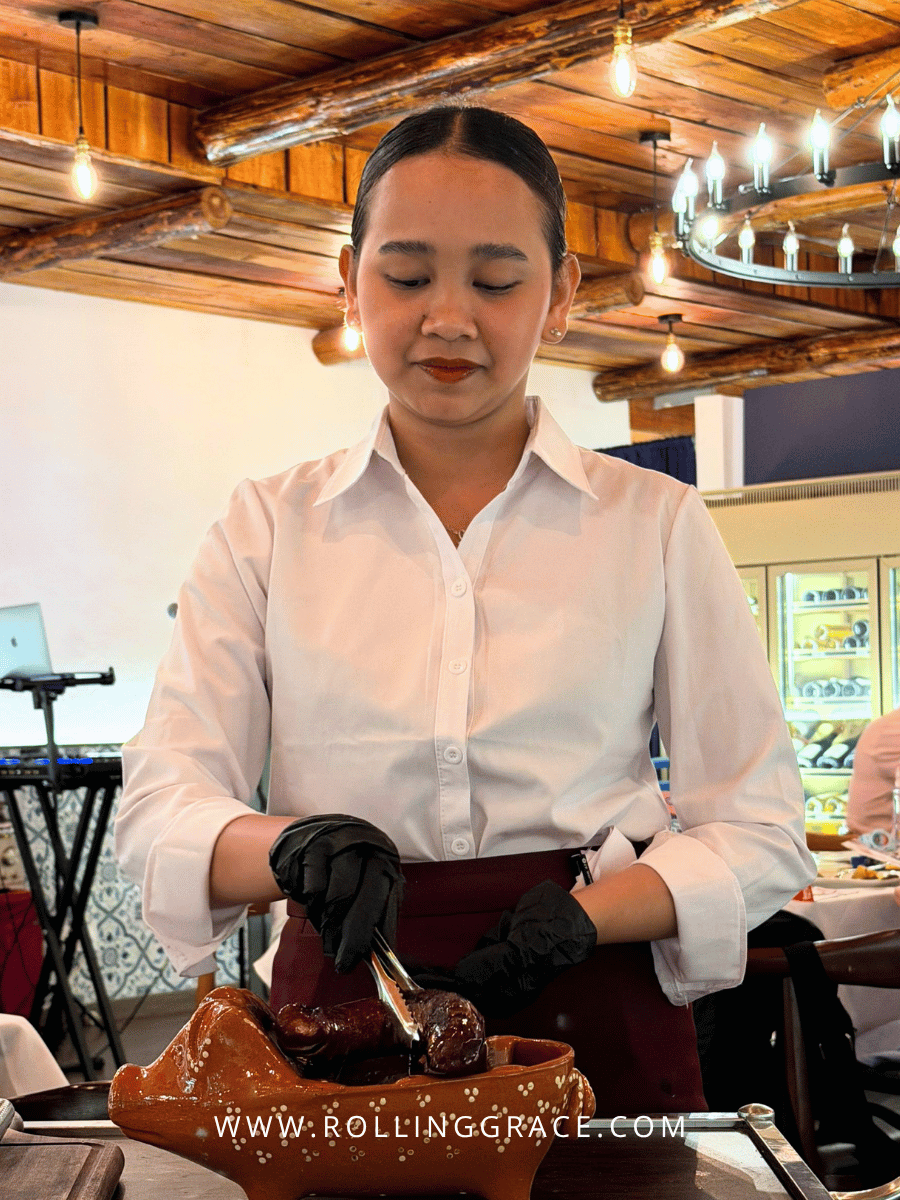
Chouriço Assado (MOP 68 half / MOP 98 whole)
Roasted Portuguese sausage, imported directly from Portugal. The chouriço arrived on a clay dish still sizzling, with a deep smoky char on the outside and a paprika heat through the centre that built with every slice. We were told to order the whole, and we understood why within seconds. Go whole. Half is a tease.

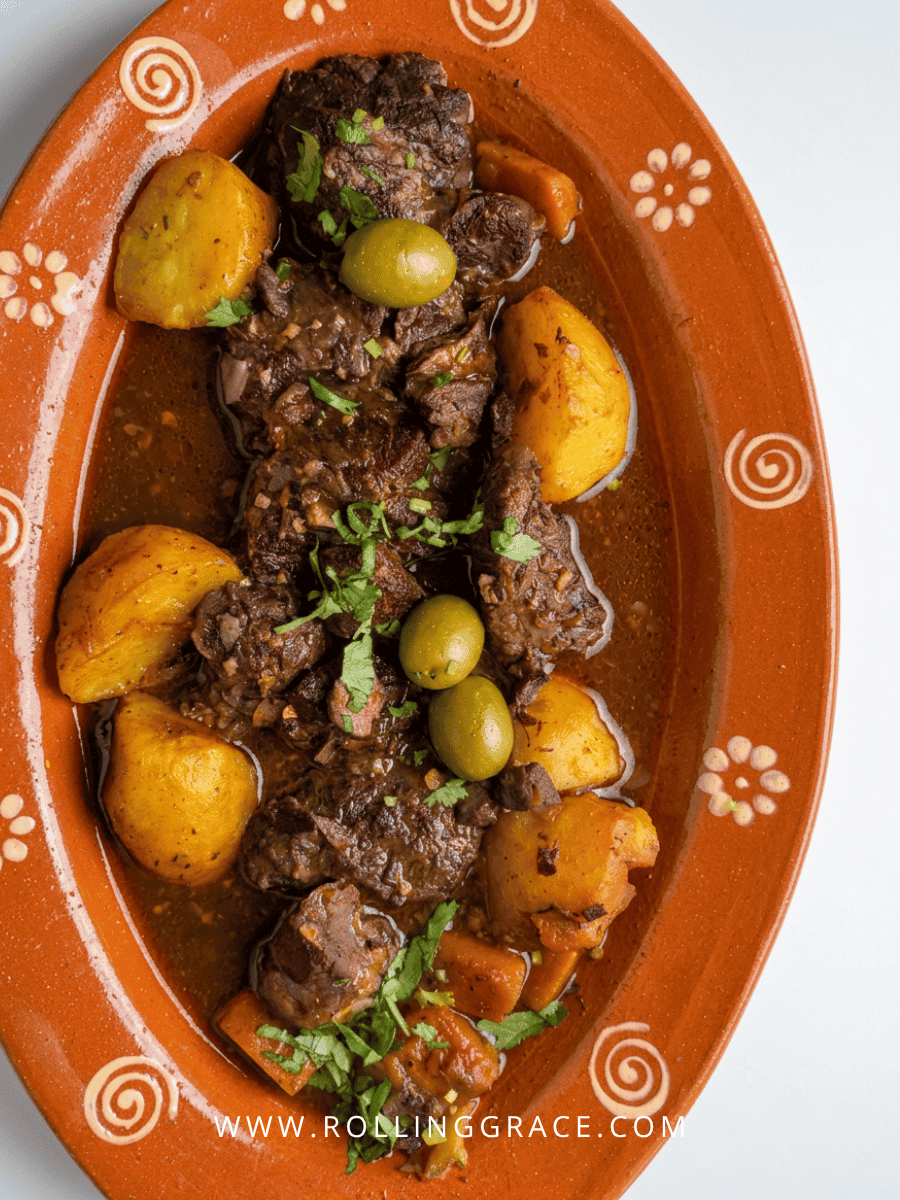
Bochechas de Porco Preto Guisadas (MOP 238)
Slow-cooked Iberian pork cheeks in a wine sauce. This is the dish that makes the farm-to-table story real. The pork comes from Amália’s own Alentejo farm, from animals raised free-walking, naturally fed, and treated with a level of care that you can taste on the plate.
My partner said the meat was fall-apart tender, the wine sauce was deep and concentrated, and the flavour had a richness that stays in your head. This was, by his account, the best dish of the night, and the one most likely to bring him back.
Is the Live Fado Music Worth the Visit?
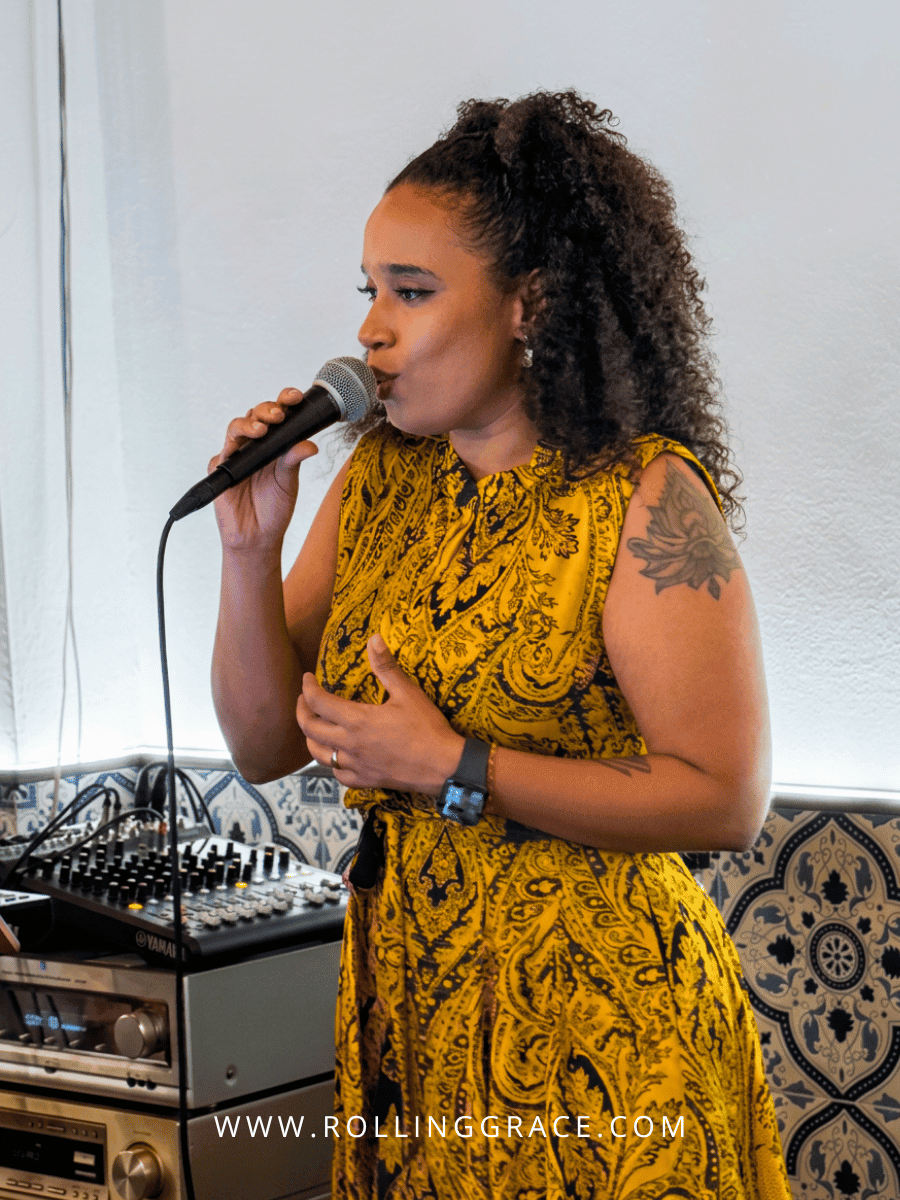
Fado happens at Amália one to two nights per week. It is not background music piped through a speaker. A singer performs from the dining room floor, accompanied by a Portuguese guitar, close enough that every table feels it land.
Fado comes from the Portuguese word for “fate.” It was born in the taverns and waterfront bars of Lisbon, carried by songs of longing, loss, and a feeling the Portuguese call saudade, a word with no translation in any other language.
It is not sadness. It is the ache of missing something you love, and hearing it sung live in a room that smells like roasted chouriço and Alentejo pork, while your wine glass catches the lamplight, is the kind of evening that most restaurants in Macau cannot give you no matter how much they charge.
The restaurant carries the name of Amália Rodrigues, born in Lisbon in 1920, the greatest fado singer Portugal has ever produced, and the best-selling Portuguese artist in recorded history.
When she died in 1999, the Prime Minister declared three days of national mourning and called her “the voice of the Portuguese soul.” To name a restaurant after her and not have live fado would be hollow. Amália does not do hollow.
Is Amália the Best Portuguese Restaurant in Taipa?
Taipa Village has António, A Petisqueira, O Santos, and a handful of others that have been serving Portuguese food for years.
Amália is the newest name on the strip, and it is not trying to compete on history. It is competing on something none of the others can match: a direct line from its own farm in Alentejo to its own kitchen in Macau, a Portuguese chef cooking Alentejo recipes without compromise, and fado music that turns an evening into something you tell people about.
For pescatarians, this is one of the strongest Portuguese restaurants in Macau. Five of the seven dishes we ordered were fish and shellfish, and not a single one felt like a consolation prize. For meat eaters, the Iberian pork cheeks alone justify the trip. For everyone, the wine list, the olives, the warmth of Tatiana’s floor, and the fado on a good night make this a restaurant that earns its name.
We left with a bottle of vinho verde in one hand and a stranger’s birthday song still in our ears. Someone at the far table had announced their birthday halfway through the fado set, and within seconds the entire restaurant, staff included, was singing.
No one asked. No one needed to. That is the kind of room Tatiana and her family have built, and that is the kind of evening you do not get twice in Macau.
Contact Information
- Address: Amália Portuguese Restaurant (葡悅正宗葡國菜), Shop A, G/F, 300-304 Rua Direita Carlos Eugénio, Vila de Taipa, Macau
- Live music: Fado, one to two nights per week (check Instagram or call ahead)
- Good for: Couples, families with kids, groups, celebrations, pescatarians
- Price range: MOP 200 to 400 per person with drinks
Get the good stuff first. Join Rolling Grace for the restaurants worth crossing a city for, the stays worth the upgrade, and the places to go before everyone else. Free, straight to your inbox.
Leave a Reply