The first thing that made us pay attention in Macau was a Portuguese egg tart, pulled from the oven minutes earlier, the caramelised top still blistered and cracking the second we bit through it. This is a city where 400 years of Portuguese, Cantonese, African, Indian, and Southeast Asian influence have collapsed into a single bite.
We ate our way through Macau over several days, from Michelin-listed Macanese restaurants to late-night street stalls, and these are the 10 dishes that we would fly back for without hesitation.
Read also: 8 Best Casinos in Macau You Must Visit in 2026

What Food Is Macau Famous For?
Macau is famous for a style of cooking found nowhere else on Earth. Macanese food is the world’s oldest fusion cuisine, born from 16th-century Portuguese sailors whose wives combined European, African, Indian, and Chinese ingredients to recreate familiar dishes with whatever was available.
That process, repeated over four centuries, produced a distinct culinary identity that earned Macau a UNESCO Creative City of Gastronomy designation.
Discover Macau Evening Food Tour with Locals
Three culinary threads run through the city. Portuguese cuisine brings salted cod cakes (pastéis de bacalhau), sardines cooked in olive oil, and rich seafood stews. Macanese cuisine takes those European roots and folds in coconut milk, turmeric, tamarind, piri piri, and soy sauce to create dishes like African chicken, minchi, and Portuguese chicken, none of which exist in Portugal itself.
Cantonese cuisine holds its own across the city’s dim sum houses, congee shops, and noodle restaurants, with local twists that reflect the proximity to the Pearl River Delta. The result is a city where a single street can move from bamboo-pole noodles to egg tarts to peanut-butter-glazed chicken without breaking stride.
10 Best Dishes to Try in Macau
The 10 best dishes to try in Macau range from Macanese originals like minchi and African chicken to Cantonese staples like crab congee and shrimp roe noodles. Several of these can be found on a single walk through Rua do Cunha in Taipa Village. Others need a specific restaurant and a willingness to queue.
Read also: Top 2 Shisha in Macau: Hookah Lounges and Rooftop Bars
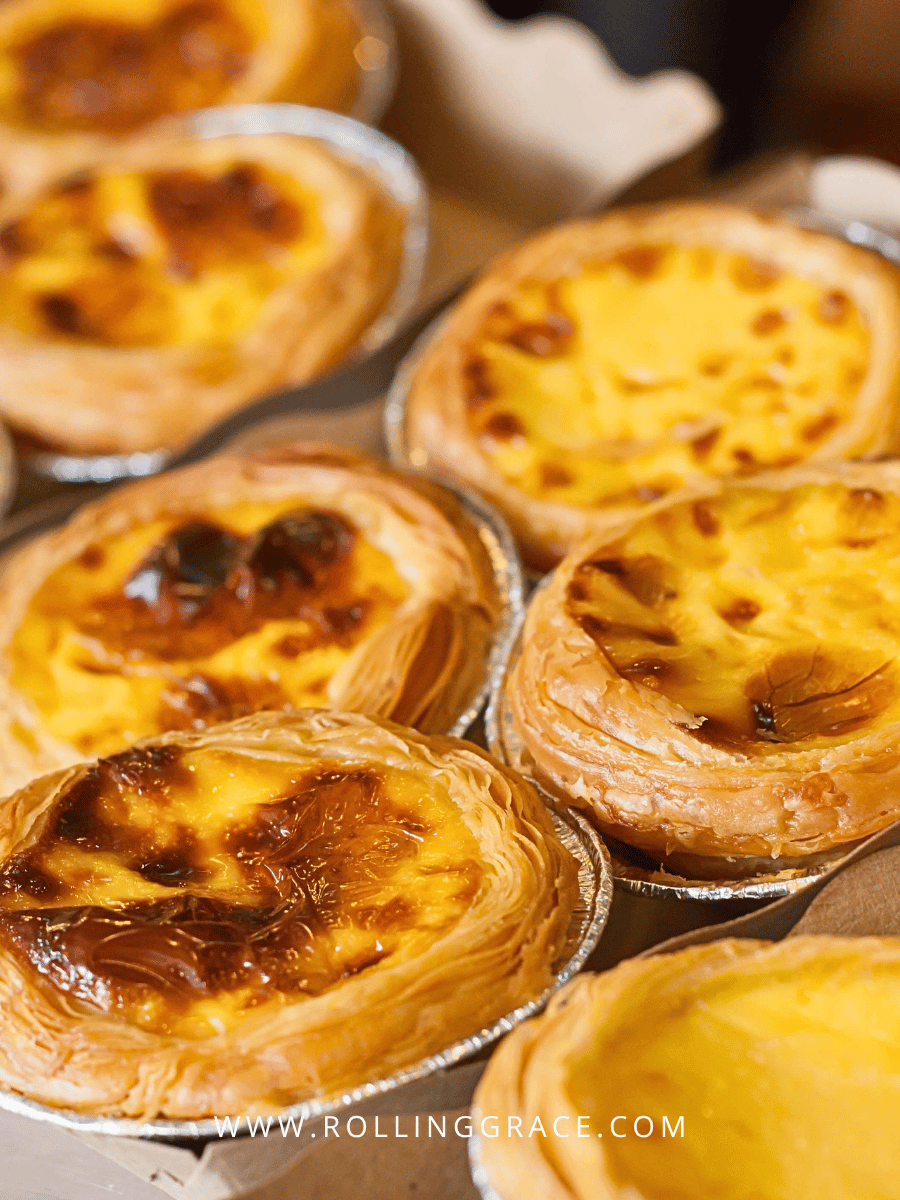
Portuguese Egg Tart
The Portuguese egg tart is the single most recognisable dish in Macau. British-born pharmacist Andrew Stow, originally from Essex, moved to Macau in 1979 and opened Lord Stow’s Bakery in Coloane Village on 15 September 1989.
Inspired by the pastéis de nata he had tried in Belém, Portugal, Stow experimented with a heavier British custard filling and Portuguese puff pastry techniques to create his own version. He had no original recipe. He built one from scratch.
The result is a tart with a flaky, layered shell and a soft custard centre made with cinnamon, lemon zest, and sugar. The top caramelises during baking into brown and black blistered spots that look like crème brûlée. Lord Stow’s Bakery now produces around 13,000 tarts daily, and there are outposts across Macau, including at The Venetian and The Londoner.
A single tart at Lord Stow’s or Margaret’s costs around MOP 11 to 13. Margaret’s Café e Nata, opened separately by Stow’s ex-wife Margaret Wong, is the other essential stop.
Both are worth trying back to back, as the filling and pastry differ noticeably between the two. It answers the question of what to eat in Macau before you even think to ask it.
Pork Chop Bun
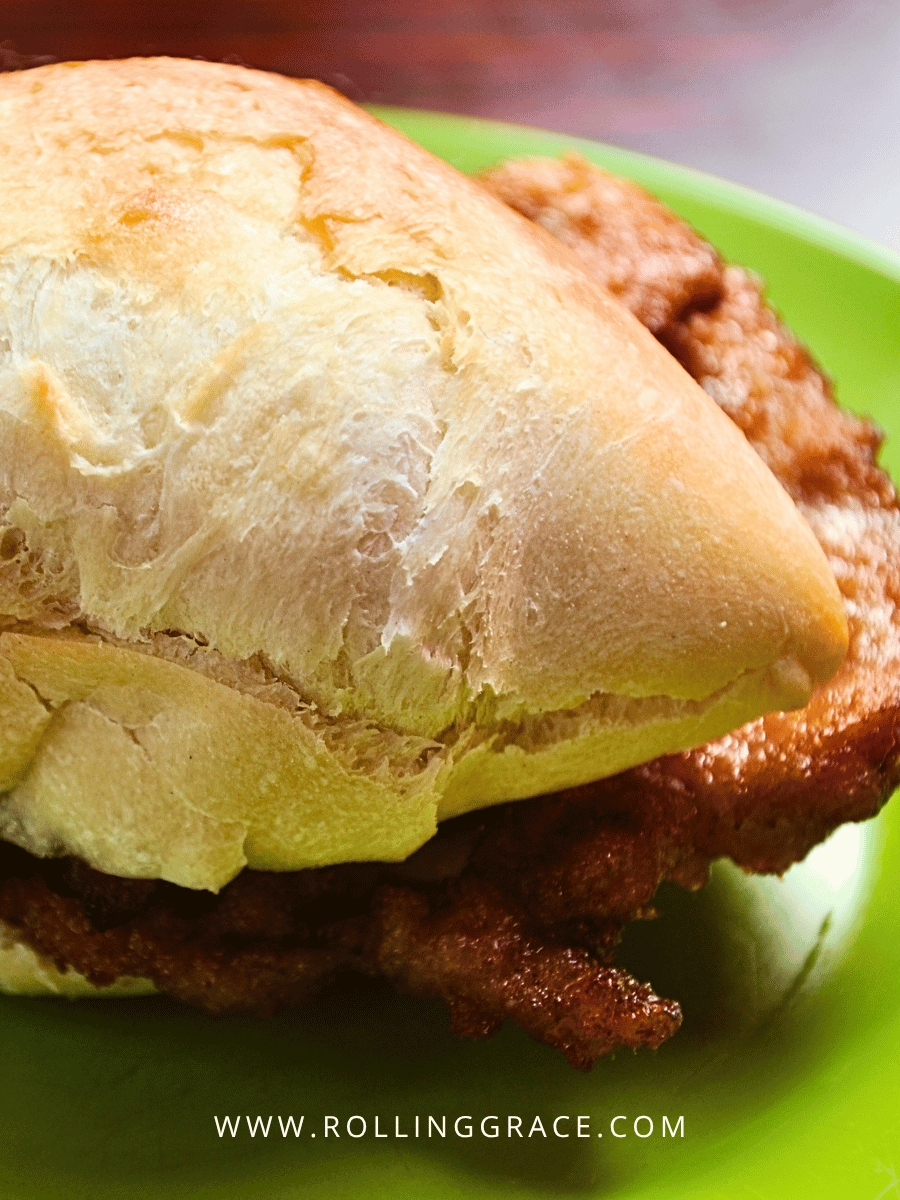
The pork chop bun is Macau street food at its most direct: a thick slab of bone-in pork, marinated in a blend of Portuguese spices, fried or grilled, and pressed inside a baguette-style roll that is crunchy on the outside and soft within.
Discover Macau Evening Food Tour with Locals
Individual restaurants have their own preference for the bread. Some use crusty loaves, others use pillowy white buns, and a few use pineapple buns for sweetness. The most popular version uses the baguette roll, where the crunch of the crust gives way to the juicy, tender pork inside. A pork chop bun from a street stall runs around MOP 25 to 40.
The best pork chop buns are eaten standing up, minutes after they come off the grill, while the bread is still warm and the pork is still dripping. Tai Lei Loi Kei on Rua do Cunha in Taipa Village is one of the most well-known spots for this dish.
It is the kind of thing that reorders every other answer to the question of what to eat in Macau.
Minchi
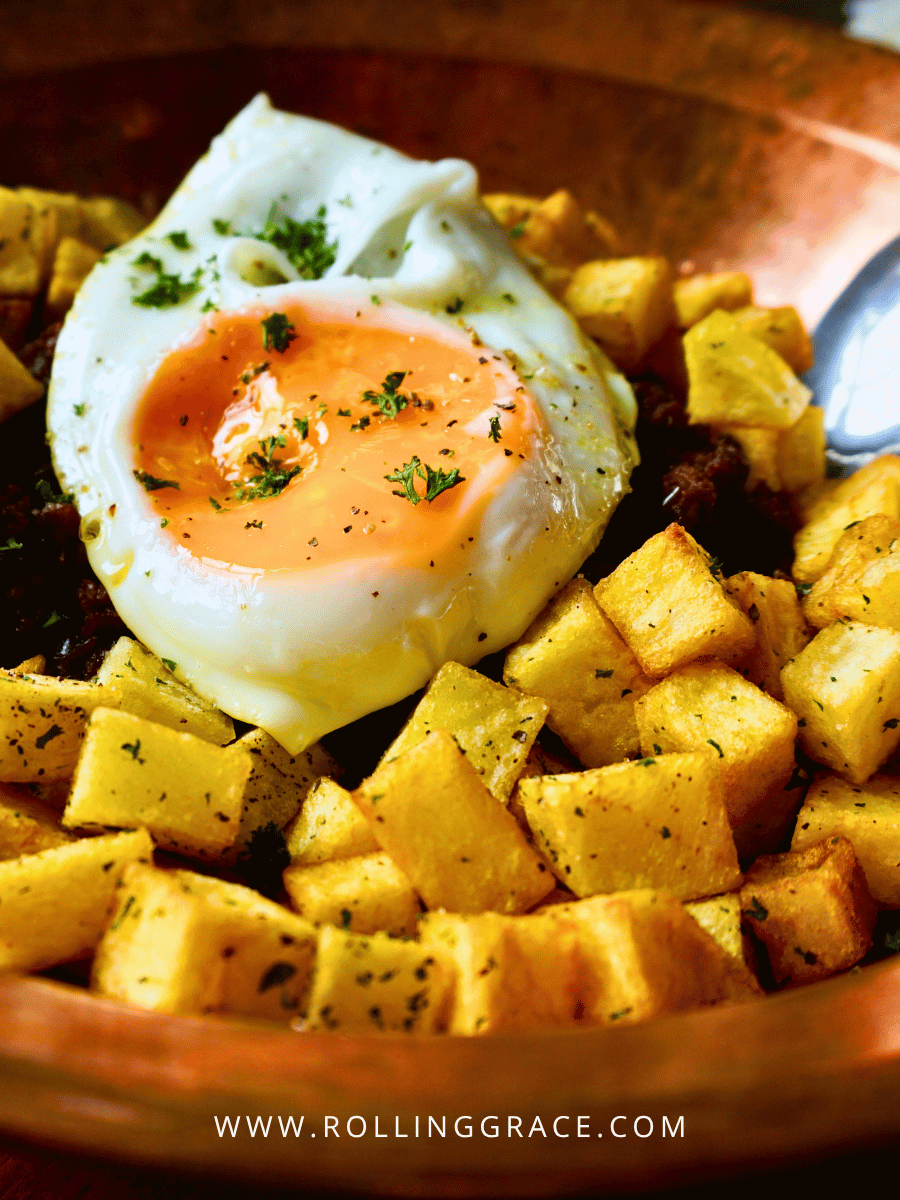
Minchi is widely recognised as Macau’s national dish, and it is the one that most visitors overlook in favour of egg tarts.
The name comes from the English word “minced,” likely borrowed from the Anglophone community in nearby Hong Kong, though some food historians trace its origins to kheema in Goa, another former Portuguese colony.
The dish is minced beef and pork (or a combination of both) stir-fried with diced potatoes, onion, garlic, soy sauce, and molasses, seasoned with bay leaves and a dusting of cumin, then topped with a fried egg with a runny yolk. The potatoes are deep-fried until crisp, and they give the dish a crunch that holds up against the rich, salty mince.
Every Macanese family has its own version. Traditionally, the meat is hand-chopped with two cleavers for a coarser, more textured result. The IFTM Educational Restaurant, which holds a Michelin Bib Gourmand, is one of the best places in Macau to try an expertly prepared minchi.
Expect to pay around MOP 120 to 180 per person at a sit-down Macanese restaurant.
African Chicken
African chicken (galinha à Africana) has almost nothing to do with Africa and everything to do with Macau.
The dish is attributed to local chef Américo Ângelo, who in the 1940s is said to have created it at the Pousada de Macau using spices he brought back from Portugal’s African colonies. He never disclosed the full recipe before he passed, and every version served in Macau today is someone’s best guess at what he originally made.
The dish involves chicken marinated and roasted or grilled, then coated in a thick sauce made from peanut butter, coconut milk, paprika, chilli, and bay leaves. The flavour profile pulls from at least four colonial legacies at once: paprika from Portugal, peanuts from Mozambique, coconut from India, and five-spice from China.
It is rich, aromatic, and unlike anything you will find in a standard Portuguese or Cantonese restaurant.

Crab Congee
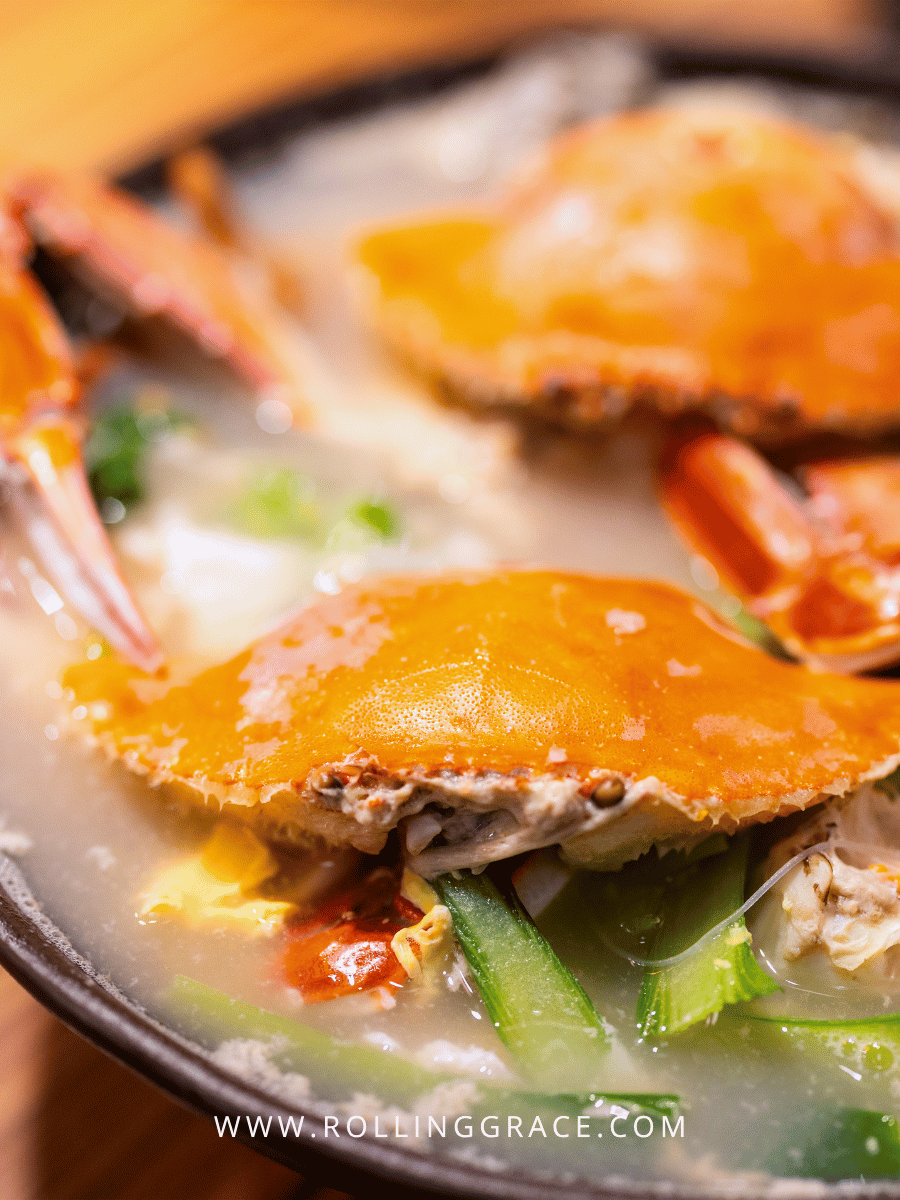
Macau borders the Pearl River estuary and has long had access to an abundant supply of freshwater crabs. Crab congee here is slow-cooked with rice until the grains break down into a thick, silky porridge, and every spoonful carries the sweet, savoury flavour of the crab roe and meat.
Discover Macau Evening Food Tour with Locals
The dish is served piping hot, often with a full crab shell on top for presentation. A bowl of congee at a local shop runs around MOP 38 to 55. Discovering what to eat in Macau will lead you to many good answers, and this is one of the more honest ones.
Crispy Dace Balls
Crispy dace balls are the ideal side order alongside a bowl of congee. Minced dace fish is shaped into balls, coated in chopped vermicelli noodles, and deep-fried until the exterior turns golden brown and shatteringly crisp.
The inside stays soft and fragrant, and the textural contrast between the crunchy noodle shell and the tender fish centre is what makes them work. They are served with soy sauce for dipping. It comes up early and often in any discussion about what to eat in Macau, and the consistency of that says enough.

Shrimp Roe Noodles
A bowl of shrimp roe noodles in Macau is a lesson in patience and precision.
The traditional method of making these noodles involves hand-kneading the dough with a long bamboo pole, bouncing body weight against the dough repeatedly until it reaches the right elasticity. Restaurants that take this seriously will not use automated machinery. The result is an eggy, springy noodle with a bite that machine-made versions cannot match.
The noodles are topped with freshly roasted shrimp roe and served in a dried flounder broth full of umami. The roe is salty, fragrant, and deeply savoury, and it clings to the noodles in a way that spreads flavour evenly across every strand. A bowl at a local noodle shop costs around MOP 40 to 55.

Steamed Rice Rolls
Steamed rice rolls are common across Cantonese-speaking regions, but the version found in Macau is distinct. A thin rice-flour batter is poured over a cloth, steamed with beaten eggs and shallots folded in, then rolled and cut into bite-sized pieces.
The finished product is smooth, fragrant, and bears a resemblance to a Japanese tamagoyaki omelette in both appearance and delicacy. The rolls are served with soy sauce, sweet sauce, and sesame sauce on the side.
This is one of those dishes that sounds simple but separates good cooks from great ones in a single bite. What to eat in Macau is a richer question than most visitors arrive expecting, and this is part of why.

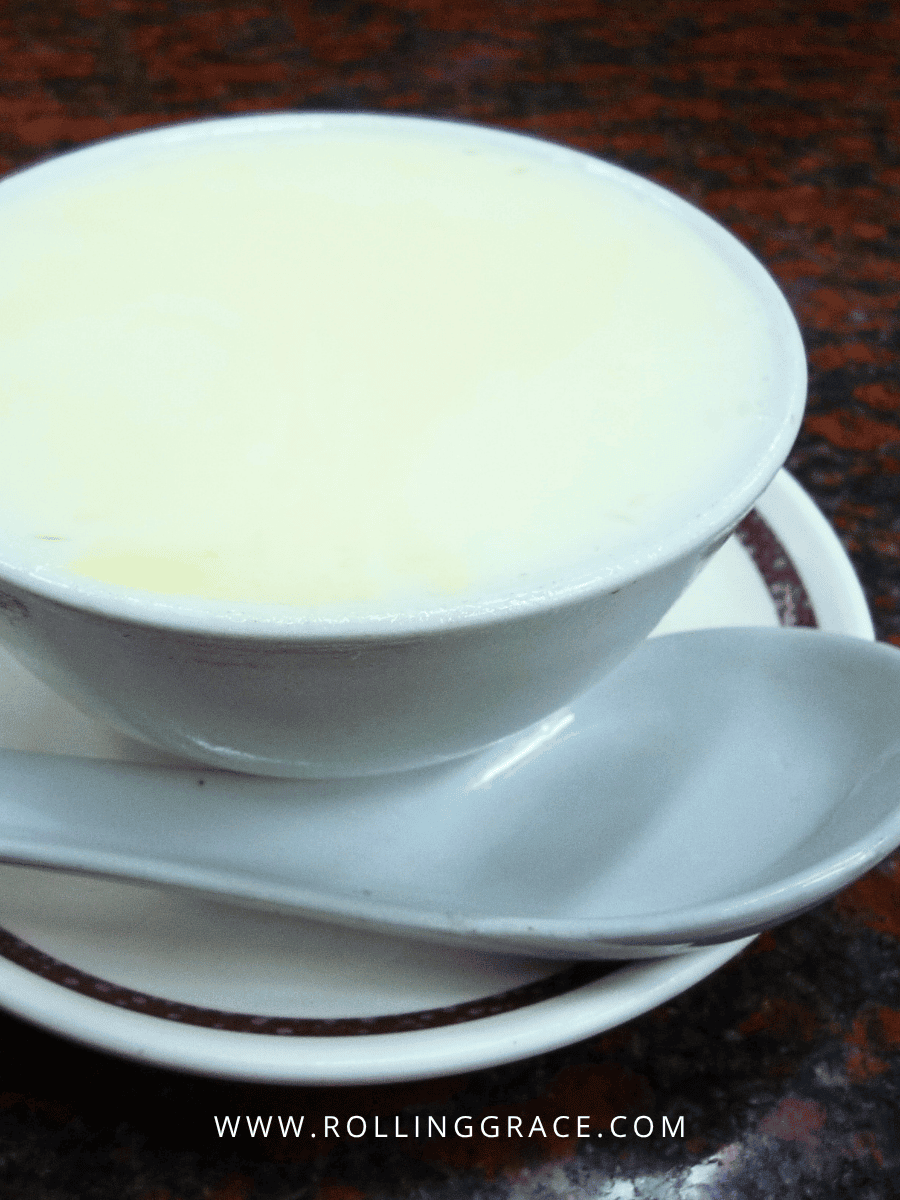
Ginger Milk Pudding
Ginger milk pudding originated in Daliang, within the Shunde district of Guangdong province, and has gained widespread popularity across Macau.
Discover Macau Evening Food Tour with Locals
The preparation is deceptively minimal: fresh ginger juice is added to milk that has been boiled and cooled to a specific temperature, and the mixture sets into a smooth, wobbly custard without any gelatine or thickener. The ginger provides warmth and a sharp, aromatic kick, while the milk stays clean and creamy.
Some Macau establishments have gone as far as setting up their own dairy farms to source the freshest milk for this dish. What to eat in Macau is rarely a difficult question once you have encountered this.
Traditional Ice Cream
Macau has a handful of old-school ice cream shops that have been churning out handmade frozen desserts for decades. Lai Kei is the most recognised, known for its red bean popsicles, ice cream blocks, and ice cream sandwiches.
The retro packaging, featuring a drawing of a young girl, has become a visual symbol of the shop and a collector’s item for visitors. Gelatina Mok Yi Kei is another institution, famous for its agar agar desserts and its musang king durian ice cream. And Hung Heng Cocos specialises in small-batch, handmade coconut ice cream that is rich, dense, and made without shortcuts.
All three are walking distance from each other in or near Taipa Village. The best answers to what to eat in Macau tend to be the ones nobody planned for, and this is one of them.

Where Can You Find the Best Street Food in Macau?
The best street food in Macau is concentrated along Rua do Cunha, a 120-metre pedestrian lane in Taipa Village also known as Taipa Food Street.
Discover Macau Evening Food Tour with Locals
This is the heart of the Macau street food market, with more than 35 stalls, bakeries, and restaurants packed into a single strip.
Getting there
- Within walking distance of the Cotai Strip casinos, including The Venetian and Galaxy Macau
- Bus lines 11, 15, 22, 28A, 30, 33, or 34
- Free hotel shuttle services from the ferry terminals
- Most shops open from 10 am to 10 pm daily
What to eat on Rua do Cunha
Rua do Cunha was officially named after Portuguese explorer Tristão da Cunha in 1884, and it remains one of the best spots for visitors looking for where to eat in Macau cheap without sacrificing quality.
- Pork chop buns, egg tarts, almond cookies, pork jerky, phoenix egg rolls
- Koi Kei Bakery and Choi Heong Yuen Bakery for Macau-style almond cookies and condensed milk candies
- Most street food items cost under MOP 30 each
Where to eat in Macau at night
- Food stalls around Senado Square and the lanes off Rua da Felicidade serve well into the late evening
- Grilled skewers, congee, noodle soups, and local desserts
- Senado Square and the Taipa Village strip are the two best areas once the sun drops
Best Restaurants in Macau
The best places to eat in Macau range from Michelin-listed Macanese restaurants to budget noodle shops near the Border Gate. For first-time visitors, Taipa Village and the lanes around Senado Square on the Macau Peninsula cover the widest spread of flavours in the shortest walking distance.
For Macanese cuisine in a formal setting, Antonio Portuguese Restaurant on Rua do Cunha holds a Michelin recommendation and serves classic dishes including African chicken, bacalhau, and baked duck rice.
The IFTM Educational Restaurant, run by the Macao Institute for Tourism Studies, holds both a Michelin Bib Gourmand and a Green Star and is one of the most respected kitchens in the city for traditional Macanese dishes. Lord Stow’s original bakery in Coloane Village is worth the trip for the egg tarts alone, and the harbourside seating outside the shop is one of the most pleasant spots in Macau to eat.
Discover Macau Evening Food Tour with Locals
For visitors looking for where to eat in Macau cheap, the city is remarkably affordable outside the casino resorts. The congee and noodle shops near the Border Gate in northern Macau are local favourites with no tourist markup.
A full meal of crab congee, dace balls, and a drink will cost a fraction of what the hotel buffets charge for comparable seafood. Street food snacks across the city generally run MOP 10 to 30 per item, and a full meal at a casual restaurant averages MOP 60 to 120 per person.
Macau is also home to some of the top hotel buffets in the world, with new brands arriving regularly across the Cotai Strip. Offerings range from all-you-can-eat oysters and sashimi to full roast stations and Portuguese dessert spreads. Some of these buffets are extremely popular, so it is always best to book ahead, particularly on weekends.
Get the good stuff first. Join Rolling Grace for the restaurants worth crossing a city for, the stays worth the upgrade, and the places to go before everyone else. Free, straight to your inbox.
Leave a Reply