Five centuries of Ottoman rule left their deepest mark on Bosnia and Herzegovina not in its mosques or bridges, but on its plates. Traditional Bosnian food is what happens when Turkish grilling, Middle Eastern spicing, and Balkan slow-cooking settle into one small country at the crossroads of southeastern Europe.
The result leans hard on grilled meat, stuffed vegetables, thick soups, and generous spoonfuls of local dairy like kajmak and pavlaka, and it is some of the most satisfying and affordable eating in the region.
You will notice the influences the moment you sit down: a grilled sausage that nods to Turkish köfte, a dumpling that could pass for ravioli, a coffee ritual lifted straight from Istanbul and made Bosnian.
Here are the top-rated traditional Bosnian foods worth building a trip around.
Read also: Top 10 Traditional Balkan Food to Try in Southeast Europe
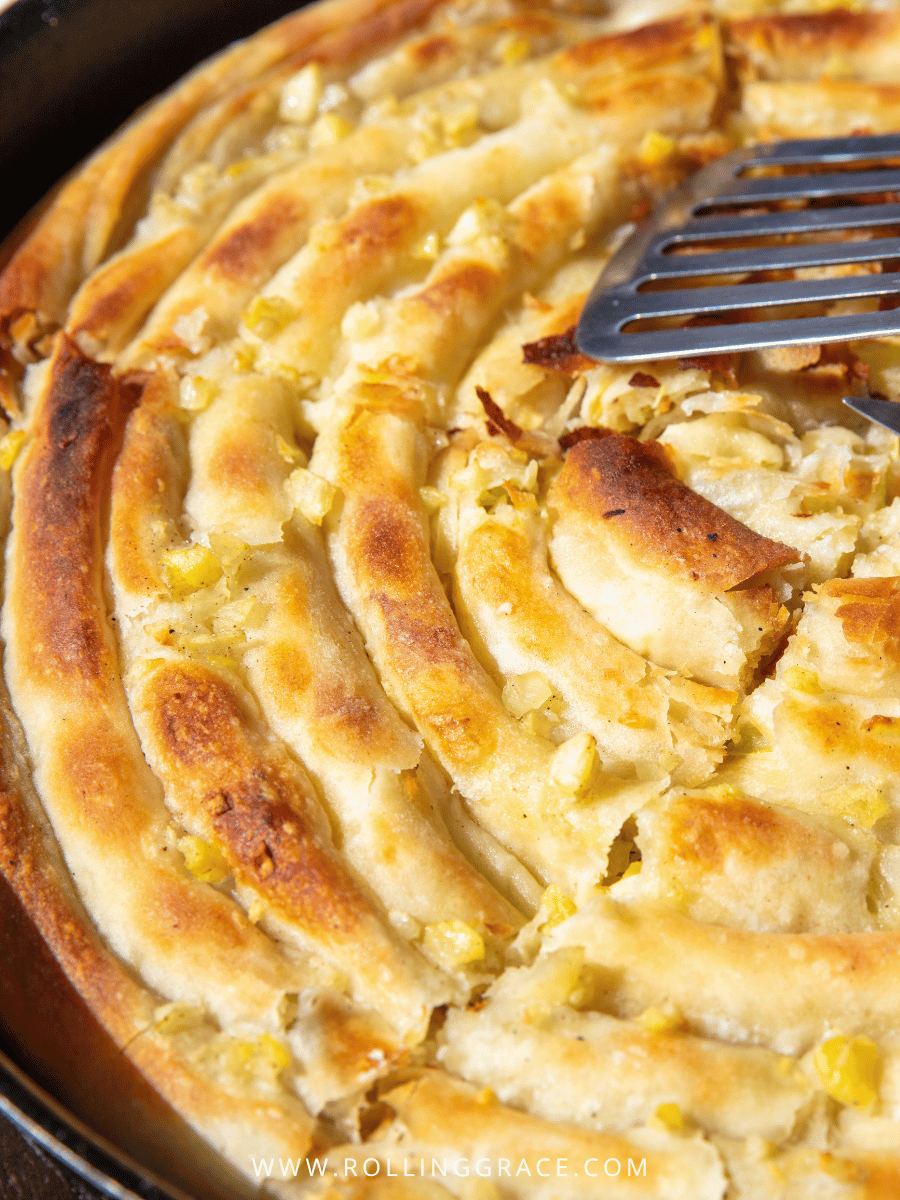
Burek
If ćevapi is Bosnia and Herzegovina’s most beloved grill, burek is its most beloved pastry. Introduced through the Ottomans, it has become the country’s definitive street food and its ultimate breakfast or hangover cure.
Strictly speaking, in Bosnia the word burek means the meat-filled version, thin sheets of flaky filo rolled into a coil and packed with spiced minced beef. The cheese-filled version is sirnica, the potato one krompiruša, and the spinach one zeljanica, though travellers often lump them all under burek.
It is baked in large spirals and sold by weight at a buregdžinica, so you can order as little or as much as you like. Watch for it being sliced with a huge blade straight off the tray, still steaming. Have it with a glass of drinkable yoghurt, the way locals do. Adding this iconic specialty to your culinary checklist is crucial for exploring traditional Bosnian food during a trip to Sarajevo or Mostar.
Book 1-day in-depth walking tour of Sarajevo city with food culture experience
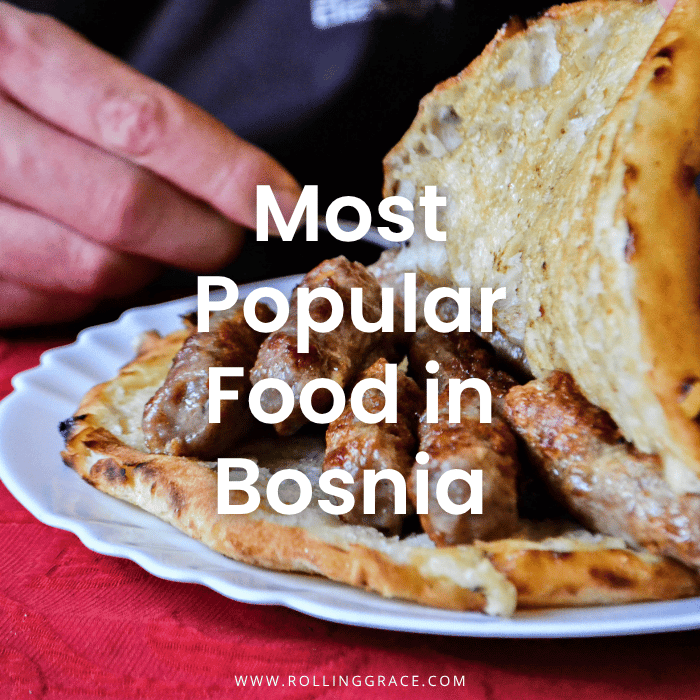
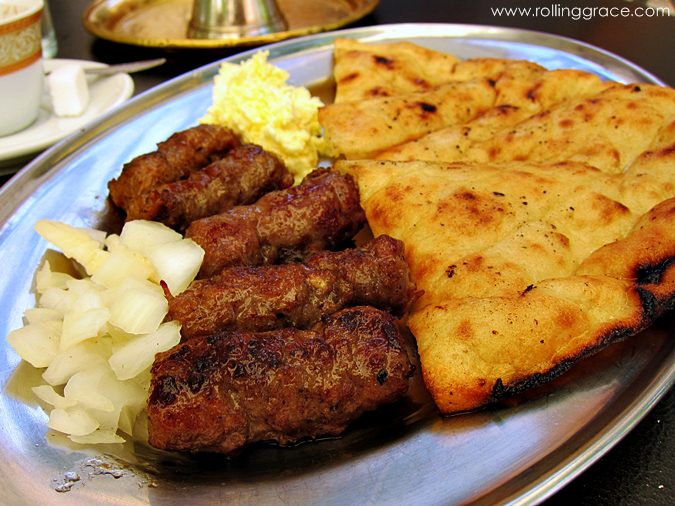
Ćevapi
If Bosnians agree on one dish, it is ćevapi. These small, skinless grilled sausages of minced meat are the closest thing the country has to a national dish, so beloved that Bosnia has put them forward for UNESCO’s list of intangible cultural heritage.
Bosnian ćevapi are made with beef, veal, lamb, or mutton, seasoned simply and rested in a light broth before grilling. Pork is not used, in keeping with local dietary tradition. They arrive tucked into a warm, pillowy flatbread called somun, scattered with raw chopped onion, and served with a spoonful of kajmak, the soft, rich clotted-cream cheese that defines so much of this cuisine.
Order in fives or tens; they are small, and they disappear fast. Sarajevo’s old town has whole streets of ćevabdžinica grill houses dedicated to them.
Bosanski Lonac
Bosanski Lonac, or “Bosnian pot,” is one of the country’s national dishes and a masterclass in patience. This is slow food in its truest form, meat and seasonal vegetables layered into a tall pot and left to cook low and slow for hours until everything melts together.
There is no single fixed recipe. The cook layers big chunks of meat, usually beef or lamb, with whatever vegetables the season offers: potatoes, carrots, cabbage, peppers, tomatoes, onions, and garlic, seasoned with parsley, paprika, and bay. Traditionally it is built in a ceramic pot and sometimes lifted with a splash of white wine. Hours of gentle simmering leave the meat spoon-tender and the broth deep and savoury.
You will find it on the menu at aščinicas across the country, and it is exactly what you want after a cold day of sightseeing. This comforting dish easily ranks as one of the best recommendations for traditional Bosnian food if you want to experience the rich, slow-cooked flavors of the Balkans.

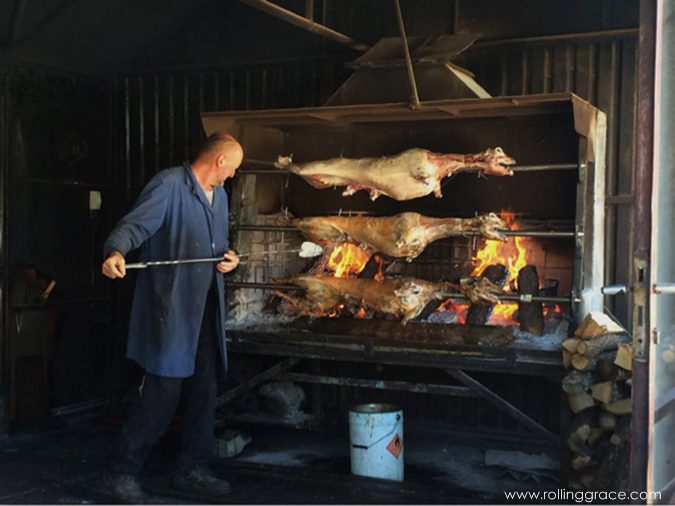
Janjetina na Ražnju
Janjetina na ražnju, “lamb on a spit,” is a special-occasion dish and a roadside spectacle rather than an everyday restaurant order. Whole lambs turn slowly over an open fire for hours, the fat rendering and the skin crisping as the smoke drifts up.
The tradition is simple and honest: the meat is sold by the kilogram, weighed out in front of you, a mark of its freshness. On a Bosnian road trip you will spot roadside restaurants with a spit turning out front, and it is always worth stopping. The reward is slow-roasted lamb so tender it barely holds together, smoky and rich.
If you are looking for a local favorite, this highly celebrated item is one of the most recommended options for traditional Bosnian food.
Dolma (Stuffed Vegetables)
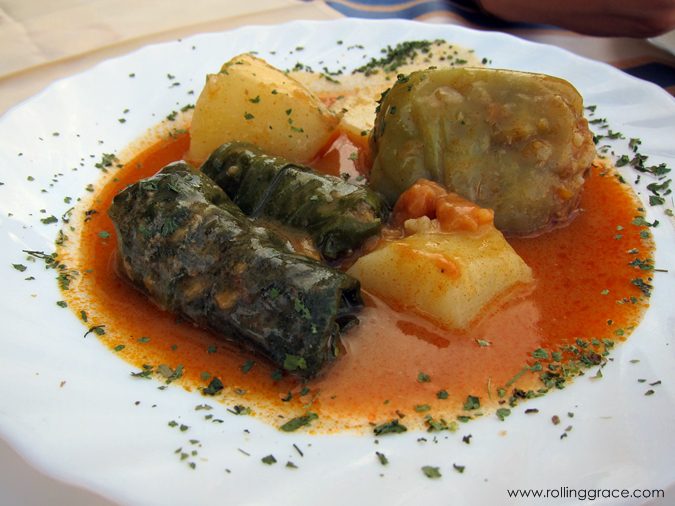
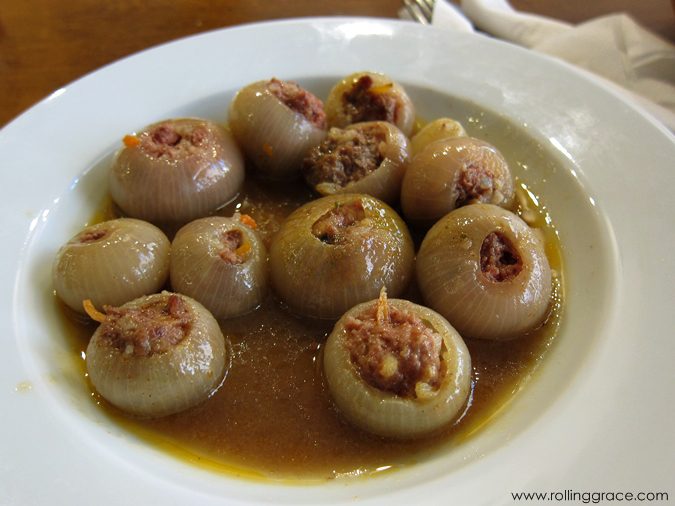
Bosnians have a real talent for stuffing rice and minced meat into anything that will hold it, and the family of stuffed vegetables, known broadly as dolma, is one of the cuisine’s great pleasures.
Filana paprika are bell peppers packed with seasoned minced meat and rice. Sogan-dolma, stuffed onions slow-simmered until sweet, are a specialty of the city of Mostar. Sarma wraps the same savoury filling in pickled cabbage leaves, while raštika uses kale, and japrak uses grape leaves. Each swap of leaf brings its own subtle flavour, and a mixed platter is the best way to taste the range in one sitting.
Tucking into a hot serving of this specific recipe is one of the best ways to explore traditional Bosnian food without settling for generic commercial variations.
Begova Čorba
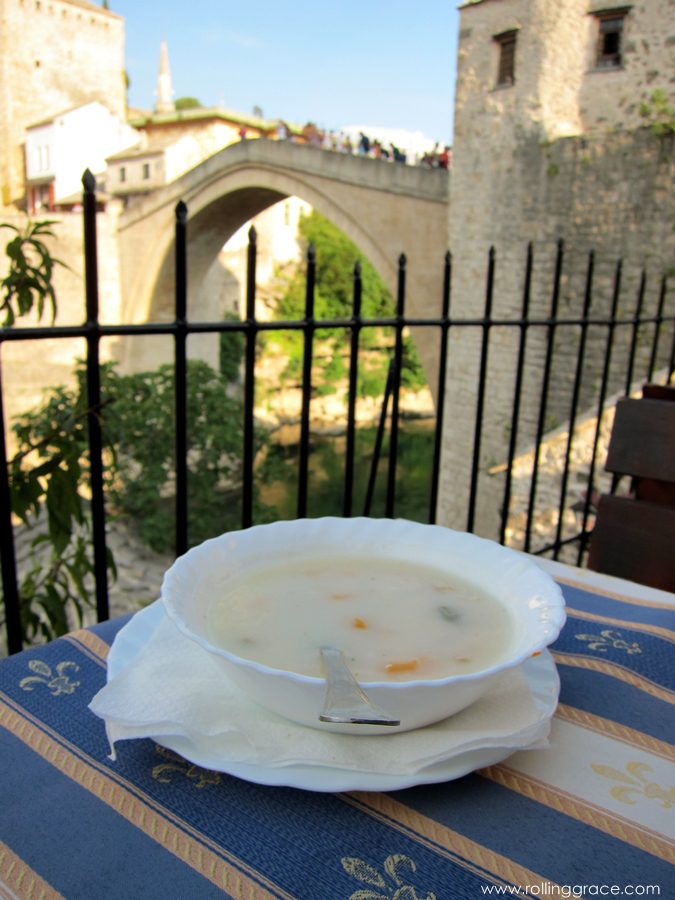
Begova Čorba, or Bey’s soup, is named after the Ottoman nobility who once ate it, and it remains one of Bosnia’s most beloved soups. This is comfort food for a cold day, thick enough to sit somewhere between a soup and a stew.
Book 1-day in-depth walking tour of Sarajevo city with food culture experience
The heart of the dish is chicken and okra, simmered slowly in a paprika-infused broth with vegetables like carrot, celery, and potato, then thickened toward the end. Despite its velvety richness it stays light on the stomach thanks to all those vegetables.
Look for it at an aščinica, the traditional canteen-style eateries where locals take their lunch, but go before mid-afternoon, as most close by 3pm. This classic dish stands out on any curated guide focusing on traditional Bosnian food.
Ćufte
Ćufte are Bosnian meatballs, but that undersells them. Made from well-seasoned lamb or beef bound with egg and flour, they are cooked in their sauce from the start so the flavours deepen and the liquid thickens around them.
The classic Bosnian version comes in a tangy egg-and-yoghurt sauce that lifts the rich meat with a gentle sourness. Some kitchens serve them in a lightly spiced tomato sauce instead, often alongside mashed potato or fries. Either way, this is homely, hearty cooking, a staple of the traditional aščinica.

Klepe sa Mesom
Klepe sa mesom are Bosnia and Herzegovina’s answer to the dumpling, and one of the clearest edible links between the Balkans, Italy, and Turkey. Trace their lineage back to the Ottoman Empire and you can see the family resemblance to Italian ravioli and Turkish mantı.
Small parcels of soft dough are filled with minced meat, boiled, and then classically dressed with garlic and yoghurt or a little melted kajmak. The spicing is warm and gentle, and the whole plate is comfort in miniature. They take real effort to make by hand, so eating a plate someone has folded for you feels like a small gift.

Roštilj (Grilled Meats)
Ćevapi may be the headline, but Bosnia’s wider world of grilled meat, roštilj, deserves your full attention. This is a country that treats the grill as an art form.
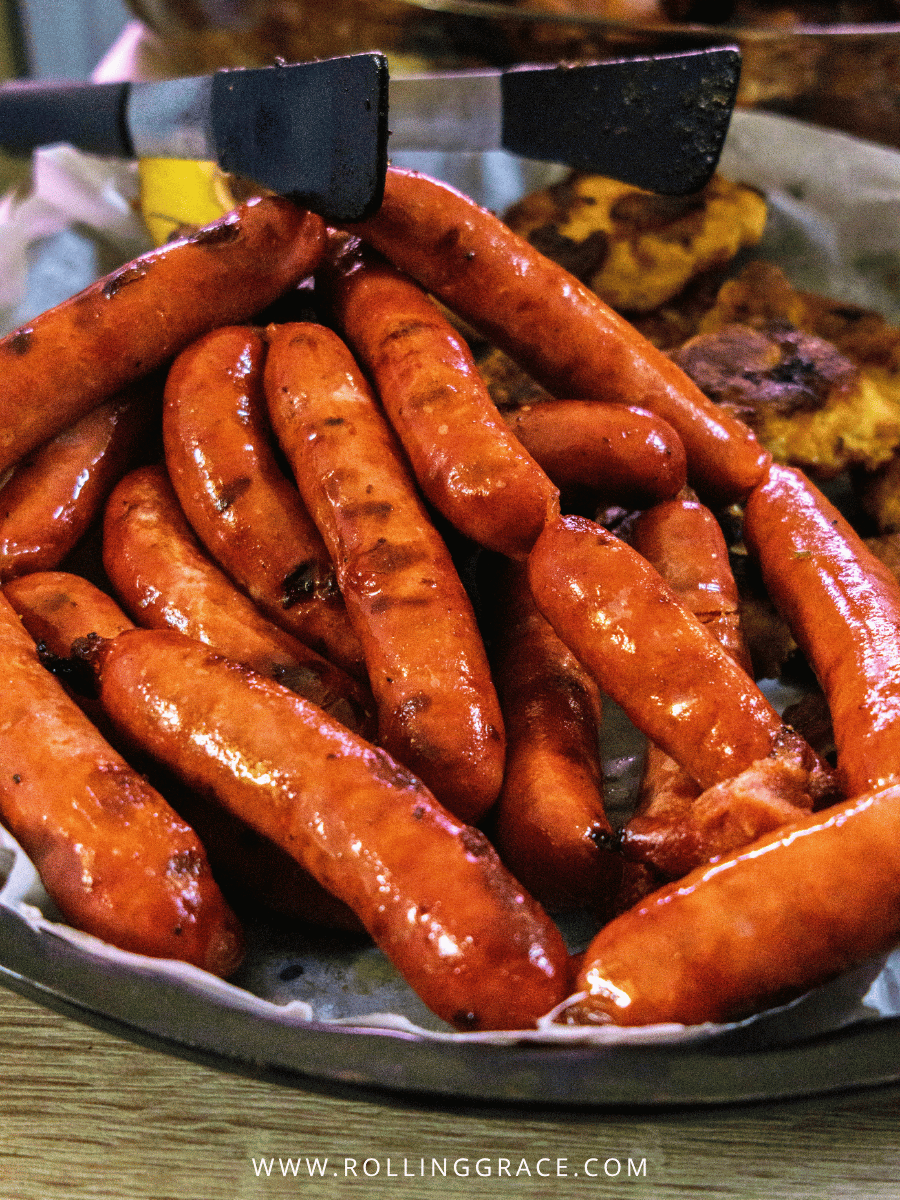
Pljeskavica is the one to know, a large, spiced patty of minced beef and lamb, essentially a Balkan burger, superb with a slab of kajmak. Then there are sudžukice, long, handmade beef sausages threaded with warm spices and seared over the coals.
Order a mixed roštilj platter and you will get a bit of everything, usually with fries or bread and a fresh salad on the side.
Bosanska Kahva
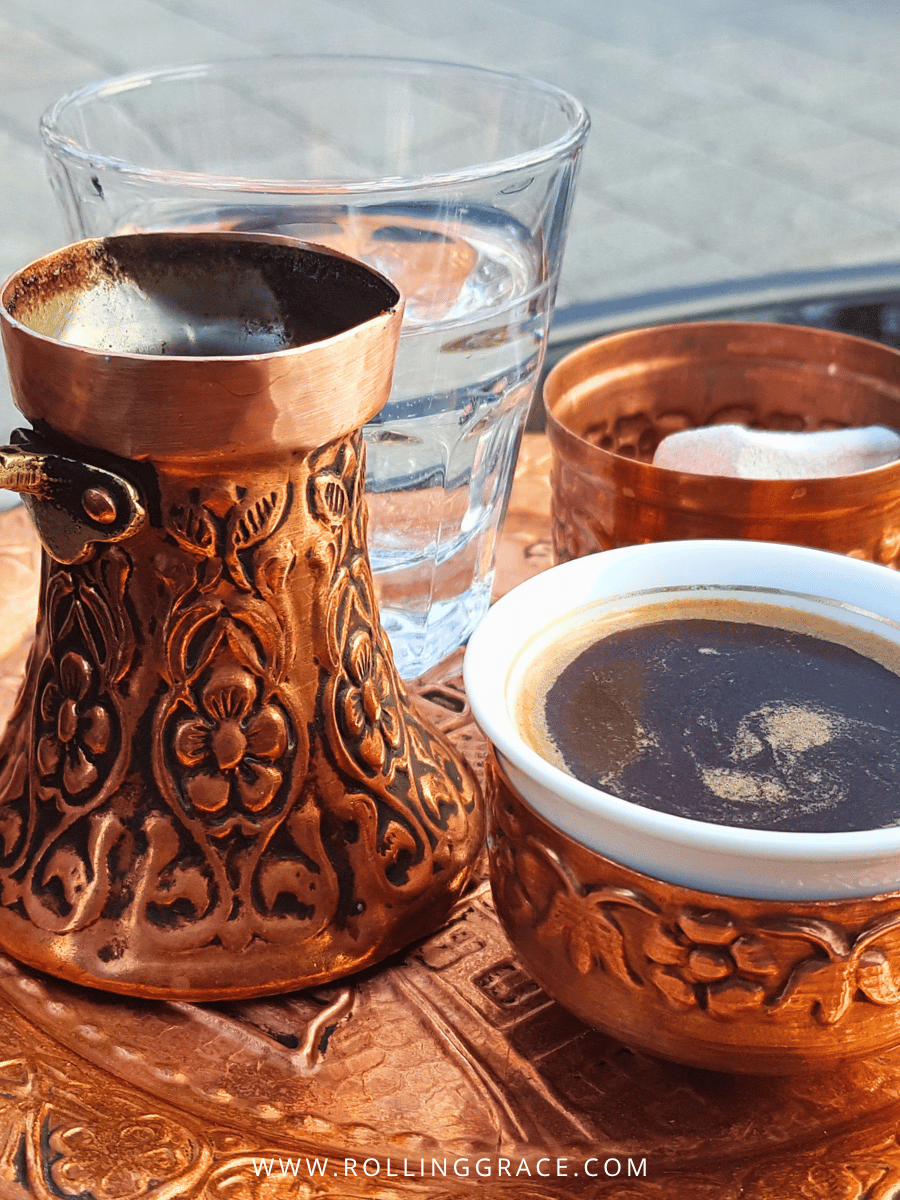
No meal in Bosnia and Herzegovina truly ends until you have had a Bosanska Kahva. Bosnian coffee is less a drink than a ritual, close cousin to Turkish coffee but prepared with its own quiet ceremony.
It comes in a small copper pot called a džezva, poured into a little ceramic cup, and served on a round tray with the full supporting cast: a glass of water to cleanse the palate, sugar cubes to soften the bitterness, and a piece of rahat lokum, or Turkish delight, for a sweet finish. The point is not speed. The point is to slow down, sip, and talk, which is exactly how Bosnians use it.
Salep
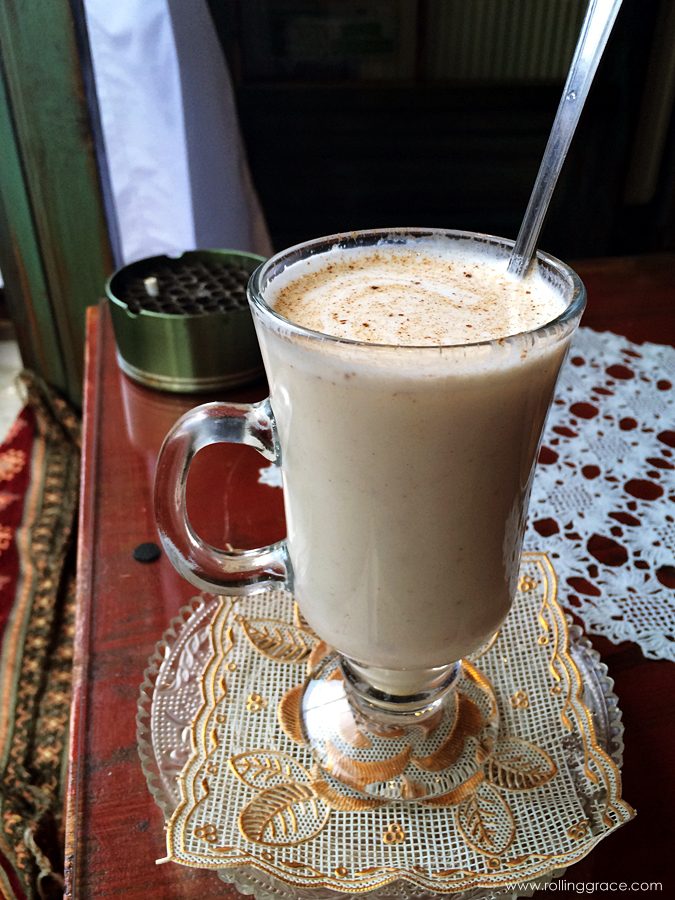
For a warming, non-alcoholic drink, seek out salep, a hot, frothy, milky drink made from the flour of ground orchid tubers. It is a winter favourite with deep Ottoman roots.
Read also:Čajdžinica Džirlo: A Beautiful Sarajevo Tea House in Bosnia
Silky and thick, salep is scented with rosewater and finished with a dusting of cinnamon, a combination that smells like an Ottoman rose garden and tastes like pure comfort. You will most often find it at winter markets and traditional cafés. If you love it here, it is worth knowing the same drink appears across the old Ottoman world, from Sarajevo to Istanbul.
Tufahija
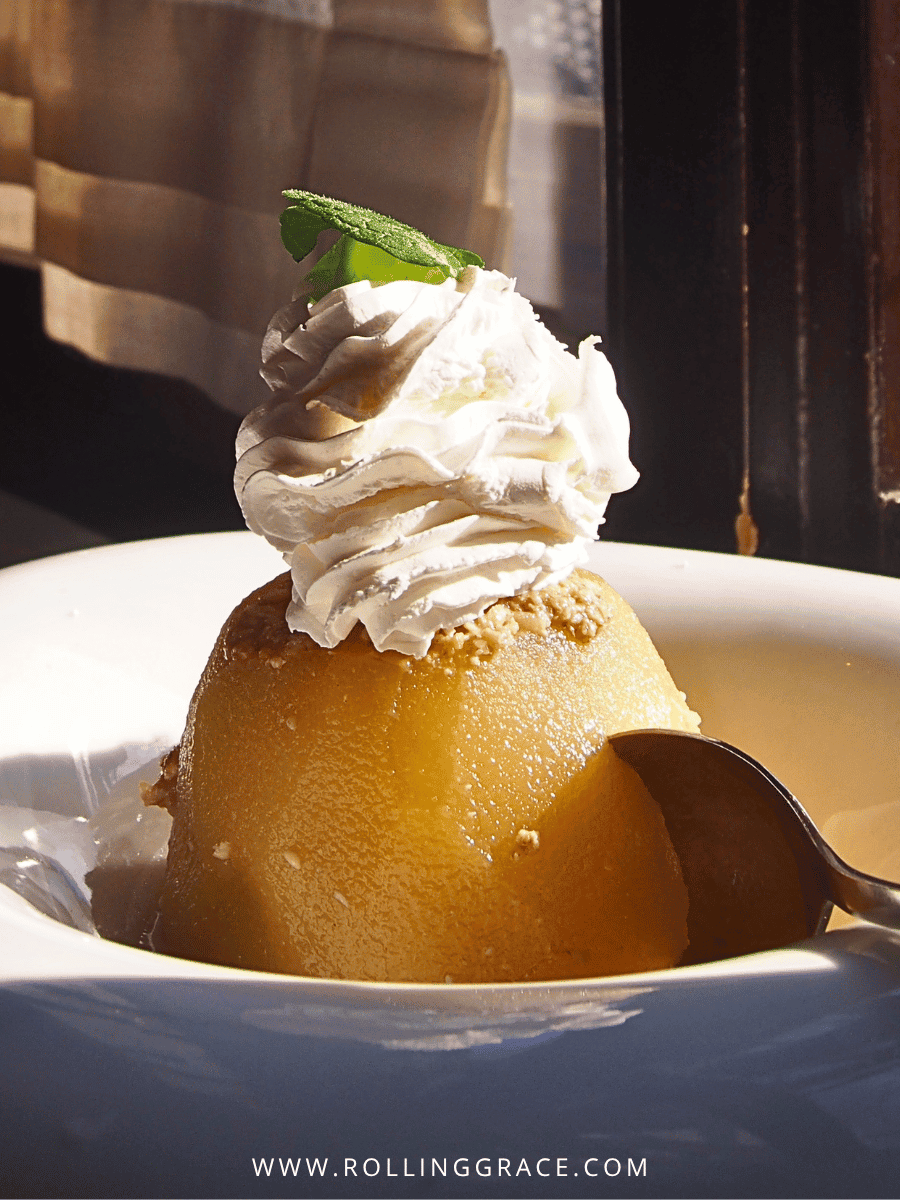
Save room, because a Bosnian meal is not finished without something sweet, and Tufahija is the one to seek out first. This elegant Ottoman-era dessert turns a humble apple into something special.
Book 1-day in-depth walking tour of Sarajevo city with food culture experience
A whole apple is poached soft in sugar syrup, stuffed with a sweet walnut filling, then served in a tall glass under a cloud of whipped cream with the syrup pooled around it. It is rich, fragrant, and deeply sweet, which is exactly why Bosnians pair it with a cup of bitter Bosanska Kahva: the strong coffee cuts the sugar, and the two together are a small ritual of their own. Order both, take your time, and you have the perfect end to a Bosnian feast.
Origins and History of Traditional Bosnian Food
Almost everything on this list traces back to the same source: nearly 500 years under the Ottomans, layered over older Balkan traditions and later brushed with Austro-Hungarian influence.
That is why Bosnian food rhymes so closely with Turkish and Albanian cooking, and why so many dishes carry names rooted in Turkish words. Eating your way through Bosnia is really a way of tasting its history, one plate of ćevapi and one cup of kahva at a time.
A quick, kind word on doing it well: the best of this food lives in small, family-run aščinicas and grill houses, not on tourist strips. Eating where the locals eat, ordering the seasonal soup, and going easy on waste keeps your money in the community and the tradition alive. It is also, without fail, where the food tastes best.
Get the good stuff first. Join Rolling Grace for the restaurants worth crossing a city for, the stays worth the upgrade, and the places to go before everyone else. Free, straight to your inbox.
Leave a Reply