I found Čajdžinica Džirlo on a rainy afternoon, after a friend swore it was the best thing he had done in Sarajevo.
The džezva arrives first: a small copper pot of Bosanska Kahva, set down with a sugar cube, a square of Turkish delight, and a glass of water – the way Bosnians have taken their coffee for centuries.
This is Čajdžinica Džirlo, a single small room up a cobbled side street in Sarajevo’s old town, and it has poured tea and coffee this way since 1997.
For a tea house this small, it carries an outsized reputation. It ranks among the highest-rated places to eat or drink in the whole city, and almost everyone who finds it was sent by a local. Here is why it earns the walk uphill.
Read also: Top 10 Traditional Balkan Food to Try in Southeast Europe
History of Čajdžinica Džirlo
You would walk past it if you did not know. The tea house fills one modest room on Kovači street in Stari Grad, just uphill from the Sebilj fountain in the Baščaršija bazaar. Persian rugs cover the floor.
Low Bosnian benches line the walls, scattered with cushions. Antique teapots, jars, and old photographs crowd every surface. From the window, the cobbled lane runs straight down to the Sebilj, framed between the low rooftops of the bazaar.
The tea house is the work of Husein and Dijana Džirlo, a husband and wife who opened it in 1997. They had spent years abroad, in Italy and then Switzerland, and returned to Sarajevo after the war looking to build something the city did not yet have.
Bosnia is coffee country. The idea of a specialist tea house, a proper čajdžinica devoted to the slow Ottoman ritual of tea, was close to unheard of when the couple opened their doors.
They took a small building on Kovači that had stood empty for nearly 40 years, next to the workshop where Husein’s father once made traditional Bosnian furniture, and turned it into exactly that. Nearly three decades on, the family still runs it, most days of the week.
Read also: What Is the Sarajevo Safari: 5 Shocking Facts
A Menu of 53 Teas
The heart of the offering is the tea list, and it is not marketing bluster. Čajdžinica Džirlo keeps a working stock of 53 different teas, from traditional Bosnian and Balkan infusions to imported organic blends.
Bosnian classics run to mint, rose, rosehip, and chamomile, alongside wild-mountain herbal mixes gathered in the highland villages. Beyond these, the shelves hold South African, Indian, and Mediterranean teas.
If the choice overwhelms you, ask the owner. A recommendation comes warmly and without fuss, which is part of the pleasure of the place.

Bosanska Kahva and Salep
Tea gives the house its name, but two other drinks deserve your attention.
Traditional Bosnian Coffee
Bosanska Kahva is served the proper way, in a small džezva with a fildžan cup, a sugar cube, and a glass of water. Taken slowly, it is a lesson in how Bosnians treat coffee as a ritual, not a transaction. If you have only ever had espresso on the run, this is the antidote.
Salep, the Winter Warmer
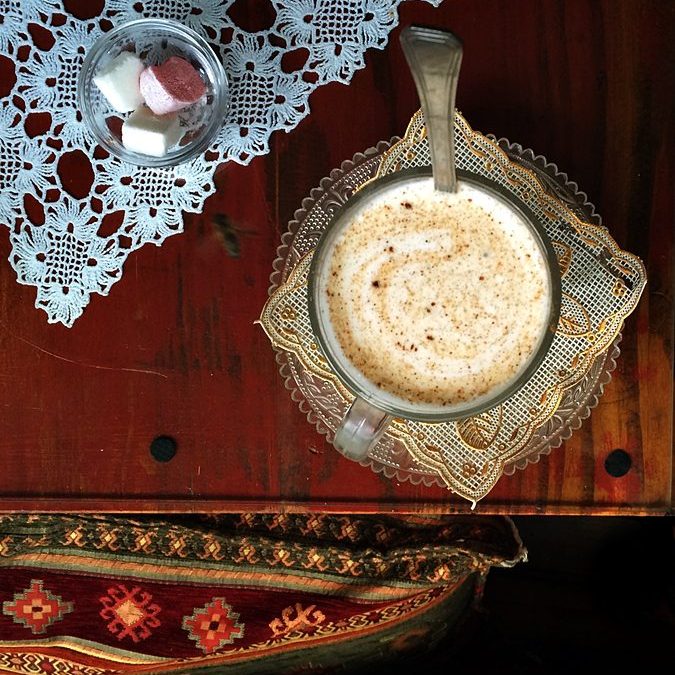
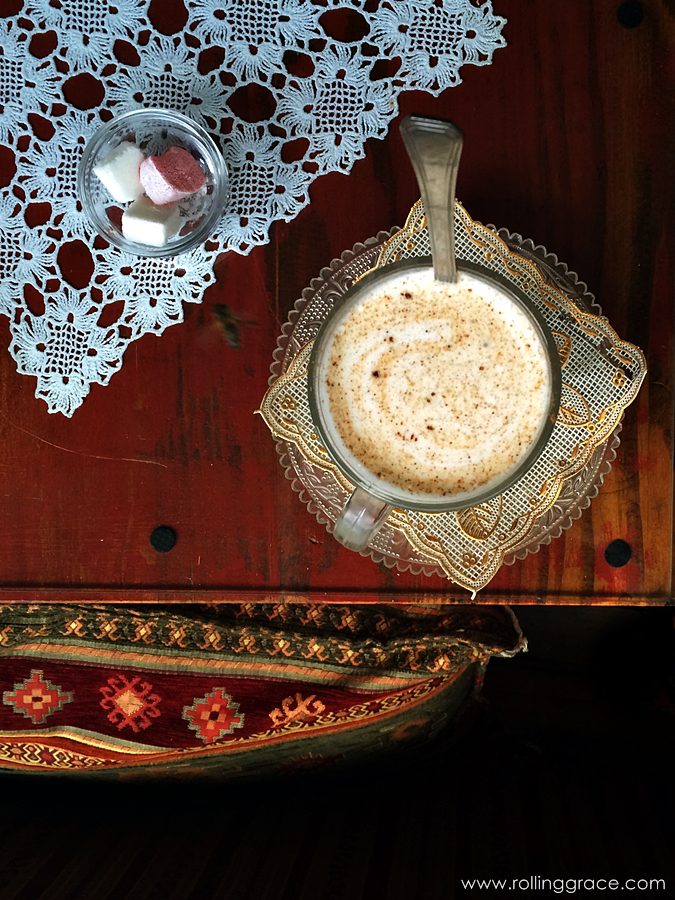
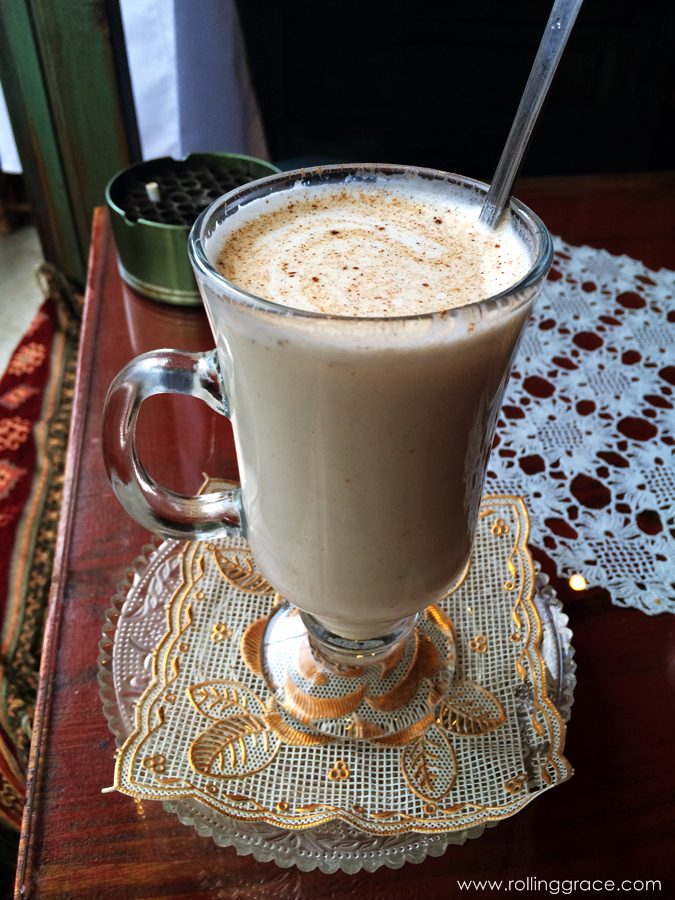
Salep is the must-order, a thick, warm, milky drink made from orchid root, dusted with cinnamon. On a cold or rainy Sarajevo day it is close to perfect. Even if you have tried the Turkish version, the salep here is worth ordering on its own merits.
What the Room Feels Like
Part of the appeal is simply staying put. The space holds barely a dozen people. The light is soft, the acoustics swallow noise, and books and magazines lie about for anyone who plans to do nothing but drink tea and let the afternoon go.


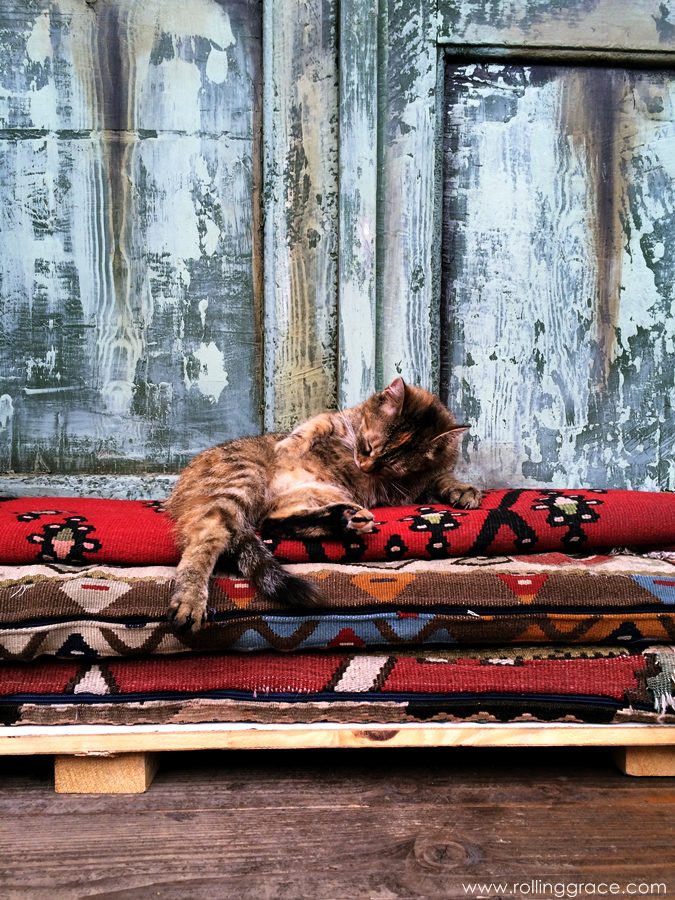
A house cat often makes the rounds, curling up beside guests for a nap. Regulars mention it as fondly as the drinks. It is that kind of room: informal, warm, and impossible to hurry.
How to Get to Čajdžinica Džirlo
The tea house is properly tricky to find, and that is half its charm. Sarajevo’s old town is a tangle of narrow lanes and odd intersections, and Kovači is a cobbled street on a slope that most visitors never think to climb.
Start at the Sebilj fountain in Baščaršija, the wooden fountain at the centre of the bazaar, and head uphill along Kovači. The tea house is a few minutes’ walk up on your left. If you lose your bearings, ask a local for the Sebilj and climb from there.
Contact Information
- Address: Teahouse Džirlo, Kovači 16, Stari Grad, Sarajevo 71000, Bosnia and Herzegovina
- Opening hours: Open daily, 8:30am to 11:00pm. Hours can shift with the season.
- Other tips: The room is small, so on busy evenings you may briefly wait for a table. Cash is preferred, so carry small notes.
Why a Place Like This Matters
Čajdžinica Džirlo is a family business that has held its ground for close to 30 years, run by the same couple who started it. Choosing a place like this over a chain café keeps money in the hands of the people who give a neighbourhood its character.
It also asks something small of you in return: to slow down, order one more pot, and take the afternoon at the pace the room sets. In a city that rewards wandering, that is no bad thing.
Get the good stuff first. Join Rolling Grace for the restaurants worth crossing a city for, the stays worth the upgrade, and the places to go before everyone else. Free, straight to your inbox.
Leave a Reply