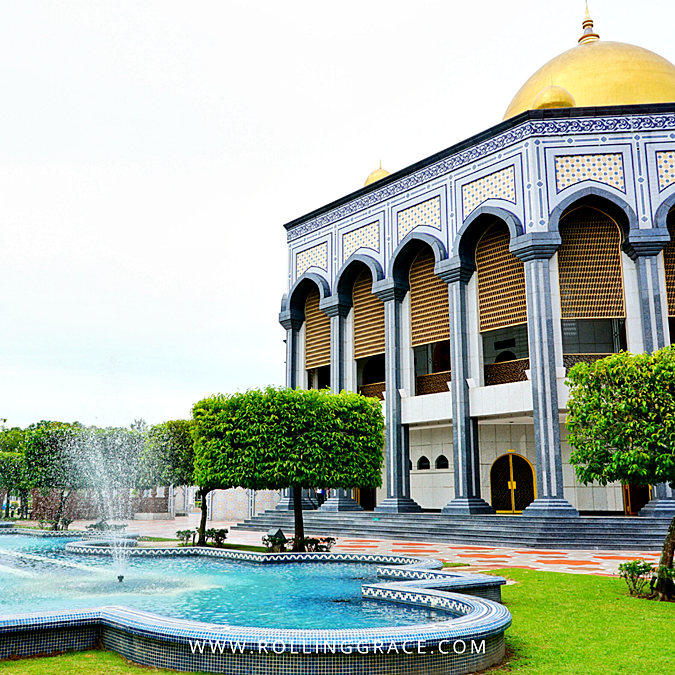
Twenty-nine golden domes catch the equatorial sun above Bandar Seri Begawan, each one gilded and precision-placed around a central dome that crowns the largest mosque in Brunei.
Masjid Jame’ Asr Hassanil Bolkiah is one of two state mosques in Brunei Darussalam, completed in 1994 at a cost of approximately USD 8 million. It holds 5,000 worshippers and functions as both an active religious space and the country’s most photographed architectural landmark.
This is not a museum. It’s a working mosque where Brunei’s relationship between Islam, governance, and daily life becomes tangible. The Sultan maintains a private entrance. Visitors are welcomed through designated doors during specific hours. These details tell you everything about how the sultanate organises itself.
Here are five reasons Masjid Jame’ Asr Hassanil Bolkiah deserves a place on your Brunei itinerary.
Read also: 6 Great Reasons to Visit Masjid Omar Ali Saifuddien, Brunei
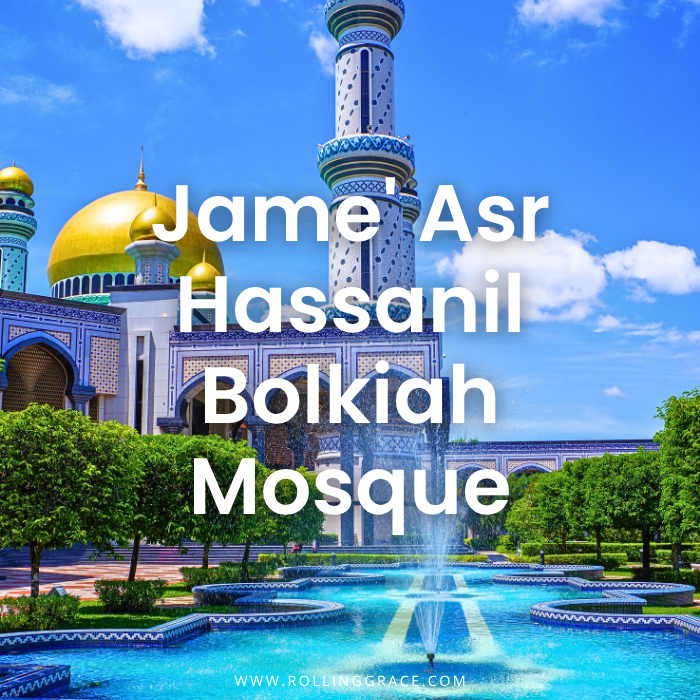
29 Golden Domes Defining Bandar Seri Begawan’s Skyline
The domes of Masjid Jame’ Asr Hassanil Bolkiah are the first thing you notice from any direction in the city. Twenty-nine domes rise above the mosque, the largest centred over the main prayer hall with twenty-eight smaller ones clustered around it in a geometrically precise but visually fluid arrangement. The gilding catches light differently depending on the hour, shifting from warm amber at dawn to blazing white gold at midday.
Photographers position themselves early morning or late afternoon, when the sun strikes at low angles and the domes produce a liquid gold effect against Brunei’s tropical sky. From elevated points across the city, the dome cluster forms a silhouette that has become synonymous with Bandar Seri Begawan itself.
Read also: Best Mosques in Brunei: 6 Most Beautiful Must-Visit Places
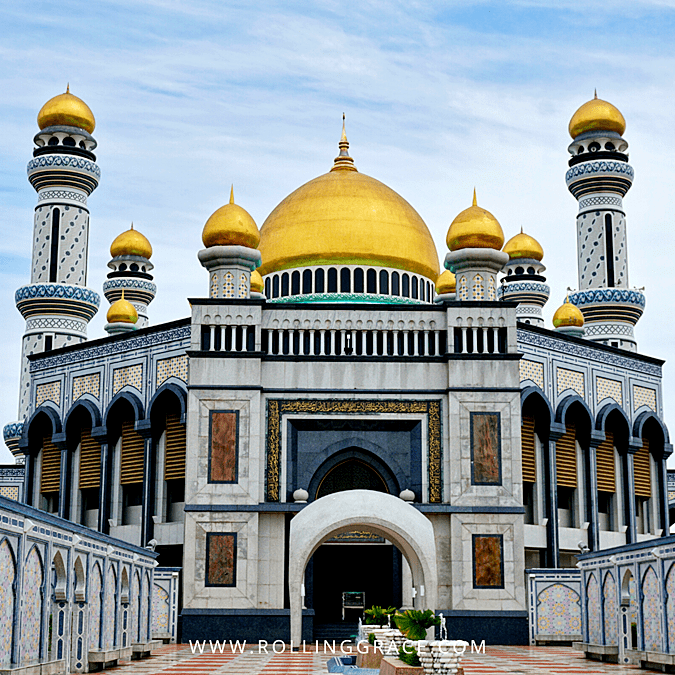

Four 58-Metre Minarets Tower Over the City
Each of the four minarets stands at exactly 58 metres (190 feet), positioned at the cardinal points of the mosque’s footprint. They serve a dual purpose: functional call-to-prayer speakers and visual anchors for the entire precinct.
Book Book Full-Day Brunei City Tour to Jame Asr’ Mosque
At night, subtle uplighting gives them a soft glow that’s visible from well beyond the mosque grounds. From ground level, looking up at a minaret base creates a sense of scale that photographs struggle to convey. The height is deliberate. In a city with few buildings above five storeys, the minarets command every sightline.

Three Design Languages in One Hall
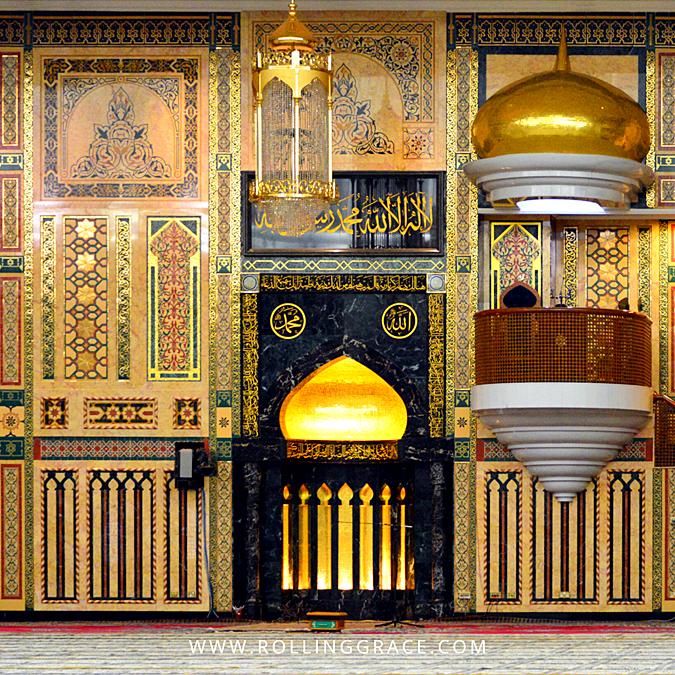
Step inside the prayer hall and you’ll find three distinct aesthetic traditions working together. The result feels neither purely traditional nor purely contemporary, but something distinctly Bruneian.
Middle Eastern Influences
Arched doorways, calligraphic panels, and ornamental ceiling treatments draw from classical Islamic design traditions. The proportions of the arches and the detail in the calligraphy signal deep respect for established religious aesthetics.
Modern Engineering
Climate control systems, structural engineering techniques, and sleek floor finishes represent the contemporary side of the interior. The prayer hall manages to hold 5,000 people without feeling cavernous or industrial, a balance that required serious engineering precision.
Local Artistic Details
Bruneian touches surface in specific colour palettes, artistic motifs particular to the region, and the layout of ablution areas. These local elements prevent the interior from feeling like an imported design and root it in its Southeast Asian context.

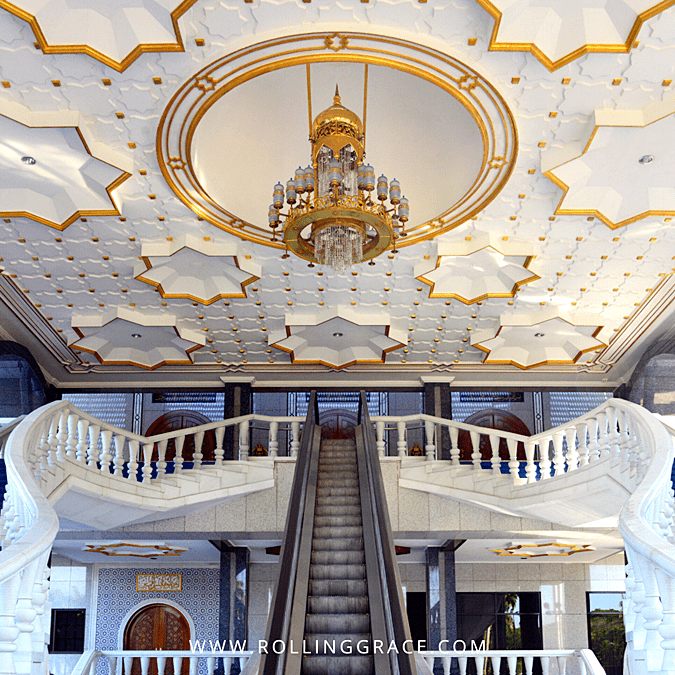
Sultan’s Private Entrance and Escalator
A separate corridor leads to the Sultan’s personal prayer space, complete with a private escalator. Non-Muslim visitors never see this section. It exists because in Brunei, the Sultan is simultaneously head of state, head of government, and head of religion.
This detail is not a curiosity. It’s an architectural expression of how power and Islam intertwine in the sultanate. The mosque was built in 1988-1994, just years after Brunei gained full independence in 1984. Sultan Hassanal Bolkiah assumed the roles of Prime Minister, Finance Minister, and Home Affairs Minister. The mosque, and his place within it, reflects that concentration of authority.
Understanding that this private space exists changes how you see the rest of the building. The public prayer hall is open and welcoming. The Sultan’s corridor is closed and elevated. Both are part of the same design. Both are intentional.
Most Photographed Courtyard Fountain
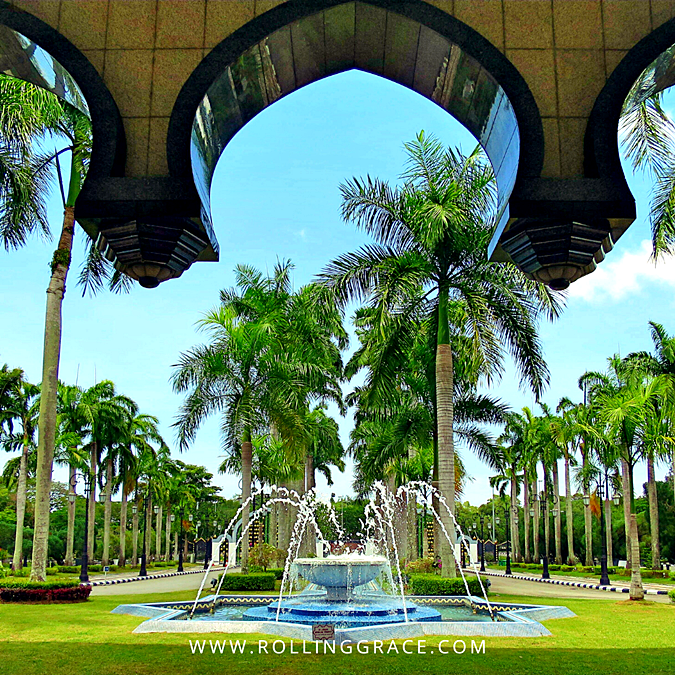
Outside the entrance reserved for the Sultan’s use, a fountain commands the forecourt. The design is intricate, with multiple water features and sculptural elements that catch both light and attention.
Visitors photograph the fountain more than any other exterior element. It’s the most accessible symbol of the mosque’s grandeur and the easiest to appreciate without entering the prayer hall. The surrounding gardens and secondary water features create a precinct that rewards a slow walk around the perimeter.
The fountain serves a practical role too: worshippers use surrounding water features for ablution preparations before prayer. Function and presentation are inseparable here.
Opening Hours and Visitor Access
Masjid Jame’ Asr Hassanil Bolkiah welcomes non-Muslim visitors during designated windows. Entry is completely free.
Monday, Wednesday, and Saturday
Open from 8am to 12 noon and 2pm to 3pm. These are your best windows for visiting. Morning slots capture the best natural light through the dome openings, making them ideal for photography outside.
Sunday
Opening time is later: 10:30am to 12 noon and 2pm to 3pm. This works well if you’re building a Sunday itinerary around other attractions in the city.
Closed Days
The mosque is completely closed to visitors on Thursday and Friday. Friday is the main congregational prayer day. Thursday closures can vary by season and religious calendar, so confirm by phone before planning a specific visit.
Entry Fee
Free for all visitors.
What to Know Before You Visit
Visitors must dress modestly (covered shoulders, knees, and hair) and can borrow free robes at the mosque. Report to security on arrival, remove shoes before entering, keep phones silent, and note that photography inside the mosque is prohibited. The female prayer hall is restricted.
Non-Muslim visitors are welcome, but basic protocols apply. None are complicated. All are respectful.
Dress Code and Free Robes
Cover your shoulders, knees, and hair before entering the prayer hall. If you arrive in shorts or a sleeveless top, free robes are provided at a designated changing area. Many visitors wear them over normal clothes. They’re functional and comfortable.
Security Registration
Report to the security desk before entering the main hall. They’ll record visitor numbers and note any large groups. The process takes about two minutes. Have your passport handy, though it’s not always required.
Photography Rules
Photograph outside the mosque freely. Domes, minarets, fountain, gardens are all open for pictures. Inside, photography is strictly prohibited. No phones, no cameras, no exceptions. This protects the sanctity of the prayer space and allows worshippers to focus undisturbed.
Phone Etiquette
Switch to silent or off entirely before entering. Even vibration can be disruptive during prayer.
Shoe Removal
Remove your shoes before entering the prayer hall. A storage area is provided. The interior floors are covered in fine carpeting designed for barefoot prayer.
Female Prayer Hall Restrictions
The female prayer section is separate and closed to male visitors and non-Muslim women. This reflects standard Islamic practice.
How to Get to Masjid Jame’ Asr Hassanil Bolkiah
Public Transport
The closest bus stop is Kiulap Commercial Station in the Gadong area, roughly a 10-minute walk from the mosque. Brunei’s bus network runs less frequently than other Southeast Asian cities, so check times before relying on it.
By Taxi or Grab
Taking a taxi directly to Kampong Kiarong is straightforward. Meters are standard. The fare from central Bandar Seri Begawan runs around BND 8-12. Grab is available in the city and gives upfront pricing before you book.
Walking From the City Centre
The mosque is about 1.5 kilometres from the main hotel and shopping districts. Walking takes roughly 20 minutes and gives you a look at the residential streets between the tourist zones and the mosque precinct.
Tips for Visitors
- Address: Simpang 127, Kampong Kiarong, Bandar Seri Begawan, Brunei Darussalam
- Contact Number: +673 2238741/2
Best Time to Visit Masjid Jame’ Asr Hassanil Bolkiah
Early morning (8am to 9am) offers the least crowded experience. Late afternoon (2pm to 2:45pm) delivers softer light for exterior photography. Avoid mid-morning if you prefer fewer visitors.
What to Pack
Bring water. Brunei is tropical and you may spend 45 minutes to an hour at the mosque. Wear comfortable walking shoes (which you’ll remove inside). A small shoulder bag to hold your shoes while walking the interior is useful. Sunscreen if you plan to spend time photographing the courtyard.
Islamic Identity in Brunei
Islam in Brunei is the foundation of governance, law, and social life. The Sultan is simultaneously head of religion and head of state. In 2014, Sultan Hassanal Bolkiah introduced the first phase of the Syariah Penal Code Law, cementing Islamic principles in the legal framework.
When you walk around Masjid Jame’ Asr Hassanil Bolkiah, you are walking through one of the most visible physical expressions of that integration. The scale communicates authority. The precision communicates permanence. The blend of international and local design communicates that Brunei sees itself as connected to the broader Islamic world while remaining distinctly itself.
For visitors, understanding this context transforms the experience. You are not looking at a decorative landmark. You are looking at how a small, resource-rich nation uses its architecture to communicate values and identity to the world.
Brunei’s rainforests and natural environment have faced development pressures over decades. The energy required to cool, light, and maintain a 5,000-capacity building in a tropical climate is significant.
Visiting responsibly means respecting posted hours, supporting local guides and businesses that work within environmental limits, and recognising the resources that a building of this scale demands.
Get the good stuff first. Join Rolling Grace for the restaurants worth crossing a city for, the stays worth the upgrade, and the places to go before everyone else. Free, straight to your inbox.
Leave a Reply