The animals killed for Hermès bags include crocodiles shot repeatedly in the head, ostriches watching their flockmates die in line, and alligators still moving in the bleed rack minutes after slaughter.
Jean-Louis Dumas sketched the first Birkin on an air sickness bag. It was 1984, a Paris to London flight, and Jane Birkin was in the seat next to him complaining that no bag on the market was practical enough for her life.
He pulled the paper bag from the seat pocket and drew the design on it. That was it. The bag that now sells for tens of thousands of dollars at boutique, and millions at auction.
Yet nobody talks about the cruel practices behind how it is made. Here is the full breakdown of what these animals endure.
Read also: Foie Gras in Fine Dining: 7 Truths Restaurants Cannot Ignore
Table of Contents
Animals Killed for Hermès Products
Hermès works with at least nine distinct animal species across five continents. Some of those supply chains are documented in court filings, undercover investigations, regulatory actions, and Hermès’ own corporate disclosures. Others are almost entirely opaque, shielded by layers of tanneries, third-party suppliers, and certifications that govern trade volumes but say nothing about what happens inside the farms.
What is consistent across all of them is this: every animal dies. Some die in facilities that have been investigated, filmed, and reported on by name. Others die in supply chains that have never been examined simply because no investigator has managed to get in. The absence of footage is not evidence of better conditions. It is evidence of less access.
Hermès has declined repeated invitations to open its supply chain to independent scrutiny, including a direct request made at its own shareholders’ meeting in 2024. The CEO’s response, on the record, was that he was not claiming there were no problems in the industry. That is the context in which everything that follows should be read.

Cattle
The majority of Hermès bags, the Togo, Clemence, Epsom, Swift, Barenia, Box Calf, and most of what you see on the boutique floor, are made from European calfskin. Hermès owns its primary calfskin tannery, Tanneries du Puy, acquired in 2015, based in France’s Auvergne region. The hides come from alpine regions of Europe, selected for their density and unmarked surface, a product of cooler climates with fewer insects and no cattle branding.
Hermès’ own sourcing data confirms that 91 percent of its hides come from Europe. The calfskin supply chain is the least scrutinised in the portfolio, partly because it runs adjacent to the European meat and dairy industries, and the hides are largely byproducts of those systems.
This does not mean the animals are raised with welfare as the priority. But no dedicated investigation has specifically targeted the Hermès calfskin supply chain, which is a different statement from confirming it is clean. Calfskin, in terms of sheer volume, is what Hermès is built on.

Nile Crocodile
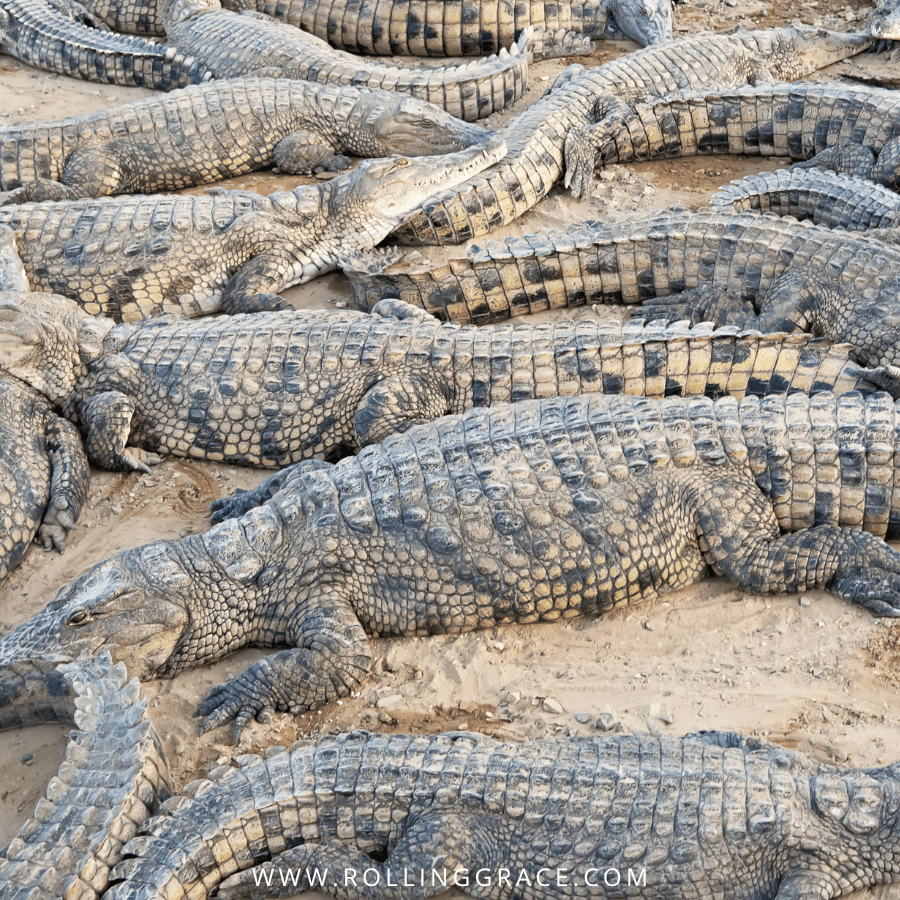
Hermès sources Nile crocodile, its second most prestigious exotic skin, from Zimbabwe. The supplier is Padenga Holdings, one of the largest Nile crocodile farming operations in the world. In 2014 alone, Padenga killed 43,000 animals. It also held, at that time, a 50 percent ownership stake in Lone Star Alligator Farms in Texas, connecting the two supply chains.
Undercover footage from Padenga’s farm in Kariba, Zimbabwe, showed concrete pits containing up to 220 crocodiles each. The director of operations at the farm confirmed to investigators that it takes between two and four crocodile belly skins to produce a single Hermès bag. He described the luxury market, on camera, as “bulletproof.”
It is one of the animals killed for Hermès bags, reflecting the demand for exotic materials in luxury fashion.
Saltwater Crocodile
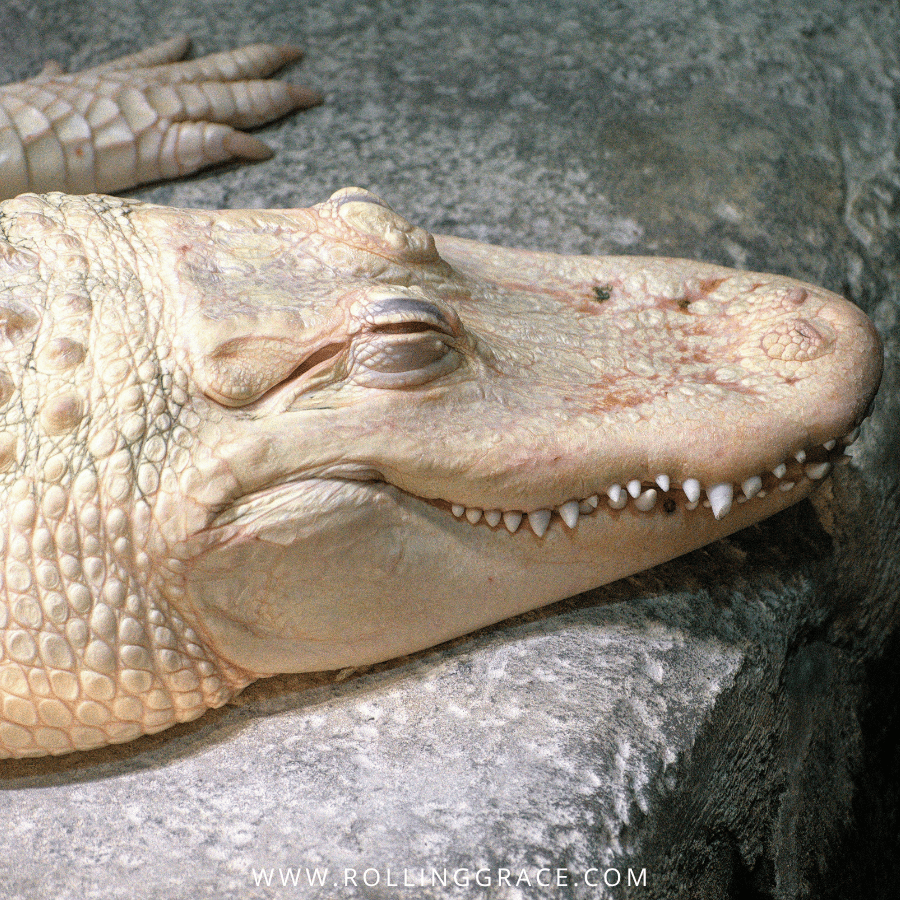
Porosus crocodile, sourced from Australia, is Hermès’ most expensive exotic skin. The smaller, more symmetrical scales command the highest prices at retail and on the resale market. The Himalaya Birkin, arguably the most coveted bag in the world, is made from Nile crocodile, but the Porosus tier sits above everything else in Hermès’ pricing architecture.
Because Porosus crocodiles are highly territorial, Hermès farms them in individual enclosures rather than communal pits. This keeps the skins unmarked and flawless. For the animal, it means solitary confinement for its entire life before slaughter.
An investigation by the Australian organisation Kindness Project, filmed on farms belonging to Hermès and its suppliers, documented crocodiles in small concrete pens filled with filthy water, before being electrocuted, dragged out, and mutilated, some while still conscious.
It is frequently listed among the animals killed for Hermès bags as part of the luxury leather trade.

American Alligator
Alligator skin comes from Lone Star Alligator Farms in Winnie, Texas, a facility Hermès has confirmed as a supplier. Padenga Holdings, also the Zimbabwe crocodile operation, owned 50 percent of Lone Star at the time PETA investigated it in 2014.
What investigators found: alligators in overcrowded concrete pits filled with waste-clouded water, workers shooting animals repeatedly in the head with a captive-bolt gun, and, when that gun malfunctioned, the farm manager directing workers to cut into conscious animals instead, forcing metal rods up their spinal columns. Animals were still moving in the bleed rack and ice-water bins several minutes after the killing attempts. The manager referred to the live alligators as “watchbands” on camera. It continues to feature in conversations about animals killed for Hermès bags and the ethics of luxury fashion.
PETA filed complaints with the Texas Parks and Wildlife Department. The department investigated and issued code violations, mostly requiring larger pen sizes. No further action was taken once those changes were made.
Hermès acknowledged the Texas farm as a supplier but said those specific skins did not go into Birkin bags. The company said it was shocked by the footage. It did not sever ties with the operation.
Ostrich
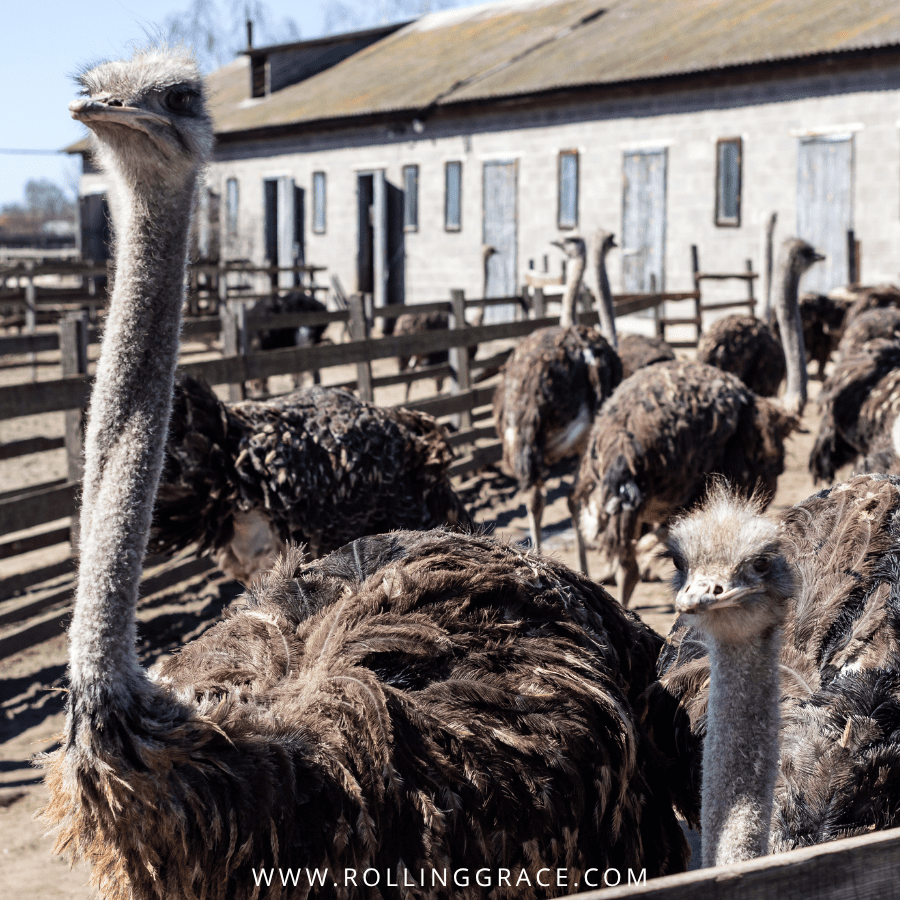
Hermès sources ostrich leather from South Africa, specifically from operations in the Klein Karoo region of the Western Cape. South Africa accounts for roughly 75 percent of global ostrich slaughter. Klein Karoo, confirmed by people within the supply chain on camera, was described as the exclusive supplier of ostrich skins for Hermès Birkin bags.
In the wild, ostriches live for more than 40 years. On these farms, they are killed at 12 months old. They are separated from their parents immediately after hatching, which matters because ostriches are highly social animals that share parental duties across both parents. Farmed ostriches never encounter their parents. They are kept on barren feedlots until they reach slaughter weight.
PETA investigators filmed the process at the Western Cape abattoirs in 2015. Birds were packed into open-topped vehicles for transport, workers struck them in the face during transit, and at the slaughterhouse they were forced into stun boxes, many slipping and falling in the process, before having their throats cut.
The ostriches waiting in line watched the birds ahead of them die. Under South African and Australian codes of practice, ostriches can be denied food for 24 hours before slaughter.
Hermès has significantly reduced its ostrich leather production in recent years, citing difficulty sourcing skins with sufficient quill coverage.
Whether that is a welfare decision or a quality control one is not something the brand has publicly clarified. It is among the animals killed for Hermès bags, contributing to ongoing debates about animal welfare.
Reticulated Python
Hermès has invested in python farms in Thailand to secure supply for its python leather goods. The python supply chain is, from an environmental standpoint, the most complicated animal in this list.
Research published in 2024 monitoring python farms in Thailand and Vietnam found that these reptiles are among the most resource-efficient livestock in production. They use significantly less water than cattle, produce fewer greenhouse gases than most warm-blooded livestock, tolerate irregular feeding better than most species, and do not carry the zoonotic disease risks associated with mammals and birds.
What that science does not cover is the welfare conditions on specific farms supplying Hermès, or the methods of slaughter. Hermès has not released third-party welfare audits of its Thai python operations for public review.

Monitor Lizard
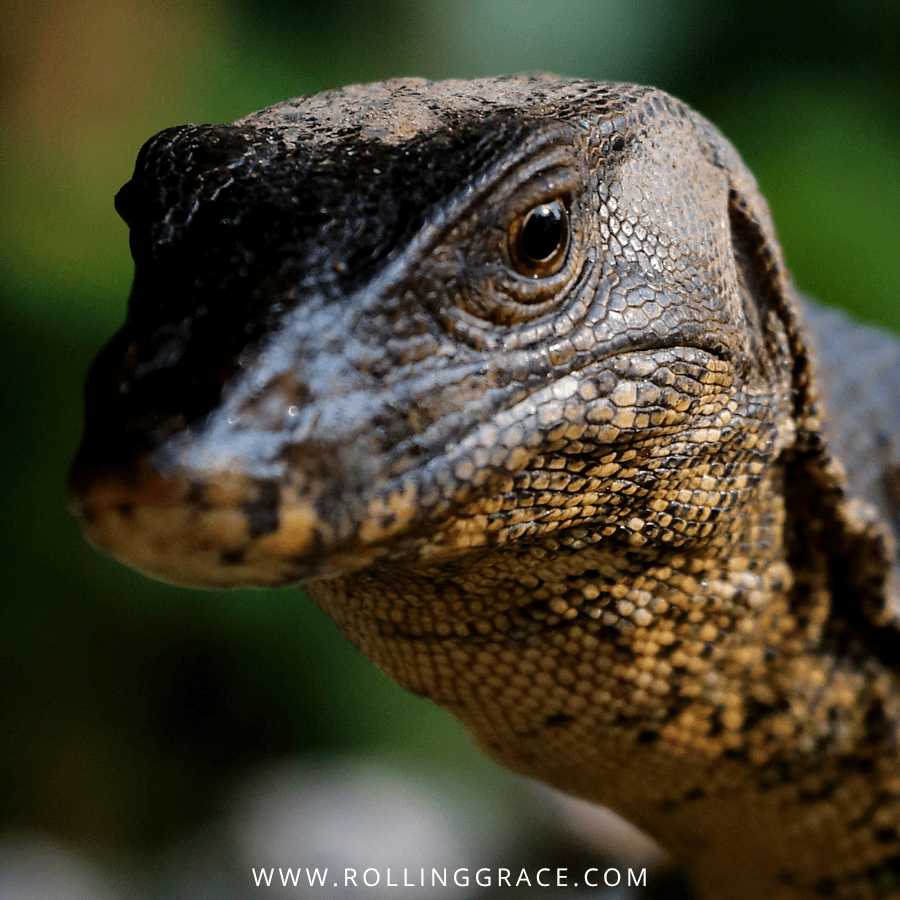
Hermès uses two species of monitor lizard: the Nile monitor from Africa, and the Asian water monitor from Southeast Asia, also called the Salvator lizard. Lizard leather is the rarest in Hermès’ active catalogue. Because each bag requires a single matched skin, and the animals are relatively small, lizard is almost exclusively used for smaller bags and accessories, typically nothing larger than a 25cm Birkin.
Most raw monitor lizard skins in global trade come from Indonesia and Malaysia under quota systems and are then processed and tanned elsewhere. Both species are regulated under CITES Appendix II, meaning trade is legal but requires permits. The effectiveness of quota enforcement varies significantly by country.
No dedicated investigation has specifically targeted the lizard farms or sourcing operations supplying Hermès. That absence does not confirm the supply chain is clean. It reflects the difficulty of access and the comparatively low profile of the lizard trade relative to crocodilians.
Today, it is often highlighted in reports examining animals killed for Hermès bags and exotic leather sourcing.
Stingray
Hermès has historically used stingray leather, known in French as galuchat, for small leather goods and accessories. The material has deep French heritage, named after Jean-Claude Galuchat, the 18th-century Parisian craftsman who first perfected its tanning. Its beaded surface is made of dentine and enamel, the same material as teeth, making it the hardest leather known.
Stingray hides come primarily from Indonesia, where they are a byproduct of established food fishing. The animals are not farmed, the species used is not endangered, and the hides are processed as secondary products of catches primarily taken for food and the pharmaceutical industry.
Among the animals in Hermès’ supply chain, stingray carries the most defensible environmental profile. It is not farmed, not the primary target of the fishing that kills it, and not a protected species. The welfare argument is harder to make for wild-caught fishing generally, but the conservation case against stingray is weaker than for any other animal on this list.
It continues to be referenced in discussions surrounding animals killed for Hermès bags and luxury craftsmanship.

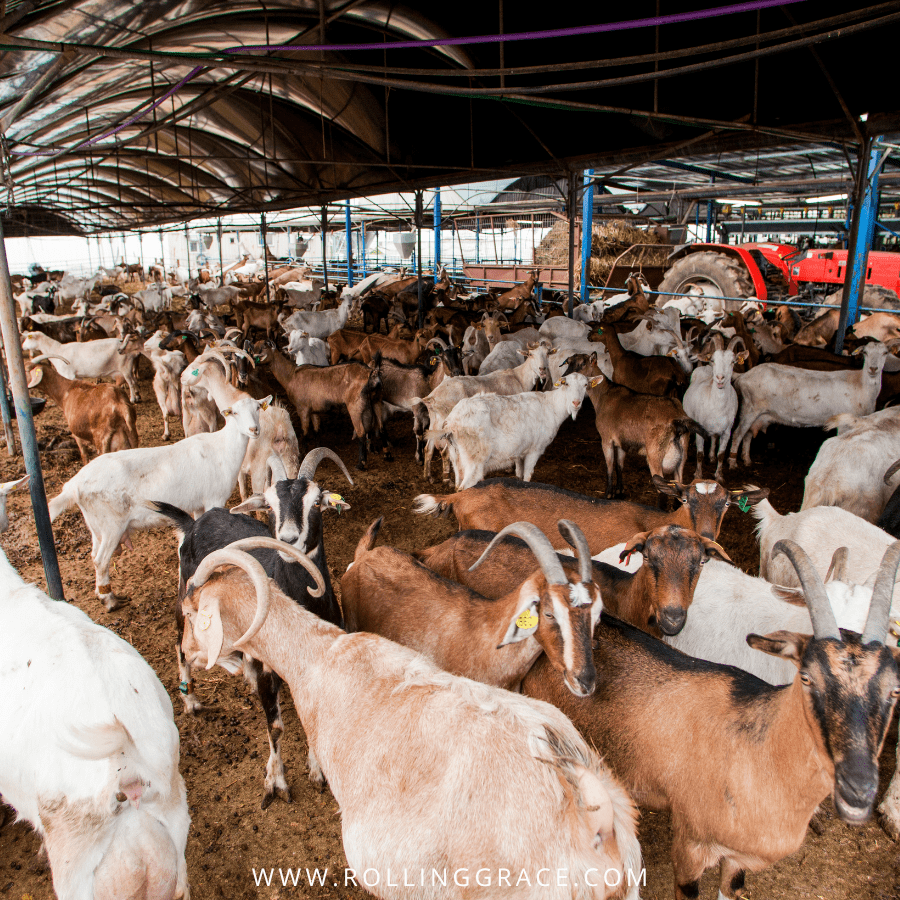
Goat
Chevre leathers, the goatskin range used primarily in Constance bags and small leather goods, are sourced from India. Goat leather holds dye with exceptional consistency, which is why Hermès uses it for its most saturated, vibrant colorways. Because goats are smaller animals, less usable hide comes from each one, which makes Chevre a relatively rare material in the Hermès catalogue.
India’s leather industry operates within a complex regulatory environment, shaped partly by restrictions on cow slaughter rooted in religious law, which pushes more activity toward goat and buffalo hides. Independent welfare audits of the specific Indian farms supplying Hermès have not been made public, and this supply chain has not been subject to any major investigation.
It ranks among the animals killed for Hermès bags, a subject that continues to divide public opinion.
Why CITES Certification Does Not Protect Animals
Every exotic leather Hermès uses comes with a CITES certificate. That document confirms the species, the trade volume, and the country of origin. It says nothing about how the animal was housed, how it was killed, or whether it was conscious at the time.
When Hermès has been challenged on welfare conditions in public, including directly by PETA at the brand’s annual shareholders’ meetings, its consistent response has been to reference CITES compliance. The company knows, and any informed person reading the convention knows, that CITES is a trade instrument, not a welfare standard. Referencing it in response to welfare questions is a deflection, and a deliberate one.
At Hermès’ 2024 shareholders’ meeting, PETA asked CEO Axel Dumas to join them on a visit to the farms. He declined. His words on record: “I’m not saying there are no problems in the industry.”
That is not a denial of what has been documented. It is an acknowledgment wrapped in a refusal to look.
List of Animals in a Hermès Bag
| Animal | Where From | Farmed or Wild | Independently Investigated |
|---|---|---|---|
| Calf | Europe | Farmed | Not specifically |
| Nile Crocodile | Zimbabwe | Farmed | Yes, PETA 2014 |
| Saltwater Crocodile | Australia | Farmed | Yes, Kindness Project |
| American Alligator | Texas, USA | Farmed | Yes, PETA 2014 |
| Ostrich | South Africa | Farmed | Yes, PETA 2015 |
| Reticulated Python | Thailand / SE Asia | Farmed | Not specifically |
| Nile Monitor Lizard | Africa | Wild-caught, quota-regulated | Not specifically |
| Asian Water Monitor | SE Asia | Wild-caught, quota-regulated | Not specifically |
| Stingray | Indonesia | Wild-caught, fishing byproduct | Not specifically |
| Goat | India | Farmed | Not specifically |
The gaps in that final column are not evidence of cleaner supply chains. They are evidence of limited access. The farms that have been investigated are the ones investigators got into. The ones that have not been investigated are not proven innocent. They are simply less visible.
Hermès is a company whose CEO has publicly acknowledged that problems exist in its supply chain, declined an invitation to verify the situation on the ground, received the lowest animal welfare rating in the luxury sector from a major independent assessment, and continued sourcing from the same animal categories without publicly changing course.
A Birkin bag is an extraordinary object. The craft is meticulous and the construction is built to outlast almost anything else in a wardrobe. None of that changes what comes before it.
Luxury has always depended on people not asking where things come from. Now you know where they come from.
Rolling Grace covers sustainability, travel, food, and the systems behind the places and products that shape how we move through the world.
Get the good stuff first. Join Rolling Grace for the restaurants worth crossing a city for, the stays worth the upgrade, and the places to go before everyone else. Free, straight to your inbox.
Leave a Reply