Foie gras in fine dining has long been accepted as a marker of luxury, even as its production raises ethical questions the industry can no longer sidestep.
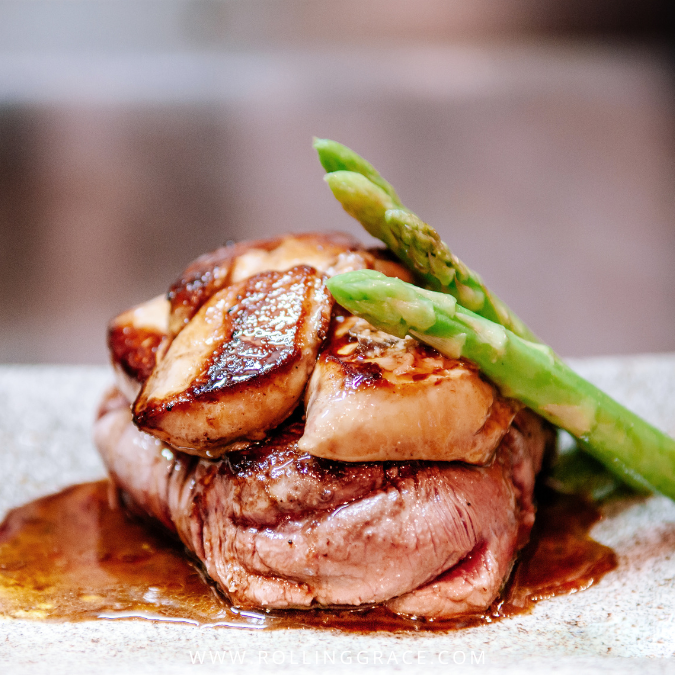
Foie gras has always been presented as something to accept rather than question. A marker of celebration. A shorthand for indulgence. In fine dining rooms across Europe, Asia, and the United States, it arrived on porcelain plates as a given. Rarely explained. Rarely defended. The assumption was that prestige justified its presence.
That assumption no longer holds.
As fine dining moves towards greater transparency, foie gras has become one of the clearest fault lines between tradition and accountability. This is not a debate driven by social media outrage or fleeting trends. It is shaped by scientific evidence, regulatory decisions, and a growing discomfort within the industry itself. Restaurants today are being asked not only how something tastes, but how it came to exist.
This article examines foie gras in fine dining through seven essential truths shaping its future. Not to provoke theatrics, but to clarify where the industry stands and where it is quietly heading.
Read also: Osteria Mozza Singapore Review: Dining at Hilton Singapore

Foie Gras Production and Animal Welfare Concerns
Traditional foie gras production depends on gavage, a force feeding process in which ducks or geese are fed multiple times daily to enlarge their livers to up to ten times their natural size. Veterinary studies have consistently found that this process causes liver pathology, respiratory distress, and restricted mobility in birds.
In the United Kingdom, production is banned on animal welfare grounds. Similar bans exist in Germany, Italy, Norway, and several other European countries. These decisions are not symbolic. They are grounded in scientific assessments of animal suffering and welfare standards.
The significance for fine dining is simple. An ingredient banned from production in multiple countries due to cruelty is no longer ethically neutral, even if imported legally. Its presence on a menu now carries an implicit defence.

Legal Status of Foie Gras and What It Signals to Restaurants
One of the most persistent defences of foie gras is legality. In parts of France, Spain, Hungary, and the United States, production remains lawful. But legality has never been the sole benchmark for responsible sourcing of foie gras in fine dining.
Bluefin tuna, shark fin, and endangered seafood species have all been served legally in the past. Fine dining later moved away from them as awareness grew. Foie gras occupies a similar position today. Legal, but increasingly misaligned with contemporary ethical standards.
Restaurants that continue to serve foie gras are no longer operating in a vacuum. Diners are informed. Silence is read as endorsement.
Countries Where Foie Gras Force-Feeding Remains Legal in 2026
Force-feeding ducks and geese to produce foie gras is legally permitted in only a few countries today. In Europe, it remains lawful in France, Spain, Hungary, Bulgaria and parts of Belgium, where producers still use gavage for traditional foie gras products, while most other EU member states have banned the practice under animal welfare laws.
Outside Europe, foie gras production with force-feeding continues in China, where it is a growing industry despite animal welfare concerns, and in Canada, where foie gras farms use force-feeding methods and there is no federal ban on the practice. In the United States, foie gras production using force-feeding is legal in states other than California, where both force-feeding and sale of foie gras produced by it have been prohibited under state law.
These jurisdictions represent the remaining legal strongholds of traditional foie gras production amidst a wider global push to outlaw force-feeding on welfare grounds.
Read also: How Animals Are Killed for Meat Consumption
Leading Restaurants Have Removed Foie Gras in Fine Dining
Removing foie gras does not mean removing richness. It means redefining it.
Chefs are increasingly achieving depth through fermentation, reduction, ageing, and plant driven umami. Mushrooms, legumes, nuts, and slow cooked vegetables now provide complexity once monopolised by animal fat. These approaches do not imitate foie gras. They render it unnecessary.
Some kitchens work with naturally raised poultry where fat accumulation occurs without force feeding. Others explore cultured alternatives developed through cellular agriculture, aiming to reproduce flavour without animal suffering. These products are still emerging, but their existence signals where innovation is being directed.
Some of the world’s most influential kitchens have removed foie gras without announcing it. No press statements. No moral banners. Just absence.
- At Noma, foie gras has no place within a menu built around ecology, seasonality, and respect for natural systems. The restaurant’s global influence demonstrates that prestige does not depend on controversial luxury ingredients.
- Eleven Madison Park went further, rebuilding its identity as a fully plant based fine dining restaurant. The shift challenged assumptions about indulgence, richness, and status, and succeeded commercially and critically.
- At Blue Hill at Stone Barns, the philosophy centres on regenerative agriculture and whole system thinking. Ingredients are judged not only by flavour, but by their impact on land, animals, and farming communities.
These restaurants are not fringe cases. They are reference points. When they move, the industry recalibrates.

Foie Gras Alternatives in Fine Dining
The modern fine dining guest arrives informed. They read menus closely. They ask about sourcing. They understand concepts such as animal welfare, biodiversity, and environmental cost.
This does not mean diners demand ideological purity. It means inconsistencies stand out. A restaurant that speaks fluently about sustainability while serving foie gras invites scrutiny.
According to consumer research conducted across Europe and North America, animal welfare ranks consistently among the top ethical concerns influencing food choices in premium dining segments. This shift is structural, not generational noise.
Ignoring it is a strategic risk.
What Diners Now Expect From Ethical Fine Dining
Sustainability in fine dining is often discussed in terms of local sourcing, waste reduction, and seasonal menus. Animal welfare is part of the same system.
Force feeding relies on intensive inputs, controlled environments, and practices incompatible with regenerative models of farming. While foie gras production represents a small volume globally, its symbolism is disproportionate to its scale.
By choosing not to serve foie gras, restaurants align their menus with broader commitments to ethical sourcing and responsible agriculture. These choices may seem incremental, but they accumulate into meaningful industry shifts.
This is not about moral superiority. It is about coherence.


Sustainability in Gastronomy
Fine dining has always been selective. It curates. It edits. It decides what deserves attention.
The most influential restaurants today understand that omission can be as expressive as inclusion. Choosing not to serve foie gras is not an act of deprivation. It is a declaration of priorities.
Luxury, in its contemporary form, values intention, traceability, and care. Excess without justification no longer reads as refinement. It reads as inertia.
Foie gras will remain part of culinary history. But history is not destiny. Fine dining’s role is not to preserve tradition unchanged, but to refine it in light of knowledge.
Stop Serving Foie Gras
Foie gras has reached a point where neutrality is no longer possible. In a dining landscape that speaks openly about sourcing, labour, and environmental limits, continuing to serve an ingredient built on force-feeding is a choice, not an inheritance. The question is no longer whether foie gras belongs to culinary tradition, but whether it belongs to the values many kitchens now claim to uphold.
Chefs and restaurants shape taste, but they also shape norms. Menus signal what is acceptable, what is worth celebrating, and what is quietly excused. Choosing to keep foie gras on the plate sends a message that some practices remain beyond scrutiny. Choosing to remove it shows that standards can change without diminishing craft, ambition, or seriousness.
We believe fine dining has the capacity to lead rather than follow. That leadership does not require grand gestures or public declarations. It requires making decisions that can withstand inspection. Foie gras is one of those decisions. And the longer it remains, the harder it becomes to argue that excellence and accountability cannot sit at the same table.
Get the good stuff first. Join Rolling Grace for the restaurants worth crossing a city for, the stays worth the upgrade, and the places to go before everyone else. Free, straight to your inbox.
Leave a Reply