Kampong Khleang floating village is the largest and least-visited of the communities accessible from Siem Reap, and almost nobody goes there.
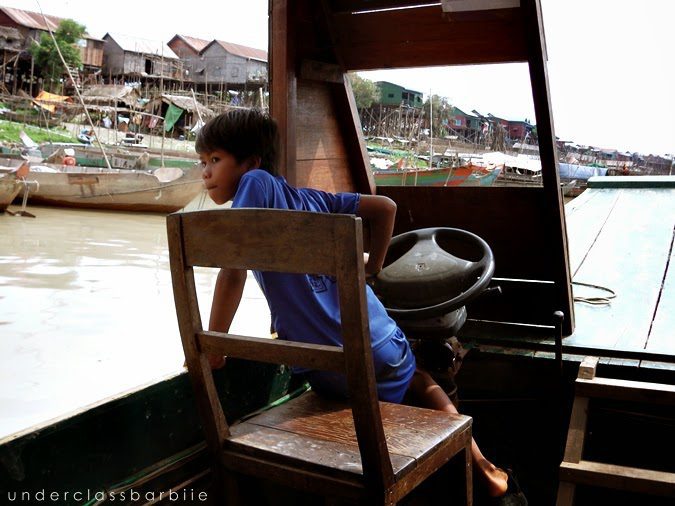
My boat captain was thirteen years old. He navigated a narrow wooden vessel through the flooded channels of Tonle Sap with the kind of calm that takes decades elsewhere and here is simply inherited. That single moment tells you everything about Kampong Khleang before you’ve even stepped onto dry land.
Read also: Top 10 Cambodian Dishes Every Foodie Must Absolutely Eat
Where is the Kampong Khleang Floating Village
Located approximately 50 kilometres east of Siem Reap, Kampong Khleang is the largest and least-visited of the floating villages accessible from the city.
Most day-trippers opt for Kampong Phluk, which has been polished into something almost presentable for tourism. Kampong Khleang has not. The village sits on the northwestern shore of Tonle Sap, Southeast Asia’s largest freshwater lake, where an estimated 1,000 families have built their lives directly on the water.
There are no hotels, no souvenir stalls, and no concessions made for outside comfort. Life here moves on its own terms, which is precisely the point.
Book Siem Reap Tonle Sap & Floating Village Half-Day Tour with Transfers

History of Kampong Khleang
Kampong Khleang translates from Khmer as “Harbour of the Tendons,” a name that points to the physical labour that has defined this community for centuries.
The village’s origins likely trace back to the era of Angkor Thom, the last great capital of the Khmer Empire, whose ruins stand less than an hour’s drive to the west. Communities along Tonle Sap have fished, traded and built on these waters for over a millennium.


Largest Freshwater Lake in Southeast Asia
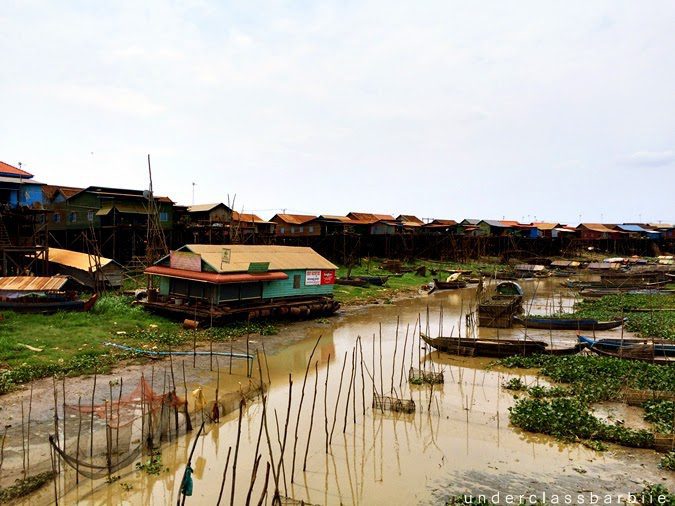
Tonle Sap is the largest freshwater lake in Southeast Asia, and Kampong Khleang Floating Village has been shaped entirely by it. During the wet season, the lake swells dramatically and the village becomes almost fully aquatic.
During the dry season, the water recedes and the stilt houses stand tall above cracked earth, their legs suddenly exposed, the village transformed into something that looks like a town hovering mid-air. There is no running water piped in and no internet connection. The lake is the infrastructure.


Getting to Kampong Khleang from Siem Reap
Arranging the Trip
Most visitors book a day trip through a local travel agent or guesthouse in Siem Reap. The road journey takes roughly one hour each way, followed by a short boat transfer to reach the village proper. Several operators combine the trip with a stop at Beng Mealea temple, which makes for a full and well-balanced day.
Prices for Boat Transfer
Expect to pay between $20 and $30 USD for the boat portion of the trip to the Kampong Khleang Floating Village. Prices shift depending on season and operator, so confirm costs at the time of booking.
If you are arranging transport independently, negotiate directly at the jetty and agree on a fixed price before departure.
What to See and Do
Explore the Village by Boat
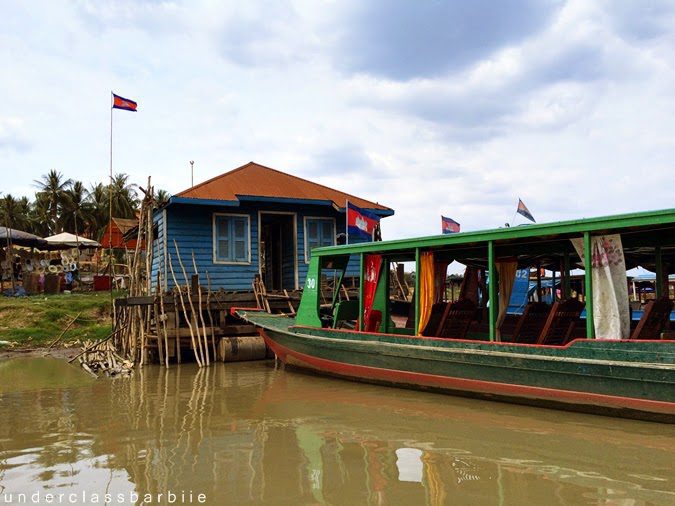
The most essential thing to do at Kampong Khleang is to take a slow boat through the village channels.
Stilt houses line the waterways on both sides, some painted in sun-faded blues and greens, others left as bare wood darkened by moisture and time. Fishing nets hang out to dry. Children watch from the doorways. The boat moves at the pace the place demands.
Watch the Fishing Techniques Up Close
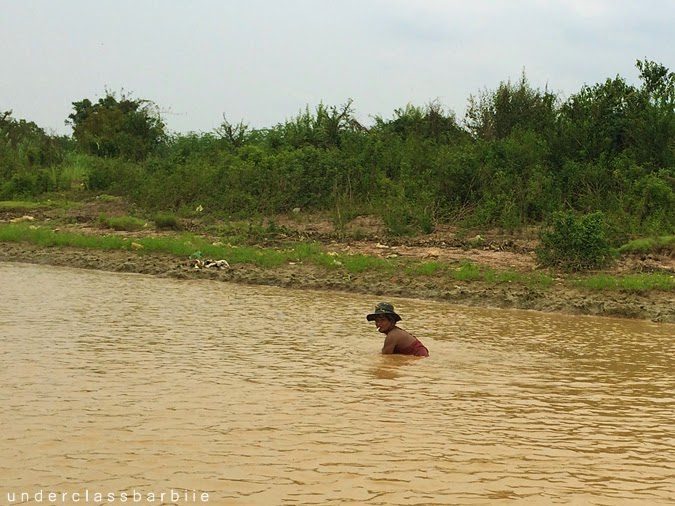
Fishing is not an activity here. It is the economic and cultural spine of the community. Villagers adapt their methods according to season: cast nets in open water during the wet months, bamboo fish traps set along the mudflats as water levels drop.
These techniques have been handed down across generations with no written manual, adjusted instinctively as the lake changes each year.
Visit During the Dry Season
The dry season, roughly November to May, is the most visually dramatic time to visit. The water has pulled back, and the stilt houses stand their full height above the ground.
You can walk beneath them, look up at the underside of floors where families live, and understand the engineering logic of a village built entirely around a lake that cannot make up its mind.

Meet the Community
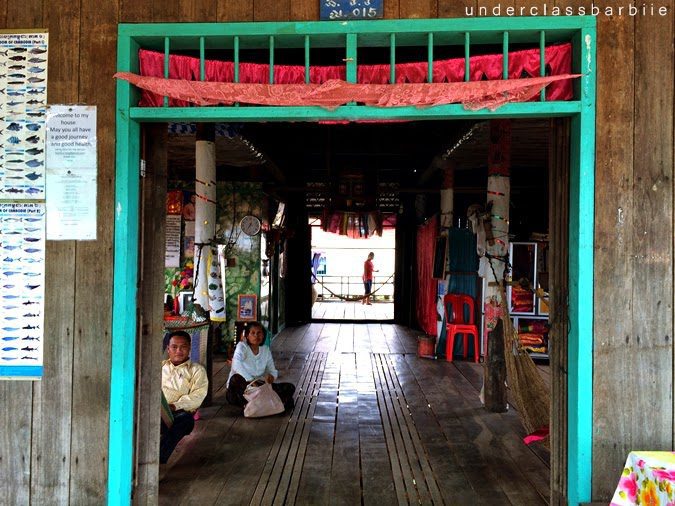
During our visit, we were invited into a villager’s home for a home-cooked meal. The ceiling was low, the kitchen was a single open flame, and the food was better than anything served at a restaurant in Siem Reap that week.
Look for the houses with red drapes and decorative detailing: these often belong to families of Chinese descent, a detail that reflects the layered migration history along Tonle Sap.
A local guide is essential when visiting the Kampong Khleang floating village, not as a formality but as a bridge between visitor and community.
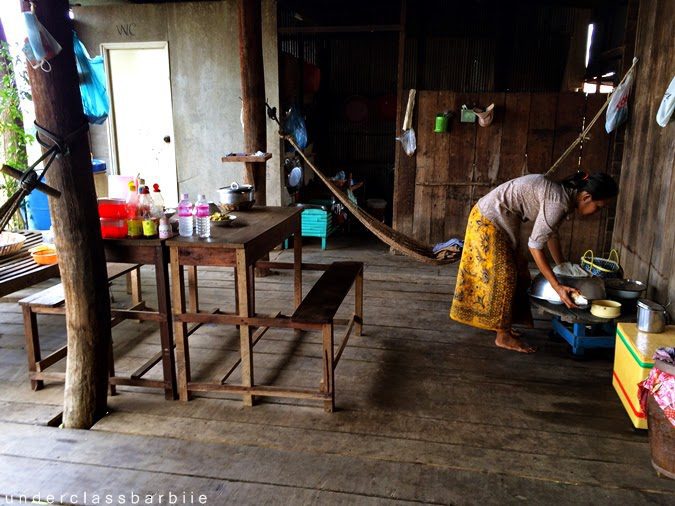

What to Eat at Kampong Khleang
Prahok
Prahok is fermented fish paste and it is not subtle. Salted, pressed and aged, it carries a pungency that is part funk, part depth, and entirely Cambodian.
It appears in almost every traditional dish in some form, as a base, a condiment, or a dipping paste. Try it here rather than in a tourist-facing restaurant in Siem Reap, where the edges have often been softened for outside palates.
Bai Sach Chrouk
Grilled pork over fragrant jasmine rice, served with pickled cucumber and daikon radish. It is a Cambodian breakfast staple, though at Kampong Khleang it arrives at whatever hour suits the family cooking it.
The pork is marinated overnight in garlic and coconut milk, cooked over charcoal, and sliced thin. Simple food, done with intention.
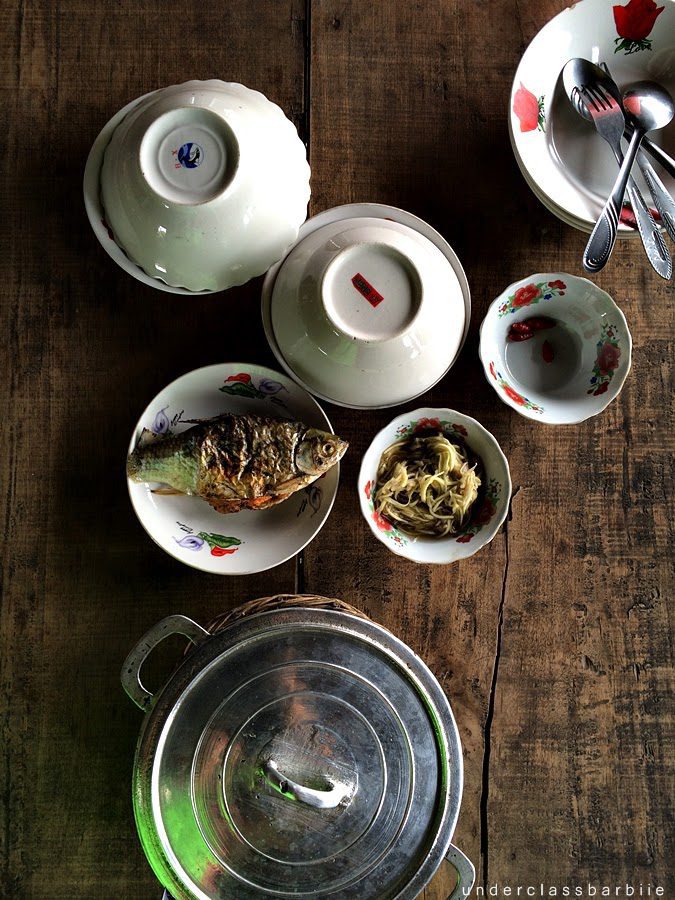
Nom Banh Chok
Khmer noodles: thin rice noodles in a cold green fish-based sauce, topped with fresh herbs, banana blossom, and bean sprouts. The sauce is made from lemongrass, kaffir lime, and fermented fish, blended into something bright and cooling.
It is one of the more distinctive dishes in Cambodian cuisine and here it is made the way it has always been made, without adjustment for outside tastes.
Chilli Sauce
Every household in Kampong Khleang floating village appears to produce its own chilli sauce. Vivid red, deeply savoury, and considerably hotter than it looks. Add it to anything on the table.

Nearby Attractions for Day Trips
Angkor Thom
The last capital of the Khmer Empire is less than an hour’s drive from Kampong Khleang. The Bayon temple at its centre is covered in 216 stone faces, each carved with the same serene, slightly ambiguous expression.
The scale is disorienting in the best way. Combine the floating village with a late afternoon visit to Angkor Thom and the day becomes genuinely layered.
Beng Mealea
Many operators include Beng Mealea as a stopping point on the drive back to Siem Reap. This is one of the least-restored temples in the Angkor complex: jungle has moved through the corridors, trees have grown through the stone, and entire sections have collapsed inward.
There are no roped-off paths and no audio guide. It is a place that requires paying attention, which is what makes it worthwhile.
Pollution and Responsible Travel
Kampong Khleang receives far fewer visitors than Kampong Phluk and has not developed the souvenir stall infrastructure that tourism brings. That is part of what keeps it intact.
What is harder to overlook is the pollution. Plastic waste collects along the waterways, rubbish accumulates at the village edges, and the same lake that sustains every family here absorbs the consequences of inadequate waste infrastructure. This is not a problem created by tourism. It is a problem that tourism, done badly, can worsen.
If you go, book through an operator who works directly with the local community and contributes to it financially. Do not leave anything behind that was not there when you arrived. Avoid photographing people without asking first. The village is not a set, and the pollution is not a backdrop.

Tips for Visitors
Best Time to Visit
Dry season (November to May) for the full stilt effect and easier access. Wet season (June to October) for a different kind of spectacle as the village becomes more fully aquatic, but access is more dependent on water levels and operator availability.
How Long to Spend
A full day trip from Siem Reap, including travel, boat ride, lunch, and a temple visit, comfortably fills seven to eight hours.
What to Bring
Cash, sun protection, a hat, and closed shoes if you plan to walk through the village during dry season. There are no ATMs at Kampong Khleang.
Is It Worth It Over Kampong Phluk?
Yes, if you want the less-managed version. Kampong Phluk is easier to reach and has more tourism infrastructure. Kampong Khleang is larger, quieter in terms of visitor numbers, and more visually striking during the dry season. The trade-off is a longer journey and less predictable logistics.

Frequently Asked Questions on Kampong Khleang Floating Village
How far is Kampong Khleang from Siem Reap?
Approximately 50 kilometres, or around one hour by road, followed by a short boat transfer to the village.
How much does a boat trip to Kampong Khleang cost?
Boat trips typically cost between $20 and $30 USD. Confirm prices with your operator before departure as rates vary by season and group size.
Is Kampong Khleang better than Kampong Phluk?
Kampong Khleang is larger and receives fewer tourists, giving it a more unfiltered feel. Kampong Phluk is closer and easier to access. The better choice depends on how much time you have and how much visitor infrastructure matters to you.
Can you eat at Kampong Khleang?
Yes. Some operators arrange home-cooked meals with local families, which is the most rewarding way to eat here. Confirm whether a meal is included when booking your tour.
What is the best season to visit Kampong Khleang floating village?
Dry season, from November to May, is most recommended for the visual impact of the exposed stilts and easier movement through the village.
Do you need a guide to visit Kampong Khleang?
A local guide is strongly recommended. The village has no tourist signage, and the most interesting parts of the visit, including meeting families and understanding the fishing methods, are significantly easier to navigate with someone who knows the community.
This guide is compiled from a first-hand visit to Kampong Khleang during the dry season, supplemented by verified local sources and direct observation.
Get the good stuff first. Join Rolling Grace for the restaurants worth crossing a city for, the stays worth the upgrade, and the places to go before everyone else. Free, straight to your inbox.
Leave a Reply