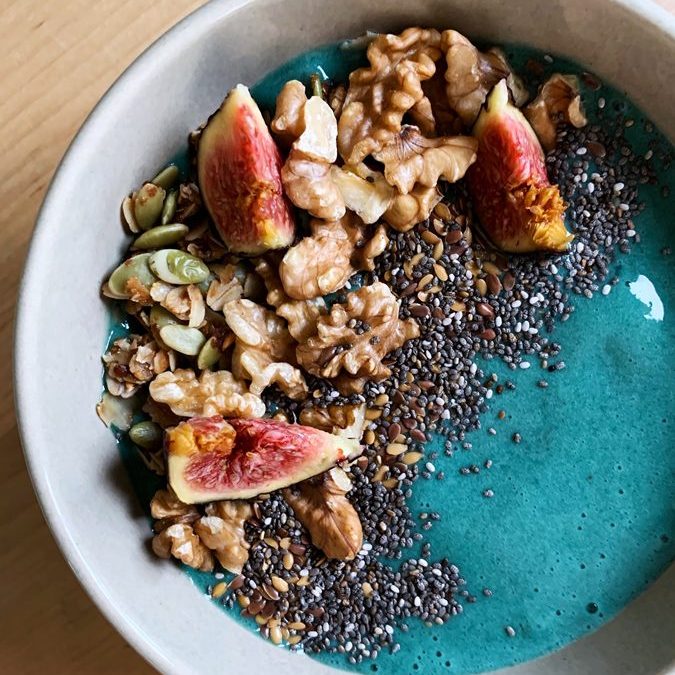
Most people overcomplicate how to make smoothie bowls at home, but the formula is far simpler than the Instagram photos suggest.
The first one I made was a shade of violent purple, slightly too runny, and blended in a machine I had originally bought for grinding curry spices. I posted it on Instagram anyway.
Within a day, it had more engagement than anything I had shared in months. That was sometime during the 2020 lockdown, and smoothie bowls have been a near-daily fixture in my kitchen ever since.
The good news is that making a beautiful smoothie bowl at home requires no special equipment beyond a decent blender, no elaborate recipe, and roughly five minutes of your morning. Here is the formula I use, followed by seven variations worth trying.
Read also: 8 Delicious Ways to Eat Chia Seeds Every Day
What Is a Smoothie Bowl?
A smoothie bowl is a thicker, denser version of a regular smoothie, blended to a soft-serve consistency and eaten with a spoon rather than sipped through a straw.
The base is typically made from frozen fruit, a splash of plant-based milk, and an optional superfood powder. That thickness is the whole point. It holds toppings in place, it forces you to eat slowly, and it turns breakfast into something that looks and feels like a proper meal rather than something you gulp down between tasks.
Granola, fresh fruit, seeds, nuts, and nut butters are layered on top, adding texture and contrast that a regular smoothie simply cannot deliver.

The Base Formula
Every smoothie bowl starts with three components: frozen fruit, liquid, and an optional superfood powder. The ratio matters more than the specific ingredients.
- Frozen fruit (2 cups, at least two-thirds frozen). Frozen bananas are the foundation. They blend into a thick, creamy base and add natural sweetness without needing any sugar. Peel and chop your bananas before freezing them in zip-lock bags. They keep well for up to two weeks. Combine the banana with a second fruit for colour and flavour: mango for gold, mixed berries for purple, red pitaya (dragon fruit) for hot pink, or acai for deep violet.
- Liquid (1 cup, unsweetened). Almond milk, oat milk, coconut milk, coconut water, or plain water all work. The key is to add the liquid gradually. Too much and you lose the thick consistency that separates a smoothie bowl from a regular smoothie. Start with half a cup, blend, and add more only if the blender is struggling.
- Superfood powder (1 to 2 tablespoons, optional). This is where the colour and the nutritional boost come from. Spirulina turns the base vivid green or electric blue (depending on whether you use green or blue spirulina powder). Acai powder adds antioxidants and a deep berry tone. Matcha gives you a muted green with a caffeine lift. Maca, lucuma, baobab, and camu camu are other options, each with their own nutritional profile.
Method
Add the liquid to the blender first, then the superfood powder, then the frozen fruit. Blend on low, scraping down the sides as needed, until you get a thick, smooth paste.
If you want extra body, add a tablespoon of rolled oats before blending. Scoop the base into a bowl and add toppings immediately, before it begins to melt.
Toppings
The toppings are where a smoothie bowl becomes worth photographing. The trick is contrast: something crunchy, something fresh, something with a bit of chew.
- For crunch: granola (homemade or shop-bought), toasted coconut flakes, chopped almonds, walnuts, or pumpkin seeds.
- For freshness: sliced banana, kiwi, fresh figs, strawberries, blueberries, or mango chunks.
- For texture and nutrition: chia seeds, flax seeds, hemp seeds, a drizzle of nut butter, a spoonful of bee pollen, or a scattering of cacao nibs.
Arrange the toppings in neat rows or clusters rather than scattering them randomly. This takes an extra 30 seconds and makes the difference between a bowl that looks thrown together and one that stops someone mid-scroll.
Classic Acai Bowl
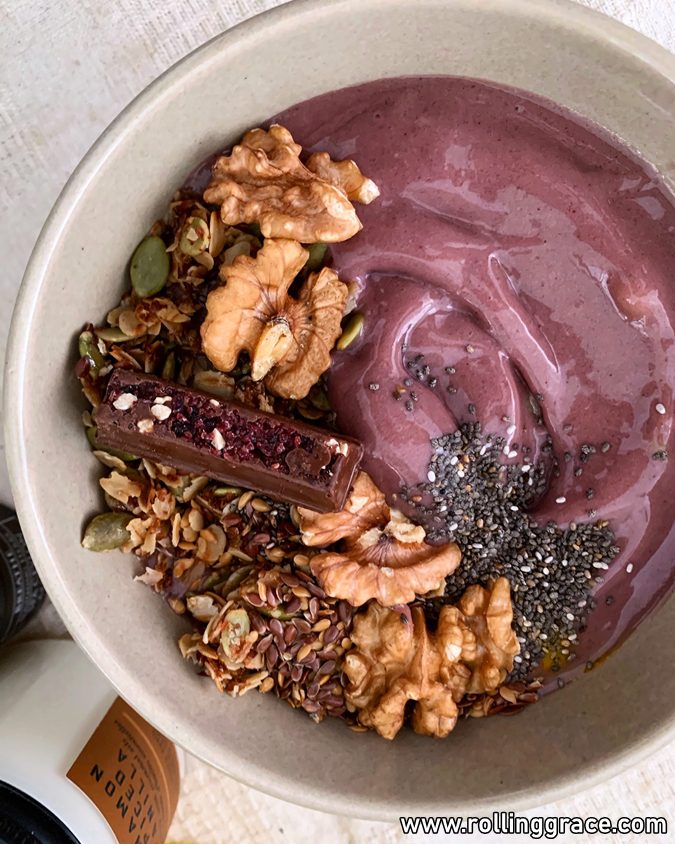
The acai bowl is the one that started the global smoothie bowl obsession, and it remains the most popular variation for a reason. Acai berries are packed with antioxidants and have a rich, slightly tart berry flavour that pairs well with banana and granola.
Blend two frozen bananas with one acai packet (or two tablespoons of acai powder), half a cup of almond milk, and a handful of frozen blueberries. Top with granola, sliced banana, fresh berries, and a drizzle of honey. It is one of the steps in how to make smoothie bowls at home.
Blue Spirulina Bowl
This is the one that turns heads on Instagram. Blue spirulina powder is extracted from blue-green algae and is high in protein, iron, B vitamins, and antioxidants. It has no fishy taste (unlike green spirulina, which can be pungent) and turns the base a striking ocean blue.
Blend two frozen bananas with half a teaspoon of blue spirulina powder and half a cup of coconut milk. Top with sliced kiwi, desiccated coconut, hemp seeds, and a few fresh blueberries. Use half a teaspoon for a pastel tone or a full teaspoon for a deeper shade. It remains one of the key parts of how to make smoothie bowls.

Mango and Papaya Bowl
Tropical, dairy-free, and refreshing. This one works particularly well with coconut water as the liquid base. It is one of the simple ways to understand how to make smoothie bowls.
Blend one frozen banana with one cup of frozen mango chunks, half a cup of fresh papaya, and half a cup of coconut water. Top with fresh berries, passion fruit seeds, toasted coconut, and a sprinkle of chia seeds.

Green Smoothie Bowl
For anyone who finds it difficult to eat enough greens at breakfast, this is the workaround. A handful of baby spinach disappears entirely into the blend when paired with sweet fruit, and you get the nutrients without any grassy taste. It is one of the methods used in how to make smoothie bowls.
Blend two frozen bananas with a large handful of baby spinach, half a cup of unsweetened almond milk, and a tablespoon of maca powder. Top with sliced kiwi, granola, flax seeds, and a drizzle of almond butter.

Banana Oat Bowl
This is the filling one. Adding oats to the base gives the bowl a denser, more porridge-like consistency that keeps you full well past lunchtime.
Blend two frozen bananas with two tablespoons of rolled oats, half a cup of oat milk, and a teaspoon of cinnamon. Let the oats soak in the milk for five minutes before blending for a smoother result. Top with sliced banana, walnuts, a drizzle of maple syrup, and a scattering of chia seeds.

Red Pitaya (Dragon Fruit) Bowl
Red pitaya powder produces the most vivid pink you will find in any natural food. It is high in antioxidants and vitamin C, and the flavour is mild enough that it does not compete with the fruit base.
Blend two frozen bananas with one tablespoon of red pitaya powder and half a cup of coconut milk. Top with fresh strawberries, granola, coconut flakes, and a few raspberries. It is one of the key steps to follow when learning how to make smoothie bowls at home.

Papaya Tropical Bowl
Light, refreshing, and lower in calories than the banana-heavy versions. This one leans on papaya as the primary fruit, which gives it a softer sweetness and a paler, more sunset-toned colour.
Blend one cup of frozen papaya with one frozen banana, half a cup of coconut water, and a squeeze of fresh lime. Top with fresh mango slices, passionfruit, toasted coconut, and hemp seeds.

Tips for a Better Bowl
- Freeze your fruit properly. Slice bananas before freezing and spread them on a tray in a single layer so they do not clump. Once frozen solid, transfer them to a zip-lock bag. This makes blending easier and faster.
- Use a high-powered blender if possible. A standard blender will work, but high-powered models like the Nutribullet or Vitamix handle frozen fruit more efficiently and produce a smoother, thicker base with less liquid.
- Do not over-blend. Once the mixture reaches a thick, soft-serve consistency, stop. Over-blending generates heat, which melts the frozen fruit and thins the base. Blend on low, use the tamper if your blender has one, and scrape down the sides frequently.
- Chill your bowl. Place your serving bowl in the freezer for 10 minutes before scooping the base into it. This keeps the smoothie cold for longer and prevents it from turning soupy before you finish eating.
- Add toppings last. Do not blend toppings into the base. The whole appeal of a smoothie bowl is the contrast between the smooth base and the crunchy, fresh toppings on top.
Where to Buy Superfood Powders in Malaysia
Spirulina, acai, matcha, maca, and pitaya powders are all available at health food stores across Kuala Lumpur, including Ben’s Independent Grocer, Jaya Grocer, and Village Grocer. Specialist stores like BMS Organics and The Hive Bulk Foods stock a wider range, often at better prices. Online, Shopee and Lazada carry most superfood powders, and brands like Rawnice and Suncore Foods ship to Malaysia. Check the packaging date and opt for organic where possible.
Frequently Asked Questions on How to Make Smoothie Bowls
What is the difference between a smoothie and a smoothie bowl?
The main difference is thickness. A smoothie is thin enough to drink through a straw. A smoothie bowl is blended to a soft-serve consistency and eaten with a spoon. The thicker base allows you to add toppings that stay in place rather than sinking, which adds texture and makes the meal more filling.
Can I make smoothie bowls without a blender?
It is difficult to achieve the right consistency without one. A food processor can work in a pinch, especially for frozen fruit, but the result tends to be chunkier. A basic blender is fine for most smoothie bowls as long as you add the liquid first and blend on low.
Are smoothie bowls healthy?
They can be. The base is typically fruit and plant milk, which provides vitamins, fibre, and natural sugars. The nutritional value depends heavily on your toppings and portion size. Loading a bowl with sweetened granola, honey, and chocolate chips turns it into a dessert. Keeping the toppings to seeds, nuts, and fresh fruit keeps it in the healthy breakfast category.
How do I make my smoothie bowl thicker?
Use more frozen fruit and less liquid. Adding a tablespoon of chia seeds, rolled oats, or nut butter also thickens the base. Make sure at least two-thirds of your fruit is frozen solid before blending.
Can I prep smoothie bowls in advance?
You can freeze the base in portions and blend them fresh each morning, but a fully assembled smoothie bowl does not keep well. The base melts and the toppings go soggy. Prep the fruit and measure the powders the night before to save time, but blend and assemble just before eating.
This guide is based on over four years of making smoothie bowls at home, testing base combinations, superfood powders, and topping ratios across dozens of variations.
Get the good stuff first. Join Rolling Grace for the restaurants worth crossing a city for, the stays worth the upgrade, and the places to go before everyone else. Free, straight to your inbox.
Leave a Reply