Sinalau Bakas is the smoked wild boar dish that Sabah’s Dusun community has been grilling over open flame for generations.
Seven years ago, a roadside stop somewhere between Tamparuli and Kundasang changed the way we think about smoked meat. These days we no longer eat meat, but Sinalau Bakas is the one dish that still comes up in conversation.
This guide exists to help you find it, understand it, and eat it properly.
Read also: Tuaran Mee in Sabah: Golden Noodle Worth Travelling For
Table of Contents
History of Sinalau Bakas
Sinalau Bakas is the signature dish of Sabah’s Dusun community, the largest ethnic group in North Borneo. The name breaks down simply: Sinalau means grill in the local tongue, and Bakas is the Dusun word for wild boar.
Together they describe something that has been central to Dusun festivity and daily life for generations, a piece of smoked meat with a marinade built from the highlands of Sabah and a cooking method that has not changed much because it does not need to.

What Is Sinalau Bakas
Wild boar meat, known in Bahasa Melayu as Babi Hutan, is a staple protein among the Dusun and Kadazan people of Sabah. Its consumption is woven into the community’s Christian faith and festive traditions, present at celebrations and equally present on an ordinary Tuesday. It is not exotic to the people who grew up eating it. It is simply food.
What makes Sinalau Bakas distinct is the smoking process. The meat is marinated in a blend of garlic, lemongrass, ginger, and turmeric, then slow-grilled over low flame until the outside chars and the fat renders down into the flesh. The result is meat that is dense with smoke, tender through the centre, and carrying enough fat to keep every bite from drying out.
The Dusun addition that sets it apart from standard grilled pork is tuhau, a wild ginger variety indigenous to Sabah. It adds a sharp, slightly fermented edge that cuts through the richness of the boar and lingers long after the plate is cleared. You will not find tuhau outside of Sabah with any regularity, which is part of why Sinalau Bakas does not travel well and is best eaten where it is made.
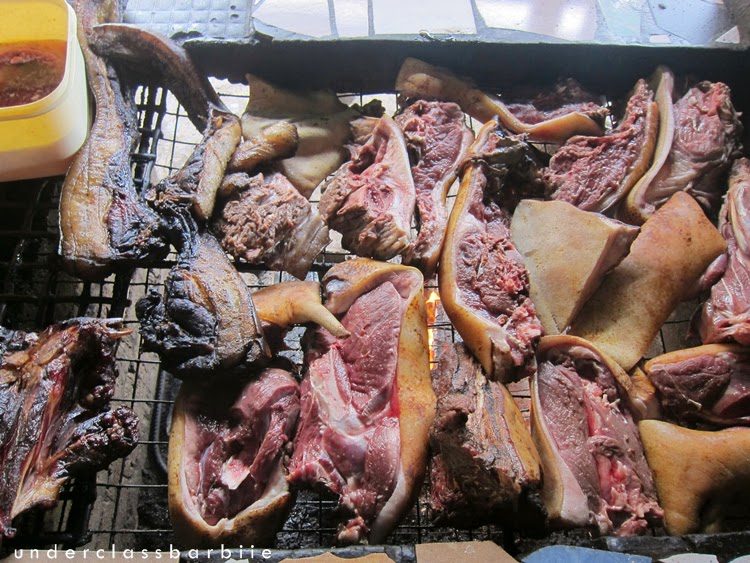
Tips for Finding Smoked Wild Boar in Sabah
- Follow the smell, not the signs. Stalls along the Tamparuli-Kundasang corridor rarely have formal signage. Look for hand-scrawled banners and follow the smoke. The grill smell reaches the road well before the stall comes into view.
- Head to Ranau for the freshest stock. Markets in Ranau carry Sinalau Bakas daily, with most vendors preparing their portions fresh each morning. It is the most reliable spot outside of the roadside corridor.
- Buy extra and freeze it. The meat keeps for up to a month when frozen. Many visitors buy portions to take home. Vacuum-seal before travelling and check your airline’s policy on carrying cooked meat before you fly.
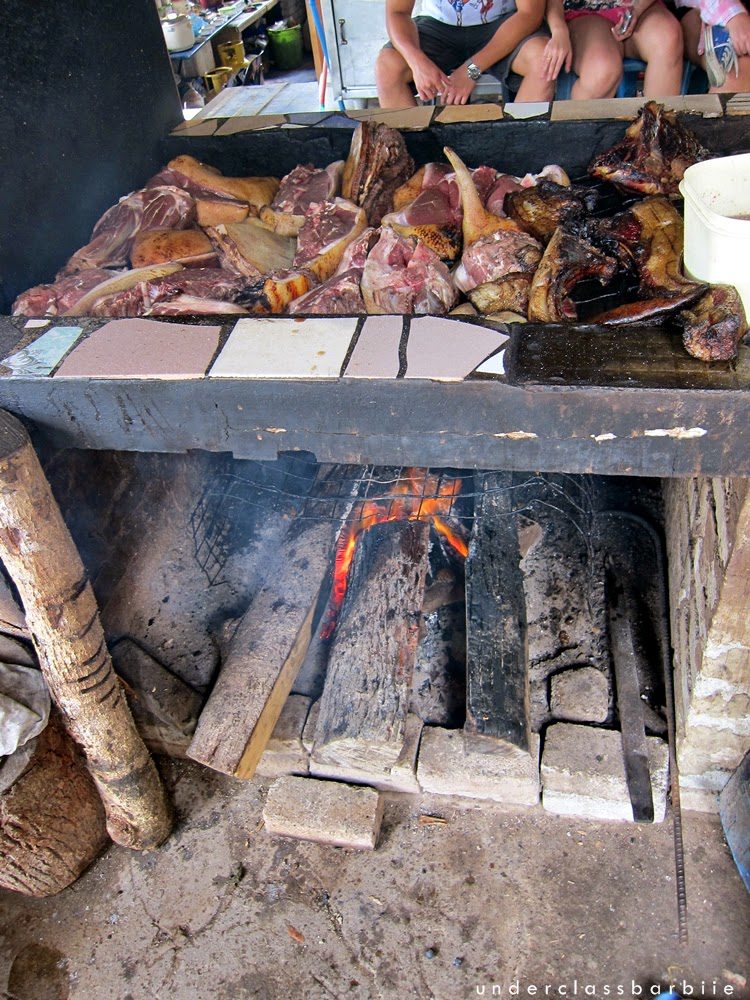
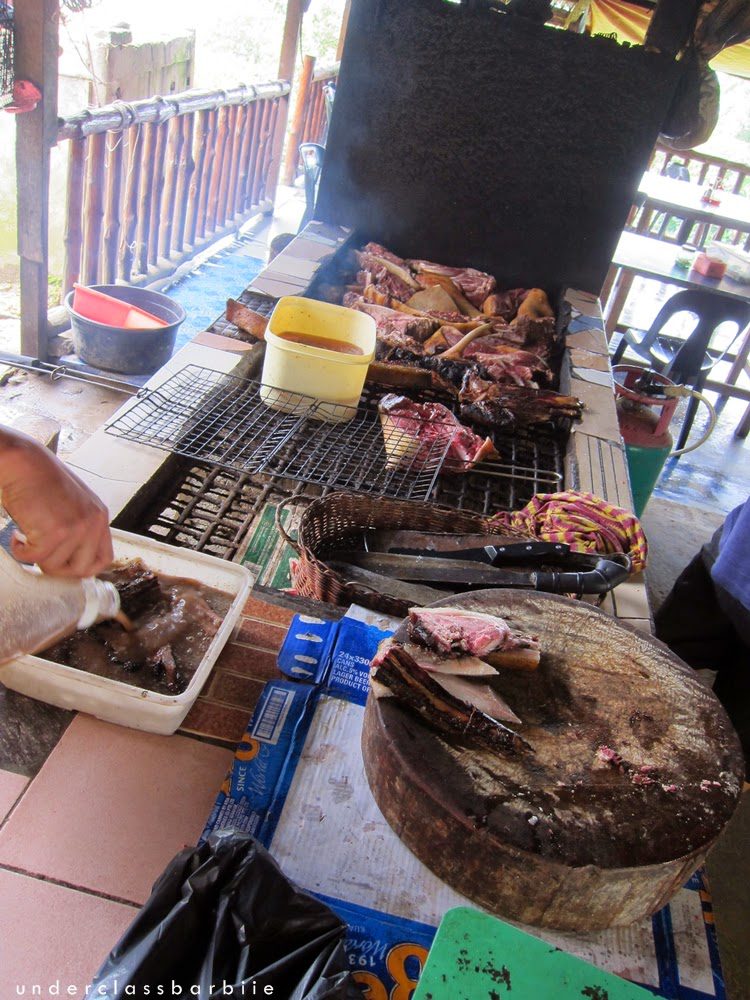
- Do not expect a restaurant. Sinalau Bakas is roadside food. The stalls are simple, the grills are outdoors, and the setup is functional.
Important Note for Muslim Travellers
Sinalau Bakas is not halal. It is a wild boar dish. The roadside stalls along the Tamparuli-Kundasang route are not always clearly signed in ways that make this obvious to visitors unfamiliar with the dish.
Look for the words Sinalau Bakas on any banner or board and understand what you are ordering before you do.
The Dusun Community Behind the Dish
The Dusun are the largest ethnic group in North Borneo and the cultural backbone of Sabah’s highlands. Their food traditions are communal by nature, tied to harvests, religious celebrations, and the kind of gathering where the cooking is as much the event as the eating. Sinalau Bakas appears at Dusun festivities consistently, prepared in outdoor kitchens with basic equipment and considerable skill.
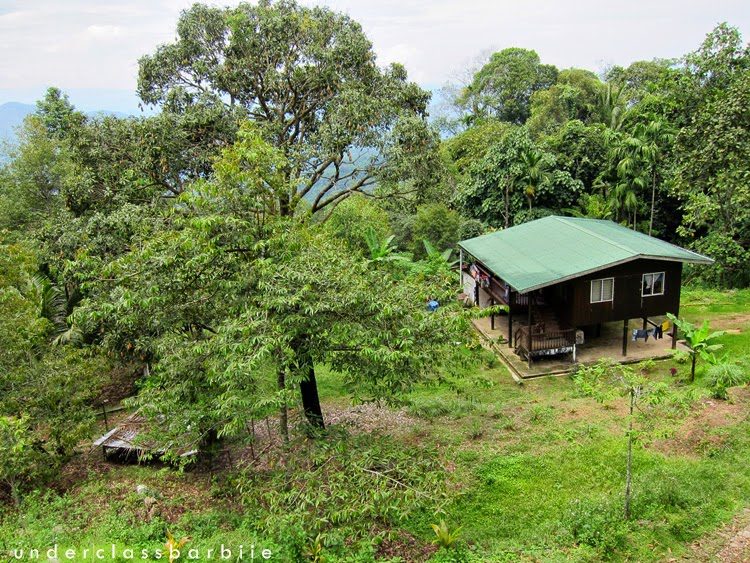
The houses of Dusun tribes in the Ranau highlands, where much of the best Sinalau Bakas originates, reflect that same practical simplicity. Kitchens are functional rather than decorative. The food that comes out of them is not.

How Sinalau Bakas Is Served
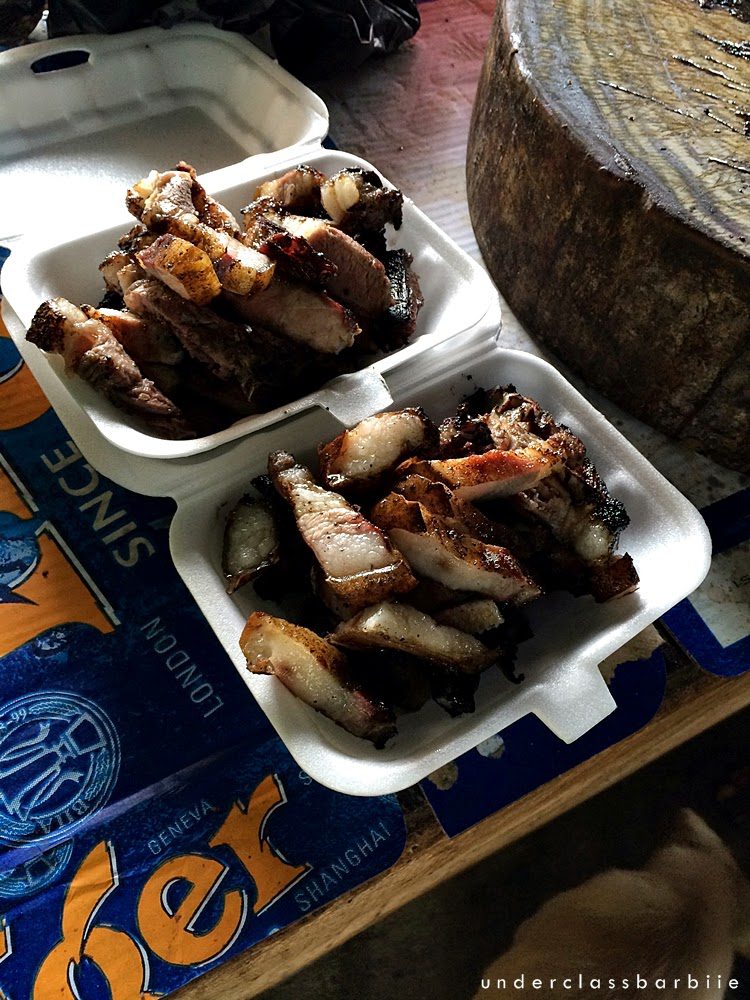
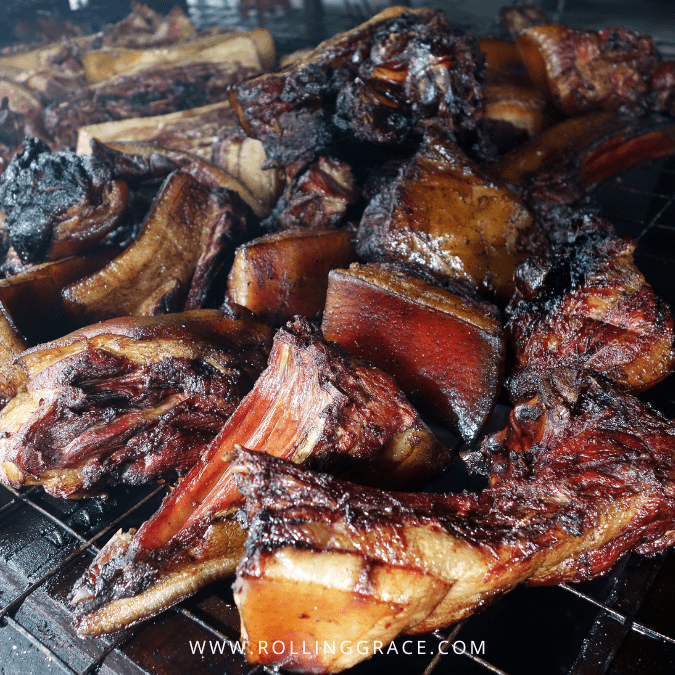
Off the grill is the standard. The meat comes in chunky portions, fat still intact, with a char on the outside that gives way to something considerably softer inside. It is typically eaten with rice and accompanied by tuhau, either incorporated into the marinade or served alongside as a condiment.
For those who want more from it, Sinalau Bakas works in a spicy curry or a stir-fry. Both are common variations at stalls and home kitchens across Sabah. The grilled version is the starting point, but neither adaptation loses what makes the dish worth eating in the first place.
Portions at roadside stalls are sold by weight rather than by plate. A standard serve runs between 200 and 400 grams depending on the vendor. The fat-to-meat ratio varies by cut, with shoulder and rib sections carrying the most fat and producing the most flavour during the smoking process. Lean cuts are available but are considered the lesser option by most regulars.
Order by pointing at what looks best on the grill rather than asking for a specific cut by name.


Where to Eat Sinalau Bakas in Sabah
The main Sinalau Bakas corridor runs along the road from Tamparuli to Kundasang, heading towards Mount Kinabalu. Most visitors travelling to Kinabalu Park pass through this route directly, which means the stalls are on the way regardless of your itinerary.
Sinalau Bakas in Tamparuli and Ranau
Tamparuli is approximately 38 kilometres from Kota Kinabalu city centre and is where the Sinalau Bakas roadside stalls begin to appear in earnest. The stalls here are informal, often marked by nothing more than a hand-scrawled banner.
Ranau, further along the same road, has the highest concentration of vendors and is where the quality is most consistent. Market vendors in Ranau typically prepare their stock fresh each morning.
If you are spending more than a day in the highlands, Ranau is worth building into the plan specifically for this.
Sinalau Bakas in Kundasang
Kundasang sits close to the base of Mount Kinabalu and is a natural stop for anyone doing the mountain. Sinalau Bakas vendors here cater largely to visitors passing through on the way to or from Kinabalu Park.
The selection is reliable and the setting, at elevation with the mountain in the background, makes for a decent lunch stop before or after the climb.
Sinalau Bakas in Kota Kinabalu
Sinalau Bakas is available in Kota Kinabalu, though the city versions are a step removed from the highland originals. The dish travels adequately but the open-flame roadside context does not. If KK is your only stop in Sabah, you will still find it. If you have the option to eat it closer to Ranau or Kundasang, take it.
Frequently Asked Questions About Sinalau Bakas
Is Sinalau Bakas halal?
No. Sinalau Bakas is wild boar and is not halal. It is sold openly at roadside stalls and markets across the Tamparuli-Kundasang corridor and in Ranau. Muslim travellers should be aware before ordering.
Where is the best place to eat Sinalau Bakas in Sabah?
The roadside stalls between Tamparuli and Kundasang are the most well-known and most consistent. Ranau market vendors are a close second. Kota Kinabalu has options but the highland stalls remain the benchmark.
Can you bring Sinalau Bakas home?
Yes. The meat keeps for up to a month when frozen. Vacuum-seal portions before travelling and check your airline’s regulations on carrying cooked meat across borders before you fly.
At Rolling Grace, we believe honouring a food tradition and being mindful about where your meat comes from are not mutually exclusive. If Sinalau Bakas earns a place on your plate, let it be a considered one.
Get the good stuff first. Join Rolling Grace for the restaurants worth crossing a city for, the stays worth the upgrade, and the places to go before everyone else. Free, straight to your inbox.
Leave a Reply