Discovering Tuaran Mee in Sabah, Malaysia
To understand a place, eat what locals were eating before anyone thought to photograph it. Not the dishes on laminated menus or the ones flagged in travel roundups, but the ones ordered without looking up, eaten at a plastic table before 9am, packed into containers for the drive to work.
Food tells you what a place values and what it refuses to change. In Sabah, that conversation happens at the breakfast table, and it has been happening the same way for decades. The dish at the centre of it is Tuaran Mee.
It comes from Tuaran, a small town 33 kilometres north of Kota Kinabalu. The noodle was developed there, named there, and is still made best there. It has since spread across Sabah’s coffee shops and hawker stalls, but the original remains the reference point.
This is a dish that does not need reinterpretation. It needs to be eaten where it started, at the right hour, before the morning crowd thins out.
Read also: Explore the Seaventures Dive Rig Experience in Sipadan

What Is Tuaran Mee
Tuaran Mee is a noodle dish defined by texture and discipline. Made from a batter of flour and egg yolk, the noodles are rich in colour and flavour without relying on heavy seasoning. Each strand is springy, dense, and unmistakably egg-forward.
The noodles are usually pan-tossed rather than served in broth. They arrive lightly coated in oil, topped with pork slices, char siew, Hakka egg rolls, fish cake, and local greens. Nothing is excessive. Every component exists to support the noodle itself.
Tuaran Mee does not seek balance through contrast. It relies on repetition, egg, heat, and chew, working together in a way that feels complete.
Just as laksa belongs to Penang and kolo mee anchors Sarawak, Tuaran Mee is the noodle most closely tied to Sabah.
Why Tuaran Mee Tastes the Way It Does
The character of Tuaran Mee comes from how it is made, not how it is presented.
Fresh noodles are essential. Many stalls still prepare them daily, adjusting texture by feel rather than measurement. The noodles are slightly crisp at the edges, chewy at the centre, and capable of holding flavour without softening too quickly.
Heat control matters. Too little and the noodles feel flat. Too much and the egg loses its fragrance. Experienced cooks rely on timing learned through repetition, not instruction.
This is why Tuaran Mee changes subtly from place to place. The difference is never dramatic, but it is noticeable to those paying attention.

History of Tuaran Mee
Tuaran Mee emerged in the 1970s, shaped by the Chinese community in Sabah. Early versions were cut by hand using knife techniques that produced thick, uneven strands. These noodles were rugged, dense, and deeply satisfying.
As machinery entered Tuaran, production became more consistent. The noodles grew thinner and more uniform, though the egg-rich flavour remained intact. Both styles are still found today, tied closely to family-run stalls and long-held methods.
Change did not replace tradition. It refined it.
Tuaran Mee remains a marker of continuity within Sabah’s food culture, adapting carefully while preserving its core identity.
Why Tamparuli Matters
While Tuaran Mee is available across Sabah, Tamparuli remains the reference point.
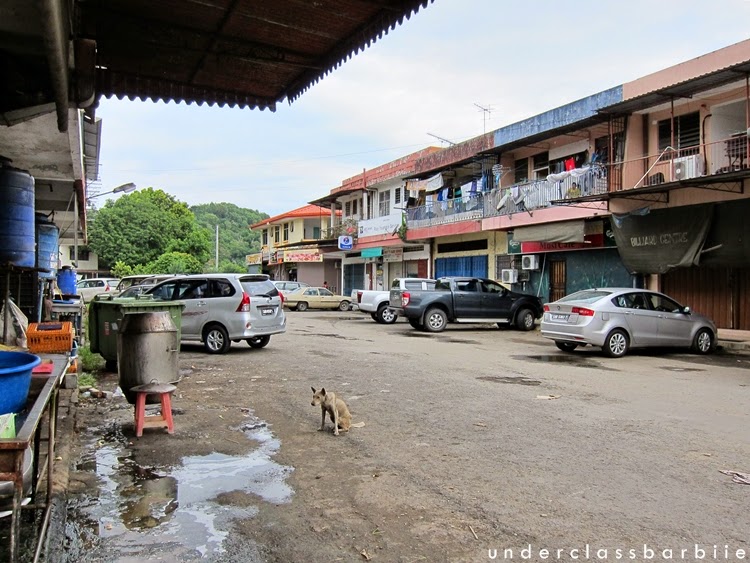
Located within the Tuaran district on the west coast of Sabah, Tamparuli sits along a river crossed by a narrow bridge. The town moves at an unhurried pace. Shops open early, close when they must, and serve what they know.
Dusun, Bajau, and Chinese communities coexist here, shaping daily life and food habits. This mix explains the depth and restraint found in local cooking. Nothing is rushed. Nothing is embellished.
Eating Tuaran Mee in Tamparuli feels ordinary in the best way. Bowls arrive without ceremony. People eat, pay, and leave. The dish exists as part of daily life, not as an attraction.
Tamparuli itself mirrors the dish it is known for. Life here remains quiet, reserved, and uncomplicated. The town offers a kind of calm that feels increasingly rare. There is no urgency to modernise what already works.
That is precisely why it tastes right here.

Tuaran Mee Near Kota Kinabalu
Tuaran is 33 kilometres from Kota Kinabalu, which makes it a realistic morning trip rather than a dedicated excursion. The drive north takes under an hour on a road that cuts through palm and river country before the town comes into view. Most people who make it do so early, eat, and are back in the city before lunch.
That proximity is part of why Tuaran Mee has stayed in the conversation among Sabah locals for as long as it has. The dish has spread to coffee shops across Kota Kinabalu and beyond, but the pull back to Tuaran itself remains.
Eating it at the source, at a kopitiam that has been serving the same recipe for decades, is a different experience from eating it reproduced elsewhere. Not better in a sentimental sense. Better in the way that context always sharpens flavour.
How Locals Eat Tuaran Mee
Most locals opt for the dry version, pan-tossed rather than soupy. Some add extra egg or pork, others keep it simple. Chilli is available but used sparingly. The noodle is never drowned.
Eating happens quickly. Tuaran Mee is not designed for lingering. It is fuel, comfort, and habit combined.
First-timers often notice the chew before the flavour. That texture is the point. The egg follows.

Tuaran Mee and Sabah Local Food Culture
Tuaran Mee is a staple within Sabah’s local food culture, commonly eaten as a regular meal rather than reserved for special occasions. Preparation relies on familiar ingredients and established techniques that prioritise texture and consistency. Recipes are rarely formalised, with methods passed on through practice and repetition.
Across Sabah, local dishes are shaped by routine and availability rather than presentation. Tuaran Mee reflects this approach through its straightforward composition and dependable flavour, offering a meal that is defined by reliability rather than variation.
Eat it where it belongs. Notice the texture. Observe the pace around you. Let the bowl speak for the place that made it. That is often how Sabah reveals itself best.
Get the good stuff first. Join Rolling Grace for the restaurants worth crossing a city for, the stays worth the upgrade, and the places to go before everyone else. Free, straight to your inbox.
Leave a Reply