Mount Emei is the obvious draw, but the best things to do in Emeishan extend well beyond the mountain itself.
At 3,099 metres, the summit of Mount Emei sits above the clouds. Not metaphorically. You take a cable car, step out, and the valley below has disappeared entirely into white. That is the first thing to understand about things to do in Emeishan: the mountain is not a backdrop for the city. The city exists because of the mountain.
Here is what Emeishan city and its mountain actually offer, and how to make the most of both.
Read also: Tiger Leaping Gorge Hiking Guide: 9 Important Things to Know
Table of Contents
Emeishan Travel Guide
Located on the southwestern edge of the Sichuan Basin, Emeishan is a county-level city of around 430,000 people across 12 towns and six townships. It is 120 kilometres from Chengdu Shuangliu International Airport and 30 kilometres from Leshan River Port, which puts it within comfortable striking distance of Leshan’s Giant Buddha on the same trip. Most visitors treat Emeishan as a two-day detour from Chengdu. Those who do tend to wish they had stayed longer.
Mount Emei itself has been a UNESCO World Heritage Site since 1996. It is the tallest of China’s Four Sacred Buddhist Mountains, and the combination of active monasteries, dense subtropical forest, and altitude-driven cloud cover creates something that genuinely resists the usual travel shorthand. It is also home to over 2,300 species of wildlife, including giant pandas spotted near Douliang village in the lower reaches of the mountain.

Jinding (Golden Summit)
The summit plateau sits at 3,077 metres and holds the Huazang Temple, which is the highest Buddhist temple in China’s predominantly Han districts. Four phenomena are associated with Jinding: the sunrise over the Sichuan Basin, the sea of clouds that forms below the ridge line in the morning, the “Buddhist halo” (a full circular rainbow effect caused by sunlight hitting the cloud layer beneath you), and the “divine light,” an atmospheric optical effect observed at dusk.
The cable car is the most practical route up. Go early if sunrise is the goal. Temperatures at the summit are considerably colder than the base year-round, so pack a layer regardless of the season. It is one of the things to do in Emeishan for visitors exploring the area.

Mount Emei Scenic Area
The scenic area encompasses the full mountain and its network of paths, temples, and forest zones. It is large enough that most visitors spend a full day moving through it. The western boundary of the mountain faces the Daxiangling range, and on clear days the visual drop between the two elevations is arresting.
The subtropical humid monsoon climate means the forest is dense, genuinely varied in flora, and stays green through most of the year. Macaque monkeys are a fixture on the lower trails and are habituated to visitors. They are not shy and have been known to take food directly from bags. Keep snacks secure.

Baoguo Temple
Baoguo Temple stands at the base of the mountain and functions as the main entrance to the scenic area. Built during the Ming Dynasty under the name Hui Zong Hall, it was intended to bring Confucianism, Buddhism, and Taoism under one roof. The Qing Emperor Kangxi renamed it in 1703. Bao Guo translates literally as “serve the nation.”
The temple faces Phoenix Lake. Because of its position at the mountain’s eastern foot, it catches the first light of the day and holds the last of the evening sun. If you are arriving on an early train, the morning light here is worth pausing for before heading further up. It is one of the things to do in Emeishan for those visiting for the first time.

Xianzhi Zhujian Ecological Garden
Eight kilometres east of Emeishan city centre, this 300-acre park does more than its name suggests. The anchor exhibit is tea production, with a working facility and a teahouse on site, but there are two other components worth noting: a dinosaur museum and a dedicated Panda Hall.
The dinosaur museum runs across three exhibition zones covering fossil skeletons, animatronic reconstructions, and palaeontology merchandise. The numbers on display are specific enough to matter: 18 full dinosaur skeletons, seven touch-accessible fossil replicas, two sets of dinosaur eggs, one full fossil pit, and 20 smaller fossil specimens. It is more substantive than the typical provincial natural history annex.

Zhuyeqing Tea Garden
The Zhuyeqing Ecological Tea Garden in Leshan is the commercial and cultural home of Emeishan’s most exported product. Zhuyeqing green tea, grown at elevation in the mountain’s humid climate, has been produced here for centuries and is now one of Sichuan’s most recognised export varieties.
The garden is divided into four zones: the Tea Expo Garden, Mingqing Garden, Ecological Garden, and Tea Plantation and Processing Area. Inside the Expo Garden, three dedicated showrooms cover tea folk culture, Zhuyeqing cultural history, and a rotating art gallery. There are scheduled tea art performances.
The surrounding mountain views from the plantation section are the quieter reward for making it this far.

Damiao Feilai Temple
Located in the northwest corner of Emei County, Feilai Hall was first built during the Song Dynasty and has been destroyed by fire multiple times across its history. The argon wood structural frame survived each time. After an 83-year restoration process, the National Cultural Heritage Bureau completed a preservation effort that retained the original architectural style throughout. The stone paving dates back centuries. There are no artificially carved decorations. It reads as what it is.
It is among the things to do in Emeishan that draw visitors to the region.
Exiu Lake
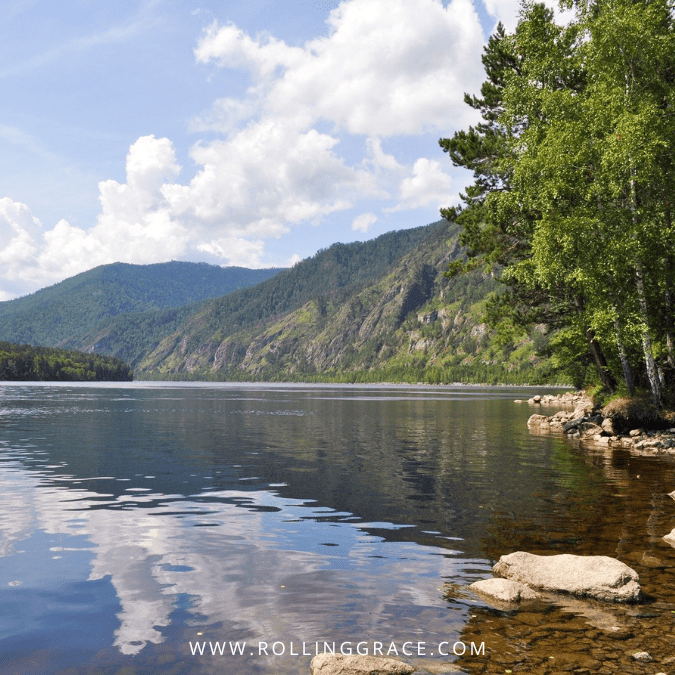
Exiu Lake is a man-made reservoir at the eastern foot of the mountain, ringed by hotels, restaurants, and a small cluster of cultural venues including a theatre and an opera house.
It functions as the city’s primary leisure zone and is worth an evening rather than a full day. The reflection of the mountain on calm mornings is the visual that most photographers come for. It is one of the things to do in Emeishan for those exploring beyond the main sites.
Getting to Emeishan
Emeishan from Chengdu
Two railway stations serve the area. Book tickets to Emeishan Railway Station, not Emei Railway Station. The distinction matters and is frequently confused on booking platforms. From Chengdu, 12 bullet trains run daily on the route, with a journey time of approximately one hour.
From Emeishan Railway Station, bus 5A or bus 12 runs to Baoguo Temple, the main entrance to the scenic area. The ride takes around 40 minutes. A taxi from the station to Baoguo Temple takes approximately 10 minutes.
Emeishan from Leshan
If you are combining the trip with Leshan’s Giant Buddha, both sites can be covered in two days with reasonable planning. Leshan is 30 kilometres from Emeishan by road.
Travel Tips for Visitors
Weather
Emeishan’s subtropical monsoon climate means rain is common from spring through to early autumn. The summit can be significantly colder than the base. A light waterproof layer and comfortable walking shoes are essential rather than optional on the mountain trails.
Entrance Fees
The scenic area entrance fee and the Jinding cable car fee are separate costs, so budget for each before you arrive.
Scenic area admission is CNY 160 per person during peak season and CNY 110 during off-peak season. If you plan to take the tourist shuttle bus up to Leidongping Car Park rather than hiking, add CNY 90 for a round-trip ticket.
Reaching the Golden Summit requires a separate cable car fare of CNY 65 going up and CNY 55 coming down. A visit to Wannian Temple involves its own cable car at CNY 65 up and CNY 45 down, plus a CNY 10 temple entrance fee.
Confirm current pricing via the official Mount Emei Scenic Area site before you travel, as fees are subject to seasonal adjustment.
Wildlife
Giant pandas have been observed near Douliang village within the lower mountain zone, but sightings are not guaranteed. For a dedicated panda experience, the Chengdu Research Base of Giant Panda Breeding remains the more reliable option on the same trip.
Discovering Top Things to Do in Emeishan
The mountain’s forest ecosystems are protected under the UNESCO designation. The macaque population is wild, not managed, and feeding them is strongly discouraged by the scenic area administration.
The tea gardens operate on sustainable cultivation practices tied to the mountain’s altitude and cloud cover, which is part of what makes Zhuyeqing tea distinct. Supporting the local tea industry directly is the more sustainable way to engage with that part of the trip.
Get the good stuff first. Join Rolling Grace for the restaurants worth crossing a city for, the stays worth the upgrade, and the places to go before everyone else. Free, straight to your inbox.
Leave a Reply