There is a version of this story that gets told cleanly. Electric cars produce zero tailpipe emissions. Petrol cars burn fossil fuels and release carbon dioxide into the atmosphere. Therefore, electric cars are better for the planet. End of article.
The actual picture is messier, more geographically specific, and in some corners, surprisingly unflattering to the EV industry. This is not an argument against electrification. The weight of scientific evidence still points in one direction. But the honest answer to whether an EV is better for the environment depends on where you live, what your electricity grid runs on, what happens to the battery when the car is done, and whether anyone is being truthful about the full lifecycle of these vehicles.
The numbers matter here, and several of them deserve more attention than they typically get.
Read also: Microplastics in Malaysian Food: Hidden Dangers and Health Risks
Table of Contents
What Are Electric Vehicles?
Electric vehicles (EVs) are cars powered entirely by electric motors rather than internal combustion engines. Instead of burning petrol or diesel, they run on energy stored in a rechargeable battery pack, which is charged via a wall outlet or dedicated charging station. Because they have no tailpipe, EVs produce zero direct emissions while driving. The category includes fully battery-electric vehicles (BEVs), plug-in hybrids (PHEVs), which combine an electric motor with a petrol engine, and hydrogen fuel cell vehicles.
EVs have existed in various forms since the early 1900s but gained serious commercial traction in the 2010s, driven largely by advances in lithium-ion battery technology, falling battery costs, and tightening emissions regulations worldwide.

EV Manufacturing Emissions and Carbon Cost
Before an electric car moves a single kilometre, it has already accumulated a significant carbon debt.
Building an EV generates more emissions during production than building a comparable internal combustion engine vehicle. According to MIT’s Climate Portal, the additional energy required to manufacture an EV’s battery means that producing a new electric car can create around 80% more emissions than building a comparable petrol car. A peer-reviewed lifecycle study published in ScienceDirect found that 46% of an EV’s total carbon emissions come from the production phase, compared to just 26% for a petrol vehicle.
Lithium-ion Battery
The specific culprit is the lithium-ion battery. Building the 80 kWh battery found in a Tesla Model 3, for instance, generates between 2.5 and 16 metric tonnes of CO2 depending heavily on the energy source used in manufacturing. That wide range is itself worth noting: a battery made in China, where roughly 60% of electricity comes from coal, carries a very different footprint from one made in Sweden or Norway on near-renewable grids.
The raw materials feeding these batteries add another layer of complexity. Each tonne of mined lithium results in approximately 15 tonnes of CO2 emitted into the atmosphere. Extracting that lithium also requires an estimated 500,000 litres of water per tonne, an enormous figure in regions that are already water-stressed. The lithium triangle of Chile, Argentina, and Bolivia, which holds some of the world’s largest reserves, has experienced severe water depletion. In Chile alone, 65% of one region’s water supply went to lithium extraction operations.
Cobalt
Most EVs in Europe and the United States still rely on lithium nickel manganese cobalt oxide (NMC) batteries, which contain cobalt, and the environmental cost of mining it is significant.
Around 60 to 70% of the world’s cobalt comes from the Democratic Republic of Congo, where mining has been tied to deforestation, waterway contamination with sulfuric acid, and the documented use of child labour. Satellite analysis of nickel and cobalt mines in Cuba recorded 570 hectares of lifeless land and over 10 kilometres of contaminated coastline.
In 2016, a toxic chemical leak from the Ganzizhou Rongda Lithium mine in Tibet killed fish, cattle, and yaks downstream – the third such incident in seven years. The Philippines shut down 23 mines producing nickel and cobalt because of documented ecological damage.
None of this makes EVs uniquely villainous. The environmental cost of extracting fossil fuels is estimated at 34 billion tonnes of CO2 equivalent annually worldwide. Cobalt mining, by comparison, produces around 1.5 million tonnes. The scale difference is not close. But the point is that EVs arrive with a carbon bill already in hand, and that bill is not trivial.
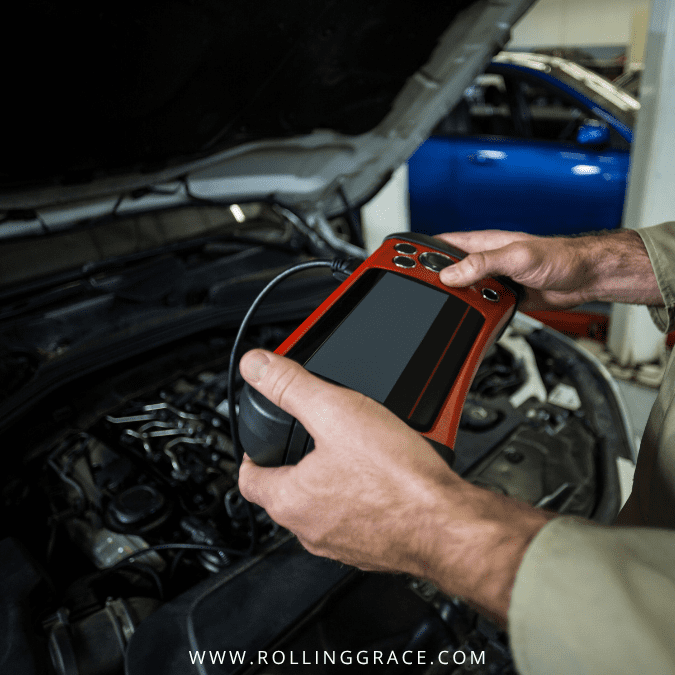
EV Carbon Breakeven Point: How Long Before It Pays Off?
The carbon debt from manufacturing has to be repaid through cleaner operation on the road. Researchers call this the breakeven point, which is the distance at which an EV’s cumulative emissions drop below what a petrol car would have produced from day one.
The numbers here are surprisingly encouraging. According to Union of Concerned Scientists data, an electric car needs to be driven approximately 21,300 miles (about 34,000 km) before it reaches its emissions breakeven with a petrol counterpart, or roughly 1.5 to 2 years of average driving. Analysis from the Argonne National Laboratory found that a Tesla Model 3 breaks even with a Toyota Corolla after just 13,500 miles in the United States, or approximately a year’s worth of driving.
The key variable is the electricity grid. In Norway, which generates almost all its electricity from hydroelectric power, that same Tesla reaches its breakeven point after only 8,400 miles. In China, where the grid still runs heavily on coal, the breakeven extends to 118,000 km or around 10 years.
BloombergNEF’s research found a two-year breakeven for American drivers, while noting that the same calculation in China at current grid conditions would take a decade. The research from Communications Earth & Environment, published in Nature’s journal family, found that battery electric vehicles consistently maintained the lowest carbon footprints across 5,000 comparative cases, even in regions with carbon-intensive electricity, because those grids are themselves decarbonising over time.
The practical implication: in most of Europe, North America, Japan, and increasingly Southeast Asia, an EV will break even on its manufacturing emissions within the first two years of ownership and then run cleaner than a petrol car for the remaining decade or more of its life.
Petrol vs Electric Cars: Lifetime Emissions Compared
Across the full lifecycle including manufacturing, fuel production, operation, and end of life, the gap between petrol vs electric cars is significant, though not uniform.
The International Energy Agency (IEA) Global EV Outlook 2024 found that globally, the lifecycle emissions of a medium-size battery electric car are roughly half those of an equivalent internal combustion engine vehicle over 200,000 km of operation. The Union of Concerned Scientists puts the figure at 52% lower for electric cars and 57% lower for electric trucks compared to their petrol and diesel equivalents.
When broken down per kilometre, the research journal ScienceDirect’s peer-reviewed meta-analysis found that battery electric vehicles average 182.9 grams of CO2 equivalent per kilometre across their lifetime, compared to 258.5 grams for petrol vehicles. MIT’s Insights Into Future Mobility study found petrol cars averaging over 350 grams of CO2 per mile over their lifetimes, plug-in hybrids at around 260 grams, and full battery EVs at approximately 200 grams.
By 2035, the gap widens further. The IEA projects that an ICE car purchased in 2035 will produce almost two and a half times the lifetime emissions of a battery electric car under current policy trajectories. In absolute terms, that represents roughly 38 tonnes of CO2 equivalent for an ICE vehicle over its lifetime versus 15 tonnes for a battery EV.
National Power Grids Affecting EV Emissions
The IEA’s analysis found that in India, where coal still dominates electricity generation, battery EV lifecycle emissions are only about 20% lower than petrol vehicles over a comparable lifetime, saving less than 10 tonnes of CO2 per vehicle. In the United States, the saving is closer to 50 tonnes. In the United Kingdom, it falls somewhere in between at under 20 tonnes.
A 2020 meta-analysis across European Economic Area countries found that in nations with very high grid carbon intensity such as Poland, Estonia, Latvia, Malta, EVs could potentially never reach an environmental breakeven point against diesel vehicles.
For Malaysia specifically, the picture is mixed. Malaysia generates the majority of its electricity from natural gas and coal. An EV charged in Kuala Lumpur carries a higher per-kilometre charging footprint than one charged in Scandinavia, but it is still cleaner than a petrol car over its lifetime once the grid factor is applied honestly. The trajectory matters too: grids across Southeast Asia are gradually incorporating more renewables, which means an EV bought today will operate on progressively cleaner electricity year on year.
This is a critical and often overlooked point. A petrol car’s emissions profile is essentially fixed: it will always burn fossil fuel. An EV’s emissions profile improves automatically as the grid it charges from gets cleaner. The car does not change; the fuel source does.

Are Plug-in Hybrids Better for the Environment?
Plug-in hybrid electric vehicles (PHEVs) are commonly positioned as a middle ground. The IEA’s data complicates this considerably.
PHEVs purchased in 2023 produce around 30% less lifetime emissions than petrol vehicles, according to IEA modelling. That sounds reasonable until you look at how people actually drive them. The European Commission published a report finding that real-world CO2 emissions from PHEVs were on average 3.5 times higher than laboratory values. The reason is straightforward: PHEVs depend on drivers actively choosing to charge them and prioritising electric mode. Many do not. The electric range gets used occasionally. The petrol engine carries most of the daily load. The battery becomes additional weight that a petrol engine has to drag around.
PHEVs are a good option in specific circumstances, such as long highway routes occasionally broken by short city runs, or situations where charging infrastructure is inconsistent. As a daily urban commuter where drivers genuinely charge the vehicle every night, the numbers improve. But as a category, PHEVs underperform their ratings in real-world use far more dramatically than either petrol cars or full battery EVs.
EV Battery Disposal Problems
The most legitimate unresolved question around electric vehicles is what happens to batteries when they reach the end of their useful life.
Lithium-ion batteries degrade over time. Once they fall below around 70 to 80% of their original capacity, they are typically considered unsuitable for vehicle use, though still functional for stationary energy storage applications. The actual vehicle battery lifespan has improved substantially as most modern EV batteries are designed to last the vehicle’s operating life, and degradation rates are slower than early sceptics predicted.
The disposal question remains unsettled. A 2016 study from Australia found that 98.3% of lithium-ion batteries ended up in landfills. Batteries in landfills can release toxins including heavy metals into soil and groundwater, and have been documented causing landfill fires that burn for extended periods. Battery recycling exists but remains expensive and technically limited. Most industrial processes can currently recover cobalt, nickel, and copper from used batteries but struggle to recover lithium itself efficiently.
Regulatory pressure is building. The European Union’s 2023 battery regulation mandates that by 2031, battery manufacturers must use minimum percentages of recycled lithium, nickel, and cobalt in new batteries, rising targets through 2036. Recycling capacity is projected to increase at least fourfold by 2030. Second-life applications for batteries, including stationary storage for buildings and grid backup, are extending the useful life of battery materials before final disposal.
The problem is not insoluble. It is, however, not yet solved. Anyone claiming EVs are entirely clean needs to account for the 12.85 million tonnes of EV lithium-ion batteries projected to go offline worldwide between 2021 and 2030.
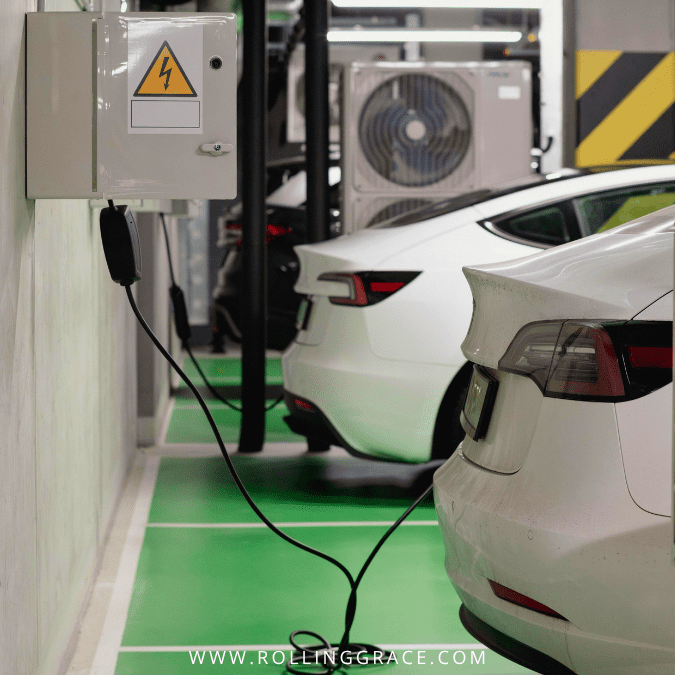
Air Quality Benefits: Are Electric Vehicles Cleaner Than Petrol Cars?
Carbon dioxide is not the only environmental metric worth considering. Urban air quality is a separate and serious concern.
Petrol and diesel vehicles produce nitrogen oxides and particulate matter that cause measurable public health damage, particularly in dense cities. Electric vehicles eliminate tailpipe emissions entirely, which has immediate and localised benefits regardless of what the power grid looks like. The IEA specifically notes this for India: even where the grid is coal-heavy enough to reduce the carbon advantage of EVs, the public health benefit from reducing vehicle pollution in cities like Mumbai is significant and measurable.
The peer-reviewed ScienceDirect meta-analysis found that EVs do produce higher particulate matter in one specific area: tyre and brake wear, as the vehicles are heavier due to their battery weight. This is a real and documented effect. Heavier vehicles shed more tyre particles, which enter waterways and soil. The same study noted, however, that regenerative braking in EVs reduces brake dust substantially compared to conventional vehicles. The net effect on particulate emissions still favours EVs, but the tyre wear issue is worth monitoring as EV fleets grow.
Are Electric Cars Better for the Environment?
Yes, in most cases, by a meaningful margin.
Across the full lifecycle in most of the world’s largest car markets, a battery electric vehicle produces around 50% fewer greenhouse gas emissions than an equivalent petrol car. The manufacturing debt is real but repaid within roughly two years of average driving. The operation phase which constitutes the majority of a car’s life is significantly cleaner, and becomes cleaner still as grids decarbonise. MIT projects petrol cars dropping to around 225 grams of CO2 per mile by 2050, while battery EVs could reach 50 grams under a high-renewable scenario.
The honest qualifications are these. The advantage is smaller on coal-heavy grids and largest on renewable-heavy ones. The mining supply chain carries genuine environmental and human rights problems that the industry has not fully resolved. Battery disposal remains an unsolved problem at scale. Plug-in hybrids deliver far less in real-world use than their ratings suggest.
For most people deciding what car to buy now, the carbon case for an EV is solid. The environmental case is mostly solid, with caveats. The more useful question (one the industry tends to avoid) is not whether EVs are better than petrol cars, but whether the raw material supply chains, recycling infrastructure, and grid energy sources are being improved fast enough to make that advantage durable. That is the part that depends not on what car you buy, but on what governments and manufacturers do next.
Get the good stuff first. Join Rolling Grace for the restaurants worth crossing a city for, the stays worth the upgrade, and the places to go before everyone else. Free, straight to your inbox.
Leave a Reply