At 4am in Yunnan, I loaded my backpack into a van and boarded a separate shuttle toward a gorge I had been reading about for months.
It was still dark. The road out of Lijiang was empty. Somewhere around the two-hour mark, the mountains appeared through the window, jagged and enormous above the treeline, draped in early mist. Nothing I had read had quite prepared me for that first view.
Read also: Top Attractions and Food in Shangri-La Yunnan, China in 2026
Table of Contents
Discovering Tiger Leaping Gorge Yunnan
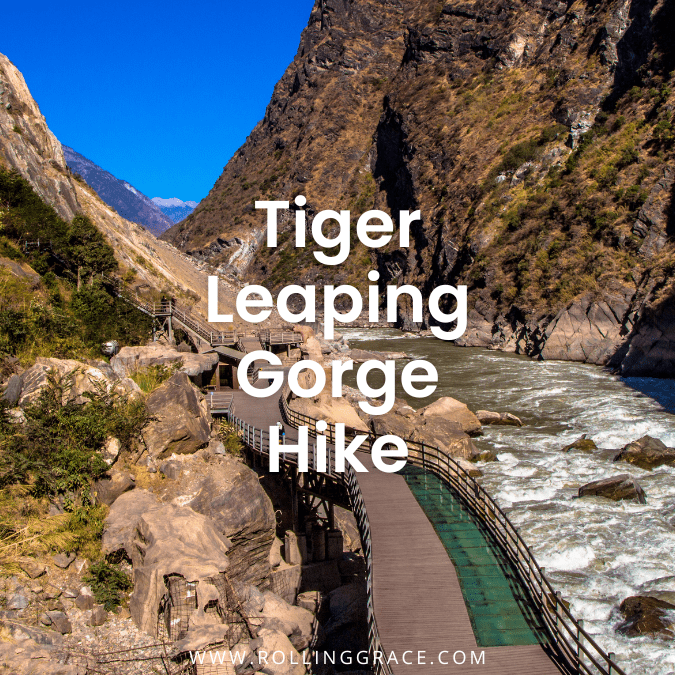
Tiger Leaping Gorge sits between Jade Dragon Snow Mountain and Haba Snow Mountain in Yunnan Province, carved by the Jinsha River over a 15-kilometre stretch that drops 3,790 metres from peak to water.
It is one of the deepest gorges in the world and, on most weekdays, one of the quietest long-distance hikes in China. I hiked it solo, completed the High Trail in two days, and have been recommending it to people ever since.
What Tiger Leaping Gorge Actually Is
The gorge takes its name from a local legend: a tiger, hunted and cornered, escaped by leaping across the narrowest point of the Jinsha River using a large rock as its stepping stone. The rock is still there. You can see it at the Middle Gorge, where the river narrows to around 30 metres and the water drops hard between walls of sheer cliff.
The gorge is divided into three sections: the Upper Gorge, Middle Gorge and Lower Gorge. Most hikers do the High Trail, which runs along the upper section from Qiaotou or the Naxi Family Guesthouse area through to Tina’s Guesthouse or Teacher Zhang’s at the Middle Gorge. The Lower Gorge sees very few visitors and is not recommended, with overgrown paths and rockslide damage as of 2026.
Book One-day tour of Tiger Leaping Gorge and Dukezong Ancient City in Lijiang
The High Trail is the one worth doing. It is 30 kilometres end to end, best completed over two days, and passes through changing terrain: cliff-edge paths with drops to the river far below, forested sections, open valleys, waterfalls, and scattered guesthouses where you can stop for noodles and cold beer.



What to Expect on the Trail
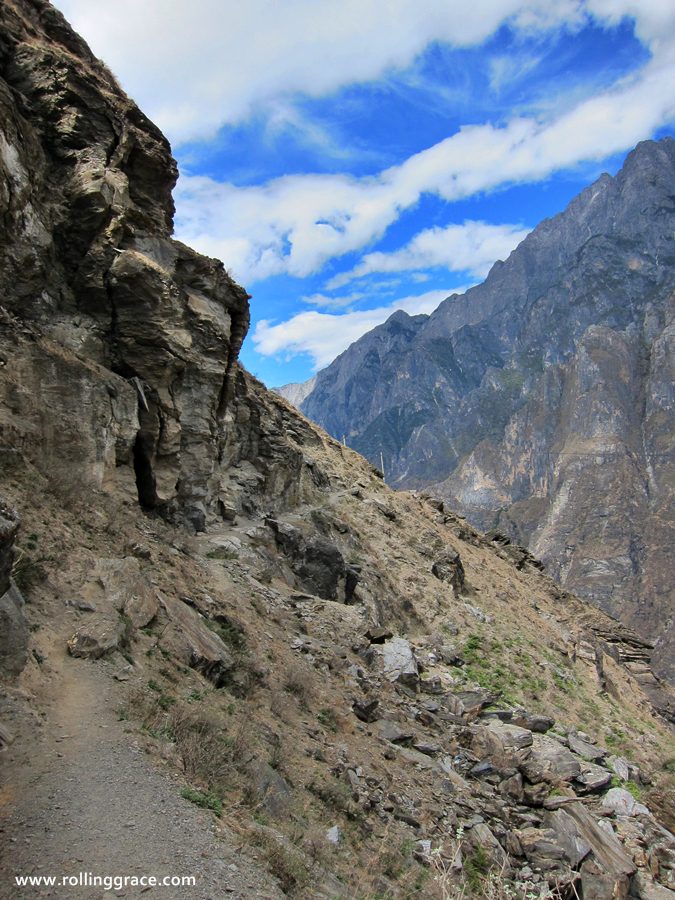
The trail wastes no time. Within the first hour you hit the 28 Bends, a relentless zigzag ascent that climbs roughly 500 metres in steep switchbacks. It is the hardest section of the entire hike and it comes at the start, before your legs are warm. Take it slowly. Most people are breathing hard by the third bend and fully humbled by the tenth. The views from the top make it worth it.
Book Lijiang to Shangri-La, Tiger Leaping Gorge, Napa Hai, Songzanlin Monastery Private Day Tour
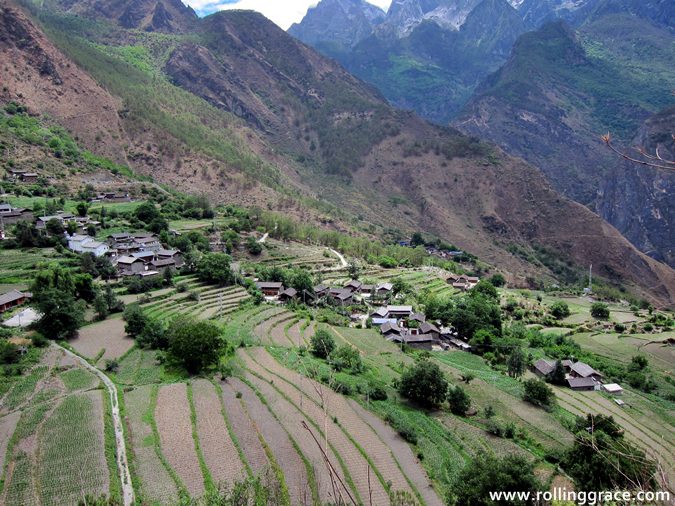
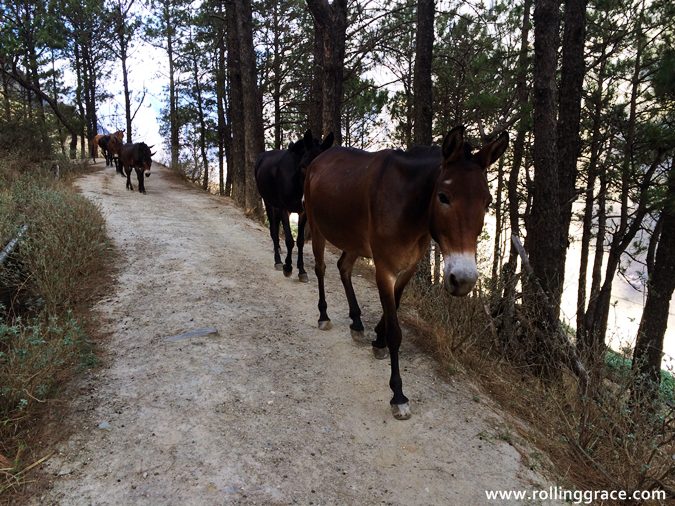
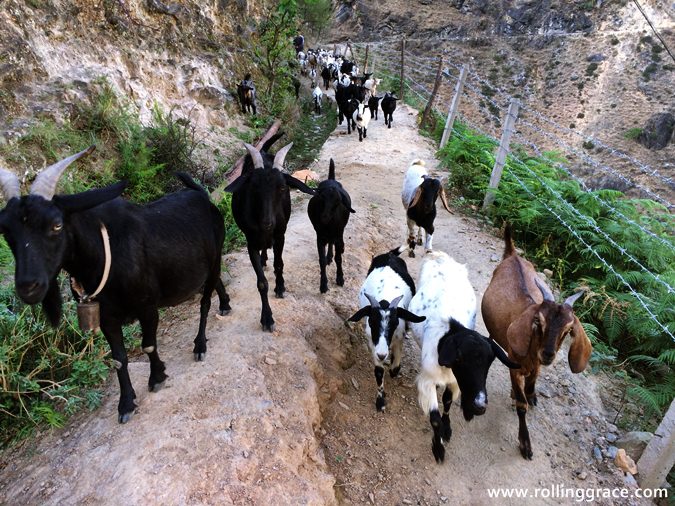
After the 28 Bends, the trail levels and the rhythm changes. You walk along cliff edges where the river is a distant roar below, pass waterfalls, move through patches of forest and open mountain meadow. Horses and goats share the path. Local women set up small stalls at intervals selling water, cold drinks and snacks. Some sell other things too, and will offer without much subtlety. That is simply part of the trail.
Guesthouses appear at regular intervals from the halfway point onward. You do not need to carry much food. The trail is well-marked with painted arrows, and though it is possible to take a wrong turn, it is not easy to get genuinely lost.
Emergency poles with blue buttons are placed along the route for assistance if needed.


Tiger Leaping Gorge Trails
- Distance: 30km (High Trail)
- Duration: 7 hours to 2 days, depending on pace and whether you stop overnight
- Start: Naxi Family Guesthouse area or Qiaotou Town
- End: Tina’s Guesthouse or Teacher Zhang’s Inn (Middle Gorge)
- Gorge depth: 3,790 metres
- Highest point on trail: Approximately 2,700 metres above sea level
- Difficulty: Moderate to challenging
Trail Updates Since 2025
This is the most important update for anyone planning to hike the Tiger Leaping Gorge:
Middle Tiger Leaping Gorge
The section of trail from Teacher Zhang’s toward the Middle Tiger Leaping Gorge was closed as of summer 2025. The sky ladder route and the Middle Gorge descent are still accessible via a guide, at a cost of around RMB 600 for a group, organised at the Yixiantian entrance near Tina’s Guesthouse. There is also a free alternative route from the Tibetan Guesthouse.
Tiger Leaping Rock
If you want to reach Tiger Leaping Rock, the famous rock at the gorge’s narrowest point, plan extra time and budget for this. Do not assume you can simply walk down from the High Trail without checking current conditions on arrival.

Entrance Fee and What You Pay
The park entrance fee is RMB 45 per person, collected by a park attendant who boards the bus before you reach the trailhead. You do not pay at a gate. The attendant comes to you.
On top of this, there are small localised fees on certain sections of the trail, particularly on paths maintained by local farmers. These are legitimate, low-cost and support the families who maintain those routes. Expect to pay between RMB 10 and 35 for sections of the Middle Gorge trail if you descend there.
The original ¥65 entrance fee listed across older guides is no longer current.
How to Get to Tiger Leaping Gorge
Qiaotou was traditionally the standard starting point and most older guides direct you there. The situation on the ground has shifted.
Buses from Lijiang no longer reliably drop hikers in Qiaotou town first. The more common current setup, as of 2025 and 2026, is to be dropped at a new trailhead near the Naxi Family Guesthouse, further into the gorge. A park attendant boards the bus en route to collect the RMB 45 entrance fee.
From Lijiang
The public bus departs from Lijiang Passenger Station at 08:30 and 13:30. The fare is approximately RMB 20 to 23 per person and the journey takes around two hours. For non-Mandarin speakers, book in advance via the WeChat ID 15308884482 or through your guesthouse in Lijiang.
Shared transfers (pin che) are the other option, costing around RMB 79 one way from Lijiang, bookable via WeChat. These include luggage forwarding to the end of the trail, which is worth arranging regardless of how you get there.
Luggage Forwarding
As of mid-2025, the luggage storage point has moved from Teacher Zhang’s to a local convenience store near the end of the trail. Confirm the exact drop-off location with your driver on the day.
Best Time to Hike
The best months are May, October and November: clear skies, stable temperatures, good visibility of both snow mountains. Spring is green and dramatic. Autumn is crisper and the trail is less wet.
Avoid July and August if you can. The rainy season brings a real risk of rockslides, and sections of the trail become slippery and unpredictable. Winter is cold but not impossible; the trail sits at around 2,700 metres at its highest, so snow is possible but not guaranteed.
Avoid Golden Week in early October if you value solitude. Guesthouses fill up and the trail’s usual quiet is completely gone.


Where to Stay on the Trail
Most hikers overnight at or near the Halfway Guesthouse, which sits roughly midway along the High Trail and is consistently well-reviewed. The claim to fame is its toilet view, which is, genuinely, exceptional.
Other guesthouses along the route include Naxi Family Guesthouse, Tea and Horse Guesthouse, Five Fingers Mountain Guest House, Tina’s Guesthouse, Chateau de Woody and Tibet Guest House. Book ahead during peak season, particularly October.
Rooms are basic, warm meals are available at all guesthouses, and most have hot water. This is not a trail that requires camping.
Getting Out: Onward to Shangri-La or Back to Lijiang
From Tina’s Guesthouse, a bus to Shangri-La departs once daily at around 3:30pm. The fare is approximately RMB 55. Book your seat through the guesthouse.
If you are returning to Lijiang, transport can be arranged from Tina’s or nearby guesthouses. Confirm your onward plans and book a day in advance; services are infrequent in this part of Yunnan and the afternoon bus fills quickly.
Important Information for Travellers
- Entrance fee: RMB 45 (paid on the bus before the trailhead)
- From Lijiang: Public bus from Lijiang Passenger Station, 08:30 or 13:30, approximately RMB 20 to 23; shared transfer approximately RMB 79
- Trail start: Naxi Family Guesthouse area (current) or Qiaotou
- Trail end: Tina’s Guesthouse or Teacher Zhang’s Inn
- Onward to Shangri-La: Daily bus from Tina’s, approximately 3:30pm, RMB 55
- Language: Download a translation app. Basic Mandarin phrases help on the trail and at bus stations.
- Payment: Cash preferred throughout. Carry enough RMB for entrance fees, trail fees, food and transport.
What to Pack
Skid-resistant hiking shoes are not optional on the 28 Bends and the cliff-edge sections. Pack light: the luggage-forwarding system exists precisely so you do not carry a full pack up 500 metres of switchbacks.
Take water for the first half of the trail; mountain springs appear reliably after the halfway point. Layers for the morning and evening at altitude, sunscreen for the exposed ridgeline sections, and a camera for all of it.
Frequently Asked Questions
- Is Tiger Leaping Gorge difficult? The 28 Bends at the start are genuinely hard, but the rest of the High Trail is moderate. If you are reasonably fit and take the 28 Bends at a steady pace, the hike is achievable without prior mountaineering experience.
- Can I hike Tiger Leaping Gorge solo? Yes, and it is an excellent solo hike. The trail is well-marked, guesthouses are evenly spaced, and the route is safe for solo travellers. I did it alone and found the solitude one of its best qualities.
- Is the trail crowded? On most days, no. Long stretches pass with only the sound of the river. Golden Week in October is the exception.
- Do I need a guide? Not for the High Trail. A guide is required if you want to descend to the Middle Gorge section that is currently closed to independent hikers, at approximately RMB 600 per group.
Tiger Leaping Gorge Trail Community
The small fees you pay along certain sections of the trail go to the families who built and maintain those paths. Pay them. The guesthouses along the route are family-run. Eat at them, sleep in them, and tip if the service warrants it.
This is one of the last long hiking trails in China that has not been heavily commercialised, and the community that keeps it that way deserves to be supported directly.
Tag @rollinggrace or #RollingGrace on Instagram to share your Tiger Leaping Gorge photos.
Get the good stuff first. Join Rolling Grace for the restaurants worth crossing a city for, the stays worth the upgrade, and the places to go before everyone else. Free, straight to your inbox.
Leave a Reply