Batik is one of Malaysia’s most documented traditional crafts, with production concentrated on the east coast of the peninsula across Kelantan, Terengganu and Pahang, which together account for the entire national output. Each state has developed a distinct visual language over generations, shaped by local geography, cultural influence and the specific techniques passed down through artisan communities.
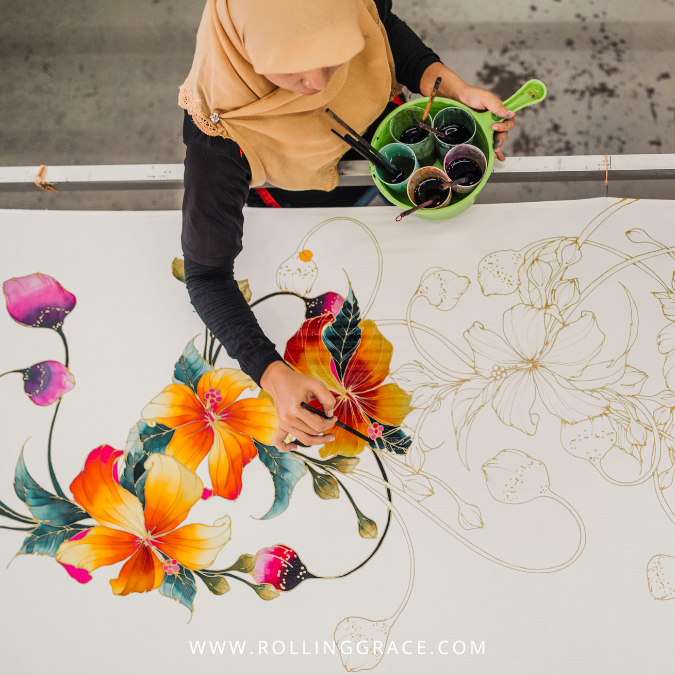
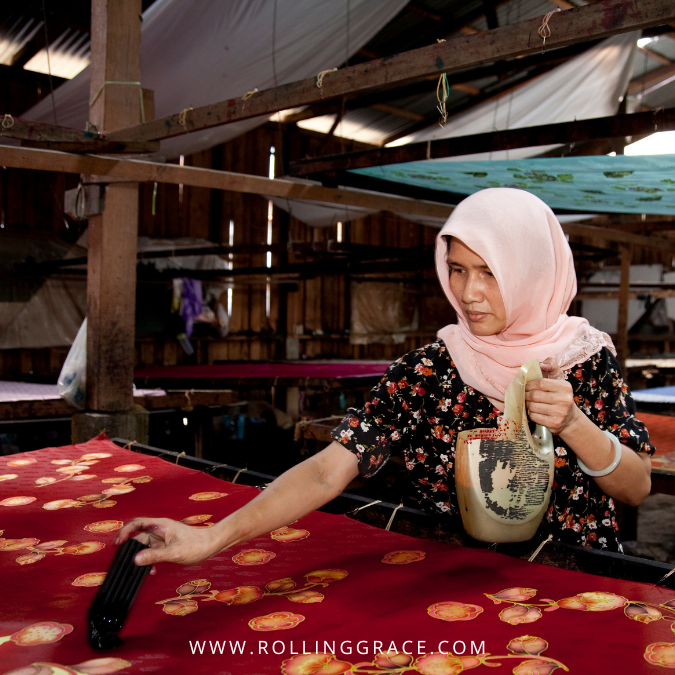
The craft of batik in Malaysia operates on a wax-resist dyeing principle. Hot wax is applied to fabric to block specific areas from absorbing dye, and the process of waxing, dyeing and boiling to remove the wax is repeated as many times as the number of colours in the final piece requires. A more colourful piece has gone through more rounds of the process.
Malaysian batik favours larger, simpler patterns than its Javanese counterpart and relies heavily on brush painting rather than the canting tool, which produces the finer, more intricate lines associated with Indonesian batik tulis. The colours in Malaysian batik tend toward lighter, more vibrant tones.
Read more: 10 Sustainable Alternatives to Plastic That Actually Work

History of Batik in Malaysia
Batik production in Malaysia traces back to trade relationships established between the Malay Peninsula and Javanese coastal cities from the 13th century onward. Javanese traders introduced wax-resist techniques to Malay artisans, and the states of Kelantan and Terengganu are broadly recognised as where the Malaysian craft took root and developed its own identity.
By the early 20th century, block printing using copper and wooden stamps had been introduced on the east coast, with Terengganu seeing the earliest stamped batik production in the 1920s. The canting technique, which uses a copper pen-like tool to apply molten wax freehand, gained wider use from the 1960s onward, having been brought in largely through Javanese influence. Stenciling, known as batik skrin, arrived from Thailand during the 1930s.
After Malaysian independence in 1957, batik was formally declared national attire and adopted as a cultural identifier. The craft went through a period of decline in the 1990s as fast fashion affected traditional industries, before a revival in 2003 brought renewed interest and a new generation of designers working with the medium.
The Malay Annals reference batik as far back as the 17th century, when Laksamana Hang Nadim was sent to India to source serasah cloth depicting forty types of flowers, a detail that points to how deeply woven batik was into royal and ceremonial life well before industrialisation.
Batik Making Techniques
Malaysian batik is produced using four main techniques, each producing a visually distinct result and suited to different scales of production.
Batik Canting (Hand-Drawn Batik)
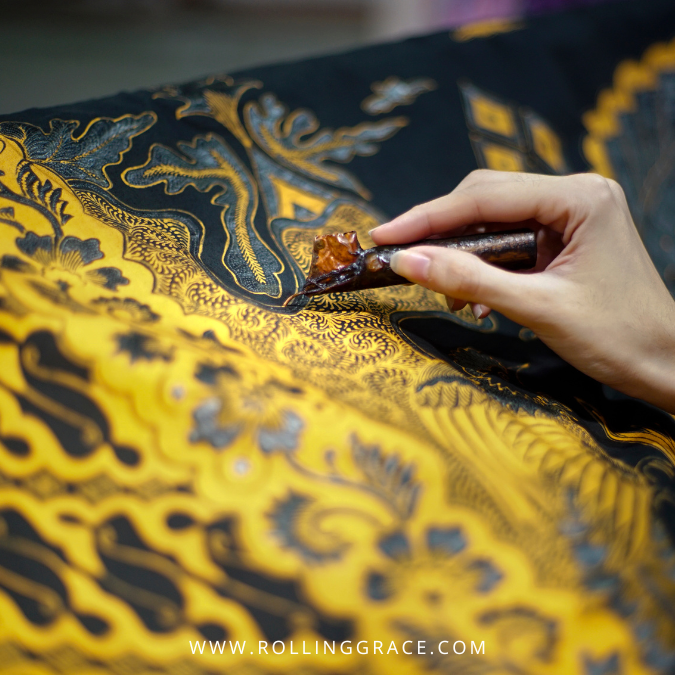
Batik canting, also called batik lukis or batik conteng, is produced freehand using a canting tool, a small copper cup attached to a wooden or metal handle, through which molten wax is drawn directly onto fabric. The wax flows through the tip like ink from a pen.
This technique produces pieces that are entirely unique, as no two hand-drawn batik cloths will be identical. It is the most labour-intensive method, with a single piece taking up to ten days to complete. Hand-drawn batik commands a higher market price because of the skill and time involved. Malaysian artisans typically stand to draw on a fabric frame, unlike Javanese artisans who sit without frame support.
Batik Blok (Block-Printed Batik)
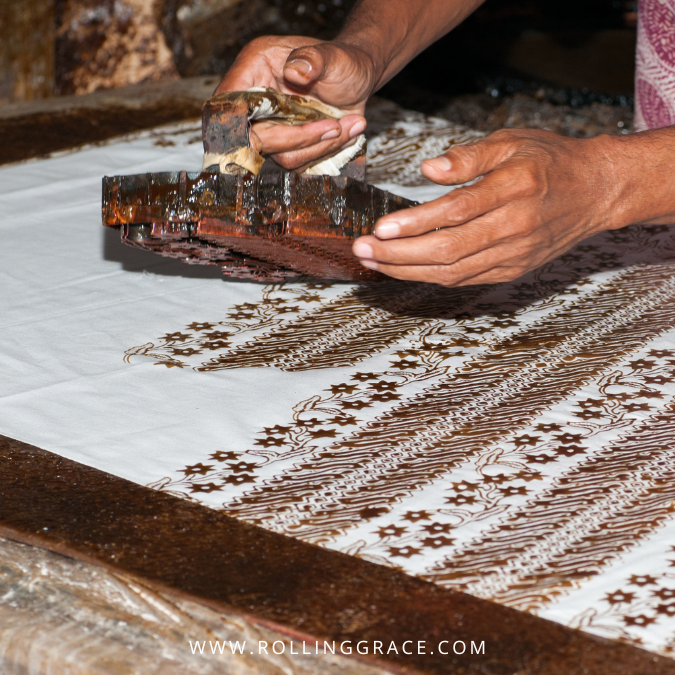
Batik blok uses copper or wooden blocks carved with patterns, which are dipped in hot wax and pressed onto fabric. Terengganu workshops are particularly known for this method, which produces repeating motifs across 20-metre cotton rolls and is better suited to larger production runs.
Block printing began in Malaysia in the 1920s. The patterns are less individually variable than hand-drawn work but retain the defining characteristic of wax-resist dyeing. Kelantan artisans Yusof and Daud Che’Su are credited with advancing stencil-based block techniques in 1939, which helped standardise production while maintaining quality.
Batik Skrin (Silk-Screen Batik)
Batik skrin applies the design through a silk screen process, allowing for greater consistency across larger runs while retaining the wax-resist principle. The technique bridges traditional craft and scaled production. It is associated with geometric patterns and is commonly used for commercial batik sold at accessible price points.
Batik Pelangi (Tie-Dye Batik)
Batik pelangi is the oldest of the four techniques and is believed to have originated in India before being adopted in Terengganu around the 1770s. The fabric is tied, folded or gathered in sections before being dipped in dye, which produces irregular colour fields and gradients. No two pieces are identical. It is the least controlled of the four methods in terms of final output, and its results vary considerably depending on how the fabric was tied and how the dye was applied.
Types of Batik Designs in Malaysia
Malaysian batik designs broadly follow three categories, shaped partly by Islamic convention which discourages realistic depictions of humans and animals. The butterfly motif is a widely recognised exception to this.
Flora and Fauna
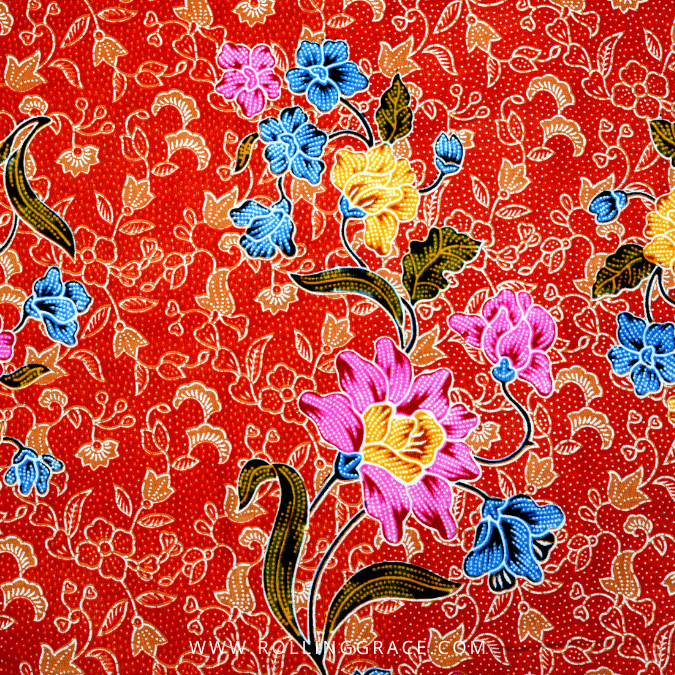
Leaves and flowers are the dominant motifs in Malaysian batik, reflecting both the country’s biodiversity and the influence of Islamic decorative arts on the craft.
The hibiscus, Malaysia’s national flower, appears frequently. Other common flora include jasmine, lotus and bamboo. Among fauna, the butterfly, hornbill and peacock feature across regional styles, with the hornbill carrying particular weight in east Malaysian designs from Sarawak and Sabah.
Geometric Patterns
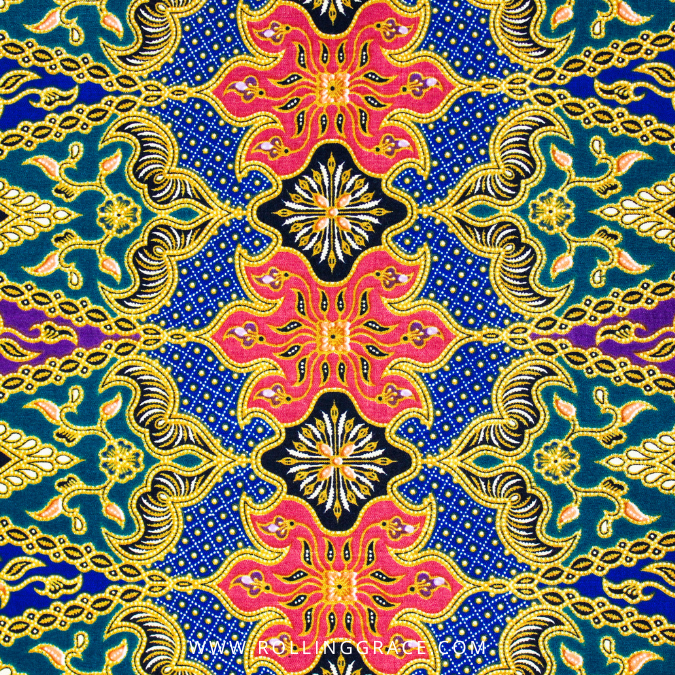
Geometric designs including spirals, diamond forms and the awan larat (drifting clouds) motif are strongly associated with Kelantan batik in Malaysia. The awan larat is one of the most recognised traditional Malaysian motifs. Geometric work suits block and screen printing methods well, which is partly why Kelantan’s high-volume production leans toward this style.
Abstract Motifs
Abstract batik in Malaysia allows artisans the greatest individual expression, with freeform colour fields, stylised natural forms and experimental compositions. This category overlaps most naturally with the batik lukis technique and with the work being done by contemporary designers applying traditional methods to modern fashion contexts.
Malaysian Batik by State
Terengganu Batik
Terengganu produces 36 per cent of batik in Malaysia and is particularly known for batik canting work using chemical dyes that produce soft pastel tones. The chempaka flower is a signature motif.
The wau bulan, the traditional moon kite native to Terengganu, appears frequently alongside sea creatures including turtles and manta rays, reflecting the coastal geography of the state. The Noor Arfa Craft Complex in Kuala Terengganu is one of the most visited destinations for batik production and retail in the country, and the Craft Renaissance Centre there teaches a seven-layer dyeing technique.
Kelantan Batik
Kelantan is the largest batik-producing state in Malaysia, accounting for 42 per cent of national output. The visual style is bolder than Terengganu, with higher contrast, deeper colours including red, black, yellow and dark blue, and geometric motifs that include spirals and the awan larat.
Copper stamping is the dominant production method and Kelantanese artisans are known for using zinc blocks to achieve consistent crisp lines. The Craft Complex in Kota Bharu demonstrates these methods and is accessible to visitors. Wayang kulit shadow puppet imagery and scenes from traditional games including kite-flying and top-spinning appear as figurative references.
Pahang Batik
Pahang contributes 22 per cent of national batik production and draws from the state’s inland landscape. Earthy tones including brown, dark red, green and black are common. Hornbill motifs appear alongside jungle plant forms, wood carving patterns and local games including the gasing spinning top. The overall palette is more muted than both Kelantan and Terengganu.
Penang Batik
Penang batik in Malaysia is associated with vibrant floral designs in bright hues including pink, purple, orange and green. The George Town heritage context has influenced a more decorative and tourist-facing batik culture in Penang, with Nyonya batik incorporating elements of Peranakan design tradition alongside mainstream floral motifs.
Perak Batik
Perak batik has a narrative quality, with motifs drawn from Malaysian life including tropical fruit such as durian and rambutan, cultural symbols including the wau kite and spinning top, and wildlife including tigers and elephants. The storytelling character of Perak batik in Malaysia sets it apart from the more abstract geometric styles of the east coast.
Selangor Batik
Selangor batik shows the clearest Javanese influence of any west coast state, with bold, graphic designs including spirals, abstract plant forms and large butterfly motifs.
The soga brown background colour, derived from the soga tree bark used in Javanese dyeing, appears across traditional Selangor pieces. The overall look is more closely aligned with Indonesian batik aesthetics than most other Malaysian regional styles.
Melaka Batik
Melaka batik reflects the state’s layered colonial and trading history. Chinese, Indian, Portuguese, Dutch and Malay design references all appear across Melaka batik, with Chinese phoenix and peacock motifs alongside Indian-influenced florals. The colour range runs toward red, gold and green. The Peranakan influence on Melaka textiles produces a distinctly ornate visual character.
Sarawak Batik
Sarawak batik in Malaysia draws from the diverse indigenous communities of the state, including the Iban, Bidayuh, Orang Ulu and Melanau peoples. Natural dyes derived from plants, roots and fruits found in the rainforest are used, producing deep blues from indigo, reds from the soga tree and blacks from charcoal.
Motifs carry symbolic meaning rather than purely decorative function. The Uma Avok motif references the hornbill bird, the Kelingkam motif depicts spiritual figures, and the Ngabang motif draws from marine life. These patterns function as tribal identifiers alongside their aesthetic role.
Sabah Batik
Sabah batik is shaped primarily by the Bajau and Kadazan communities. Bajau batik reflects the community’s maritime heritage, with sea creature motifs including fish, turtles, starfish and shells rendered in light blue, turquoise and green.
Kadazan batik uses a bolder palette of deep red, maroon, black and orange, with motifs drawn from rice cultivation, traditional dances and the hawk and hornbill. The two traditions produce visually distinct results and together represent one of the more ethnographically layered regional batik traditions in the country.
Malaysian Batik vs Indonesian Batik
The distinction between Malaysian and Indonesian batik is most visible in three areas: technique, pattern scale and colour.
Batik in Malaysia relies primarily on brush painting to apply wax across the fabric, which produces larger, less intricate patterns than the canting-based batik tulis of central Java. Indonesian artisans typically sit and draw on fabric without a frame, while Malaysian artisans stand and work on a frame. The result is a fundamentally different physical relationship between the maker and the cloth.
Indonesian batik, particularly from Javanese centres including Solo and Yogyakarta, uses deeper colour palettes with heavier use of browns and beiges, and the patterns carry more complex layering. Indonesian batik tulis is considerably older as an industry and the artisan labour rate in Indonesia is lower, which contributes to a price difference between equivalent hand-drawn pieces from both countries.
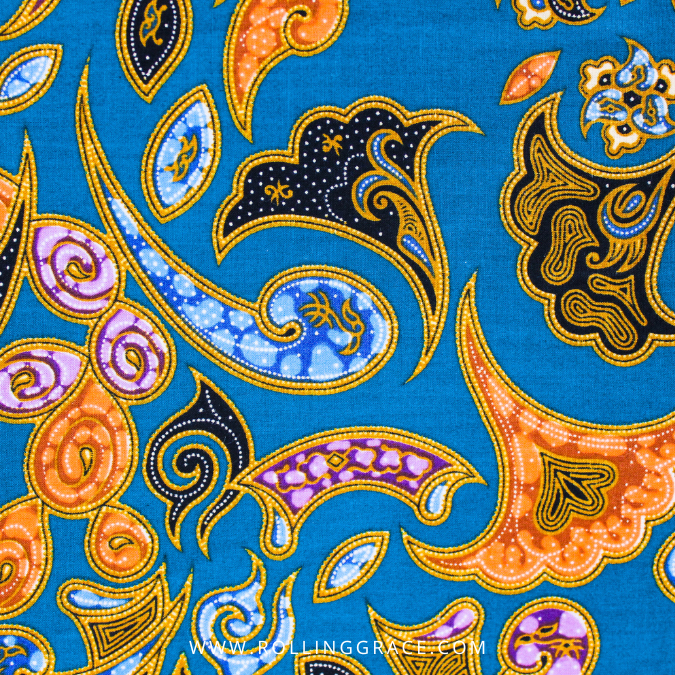
Malaysian batik colours run lighter and more vibrant. The Islamic design conventions that discourage figurative depictions of humans and animals are more consistently observed in Malaysian batik than in Indonesian batik from non-Muslim majority regions.
Indonesian batik was inscribed on the UNESCO Representative List of Intangible Cultural Heritage of Humanity in 2009. Malaysia submitted its own application around the same period and the craft holds national heritage status domestically.
Where to Buy Batik in Malaysia
East Coast Markets and Factories
Kota Bharu in Kelantan and Kuala Terengganu in Terengganu are the primary destinations for batik shopping in Malaysia. Weekly markets in both cities sell handmade batik in Malaysia directly from artisans, and batik factories in both states offer the opportunity to observe production alongside purchasing. The Noor Arfa Craft Complex in Terengganu and the Craft Complex in Kota Bharu are the most accessible factory-retail operations for visitors. Purchasing directly from east coast artisans produces the best prices for hand-drawn work.
Kuala Lumpur
Central Market in Kuala Lumpur houses around 45 batik vendors and is the most practical single destination for batik shopping in the capital. Karyaneka Gallery on Jalan Conlay carries curated pieces including heirloom-quality work. Batik Boutique’s Petaling Jaya studio focuses on contemporary batik fashion that blends traditional wax-resist techniques with modern silhouettes.
Penang and Melaka
George Town has several dedicated batik workshops and retail outlets catering to the heritage tourism market. Craft shops in Melaka’s heritage district stock batik reflecting the state’s multicultural design influences. Bargaining is standard practice at market-level purchases across all states.
Find Batik Workshops in Malaysia
Kuala Lumpur
myBatik in Kuala Lumpur runs batik painting workshops for groups and individuals across all skill levels, with a café on site and a retail section.
The Ruma Hotel offers batik making workshops using traditional canting tools. Thean Hou Temple hosts batik painting sessions on silk scarves.
Terengganu
The Craft Renaissance Centre in Terengganu teaches a seven-layer dyeing technique and is the most technically focused workshop available to visitors in the state. Gelanggang Seni in Kelantan offers hands-on sessions with copper canting tools.
Penang
Penang Batik Workshop in George Town provides a complete introduction to the craft. Nyonya Batik Workshop combines batik painting on sarongs with an introduction to Peranakan culture.
Pahang
Homestay programmes in Pahang include dye-making from indigo plants as part of a broader batik production experience, suited to visitors interested in the full process from raw material to finished cloth.
Modern Batik Fashion
Batik in Malaysia has moved considerably beyond its traditional sarong and kebaya context. Malaysian designers including those at Batik Boutique and KL Batik have produced contemporary clothing lines that apply wax-resist techniques to dresses, blouses, asymmetric cuts and garments that combine batik panels with chiffon and lace. During recent Kuala Lumpur Fashion Week editions, batik-inspired pieces appeared across gowns, jumpsuits and swimwear.
Artisans are also experimenting with wax-resist dyeing on non-traditional materials including leather, denim and silk. Digital printing techniques are being combined with traditional methods to produce batik-inspired pieces at commercial scale. The challenge for the industry is maintaining the distinction between genuinely handmade batik in Malaysia and printed fabric that replicates batik patterns without the wax process.
Batik shirts with collars are accepted as formal wear for government events and corporate functions across Malaysia, paired with dress trousers. The government’s requirement for civil servants to wear batik in Malaysia on designated days has been a consistent driver of demand for mid-market batik apparel.

Sustainability and Batik in Malaysia
The traditional batik production process has a direct relationship with natural materials. Sarawak batik’s use of plant-based dyes from indigo, the soga tree and charcoal represents one of the more intact natural dyeing traditions in the country. Pahang’s homestay batik programmes include dye extraction from indigo plants as a core part of the experience.
Organisations including Badan Warisan Malaysia have worked to recognise master batik craftspeople as national living treasures, and Kraftangan Malaysia runs craft centres across the country where traditional techniques are demonstrated and taught. The concern within the industry is the dominance of machine-printed fabric sold as batik in Malaysia without the wax-resist process, which undermines the value of handmade work and reduces the economic viability of artisan production.
Purchasing from certified artisans and established craft centres, particularly on the east coast, directly supports the continuation of the handmade tradition.
Hari Batik Malaysia
Malaysia celebrates Hari Batik Malaysia on 3 December each year, and civil servants are required to wear batik on the 1st and 15th of every month, reflecting the government’s long-standing policy of positioning batik as national attire.
Essential Batik Care Tips
- Hand-drawn batik on silk or cotton should be washed in cold water with a mild detergent, avoiding wringing and direct sunlight, to preserve colour and wax detail. Block-printed cotton batik is more durable and easier to maintain. Both types should be stored flat or rolled rather than folded to prevent crease marks along wax lines.
- Batik cloth produced in 4-metre lengths is used for women’s formal wear, while 2-metre lengths are standard for men’s shirts. Both lengths are available at market and factory level across the east coast states.
Get the good stuff first. Join Rolling Grace for the restaurants worth crossing a city for, the stays worth the upgrade, and the places to go before everyone else. Free, straight to your inbox.
Leave a Reply