Nasi campur in Indonesia begins with rice, then builds outward from what the cook has prepared that day.
At a warung counter in Indonesia, nasi campur is assembled in full view. A scoop of hot white rice lands first. Then come the side dishes, chosen from trays of freshly cooked food: crisp fried chicken, turmeric-stained tofu, long beans dressed in grated coconut, a spoonful of stewed beef dark with spice. The plate fills quickly, colour pressing against colour.
There is no single formula. In Bali, pork, lawar and sate lilit often dominate. In Java, fried tempeh, ayam goreng and vegetable stews are common. What unites them is the way everything arrives together on one plate, rice absorbing sauces, sambal cutting through richness, textures shifting from crisp to soft in a single mouthful.
Nasi campur in Indonesia is everyday food, ordered at lunch counters, market stalls and roadside eateries. It is practical, adaptable and deeply local, shaped by what is cooked that morning and what the diner chooses.
In this article, we look closely at what defines nasi campur, how it differs from nasi Padang, and why this mixed rice plate remains central to Indonesian eating.
Read also: Indonesia Travel Guide
History of Nasi Campur in Indonesia
Nasi campur in Indonesia did not emerge from a single origin story. It grew out of a practical way of eating: rice served with several dishes cooked separately and assembled on one plate.
For centuries, rice has been the staple across the archipelago. In markets and village kitchens, families prepared meats, vegetables and sambal in individual pots. When it was time to eat, portions were placed beside rice. Over time, this method became standardised in warungs and street stalls, where diners select from trays of food displayed behind glass.
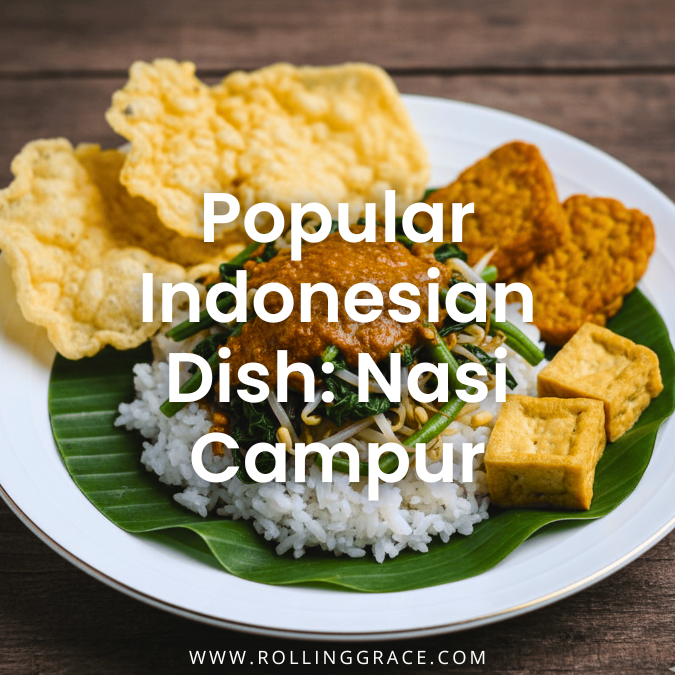
The term “nasi campur” simply means mixed rice. It refers less to a fixed recipe and more to a serving format. In Java, it often includes fried chicken, tempeh, tofu and stewed vegetables. In Bali, pork preparations, lawar and sate lilit are common. In Muslim-majority regions, pork is absent and halal guidelines shape the selection. In Bali, Hindu culinary traditions influence the plate.
The dish reflects Indonesia’s regional diversity without belonging to any single province. Its history is tied to agriculture, market culture and everyday cooking practices, not folklore.
Today, nasi campur remains one of the most accessible ways to understand Indonesian food. One plate reveals how different regions season, fry, braise and balance heat.

Ingredients & Recipe
Nasi campur in Indonesia begins with plain steamed white rice. The rice is not heavily seasoned. Its role is practical. It absorbs sauces, carries spice and balances salt.
The protein varies by region. Ayam goreng is common, fried until the skin is crisp and the flesh firm. Bebek may appear, often marinated in turmeric and coriander before frying. In Bali, pork is frequently included. In Java, beef stews or shredded chicken are more typical. Tempeh and tofu are standard components across much of Indonesia, sliced and fried until golden.
Vegetables provide contrast. Long beans dressed in grated coconut, blanched spinach, stewed jackfruit or pickled cucumber may sit beside the rice. Their purpose is balance, cutting through the richness of meat and fried elements.
Sambal completes the plate. Made from fresh chillies ground with shallots, garlic and often shrimp paste, it determines the heat level. Some versions are raw and sharp. Others are cooked down and deeper in flavour.
There is no single recipe. The cook prepares each component separately, often early in the morning. Assembly happens at the counter, where portions are added directly onto the rice in response to the diner’s choice.

Nasi Campur Bali
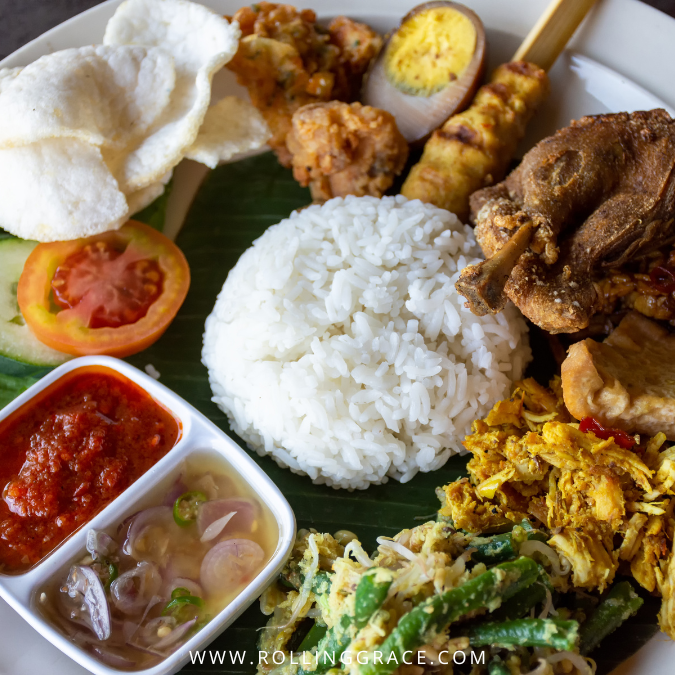
In Bali, nasi campur takes on a distinct identity shaped by local ingredients and Hindu culinary traditions. Often referred to simply as nasi Bali, it is defined by the use of base genep, a complex Balinese spice paste made from turmeric, galangal, ginger, shallots, garlic, candlenut and chillies.
A typical plate may include shredded chicken, slow-cooked pork, lawar made with vegetables and grated coconut, fried tempeh, tofu and a spoonful of sambal. Rice remains central, absorbing the oils and spice from each component. The flavours are deeper and more aromatic compared to many Javanese versions.
Pork is common in Bali, particularly in dishes such as babi guling. However, halal versions are also widely available. These often feature ayam betutu, a whole chicken rubbed with base genep and slow-cooked until tender, along with sate lilit made from minced fish or chicken mixed with grated coconut and wrapped around lemongrass stalks.
Nasi Campur Bali reflects the island’s religious and agricultural landscape. Spice blends are layered and labour-intensive. Coconut is used generously. The plate is assembled from dishes prepared separately, then brought together over rice at the point of serving.
Vegetarian Nasi Campur in Indonesia
A vegetarian version of nasi campur is common across Indonesia, particularly in areas where plant-based dishes are already part of everyday cooking.
The base remains plain steamed white rice. Around it, meat is replaced with plant-based components that are already central to Indonesian food culture. Tempeh, made from fermented soybeans, is often sliced and fried until crisp at the edges. Tofu may be fried, braised in sweet soy sauce or simmered in coconut-based gravies.
Vegetables play a larger role in this version. Long beans dressed in grated coconut, sautéed spinach, stewed jackfruit, blanched cabbage or pickled cucumber are typical additions. In Bali, lawar can be prepared without meat, focusing instead on vegetables and coconut.
Sambal remains essential, though vegetarian diners should note that some versions contain shrimp paste. Chilli sauces made without fermented seafood are widely available and can be requested.
Vegetarian nasi campur does not feel like a compromise. It reflects how Indonesian cooking has long balanced rice with tempeh, tofu and seasonal vegetables, making plant-based plates both practical and rooted in local food traditions.

Best Places to Try Nasi Campur
Tinutuan Wakeke, Manado
While best known for Manado porridge, this long-running eatery in North Sulawesi also serves rice plates with assorted vegetable and protein dishes reflecting regional flavours. Expect bolder spice levels typical of Manado cooking.
Nasi Campur Aliong 333, Jakarta
A well-known mixed rice shop in Jakarta, recognised for generous portions and a Chinese-Indonesian selection of roasted meats, braised pork and vegetable sides. Diners choose from a counter display before the plate is assembled.
Nasi Campur Afa Kalimantan, Jakarta
This Jakarta eatery focuses on Kalimantan-style dishes, offering a selection of braised meats and regional vegetable preparations served over rice. The flavours lean savoury and spice-driven.
Nasi Ayam Kedewatan Ibu Mangku, Ubud
Although technically known for nasi ayam, this Balinese institution presents a rice plate format similar to nasi campur. Shredded chicken, lawar, sambal and vegetable sides are arranged around rice in the Balinese style.
Rumah Makan Andrawina, Yogyakarta
A traditional restaurant serving Javanese home-style cooking. Mixed rice plates here typically include stewed meats, fried tempeh, tofu and lightly sweet vegetable dishes characteristic of Central Java.
The rice is still warm when it is spooned onto the plate. Steam lifts briefly before settling. A ladle of dark sauce pools at one edge. Fried chicken rests beside it, the crust rough and golden. Tempeh, cut into thin rectangles, is stacked neatly. A spoonful of sambal sits bright and red against the white grains.
Nothing about nasi campur in Indonesia is uniform. In Bali, pork and lawar appear frequently. In Java, sweet soy glazes and fried tofu are common. In other regions, seafood or beef takes precedence. The plate shifts according to place and season, but rice remains the constant.
Each element is prepared separately earlier in the day, then placed together in one final arrangement. The flavours meet only at the point of serving. That immediacy is part of its appeal. One plate holds crisp, soft, spicy and savoury in equal measure, without excess or explanation.
Get the good stuff first. Join Rolling Grace for the restaurants worth crossing a city for, the stays worth the upgrade, and the places to go before everyone else. Free, straight to your inbox.
Leave a Reply