Wondering what to eat in Brunei? The Islamic sultanate on the northern coast of Borneo runs on a handful of dishes you will not find anywhere else in Southeast Asia.
The first thing you smell in any tamu (Brunei wet market) is rice and hot oil. Steamed jasmine cooling in metal pots, oil bubbling for cucur, and somewhere behind it the sweet pull of durian. Brunei’s food scene runs on a handful of dishes you will not find anywhere else in Southeast Asia.
This is a guide to 9 must-try Brunei foods, from the cheapest street meal in the country to the smoked sausages made for Hari Raya.
Read also: Gadong Night Market Brunei: 12 Delicious Local Food to Try
Table of Contents
What Makes Brunei Food Unique
Brunei Darussalam is a small Islamic sultanate on the northern coast of Borneo, sandwiched between Sarawak and Sabah. The cuisine is Malay at its core, with overlaps to Malaysian and Indonesian cooking, but distinguished by national plates like Ambuyat (eaten with bamboo prongs), Nasi Katok (a B$1 rice plate that runs the country), and the rare wild durians of the Borneo jungle.
All food in Brunei is halal by law. No pork is served and no alcohol is sold, but the depth of flavour does not suffer for it.

Nasi Katok: Brunei’s B$1 National Rice Plate
Nasi Katok is the most ordered meal in the country. The name translates literally as “knock rice,” from the historical practice of late-night customers knocking on vendors’ doors after closing.
It is a minimalist plate of three things: plain white rice, sambal (a chilli relish), and a piece of fried chicken, all wrapped in greaseproof paper. The price is B$1 in the city and even cheaper in the suburbs. There is no garnish, no second protein, no salad. The point is that you can buy lunch for the cost of a soft drink anywhere in Brunei.
Book Half Day City and Water Village Tour in Brunei
The dish has spawned franchise chains, with Nasi Katok Buttermilk SDK as one of the most well-known modern interpretations. The buttermilk fried chicken version is the closest Nasi Katok has come to a luxury upgrade.
It remains an absolute must-try staple that represents the very core of what to eat in Brunei for first-time visitors.
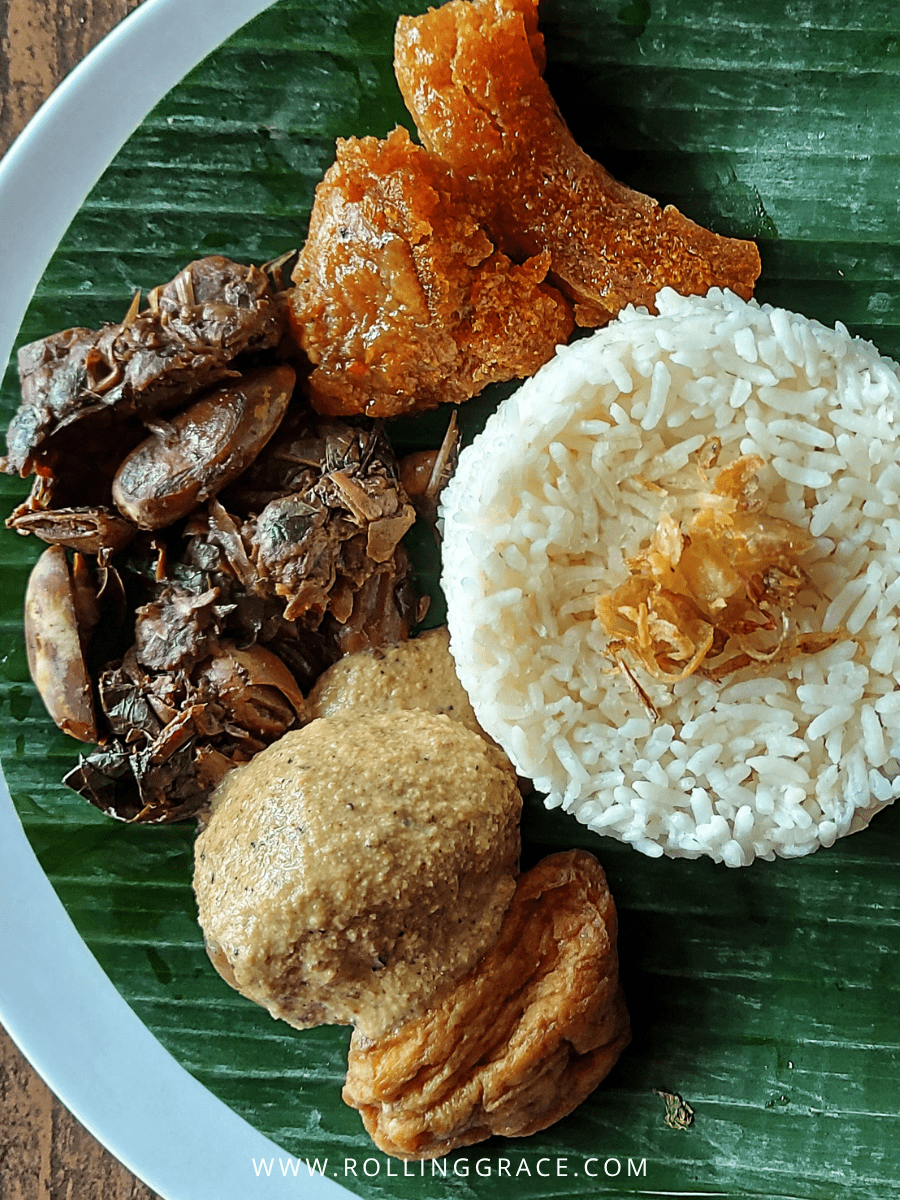
Ambuyat: The National Dish of Brunei
Ambuyat is Brunei’s official national dish and probably the strangest first taste a visitor will have. It is made from the starchy interior trunk of the sago palm, boiled into a translucent, glutinous paste that has no flavour of its own.
The point is the dipping: ambuyat is eaten with chandas (sometimes spelled candas), a pair of bamboo prongs, by twirling the paste around the sticks like spaghetti and dipping it into a cacah (sauce or side dish).
The classic accompaniments are tempoyak (fermented durian paste), ulaman (raw vegetable salad), ikan goreng (fried fish), hati buyah, or beef rendang. Aminah Arif in Kg Kiulap is the most established place in Bandar Seri Begawan to try it. Eat it hot. As it cools, the paste turns from glutinous to inedible.
Sampling this classic preparation is one of the most rewarding ways to experience what to eat in Brunei like a true local.

Hati Buyah: Bruneian Beef Lung Sate
Hati buyah is one of the more unusual Bruneian dishes and a real local favourite. It is sliced beef lung, boiled then marinated with coriander, lemongrass, salt, sugar, and spices, and stir-fried or grilled on skewers.
The texture is firm and chewy, the flavour smoky and slightly sweet. You will find it on satay sticks at Gadong Night Market, served alongside ambuyat at Aminah Arif, or as a topping on Soto Brunei, the country’s spiced noodle soup.
If the idea sounds confronting, start with it as a sate. The marinade carries it, and the smokiness from the grill makes it accessible even to first-timers. It is clear from the very first bite why this food item is always at the top of the list for what to eat in Brunei.

Belutak: Brunei’s Smoked Beef Sausage
Belutak (or belutak daging) is Brunei’s traditional beef sausage and one of the most distinctly Bruneian things you can eat.
It is 80 percent beef and 20 percent fat, marinated with garlic, chilli, onions, salt, and sugar, stuffed into casings made from beef intestines, then sun-dried for 3 to 4 days. The result is a firm, savoury sausage with a sweet-sour edge and a long shelf life.
Belutak is most often eaten during Hari Raya Aidiladha, when families across Brunei prepare it at home and serve it sliced and pan-fried alongside rice. It is also a regular feature on the menu at Aminah Arif and similar traditional restaurants in Bandar Seri Begawan.
For a reliable and comforting culinary option, this dish stands out on any curated guide of what to eat in Brunei.

Durian Sukang and Durian Dalit
Brunei is one of the few places in the world where you can still find wild Borneo jungle durians, and the two most prized are durian sukang (red durian) and durian dalit (orange durian).
Both grow in the deep rainforest of Borneo and are foraged, not commercially farmed. The flesh is thinner than the standard yellow durian, the flavour deeper and more complex, with notes often described as alcoholic, smoky, and slightly bitter.
The redder the flesh, the stronger the flavour, and the higher the price. Wild durians are seasonal, usually appearing at Tamu Kianggeh and other markets between June and August. If you see a stall selling them, it is worth paying the premium. They do not export.

Kelupis: Glutinous Rice Rolls in Nyirik Leaves
Kelupis is a soft glutinous rice roll wrapped in nyirik leaves and steamed until the fragrance of the leaf permeates the rice. It is traditionally served at weddings and ceremonial occasions by the Bisaya, Lun Bawang, and Lundayeh ethnic groups, with regional variations including fillings of dried shrimp or anchovies. Some versions come plain and are dipped into peanut paste or a thin curry sauce.
Book Half Day City and Water Village Tour in Brunei
Kelupis is a snack instead of a main, sold in small bundles at morning markets across Brunei. The most common way to eat it is hot, straight from the steamer, with a cup of strong local coffee. Tucking into a serving of this is one of the best ways to explore what to eat in Brunei without breaking the bank.
Cucur: Brunei’s Beloved Street Fritters
Cucur are deep-fried fritters and one of the foundations of Brunei’s street food scene. The basic principle is simple: a chunk of fruit, vegetable, or meat is dipped in batter and fried. The everyday versions use banana, sweet potato, carrot, yam, or prawn. The more interesting ones use distinctly Bornean produce: durian, tibadak (cempedak), tarap (Johey oak fruit), or sukun (breadfruit).
You will find cucur at every market stall and even on the menu at fine-dining Bruneian restaurants. The right time to eat them is straight out of the oil, when the batter is still crisp and the filling is hot.
A small paper cone of mixed cucur from Tamu Kianggeh is the cheapest and best afternoon snack in Bandar Seri Begawan. Adding this iconic dish to your culinary hit list is one of the smartest choices for what to eat in Brunei during a short trip.

Pulut Panggang: Grilled Sticky Rice in Banana Leaves
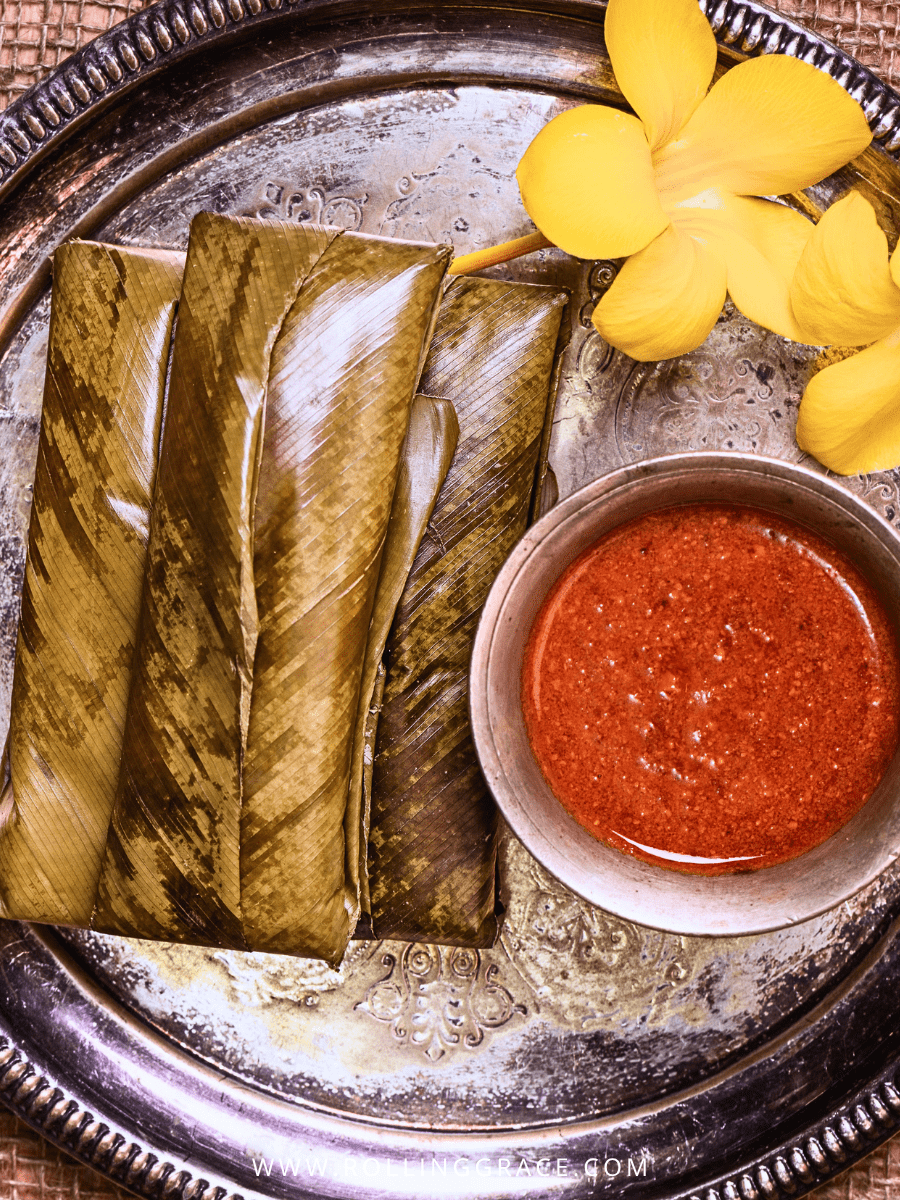
Pulut panggang is a parcel of sticky glutinous rice stuffed with seasoned dried shrimp, prawn, or spiced beef sambal, wrapped tightly in banana leaves, and grilled over a low charcoal flame.
The leaves turn dark, the rice picks up the smoke, and the filling melts into the centre. It is one of the most popular grab-and-go snacks at the Gadong Night Market and is the natural pairing with hati buyah or ikan bakar (grilled fish).
The right ratio is half rice, half filling. Anything less than that and the snack feels dry. For a true taste of the country’s rich food heritage, this local staple remains a definitive answer to what to eat in Brunei.

Kuih-Muih: Brunei’s Traditional Bite-Sized Sweets
Kuih-muih is the umbrella term for the bite-sized traditional Malay sweets that fill every market and morning tea table in Brunei. They come in a hundred shapes and colours, made primarily with rice flour, sugar, coconut cream, and tapioca.
The most well-known Bruneian varieties are selurut (a coconut and palm sugar pudding), penyaram (a deep-fried sweet pancake), tapai (fermented sweet rice), and kuih cincin (a flower-shaped fried biscuit made with red palm sugar).
For Hari Raya, kuih bahulu (a small sponge cake) and kek lapis (layered cake) are the standard hosting sweets, but the daily kuih trays at any tamu in Bandar Seri Begawan offer the widest selection year-round.

Where to Eat Brunei Food: Tamu Kianggeh and Gadong Night Market
The two most authentic places to eat Brunei food are the Tamu Kianggeh in central Bandar Seri Begawan and the Gadong Night Market in Taman Selera.
Tamu Kianggeh runs in the mornings and is the right place for fresh kuih-muih, cucur, kelupis, and the seasonal jungle durians. Gadong Night Market opens around 5pm and is the right place for hati buyah, pulut panggang, ikan bakar, satay, and rice dishes.
Read also: 7 Best Things to See at Tamu Kianggeh Market, Brunei
What Is the Most Famous Brunei Food?
The most famous Brunei food is Ambuyat, the national dish made from sago palm starch and eaten with bamboo prongs called chandas. While Nasi Katok is the most commonly eaten meal in the country, Ambuyat is the most representative of Brunei’s distinct culinary heritage.
It is served with a wide range of dipping sauces and side dishes, including hati buyah (beef lung), ikan goreng (fried fish), and tempoyak (fermented durian paste).
Is Brunei Food Halal?
All food in Brunei is halal by law. The country follows Sharia, which means pork is not served anywhere, alcohol is not sold publicly, and all meat is halal-certified at source.
This makes Brunei one of the easiest destinations in Southeast Asia for Muslim travellers, with no need to verify any restaurant or food stall before eating.
Cultural Heritage and Halal Food in Brunei
Brunei is one of the only places in Southeast Asia where Islamic law is consistently applied across the entire food system, and the food culture has thrived within that framework.
The absence of pork and alcohol has shaped how Bruneian cooks build flavour, with more emphasis on smoke, sweetness, spice, and fermentation. Eating Brunei food, particularly Ambuyat or jungle durian, is a way to understand how the country has built a distinct culinary identity that owes as much to its religious culture as to its geography.
Buying from local tamus and family-run restaurants like Aminah Arif supports the small Bruneian producers who keep these dishes alive.
This Brunei food guide is based on visits to Bandar Seri Begawan, Tamu Kianggeh, and Gadong Night Market, with cultural details verified against Brunei Tourism resources.
Get the good stuff first. Join Rolling Grace for the restaurants worth crossing a city for, the stays worth the upgrade, and the places to go before everyone else. Free, straight to your inbox.
Leave a Reply