Niah National Park in Sarawak holds the oldest evidence of modern humans in Southeast Asia, and you can walk right into it.
In 1958, a team led by Sarawak Museum curator Tom Harrisson pulled a human skull from the soil at the West Mouth of the Niah Great Cave. Radiocarbon dating placed it at roughly 40,000 years old, which made it, at the time, the oldest modern human fossil ever found.
The Deep Skull, as it came to be known, put a patch of Sarawak rainforest 110 kilometres from Miri at the centre of the story of how our species spread across Southeast Asia.
Read also: 7 Best Tips for Hiking Bukit Panorama Sungai Lembing, Pahang
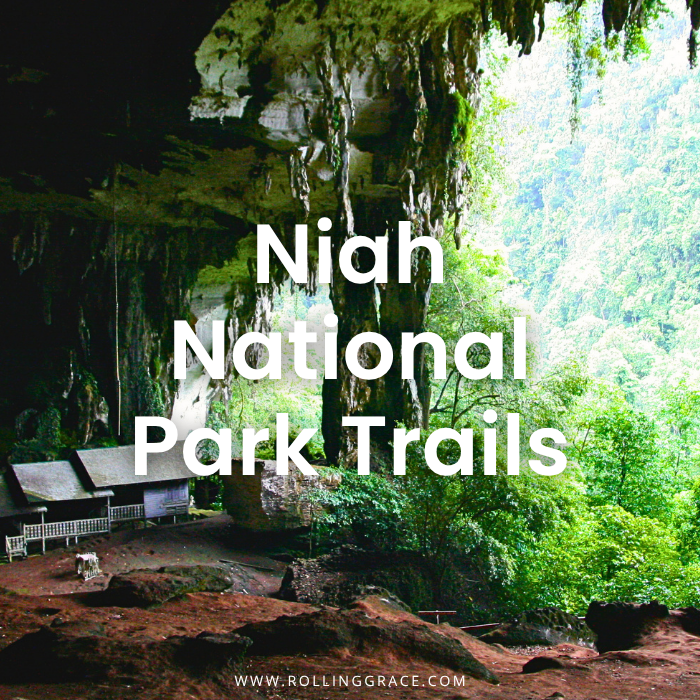
UNESCO World Heritage Site in Sarawak
Niah National Park protects over 3,100 hectares of lowland rainforest around Gunung Subis, a limestone massif riddled with caverns, the largest of them known locally as Gua Niah, the Niah Great Cave.
In July 2024, the Archaeological Heritage of Niah National Park’s Caves Complex was inscribed as a UNESCO World Heritage Site at the 46th World Heritage Committee session in New Delhi. It is Malaysia’s fifth World Heritage Site and Sarawak’s second after Gunung Mulu National Park.
According to UNESCO, the deposits here record at least 50,000 years of human interaction with the rainforest, the longest known sequence of its kind anywhere in the world.

Gua Niah History: Why This Cave Matters
UNESCO World Heritage Site
Niah’s nomination dossier was years in the making. Work began in 2019, the formal submission reached Paris in 2021, and on 27 July 2024 the World Heritage Committee accepted the dossier without amendments under cultural criteria iii and v.
The inscription covers the prehistoric rock art, the boat-shaped burials and the deep archaeological deposits at the northern edge of the Subis massif.
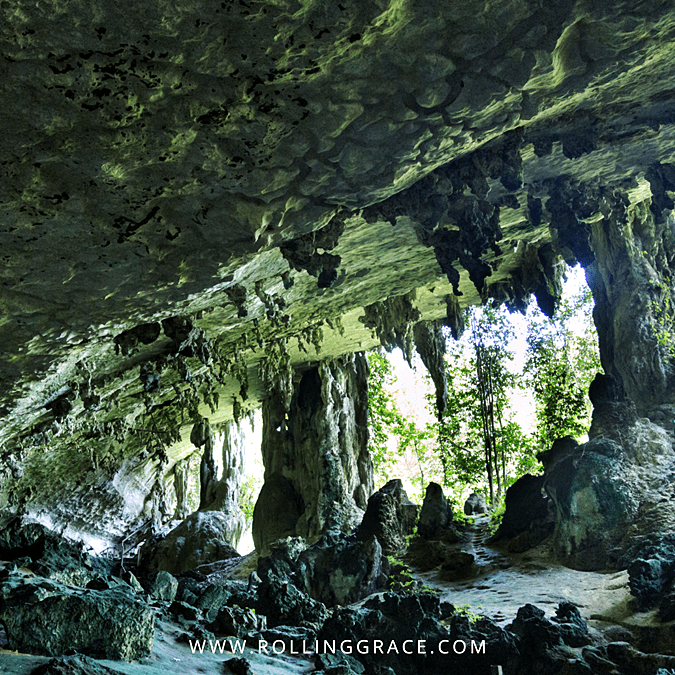
The Deep Skull and what came after
The skull Harrisson’s team found belonged to an adult female. Earthenware, bone tools, ornaments and food remains followed over a decade of excavation, and in 2020 all 122 pieces of human remains held abroad were returned to Sarawak.
Excavation pits are still visible inside the Great Cave today, fenced off beside the boardwalk. The park is one of the few places in the world where you can stand inside an active archaeological site without a permit, a guide or a queue.
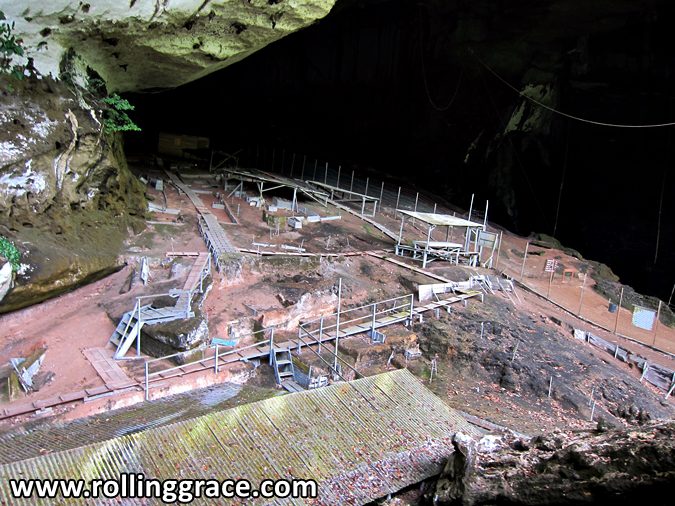
River Crossing and the Plankwalk
The journey to the caves is half the experience. From the park headquarters at Pangkalan Lubang, a motorised boat ferries you across the Niah River for RM1 each way, paid directly to the boatman.
On the far bank stands the Niah Archaeology Museum, free to enter and open from 9am to 5pm, and worth twenty minutes before the walk for its displays on the geology and excavation history of the caves.

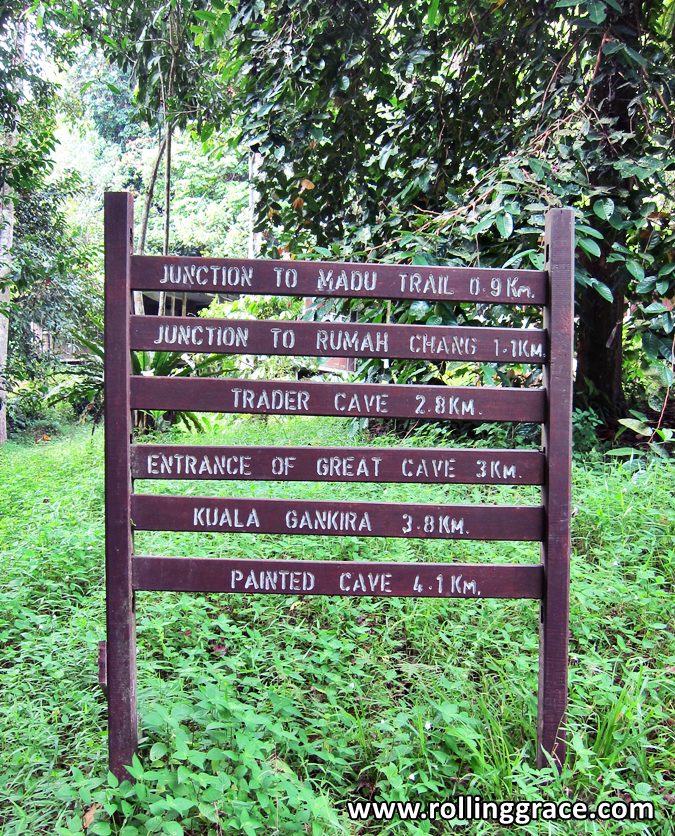
From the museum, a raised wooden plankwalk runs 3 kilometres through dense primary rainforest to the cave mouth, with the Painted Cave a further kilometre on. Allow about an hour each way.
The forest is loud with cicadas and birdlife, and the route passes giant tapang trees, pandanus and wild orchids. Long-tailed macaques are common sightings, so keep your camera within reach.
Sections of the boardwalk are slippery after rain, which in Sarawak means most afternoons.

7 Must-See Wonders Inside the Caves
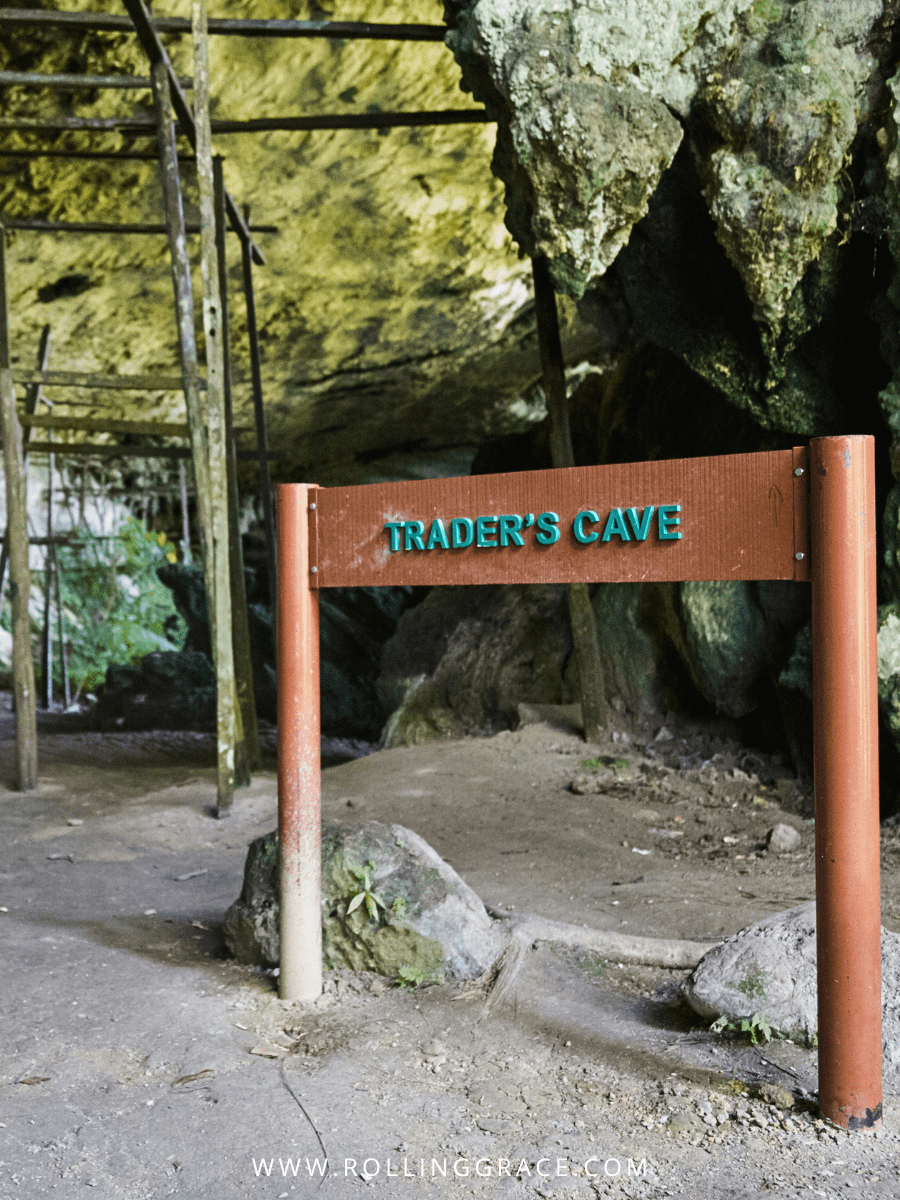
Trader’s Cave
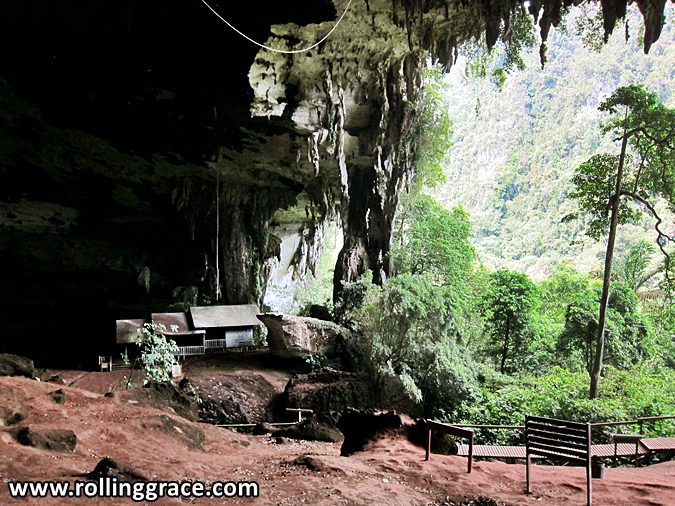
The first formation you reach is Trader’s Cave, an open rock shelter where guano and birds’ nest traders once did business. The wooden frames of the collectors’ huts, used until the 1970s, still stand beneath the overhang, weathered grey against the limestone.
The West Mouth, one of the world’s largest cave entrances
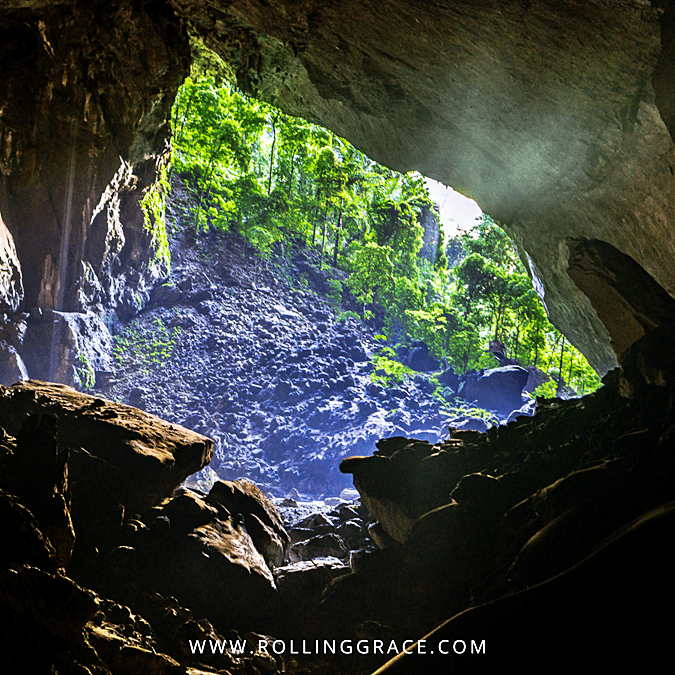
The West Mouth, or Lobang Kuala, opens roughly 250 metres wide and 60 metres high, among the largest cave entrances on the planet.
Bats and swiftlets wheel constantly overhead, and the scale only registers once you spot the bamboo poles of nest collectors lashed to the ceiling far above. This is also where the Deep Skull was found.
The Padang Chamber
Deeper in, the passage opens into the Padang, a vast chamber where shafts of sunlight pour through holes in the roof and strike the guano-darkened floor.
Most of the Niah National Park photos you have seen were taken here, and on a clear morning the light beams are sharp enough to look solid.
Moon Cave, or Gan Kira
Past the Padang, the boardwalk plunges into Gan Kira, a stretch of total darkness that takes around half an hour to cross. A headlamp is essential here, not optional. Sweep your beam across the walls as you go; the flowstone and drip formations in this section are easy to miss if you hurry.
The Painted Cave, or Kain Hitam
A short forest walk beyond the Great Cave brings you to the Painted Cave, where prehistoric artists worked red hematite figures onto the cave wall. The drawings show human figures, animals and longboats, the boats believed to carry the souls of the dead to the next world. The paintings are faint now, so look closely and give your eyes time to adjust.
The Death Ships
Boat-shaped coffins, known as death ships, were excavated from the floor of the Painted Cave. Their contents now rest in the Sarawak Museum in Kuching, but the original burial plots remain in place, marked where the coffins lay.
Stay until late afternoon if you can. As the light drops, vast flocks of swiftlets stream back into the cave to roost while thousands of bats pour out for the night’s feeding, the two populations crossing mid-air at the West Mouth.
It is one of Borneo’s great natural displays and most day trippers leave too early to see it.
Gua Niah Hike: What to Bring
The Gua Niah hike is flat and boardwalked the whole way, but the distance adds up to around 8 kilometres return plus everything you walk inside the caves.
Wear proper walking shoes with grip, as the boardwalks inside the cave are coated in guano and condensation. Bring at least one litre of water per person, snacks, and a headlamp or torch with fresh batteries for the dark sections. A light rain jacket is sensible year round.
There is a cafeteria behind the ticket office at park headquarters serving simple cooked meals, but nothing once you cross the river.
How to Go to Gua Niah from Miri
By Car or Taxi
The park is about 110 kilometres from Miri on the main Miri-Bintulu road, or 80 kilometres on the coastal road, roughly a 90-minute to two-hour drive.
A taxi or e-hailing ride from Miri runs directly to the park headquarters. Driving yourself is the most flexible option, and the coastal route makes for an easy, scenic run with parking available at headquarters.
Register on arrival; Sarawak Forestry also asks visitors to pre-register online before entering any of its parks.
By Bus
Take a bus from Pujut Corner Bus Terminal towards Bintulu, Sibu or Kuching and ask to be dropped at the Niah junction. Coming from Bintulu, the park is around 115 kilometres away, with buses on the same trunk route.
From Batu Niah Town
The headquarters lies about 3 kilometres from Batu Niah. Take a local taxi, hire a longboat along the river, or walk the riverbank path in roughly 45 minutes.
Gua Niah Tour Packages
Day tours run from Miri hotels and typically bundle return transport, the park ticket, the river crossing and a guide for the full cave circuit. They suit travellers without a car or anyone who wants the archaeology explained on site.
That said, Niah is one of the easiest major caves in Borneo to visit independently; the trail needs no permit and no guide, so a tour package is a convenience here, not a requirement.
Gua Niah Entrance Fee, Tickets and Opening Hours
Gua Niah opening hours are 8am to 5pm daily, but note that the ticket counter closes at 3pm, a detail that catches out plenty of late arrivals hoping to catch the bat exodus.
Entrance fee for Malaysian visitors
Adults pay RM10 and children aged 7 to 18 pay RM3. Senior citizens and disabled visitors pay RM5. Bring your MyKad as proof of citizenship.
Entrance fee for foreign visitors
Adults pay RM20 and children aged 7 to 18 pay RM7. Children aged 6 and below enter free.
Buying Niah National Park tickets online
Tickets can be purchased in advance through the Sarawak government’s online portal at service.sarawak.gov.my, with the e-ticket emailed as a PDF for redemption at the park entrance.
Most visitors simply pay at the counter on arrival.
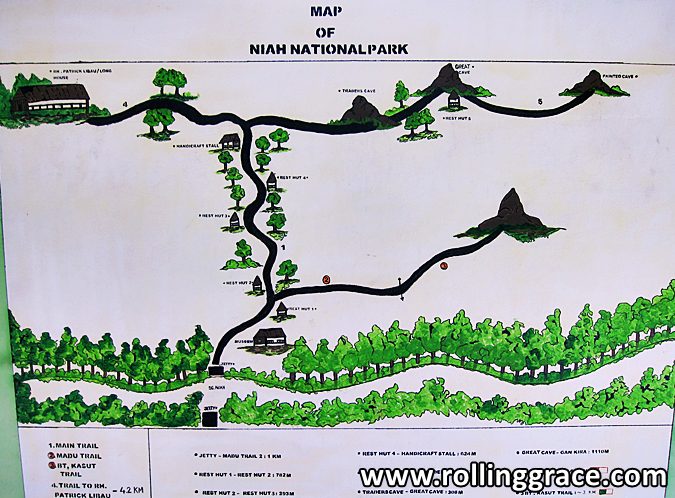
Gua Niah Map
Pick up the free printed trail map at the ticket counter when you register; it marks the plankwalk, the caves and the two forest trails, Bukit Kasut and Madu.
Mobile signal fades past the river crossing, so screenshot any digital map before you set off. The route itself is hard to lose: a single boardwalk runs from the museum to the Great Cave and on to the Painted Cave, with signage at each junction.
Where to Stay Near Gua Niah
Sarawak Forestry manages chalets, hostel rooms and a campsite at the park headquarters, bookable through its eBooking site.
An overnight stay lets you take the caves slowly and catch both the morning forest and the evening swiftlet return. Budget inns in Batu Niah town and the full range of hotels in Miri round out the options.
An Iban longhouse homestay connected to the plankwalk offers a community-run alternative for travellers wanting a deeper stay.
Tips For Visiting Responsibly
The swiftlet nests on the cave ceilings have been harvested by local collectors for generations under a licensing system, and the colonies are sensitive to disturbance.
Keep to the boardwalks, keep noise down inside the chambers, never touch the paintings or formations, and carry out everything you carry in. The fenced excavation areas are working archaeological zones, not photo props.
Frequently Asked Questions About Niah National Park
Do you need a guide to visit Niah National Park?
No. Unlike Gunung Mulu, the Great Cave and Painted Cave can be explored independently. Licensed guides can be hired at headquarters for historical context if you want it.
How long does the Gua Niah hike take?
Plan for four to six hours return, covering the boat crossing, the 3-kilometre plankwalk each way and time inside the caves. Fit walkers can do it faster, but the heat slows most people down.
Is Niah National Park worth visiting compared to the Mulu Caves?
Yes, and for different reasons. Gunung Mulu National Park is the grander cave system, home to the world’s largest known cave chamber; Niah is the human story, with 50,000 years of archaeology, rock art and burial sites in a park you can visit as an easy day trip without flights or permits. The two are Sarawak’s twin World Heritage Sites and pair well on one Miri-based itinerary.
Can you do Niah National Park as a day trip from Miri?
Comfortably. Leave Miri by 8am, reach the ticket counter before it closes at 3pm, and you will have ample time for all the main chambers. Stay overnight if you want the dusk bat and swiftlet changeover.
Contact Details
- Address: Niah National Park, Batu Niah, 98200 Niah, Sarawak, Malaysia
- Contact number: +6085-737454 / +6085-737450
- Opening hours: 8am to 5pm daily (ticket counter 8am to 3pm)
- Website: https://niahnationalpark.my/
This guide is a researched update compiled from Sarawak Forestry Corporation records, the UNESCO inscription documents and recent visitor reports, with prices and opening hours verified in June 2026. It is part of our Malaysia Travel Guide hub.
Get the good stuff first. Join Rolling Grace for the restaurants worth crossing a city for, the stays worth the upgrade, and the places to go before everyone else. Free, straight to your inbox.
Leave a Reply