The Langkawi history, legends and myths have shaped the island’s identity long before the first resort was built.
Langkawi’s reputation as a holiday destination is well established. The duty-free shopping, the cable car, the beaches along Pantai Cenang. But the island has an older identity running beneath all of that, one built from generations of oral storytelling that explains its mountains, its lakes, its place names, and its long history of misfortune.
Locals take several of them seriously, and the geography of Langkawi bears their imprint in ways that are visible if you know where to look. Here are the seven legends that matter most, and what they actually say.
Read also: The Fat Frog Langkawi: 5 Absolute Must-Try Vegan Dishes
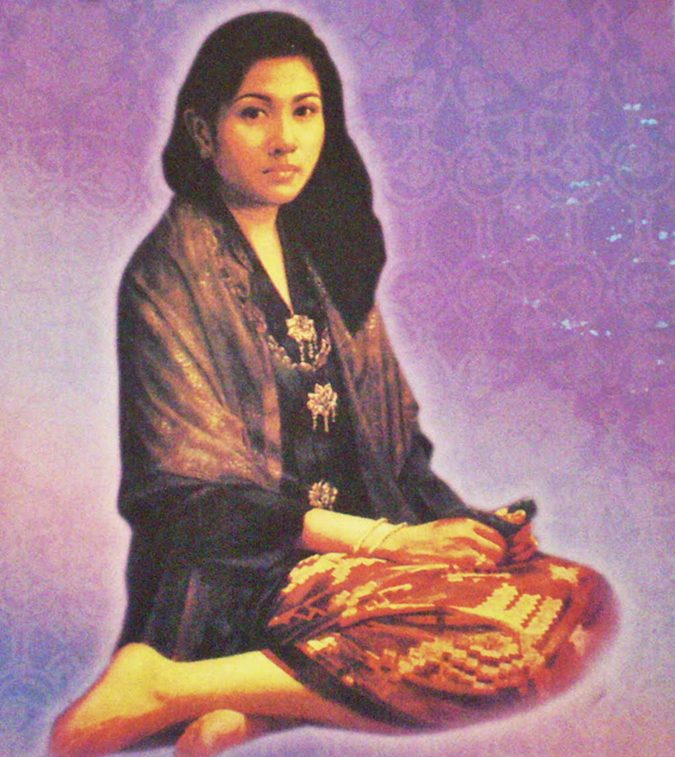
Mahsuri of Pulau Langkawi
Mahsuri was a young woman who lived on Pulau Langkawi during the late 18th century. Her parents had originally migrated from a small Muslim village near Phuket, Thailand. She married a local warrior named Wan Darus, who was called away to fight the invading Siamese, leaving Mahsuri on the island alone.
During his absence, she befriended a young traveller passing through the village. The village chief’s wife, Wan Mahora, was jealous of Mahsuri’s beauty and used the friendship to spread rumours of adultery. Mahsuri was captured, tried, and sentenced to death.
The execution did not go smoothly. No weapon could kill her. Eventually, Mahsuri herself revealed that only her father’s keris could end her life. When it did, white blood flowed from the wound, which the Malay tradition holds as a sign of absolute innocence. With her final breath, she cursed Langkawi to seven generations of misfortune.
Not long after her death, the Siamese invaded the island. Decades of failed harvests and conflict followed. Langkawi only began to prosper as a tourist destination after it was declared a free port in 1987, some 160 years later.
In 2000, the Malaysian government traced Mahsuri’s descendants to Phuket. Her seventh-generation descendant, Wan Aishah, visited the tomb that year, and many locals consider that visit the formal end of the curse.
Makam Mahsuri, the site of her tomb in Kampung Mawat, is now a heritage complex with a museum, theatre, and reconstruction of a traditional Malay house. Entry is RM10 to RM15 for adults.
The story of Mahsuri remains the most enduring of all Langkawi history legends, retold across generations without losing its weight.
Gunung Mat Chinchang and Gunung Raya: The Battle of the Giants
The rock layers of Gunung Mat Chinchang represent the oldest sedimentary formation in Southeast Asia, dating to the Cambrian period, 550 to 505 million years ago. The legend attached to it is considerably more recent, but no less dramatic.
According to local myth, Mat Raya and Mat Chinchang were two families of giants whose children were to be married. A fight broke out at the wedding, and pots, pans, and crockery were hurled across the landscape. The spillage and wreckage gave names to the places where things landed: the town of Kuah takes its name from the Malay word for gravy, which spilled on the ground there. Tanjung Cincin, the Cape of the Ring, marks where the engagement ring was thrown. Kampung Air Hangat, meaning Hot Water Village, is where boiling water was flung. Kampung Belanga Pecah, or Broken Crockery Village, speaks for itself.
The fight was eventually broken up by a third giant, Mat Sawar. Ashamed of what they had done, Mat Raya and Mat Chinchang transformed themselves into the mountains that bear their names.
Langkawi was recognised as a UNESCO Global Geopark in 2007, with Gunung Mat Chinchang at its geological centre. The Langkawi SkyCab cable car runs from Oriental Village to the upper station at over 700 metres, with the SkyBridge accessible between the two stations.
Experience ATV Sky at Gunung Machinchang
From cursed mountains to poisoned wells, Langkawi history legends are embedded in the island’s place names and geography.

Tasik Dayang Bunting: Lake of the Pregnant Maiden
Langkawi history legends stretch back centuries, long before the island became one of Malaysia’s most visited destinations.
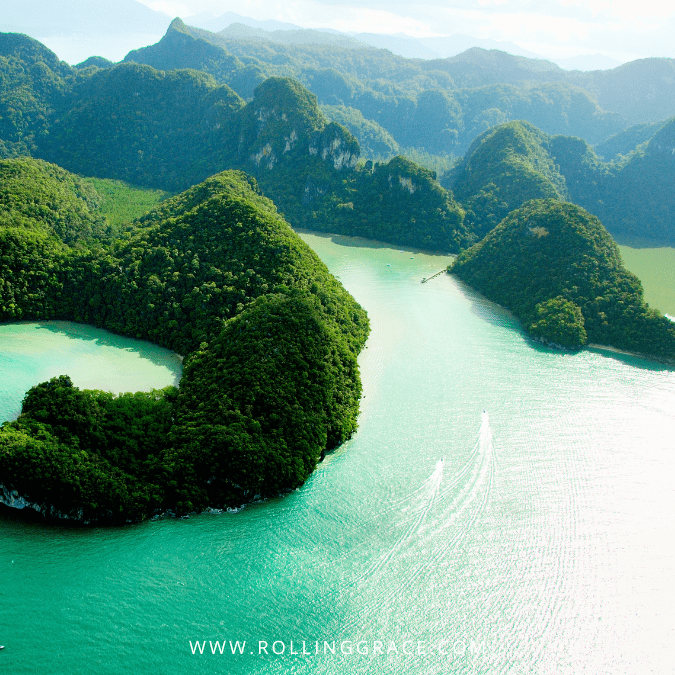
On Pulau Dayang Bunting, a freshwater lake sits inside a limestone island surrounded by jungle. When viewed from above, the combination of marble and granite bedrock creates a shape resembling a pregnant woman lying on her back, which is how the lake and the island got their names.
Book Private Dayang Bunting Island Tour
The legend behind the name tells of Mambang Sari, a female sprite, and Mat Teja, a male genie who fell in love with her. He sought the advice of a sage named Tok Dian, who told him to wipe his face with mermaid tears. He did so, Mambang Sari fell in love with him, and they married. She spent her pregnancy at the lake, but the child died seven days after birth. Grief-stricken, she laid the infant to rest in the water. The baby, according to the legend, became a white crocodile visible only to those with the purest hearts.
Since then, the lake has carried a reputation for healing barren women. Visitors still come to bathe in it or collect its water. The lake is accessible by boat from Kuah Jetty as part of an island-hopping trip to the south of the archipelago.
Gua Cerita: Cave of Legend
Gua Cerita sits on the northeastern tip of Langkawi, accessible only by boat. Inside, ancient inscriptions in Sanskrit and Tamil line the cave walls, pointing to a history of contact between the island and South Asian traders centuries before the current legends were formalised.
The myth attached to the cave tells of a Chinese princess and a Roman prince whose families had agreed to a union for political reasons. A mythical phoenix, believing the alliance would destroy smaller kingdoms, abducted the Chinese princess and hid her in a palace on the island.
The Roman fleet carrying the prince was also attacked, though the prince survived and washed ashore on the same island. The two were reunited. When the phoenix realised it had failed to prevent the marriage, it banished itself. The sunsets and rainbows visible from this part of Langkawi are said to be its legacy.
The cave is not always open to visitors. Check access before travelling, as entry depends on tides and sea conditions.

Padang Beras Terbakar: Field of Burnt Rice
This is less a myth than a piece of military history absorbed into legend.
When the Siamese army was advancing on Langkawi, the local commander Datuk Panglima Hitam ordered villagers to hide their rice stores in underground cellars and poison the wells. The Siamese arrived, drank the poisoned water, and suffered significant losses. In retaliation, they massacred the village and burned everything to the ground, including the buried rice stores.
The site where the cellars stood became known as Padang Beras Terbakar, the Field of Burnt Rice. It sits near Padang Matsirat, close to the airport. After heavy rain, locals say the scent of burnt rice still rises from the soil.
Air Terjun Telaga Tujuh: Seven Wells Waterfall
Visitors who take time to explore Langkawi history legends leave with a far richer understanding of the island than those who don’t.
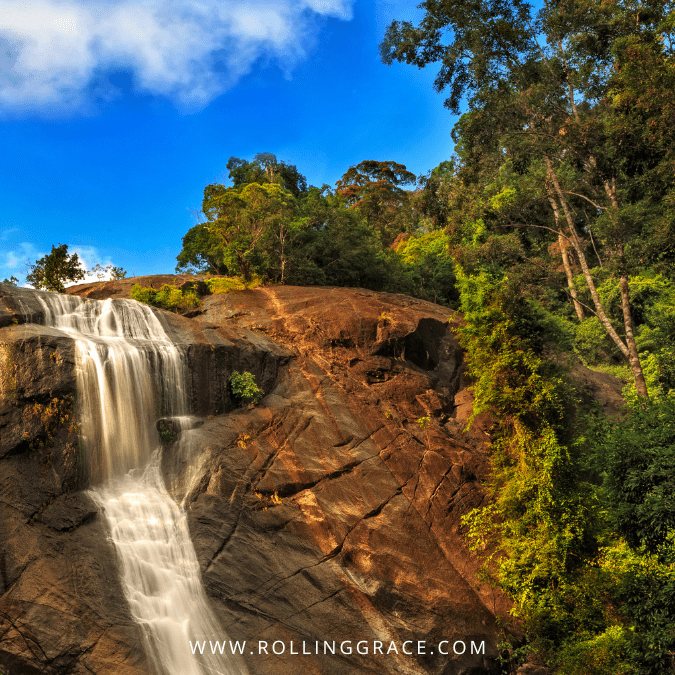
Telaga Tujuh is a series of seven natural rock pools carved into the granite of Gunung Mat Chinchang by cascading water. The pools are connected by short waterfalls and remain full year-round.
The legend holds that seven nymphs would bathe in the pools after dark and vanish at the first sign of a human. The pools are considered a liminal space in Langkawi’s folklore, the kind of place where the boundary between the ordinary and the otherworldly is thinner than usual.
Today, Telaga Tujuh is one of the most popular day trips from the main resort areas. The walk up from the car park takes around 20 minutes on a paved path. Going early or just before closing keeps the experience considerably quieter.
Gua Langsir: Cave of the Banshee
The langsuir in Malay folklore is the spirit of a woman who died in childbirth. She is said to take the form of a beautiful woman and use that appearance to lure men toward her before killing them.
The legend of Gua Langsir on Langkawi involves a langsuir who had made the cave her home. She would sing to fishermen passing below, drawing them toward the cliffs. One day, a deaf fisherman rowed past. He heard nothing, showed no response, and continued on his way. The langsuir, believing she had lost her power, abandoned the cave and was never seen there again.
The cave is accessible by boat along the mangrove coastline and is typically included in kayaking or boat tours through the Kilim Karst Geoforest Park.
These Langkawi history legends are not simply folklore; several are backed by verified archaeological and genealogical evidence.

Where to Experience These Legends in Langkawi
Lagenda Langkawi Dalam Taman
The Lagenda Langkawi Dalam Taman park near Kuah Jetty brings several of these stories together in a landscaped setting with sculptures and cultural displays. It is a useful starting point for first-time visitors who want context before visiting the individual sites.
UKM Langkawi Research Centre
For the geology that underpins the Mat Chinchang legend, the UKM Langkawi Research Centre in Pantai Kok has detailed exhibits on the island’s geological history and is open to the public.
No trip to the island is complete without at least a passing encounter with Langkawi history legends and the places that carry them.
Responsible Travel in Langkawi
Langkawi’s geopark status means the geological sites connected to these legends are protected under UNESCO guidelines. When visiting caves, waterfalls, and forest areas, stay on marked paths and follow guide instructions. Several of these sites are ecologically sensitive.
The UNESCO Geopark designation brought scientific credibility to sites already central to Langkawi history legends for hundreds of years.
Frequently Asked Questions on Langkawi History Legends
What is the most famous legend of Langkawi?
The legend of Mahsuri is the most widely known. It tells of a young woman falsely accused of adultery, executed despite her innocence, whose dying curse is said to have brought seven generations of misfortune to the island.
Is Mahsuri a real historical figure?
The Kedah Historical Society has documented over 30 versions of the legend. Her tomb in Kampung Mawat is a recognised heritage site, and her seventh-generation descendants were traced to Phuket in 2000. The core story is treated as historical by many locals.
Where is Makam Mahsuri located?
Makam Mahsuri is in Kampung Mawat, Ulu Melaka, approximately 12km from Kuah. It is open daily from 08:30 to 18:00. Entry is RM10 to RM15 for adults and RM5 for children. A live theatre performance runs on weekends from 15:00 to 16:30.
What is the geological significance of Gunung Mat Chinchang?
Gunung Mat Chinchang is part of the oldest sedimentary rock formation in Southeast Asia, dating back 550 million years to the Cambrian period. It forms the centrepiece of Langkawi’s UNESCO Global Geopark designation, awarded in 2007.
Can you visit Gua Cerita and Gua Langsir?
Both are accessible by boat. Gua Cerita is tide-dependent and not always open. Gua Langsir is typically included in mangrove and kayaking tours through the Kilim Karst Geoforest Park. Confirm access with your tour operator before booking.
Get the good stuff first. Join Rolling Grace for the restaurants worth crossing a city for, the stays worth the upgrade, and the places to go before everyone else. Free, straight to your inbox.
Leave a Reply