The cheese pulls before you even lift your fork. Kunafa arrives at the table hot, the mozzarella still molten beneath a golden crust of shredded pastry, the whole thing drenched in sugar syrup and finished with a handful of crushed pistachio. It has been turning up on Malaysian food videos for a couple of years now, and the queues at Bukit Bintang’s Arabic restaurants have not shown much sign of shortening.
This guide covers everything worth knowing about kunafa: what it is, where it comes from, the main varieties, and where to find the best versions in Kuala Lumpur.
Read also: 13 Must Try Food in Sri Lanka Every Traveller Should Eat

What Is Kunafa?
Kunafa goes by several spellings depending on where you encounter it: kunafah, kanafe, and knafeh all refer to the same dessert.
At its core, it is a pastry made from kataifi dough, a fine shredded wheat used across Middle Eastern baking, soaked in sugar syrup and topped generously with crushed pistachios. The two most common fillings are cheese and cream. Both are worth trying. The cheese version is the one that went viral.
History of Kunafa
Kunafa has been made for several centuries and its exact origin is the subject of some debate across the region. Despite its strong association with Turkish cuisine in many Western markets, the dessert is widely believed to have been created by Palestinian Arabs in the city of Nablus.
From there it travelled across the Levant and into neighbouring regions, becoming a staple of Middle Eastern pastry culture from Jordan and Lebanon to Egypt and Turkey. Nablus kunafa, made with a specific soft white cheese local to the region, remains the most celebrated version.

Types of Kunafa
There are several recognised varieties of kunafa, each differentiated by the texture of the dough and its construction.
- Kunafa Khishneh uses coarse, rough-cut kataifi strands and produces a crunchier outer layer.
- Kunafa Naameh is made with a finer, smoother dough that resembles semolina and has a softer, more cake-like texture.
- Kunafa Mabroomeh is rolled rather than layered, with the dough and filling formed into individual cylindrical pieces before baking.
- Kunafa Bayn Naraain is a double-stacked version with cream or cheese sandwiched between two layers of dough.
In Kuala Lumpur, the two varieties you will encounter most consistently are cheese kunafa and cream kunafa. The cheese version uses mozzarella for its melting properties. The cream version replaces the cheese with heavy or whipping cream and is noticeably lighter on the palate.

Kunafa Ingredients and Recipes
Kunafa is deceptively simple to make. The core ingredients include kataifi pastry, butter, sugar, water, pistachios, and mozzarella cheese. The sugar syrup, often lightly scented, is poured over the pastry once baked.
For cream kunafa, cheese is replaced with whipping or heavy cream. Some variations use a blend of cheeses for a richer finish, though mozzarella remains the most accessible and widely used option.
How to Eat Kunafa
Cheese kunafa is best eaten immediately, while the cheese is still gooey and the pastry retains its texture from the oven. Left to sit, the syrup continues to saturate the dough and the contrast between crisp exterior and molten interior disappears.
The dessert is sweet by design and the syrup is generous. If you find rich desserts overwhelming, the cheese version handles this better than the cream, as the saltiness of the mozzarella cuts through the sugar in a way that keeps each bite balanced. Pairing kunafa with unsweetened black coffee or plain tea is the most common way to eat it across the Middle East, and it works for the same reason: the bitterness of the drink resets the palate between bites.
Where to Find Kunafa in KL
Bukit Bintang is the most concentrated area for Middle Eastern food in Kuala Lumpur, and kunafa is available at most Arabic restaurants in the neighbourhood.
Dubai at Food Republic in Pavilion Kuala Lumpur is widely credited as the outlet that sparked the kunafa trend in Malaysia, with a viral video of the cheese pull introducing many locals to the dessert for the first time. Cheese kunafa is priced at RM15 and cream kunafa at RM12.
Damascus, one of the longer-established Arabic restaurants in Bukit Bintang, also carries kunafa alongside a broader selection of Levantine pastries.
As a general rule, any Arabic restaurant in KL that sells baklava will have kunafa on the menu as well.
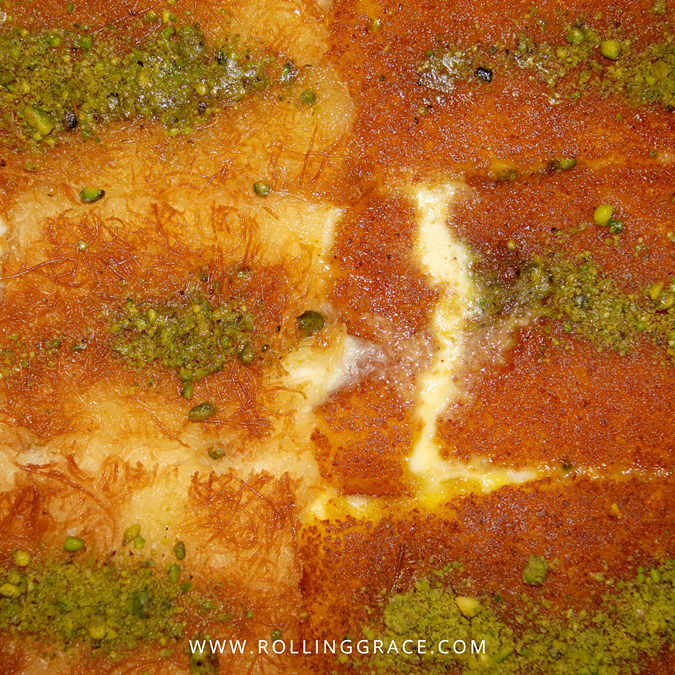
Kunafa vs Baklava
Both are Middle Eastern pastry desserts soaked in syrup and finished with nuts, but they are quite different in construction and texture.
Baklava is made from thin layers of filo dough stacked with chopped nuts and requires considerably more preparation. Kunafa is built around the kataifi dough and a warm cheese or cream filling, and is served hot rather than at room temperature. Kunafa is the more immediately satisfying of the two if you are after something warm and indulgent.
Frequently Asked Questions on Kunafa in Malaysia
- What does kunafa taste like? Sweet, rich, and slightly savoury in the cheese version. The pastry is crisp on the outside and soft where the syrup has soaked in. The pistachio on top adds a dry, nutty contrast to the richness of the filling.
- Is kunafa halal? Yes. Kunafa is inherently halal and made from pastry, dairy, sugar, and nuts. All the kunafa outlets in Bukit Bintang serve halal food.
- How much does kunafa cost in KL? Prices start at around RM12 for cream kunafa and RM15 for cheese kunafa at popular outlets in Bukit Bintang.
- Where is the best kunafa in KL? Dubai at Food Republic in Pavilion KL and Damascus in Bukit Bintang are the most consistently recommended spots in the city.
Get the good stuff first. Join Rolling Grace for the restaurants worth crossing a city for, the stays worth the upgrade, and the places to go before everyone else. Free, straight to your inbox.
Leave a Reply