Kathmandu has been accumulating history for over a thousand years. Temples, courtyards, palaces and back lanes that have been walked since the Licchavi period press up against each other in a way that can be disorienting without context.
The museums here provide that context. They hold medieval woodcarvings, Rana-era portraits, Buddhist thangkas, bronze deity figures and objects that document how this valley became the political and spiritual centre of Nepal. Most visitors walk past several of them without knowing they exist.
This guide covers the seven best museums in Kathmandu for anyone who wants to go beyond the surface of the city.
Read also: Top Attractions in Kathmandu: A Cultural Journey
National Museum of Nepal
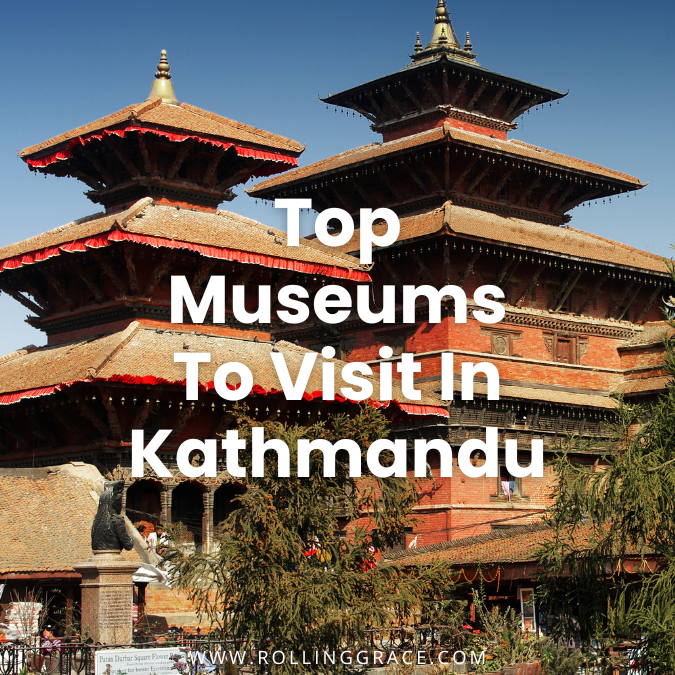
The National Museum of Nepal holds one of the most comprehensive collections in the country, spanning art, arms, natural history and Buddhist and Hindu religious objects accumulated across centuries of Nepali civilisation.
Its galleries move through a wide range of material: ancient stone sculptures, traditional paintings, woodcarvings, and manuscripts that trace the country’s history from the Licchavi period through to more recent centuries. The stone inscription collection is among the most significant in the region, with pieces dating back to 300 AD that document early political and religious life in the Kathmandu Valley. Alongside these, the museum holds examples of traditional metalwork, textiles and woodcarving that reflect the craftsmanship Nepal became known for across South and Southeast Asia.
For first-time visitors to Kathmandu, this is a practical starting point before exploring the city’s temples and palaces. The objects here give weight to what you see outside. It stands among the museums in Kathmandu that highlight Nepal’s cultural legacy.
- Address: Chhauni, Kathmandu, Nepal
- Opening hours: 10:30 AM to 3:00 PM. Closed on Tuesdays and public holidays
- Contact number: +977-1-4271478
- Website: https://nationalmuseum.gov.np/
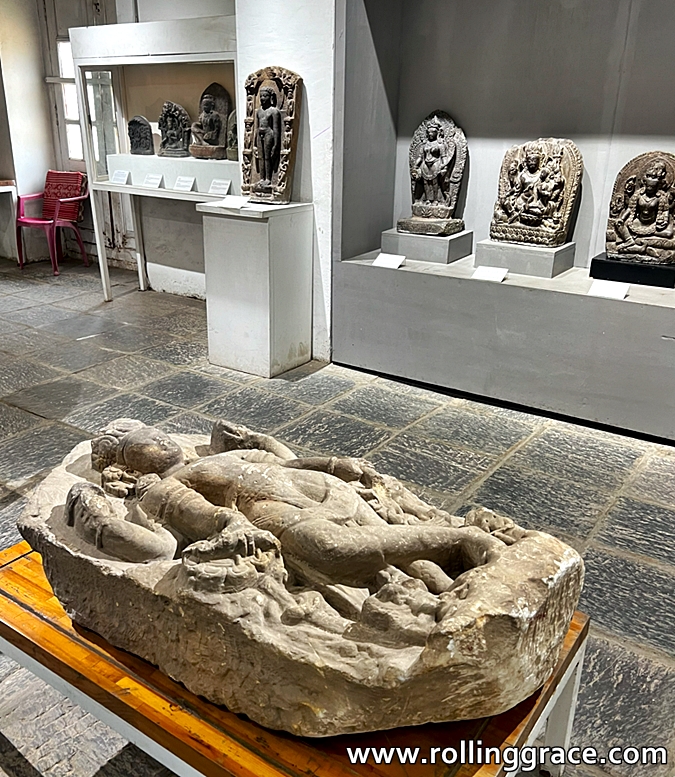

Narayanhiti Palace Museum
Narayanhiti Palace sits at the centre of Kathmandu, behind high walls that once kept the public at a considerable distance. That changed in 2008, when the monarchy was abolished and the palace was converted into a museum. It is now one of the most visited sites in the city, and one of the few places where the final chapter of Nepal’s royal history can be examined directly.
The building blends Nepalese and European architectural influences, a combination that reflects the Shah dynasty’s positioning of Nepal on the international stage during the twentieth century. Inside, the museum holds royal memorabilia, photographs, personal belongings and historic documents accumulated across the reigns of the Shah kings. The scale of the interiors gives some indication of how the monarchy operated at its height.
The palace is also the site of the 2001 royal massacre, in which Crown Prince Dipendra killed nine members of the royal family before turning the gun on himself. The museum does not dwell on this, but the weight of it is present throughout. It is one of the museums in Kathmandu where visitors can learn more about the valley’s political progress.
- Address: Narayanhiti Palace Museum, Kathmandu 44600, Nepal
- Opening hours: 11:00 AM to 4:00 PM. Closed on Tuesdays and public holidays
- Contact number: +977-1-4228489
Taragon Next
Taragaon Next sits on the grounds of the Taragaon Regency Hotel on Boudhanath Sadak, a short walk from one of the most important Buddhist stupas in the world. The location is deliberate. This part of northern Kathmandu has long drawn scholars, artists and travellers, and the gallery has positioned itself within that tradition.
Formerly known as Taragaon Museum, it is a private gallery supported by the Saraf Foundation, which funds arts and cultural institutions across South Asia. The building itself is worth noting, with a distinctive red brick structure with curved archways that stands apart from the standard museum architecture found elsewhere in the city.
The gallery focuses on contemporary and modern Nepali art, with a programme that rotates exhibitions and supports living artists. It is a different proposition from the historical collections found at the national institutions – less about artefacts and more about how Nepali creative culture is evolving. For visitors who have spent time at the older museums and want to see what is happening in the country’s art scene now, Taragaon Next offers a clear counterpoint.
It is one of the museums in Kathmandu that introduces visitors to the city’s history and culture.
- Address: Boudhanath Sadak, Kathmandu 44600, Nepal
- Opening hours: 10 am–5:30 pm
- Contact number: +977 1-5911857

Museum Of Nepali Art (MoNA)
Nepal’s first private art museum, MoNA was founded by collector Rajan Sakya and opened in February 2020. It is located inside the Kathmandu Guest House in Thamel, one of the most visited parts of the city, which makes it genuinely accessible rather than an afterthought on an itinerary.
The collection holds around 500 pieces of contemporary and traditional art by living Nepali artists, the majority drawn from Sakya’s private collection. The focus is deliberate: most significant works of Nepali art have historically ended up in private hands or overseas, and MoNA was set up specifically to bring them back into public view within Nepal.
Paubha paintings, sculpture and works that sit at the intersection of Buddhist and Hindu iconography form the backbone of the permanent display, alongside pieces by younger artists working in a more contemporary register. Thematic exhibitions rotate throughout the year.
It is a compact gallery. Most visitors spend 30 to 40 minutes inside. Each piece carries a QR code with detailed information on history and symbolism, and prints are available to purchase. Entrance is 500 NPR.
- Address: Hotel Yak & Yeti, Durbar Marg, Kathmandu 44600, Nepal
- Opening hours: 10:00 AM to 5:00 PM
- Contact number: +977-1-4248999

Nepal Aviation Museum
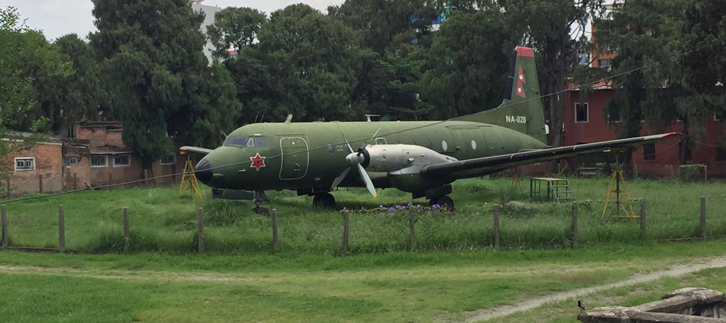
The Nepal Aviation Museum in Sinamangal is built inside an Airbus A330-300 that belonged to Turkish Airlines. The aircraft flew for eight months before suffering a runway excursion at Tribhuvan International Airport in March 2015. Rather than scrapping it, the Civil Aviation Authority of Nepal and pilot Bed Upreti’s trust dismantled, relocated and reassembled the fuselage into a museum, which opened to the public in November 2017.
Inside, the original cockpit is preserved and accessible to visitors. The cabin holds over 350 miniature aircraft models spanning commercial and military aviation, alongside an aerial photography gallery and a video documentary on Nepal’s aviation history that runs at regular intervals throughout the day. A real Ecureuil helicopter is stationed on the grounds outside.
The museum was built with a specific purpose: to draw young Nepalis toward careers in aviation. School groups visit regularly, and students with a letter from their institution enter free of charge. For general visitors it sits close to Tribhuvan International Airport in Sinamangal, making it a practical stop on the way in or out of the city.
It is often included in lists of museums in Kathmandu for travellers exploring the city.
- Address: Sinamangal, Kathmandu 44600, Nepal
- Opening hours: 9:00 AM to 4:30 PM
- Contact number: +977-1-4460245

Nepali Folk Musical Instrument Museum
The Nepali Folk Musical Instrument Museum occupies an unassuming space in Laxmishwor Mahadeb, close to the Bagmati River in Kathmandu. It is not the kind of place that announces itself. The building blends into the neighbourhood, which makes finding it part of the experience.
Inside, the collection brings together folk music instruments from Nepal’s many ethnic groups, each representing a distinct regional tradition. The madal, the sarangi, the dhyangro and dozens of lesser-known instruments from communities across the country’s 77 districts are on display, many of which have gone out of active use in the communities they came from. For anyone with an interest in how music functions as cultural memory, the collection rewards close attention.
It remains one of the museums in Kathmandu worth visiting for those interested in heritage.
- Address: Laxmishwor Mahadeb, Kathmandu 44600, Nepal
- Opening hours: 10:00 AM to 5:00 PM
- Contact number: +977 1-5342741
Natural History Museum
The Natural History Museum of Nepal sits at the edge of the Swayambhunath World Heritage Site on Swayambhu Circular Road, which means most visitors walk past it on the way to the stupa without stopping. That is a reasonable thing to correct.
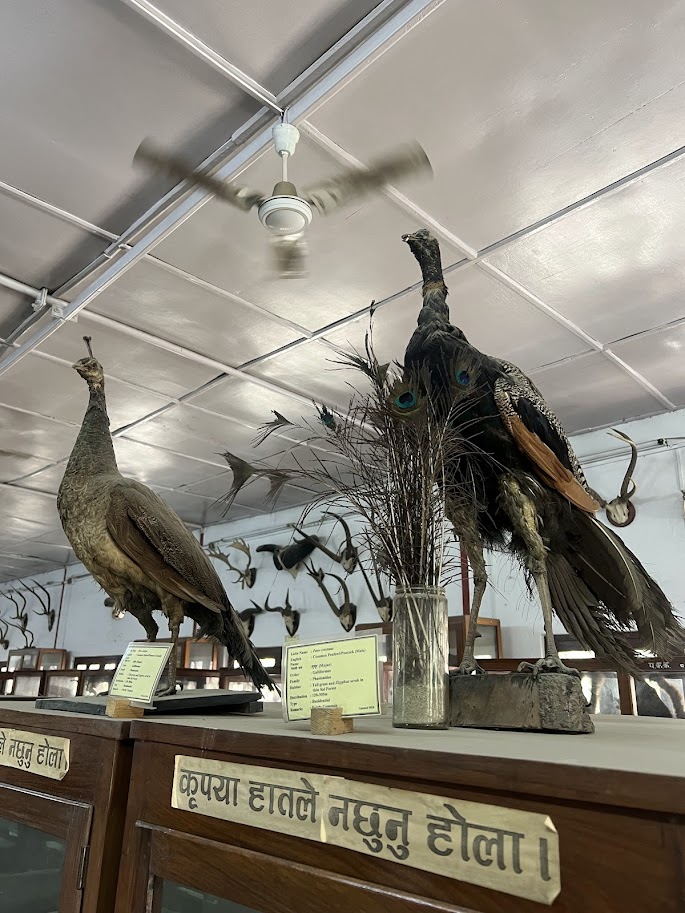
Operated by Tribhuvan University and established in 1975, the museum has spent five decades assembling a collection that now holds 50,000 specimens of Nepal’s flora, fauna and fungi. The country spans five climatic zones within a relatively compact geography, from the Terai lowlands to the high Himalayas, and the collection reflects that range. Insects, birds, mammals, reptiles, plant specimens and fungi from across those zones are catalogued and displayed across the museum’s modest galleries.
The butterfly collection draws particular attention. Nepal sits within one of the most biodiverse corridors in Asia, and the specimens on display include species rarely seen outside specialist collections. For anyone with an interest in ecology, conservation or the natural sciences, the depth here exceeds what the building’s exterior suggests.
- Address: Swayambhu, Kathmandu, Nepal
- Opening hours: 10:00 AM to 5:00 PM. Closed on Saturdays
- Contact number: +977-1-4271932
Tips for Visiting Museums in Kathmandu
Most of Kathmandu’s museums are independently managed, with separate ticketing and varying opening days. A little planning goes a long way.
- Combine museums geographically. The National Museum and the Natural History Museum are both near Swayambhunath and can be visited on the same day without significant travel between them.
- Verify opening hours before you go. Several museums close on specific days: the Narayanhiti Palace Museum closes on Wednesdays, the National Museum closes on Tuesdays, and the Nepali Folk Musical Instrument Museum is closed on weekends. Hours can change without notice.
- Budget for entry fees. Foreigners pay significantly more than Nepali nationals at most museums. Narayanhiti Palace charges 1,000 NPR for foreign visitors. MoNA charges 500 NPR. The Nepali Folk Musical Instrument Museum charges 1,000 NPR for foreigners. Carry cash as not all venues accept cards.
- Leave bags and phones at the entrance where required. Narayanhiti Palace Museum requires visitors to deposit bags, cameras and smartphones at the entrance before entering.
- Call ahead for smaller museums. The Nepali Folk Musical Instrument Museum in particular is difficult to find and benefits from a call before visiting.
- Allow more time than you think. The National Museum alone warrants two to three hours if you intend to move through the galleries properly.
- Dress modestly. Some museums are located within or adjacent to active temple complexes. Covered shoulders and knees are appropriate throughout.
Top Museums in Kathmandu for Students
Several of Kathmandu’s museums offer meaningful value for students, both in terms of reduced entry and the depth of what they hold.
- The Nepali Folk Musical Instrument Museum is worth flagging specifically for ethnomusicology students or anyone studying intangible cultural heritage. The collection includes instruments that no longer exist in active use in their communities of origin, which gives it a research value beyond what a general visit might suggest.
- The Natural History Museum at Swayambhu is the most explicitly student-focused institution on this list. Educational outreach is a stated objective of the museum. It welcomes school and college students for research visits, runs awareness programmes, and publishes yearly journals. Students with a valid ID card receive up to 50% off the entry fee, which is already among the lowest of any museum in the city.
- The Museum of Nepali Art in Thamel works well for art and design students. The collection rotates periodically, each piece is labelled in English with a QR code linking to further detail on the artist and technique, and the focus on both traditional and contemporary Nepali work gives students a clear view of how the country’s artistic traditions are evolving.
- Narayanhiti Palace Museum is the most useful stop for students of modern South Asian history, political science or architecture. The palace documents the final decades of Nepal’s monarchy in considerable detail, and the building itself is a study in how Nepalese and European influences were combined during the twentieth century.
Discovering Museums in Kathmandu
Nepal loses cultural artefacts steadily. Objects leave through private sales, undocumented exports and the kind of gradual dispersal that happens when institutions lack resources to compete. What remains in Kathmandu’s museums represents what has been held onto, sometimes deliberately and sometimes against considerable odds.
The Nepali Folk Musical Instrument Museum exists because one collector decided that instruments going out of use needed a permanent home. MoNA exists because a private collector wanted significant works of Nepali art to stay in Nepal. The Natural History Museum has spent five decades cataloguing biodiversity that in some cases no longer exists in the wild in the numbers it once did. These are not passive institutions. They are active responses to the problem of loss.
For visitors, that context changes what a museum visit means. The objects here are not generic heritage displays. They are specific records of a country navigating rapid change while trying to hold onto what preceded it. That is worth an afternoon of anyone’s time in Kathmandu.
Get the good stuff first. Join Rolling Grace for the restaurants worth crossing a city for, the stays worth the upgrade, and the places to go before everyone else. Free, straight to your inbox.
Leave a Reply