Things to do in Phu Quoc goes well beyond its coastline, and this guide covers all of it.
Phu Quoc sits in the Gulf of Thailand, where clear water, quiet bays and forest-backed coastline have kept it from feeling like anywhere else in Vietnam. The island reveals itself slowly, through trails cutting into national parkland, fishing villages that have fed the same families for generations, and a food scene built on proximity to the sea rather than concession to tourists.
This guide covers the full length of it: the beaches worth the journey, the national park, the night markets, the history, and everything in between.
Read more: Top 11 Best Shisha in Ho Chi Minh, Vietnam
Phu Quoc National Park
Phu Quoc National Park covers nearly half the island and protects one of the last intact lowland forest systems in southern Vietnam. Established in 2001, the park holds over 1,000 plant species, 12 of which are found nowhere else in the world, alongside populations of silvered langur, slow loris, crab-eating macaque and hornbill. The density of the jungle closes in quickly once you leave the main trail, and early mornings bring the best chance of seeing anything move.
The trails reach Mount Chua, the island’s highest point at 603 metres. The main route covers 7.5 kilometres through dense jungle and rocky slopes and takes most hikers two and a half hours. It is not a casual walk. The reward at the top is an unobstructed view across the forest canopy to the coastline on both sides of the island. For a gentler option, the Ganh Dau trail runs flat through old-growth trees.
The dry season, November to April, is the window for all of it. It is one of the most popular things to do in Phu Quoc for visitors exploring the island.

Fish Sauce Factories
Phu Quoc’s reputation for producing the finest fish sauce is well-earned, with its traditional fermentation methods standing as a hallmark of Vietnamese culinary excellence. Anchovies, freshly caught from the surrounding waters, are meticulously layered with salt in towering wooden barrels and left to age for up to a year, resulting in a deep, amber-hued liquid bursting with umami.
A visit to local fish sauce factories, such as Khải Hoàn Land and Hưng Thịnh, offers a rare glimpse into this time-honoured craft. Guests can observe the delicate balance of patience and expertise required in its production while sampling some of the most sought-after fish sauce in Vietnam.

Bee Farms
Phu Quoc’s bee farms sit among the pepper plantations in the island’s interior, where the surrounding forest keeps the air thick with pollen. The farms raise both Italian honey bees and native Phu Quoc species, and the honey they produce carries the floral character of whatever is in bloom nearby. Visitors can walk through the hives with a guide, watch honey being harvested, and taste several varieties on the spot.
Beyond the honey, these are working farms with a considered approach to what they grow and how. The guided tours cover beekeeping, the role of pollinators in the island’s agriculture, and the broader ecosystem the bees depend on. It is a quieter stop than the beaches, and a more useful one for understanding how the island actually feeds itself.
It remains one of the memorable things to do in Phu Quoc during a visit.

Pepper Farms
Phu Quoc’s pepper plantations stand as a proud symbol of its agricultural heritage, producing some of the world’s finest black pepper. The island’s fertile soil and tropical climate create the ideal conditions for cultivating this prized spice, renowned for its robust flavour and rich aroma.
A visit to these plantations provides an intimate look at the meticulous care involved in cultivating and harvesting pepper. Walking between the neatly arranged vines, visitors can witness the traditional techniques that have sustained this industry for generations, offering a deeper appreciation for this essential ingredient in global cuisine.
It is often included in lists of the best things to do in Phu Quoc.

Dinh Cau Night Market & Temple
Dinh Cau Night Market runs along the waterfront from early evening, its stalls built around what came off the boats that day. Grilled squid, bowls of noodle soup, clams cooked with chilli and lemongrass. The quality is consistent because the supply is local and the cooks have been at the same spots for years. Further along, past the souvenir stalls selling pearls and lacquerware, handmade jewellery and woven goods line the walkway.
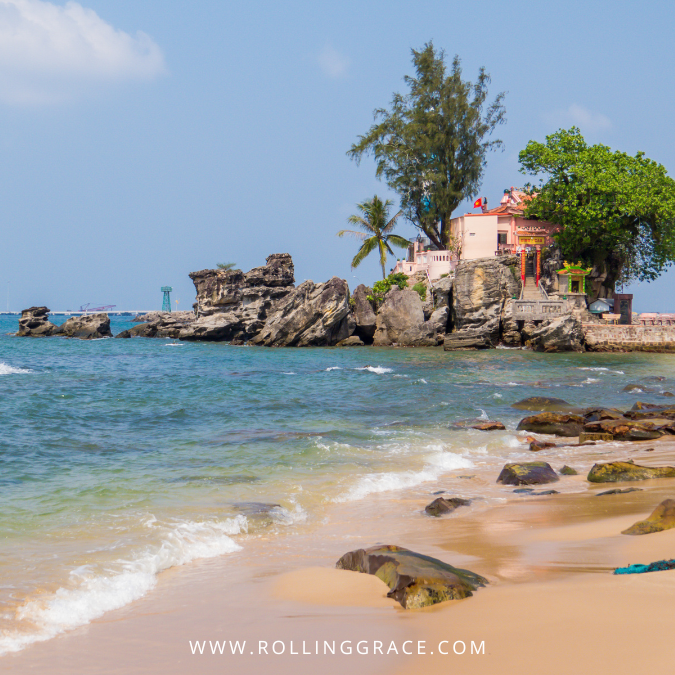
At the end of the street, Dinh Cau Temple sits on a rocky outcrop where the Duong Dong River meets the sea. Built in the 17th century by fishermen who believed the rock formation had guided them through a storm, it has served as a place of worship for the island’s maritime community ever since. The climb up 29 stone steps brings you to a small shrine, a working lighthouse, and a terrace facing open water. Arrive before sunset and stay until the light goes.
Phu Quoc Prison History Museum
- Address: 350 Đ. Nguyễn Văn Cừ, An Thới, Phú Quốc, Kiên Giang, Vietnam
- Opening hours: 7 am–5 pm
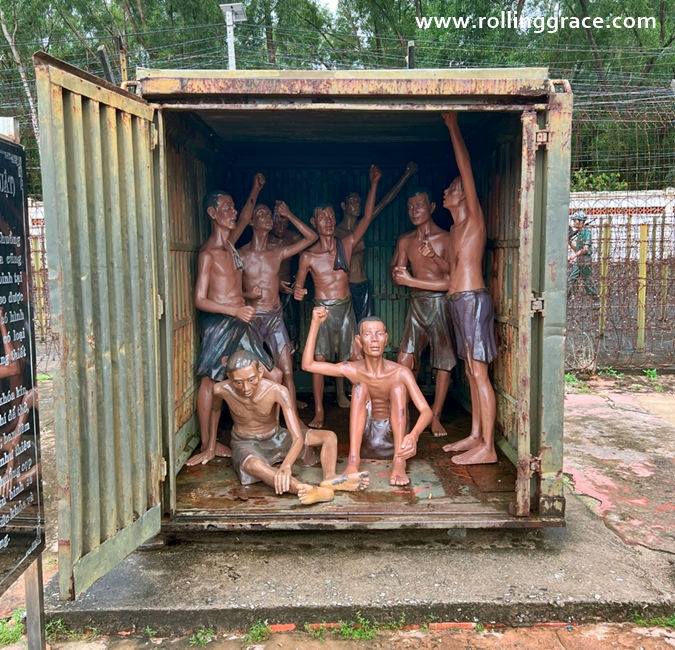
A visit to Nha Tu Prison, also known as Phu Quoc Prison, provides a poignant glimpse into Vietnam’s wartime history. Once a site of imprisonment and hardship, it now stands as a solemn memorial to those who endured its confines. The exhibits, featuring preserved artifacts and reconstructed cells, serve as a powerful reminder of resilience and the cost of conflict.
It continues to be one of the recommended things to do in Phu Quoc for travellers.
Read more: Inside Phu Quoc Prison: Exploring Coconut Tree Prison in Vietnam
Suoi Tranh Waterfall
Suoi Tranh sits about 10 kilometres from Duong Dong town, reached by a short walk through forest trails where the path follows a stream lined with mossy rocks and small cascades. The waterfall empties into a natural rock pool at the base, shallow enough to stand in and cool enough to make the walk worthwhile.
Come during the rainy season, May to October, when the stream is at full flow. In the dry season the water slows considerably, and occasionally stops altogether. Entrance is 30,000 VND for adults.

Grand World Phu Quoc
- Address: Bãi Dài, Gành Dầu, Phú Quốc, Kiên Giang, Vietnam
Grand World opened in 2021 on the island’s northern coast and runs 24 hours, which is where the nickname comes from. The 85-hectare complex is built around European-style architecture, a 400-metre Venice-inspired canal, live cultural performances, open-air dining and a night market. Entry is free, though the gondola ride and the Quintessence of Vietnam show require tickets.
It is built for an evening. The canal is the centrepiece, flanked by coloured facades and arch bridges, with gondoliers working the water after dark. The nightly performances are large in scale, the food options wide enough to spend a few hours without running out of things to try.

Su Muon Pagoda
- Address: Suoi Da Hamlet, Dương Tơ, Phú Quốc, Kiên Giang, Vietnam
For those seeking a moment of tranquility, Su Muon Pagoda provides a peaceful sanctuary with sweeping views of Phu Quoc. This revered Buddhist temple, adorned with intricate carvings and golden statues, offers a glimpse into the island’s spiritual traditions. It is widely regarded as one of the must-try things to do in Phu Quoc.
Pearl Farms in Phu Quoc
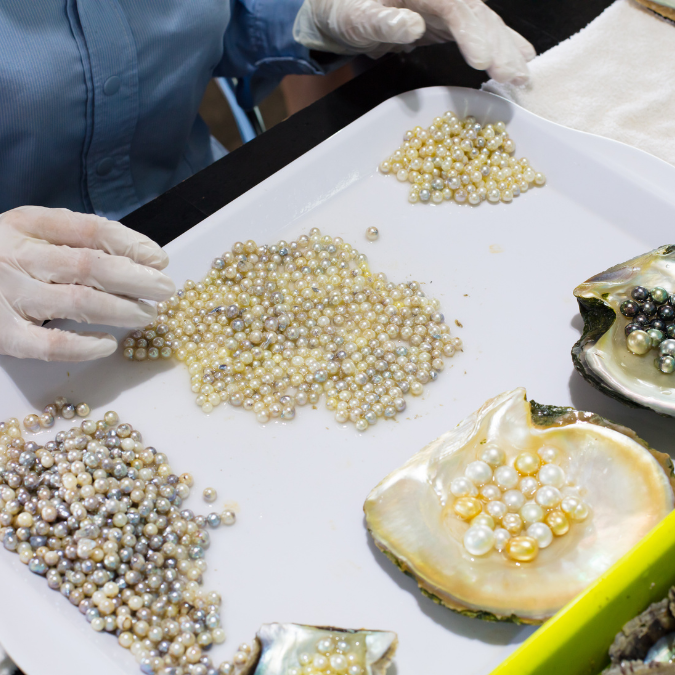
Phu Quoc’s pearl farms sit along the western coast, mostly along Long Beach and the road south towards An Thoi. The island earned the nickname Pearl Island for good reason. Its calm, clean waters and consistent salinity produce saltwater pearls with a thick nacre and a depth of lustre that freshwater varieties rarely match.
The cultivation process takes patience. Oysters are selected by size and age, nucleated by hand, then lowered into sea cages and left for anywhere from one to eight years depending on the quality being aimed for. A guided tour walks you through each stage, from the live oyster tanks to the harvesting tables, and ends in a showroom.
The pearls come in creamy white, yellow and black, with black being the rarest and most expensive. Buy directly from the farms. The night market sells cheap imitations.
Hon Thom Cable Car
- Address: Bãi Đất Đỏ, An Thới, Phú Quốc, Kiên Giang, Vietnam
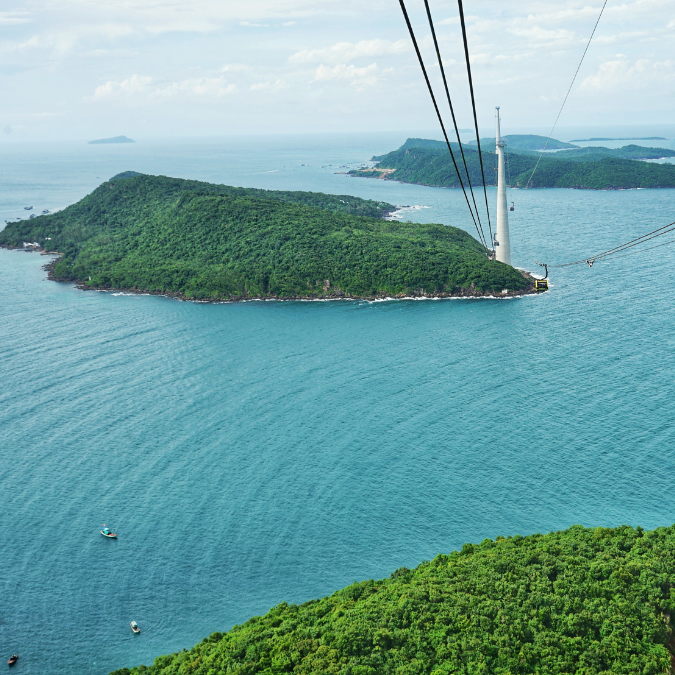
A ride on the Hon Thom Cable Car presents a breathtaking perspective of Phu Quoc’s turquoise waters and traditional fishing villages. As the world’s longest oversea cable car, it glides from An Thoi to Hon Thom Island, offering a mesmerising journey high above the Gulf of Thailand.
It stands out as one of the enjoyable things to do in Phu Quoc while exploring the island.
Islands & Beaches in Phu Quoc
Phu Quoc’s surrounding islets provide an idyllic setting for an island-hopping adventure. Explore the pristine shores of Hon Mong Tay (Fingernail Island), Hon May Rut, and Hon Gam Ghi, where crystal-clear waters, vibrant coral reefs, and secluded beaches invite moments of discovery and relaxation.
If you’re staying at a Phu Quoc Island Resort, many of these beaches are just a short distance away, offering a luxurious and relaxing getaway. This destination is home to some of Vietnam’s most stunning beaches, each offering something unique:
- Sao Beach: Powdery white sand and turquoise waters, perfect for sunbathing.
- Khem Beach: A quieter, more exclusive beach with crystal-clear water.
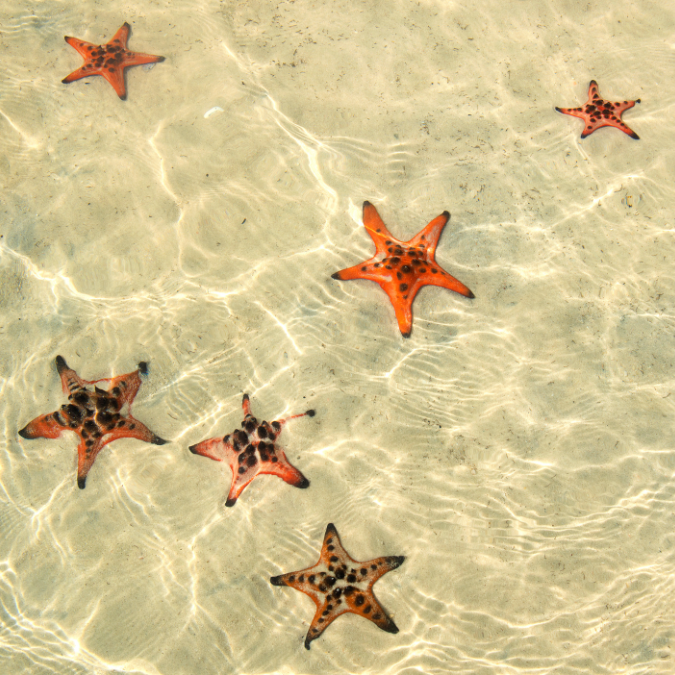
- Starfish Beach: Famous for its shallow waters teeming with red starfish.
- Fingernail Island: A tiny island known for its snorkelling spots and pristine shores.
Starfish Beach Phu Quoc
Starfish Beach sits on the northern tip of the island, about 25 kilometres from Duong Dong town, at the edge of Rach Vem fishing village. The road in is straightforward until the last five kilometres, which turns to rough red dirt. A motorbike handles it better than a car.
The beach itself is calm and shallow, the water clear enough at low tide to see the red starfish resting on the sand without going further than your knees. They are most visible during the dry season, November to April, between eight and eleven in the morning when the light is right. Do not lift them from the water. Exposure to air harms them quickly.
Beyond the starfish, the floating seafood restaurants at Rach Vem are reason enough to make the trip. They sit on stilts above the water, and the catch comes straight off the boats that morning. Come for the starfish, stay for lunch.
How to Get to Phu Quoc, Vietnam
If you’re wondering how to get to Phu Quoc, Vietnam, the island is easily accessible:
By Air
Fly into Phu Quoc Airport (PQC) from major cities like Ho Chi Minh City, Hanoi, or Bangkok. Phu Quoc Airport is modern and well-equipped, making travelPhu Quoc International Airport (PQC) sits about 10 kilometres south of Duong Dong town.
Direct flights operate from Ho Chi Minh City, Hanoi and Da Nang several times daily, with international connections from Bangkok, Kuala Lumpur, Seoul, Taipei and Hong Kong. Flight time from Ho Chi Minh City is around 55 minutes.
By Ferry
Ferries run daily from two mainland departure points. From Ha Tien, the crossing takes roughly 1.5 to 2 hours and covers about 45 kilometres. From Rach Gia, the journey is longer at 2.5 to 3 hours across 120 kilometres.
Both routes arrive at Bai Vong Port on the island’s east coast. Operators include Superdong and Phu Quoc Express, with multiple daily departures on both routes. Tickets can be booked online. The dry season crossing, November to April, is the calmer one.
Phu Quoc vs Phuket: Which Is Better?
Travellers often compare Phu Quoc vs Phuket when choosing a beach destination in Southeast Asia. While both islands offer stunning beaches and vibrant nightlife, Phu Quoc is quieter, less commercialised, and ideal for those seeking a more relaxed, nature-focused getaway.
Phuket, on the other hand, is more developed, with a livelier party scene and larger tourist crowds. If you prefer a laid-back retreat with untouched natural beauty, Phu Quoc is the better choice.
How Many Days Are Enough for Phu Quoc
Wondering how many days are enough for Phu Quoc? Ideally, a 3 to 5-day trip allows you to explore the island’s top attractions, relax on its stunning beaches, and experience its unique food culture. If you want to enjoy island hopping, national parks, and local markets, extending your stay to a week would be perfect.
Phu Quoc is popular and has gained international fame for several reasons:
- Pristine Beaches: Home to some of Vietnam’s most beautiful beaches, like Sao Beach and Khem Beach.
- Vietnamese Food: Known for its fresh seafood, fish sauce, and black pepper.
- Nature & Wildlife: Phu Quoc National Park is a UNESCO Biosphere Reserve with rich biodiversity.
- Attractions & Activities: From the world’s longest oversea cable car to bustling night markets, there’s something for everyone.
- Sunsets & Islands: Unlike other tourist hotspots, Phu Quoc still retains a peaceful, untouched charm.
Where Is Phu Quoc on the Vietnam Map
Phu Quoc sits in the Gulf of Thailand, off the southwest coast of Vietnam, closer to Cambodia than to the Vietnamese mainland. Despite that, it is well-connected by air and sea and straightforward to reach from most major cities in the region.
Discover Things to do in Phu Quoc
The island covers a lot of ground. Beaches, national parkland, pepper plantations, pearl farms, night markets and one of Vietnam’s most distinct food cultures are all here, and none of it requires much planning to find.
What makes the island worth more than a few days is the range. The interior is as interesting as the coast. The history runs deeper than the resorts suggest. The food is specific to this place in ways that the rest of Vietnam’s island destinations rarely are.
On our visit, the thing that stayed with us longest was not a beach. It was an early morning at Dinh Cau, before the market stalls opened, watching the fishing boats come in with the night’s catch while the temple sat quiet above the water. Phu Quoc has been quietly accumulating character for a long time, and most of it is still intact.
For more on Phu Quoc, keep following Rolling Grace.
Get the good stuff first. Join Rolling Grace for the restaurants worth crossing a city for, the stays worth the upgrade, and the places to go before everyone else. Free, straight to your inbox.
Leave a Reply