Dusit Thani Maldives sits on Mudhdhoo Island in Baa Atoll, a UNESCO Biosphere Reserve recognised for its concentration of marine life. Its position places it within reach of Hanifaru Bay, one of the Indian Ocean’s most important seasonal feeding grounds for manta rays. Between June and October, plankton blooms draw large congregations into the bay, turning the surrounding waters into a site of scientific and ecological significance.
For travellers comparing Dusit Thani Maldives price, villa categories and reef access, geography matters as much as design. The house reef is accessible directly from the island, reducing the need for long boat transfers for snorkelling.
Villas are spaced along curved jetties and shaded beachfront corridors, balancing lagoon access with privacy. The layout responds to reef lines, currents and marine zones that shape how the island can be used without overwhelming it.
Read also: Top 7 Hotels with Private Pools in Malaysia

Located in UNESCO Biosphere Reserve
Baa Atoll received the Biosphere Reserve status from UNESCO in 2011, a designation that applies environmental scrutiny to tourism, marine interaction and waste systems. Mudhdhoo Island sits firmly within this protected zone, which shapes excursion rules, reef access and visitor movement throughout the atoll.
Stay at Dusit Thani Maldives for a private island inside Baa Atoll’s UNESCO biosphere, five minutes by speedboat from Hanifaru Bay’s manta ray feeding grounds.
Hanifaru Bay, located nearby, enforces strict marine codes that prohibit diving, limit snorkeller numbers and require licensed guides for all visits. These measures are in place to protect plankton cycles and feeding behaviour of manta rays and whale sharks.
Selecting a resort within this ecological framework signals an awareness that luxury in the Maldives exists inside fragile systems. The biosphere context is not a marketing overlay. It dictates conduct and shapes experience.

360 Degree House Reef in Baa Atoll
One of Dusit Thani Maldives’ most compelling attributes is its encircling house reef. The reef forms a near continuous ring around the island, accessible from designated entry points that protect coral structure while allowing controlled snorkelling.
Marine sightings frequently include reef sharks, rays, parrotfish, turtles and shifting coral formations that reflect natural recovery cycles across the archipelago. Conditions vary with tide, season and current strength, and guests are briefed on safe entry points and reef preservation before entering the water.
Overwater villas extend into lagoon zones that connect to reef sections, allowing guests to enter directly from private decks during appropriate tide levels. This reduces dependence on daily boat excursions and gives the island itself marine value.
For travellers searching for Maldives resorts with strong house reef access, this continuous reef perimeter is a structural advantage.
Proximity to Hanifaru Bay
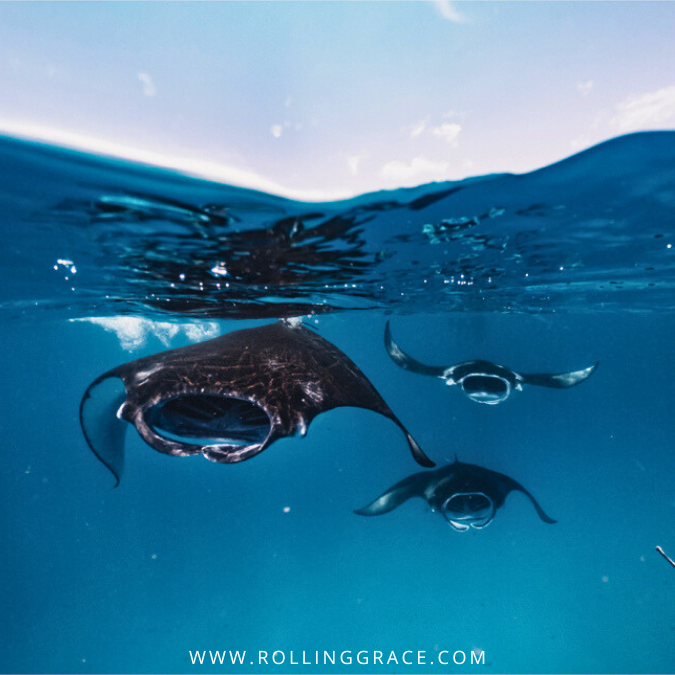
Hanifaru Bay sits approximately 15 minutes away by speedboat under standard sea conditions. Between May and November, monsoon driven plankton blooms create dense feeding columns that attract reef manta rays in significant numbers.
Access to the bay is strictly regulated. Snorkelling quotas are enforced and visitors must follow surface based observation rules. Interaction remains passive and controlled to avoid stress to marine life.
Dusit Thani Maldives arranges guided trips through its Ocean Dive Centre in line with these regulations. The short transfer time reduces logistical complexity when feeding alerts are issued by marine authorities.
For travellers planning around manta season, distance directly influences responsiveness. Proximity enhances opportunity without promising certainty, as wildlife activity depends entirely on environmental conditions.
Overwater Villas and Beach Residences
Accommodation at Dusit Thani Maldives includes overwater villas, beach villas and multi bedroom residences. Each category is positioned to balance privacy, direct access and spatial flow.
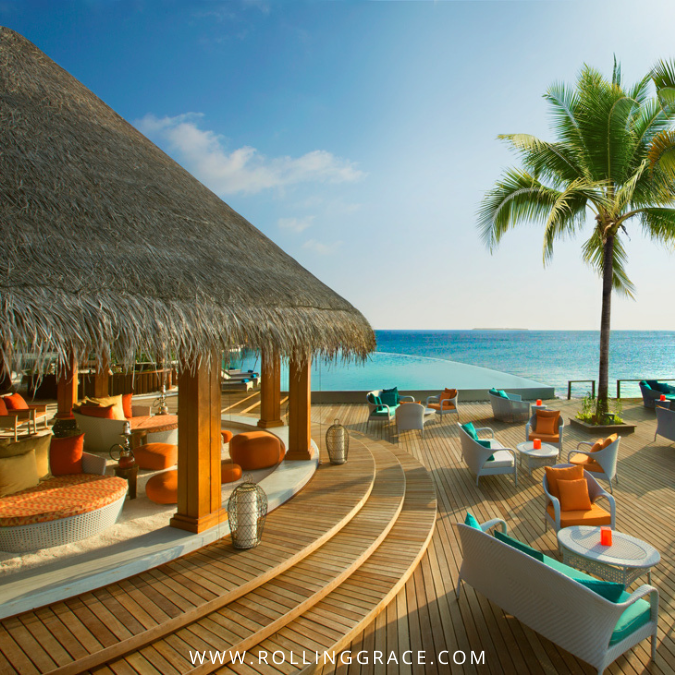
Overwater villas extend above shallow lagoon water on timber walkways. Interiors are arranged with the sleeping area facing the horizon, separated from bathing spaces by transitional zones that create privacy without confinement. Outdoor decks include seating areas and, in selected categories, private plunge pools positioned to maintain visual continuity with the lagoon.
Beach villas sit behind vegetation buffers that shield interior spaces from public view while allowing direct beach access. Private pools and shaded terraces anchor these layouts, creating defined outdoor living areas that expand usable space.
Interior finishes reflect Thai architectural influence through high pitched ceilings, dark timber accents and clean structural lines. The design language prioritises proportion and ventilation over ornamentation.

Devarana Spa Above the Tree Line
The Devarana Spa is positioned in elevated pavilions set among coconut palms, lifting treatment spaces ab25ove ground level to create separation from beach circulation areas. Access pathways guide guests upward into a quieter zone where treatment rooms and steam facilities are arranged in discreet clusters.
Therapies draw from Thai wellness traditions alongside contemporary spa practices. The architectural elevation of the spa enhances privacy while maintaining connection to surrounding foliage.
For travellers evaluating Maldives resorts with fully integrated spa offerings, the physical separation of the spa from central circulation routes strengthens its sense of retreat.

Borderless Dining Concept
Dining at Dusit Thani Maldives spans multiple venues that include an international buffet restaurant, a Thai speciality restaurant, an overwater grill and a poolside bar. Menu structures reflect the logistical realities of island supply chains, which rely heavily on air freight and marine transport.
The concept referred to as Borderless Dining allows private meals to be arranged on beaches, villa decks or lagoon facing locations. These arrangements require coordinated kitchen extension, controlled lighting and weather monitoring to ensure practicality and safety.
Sustainability initiatives within dining operations include reduction of single use plastics, glass bottling programmes and waste segregation systems aligned with biosphere reserve standards. In remote island settings, food systems directly influence environmental footprint.
Stay at Dusit Thani Maldives for a private island inside Baa Atoll’s UNESCO biosphere, five minutes by speedboat from Hanifaru Bay’s manta ray feeding grounds.
Ocean Dive Centre and Marine Guidance
The Ocean Dive Centre provides snorkelling excursions, scuba diving trips and guided visits to Hanifaru Bay. Marine briefings precede all protected area excursions and cover buoyancy control, distance protocols and environmental conduct.
Feeding alerts from Hanifaru Bay are monitored in coordination with marine authorities. Scheduling depends on plankton density reports, tidal movement and visitor quota availability.
Guests seeking responsible marine interaction increasingly evaluate how resorts align with conservation frameworks. Structured guidance and adherence to park rules reflect long term thinking about reef preservation.
How to Get to Dusit Thani Maldives
Seaplane Transfer from Velana International Airport
Dusit Thani Maldives is reached by seaplane from Velana International Airport in Malé. The flight takes approximately 35 minutes and operates only during daylight hours, typically between 6.30am and 4.00pm. Guests arriving in the evening may need to overnight in Malé before continuing to the resort the following morning.
From the air, the geography of the Maldives becomes clear. Coral atolls appear in shifting rings of turquoise and deep blue, offering orientation before landing on the floating platform near the island.
Transfer Costs and Arrival Planning
Return seaplane transfers are arranged by the resort and are charged separately from most room rates. Current standard pricing is generally around USD 650 per adult return, with reduced child rates. Final amounts are confirmed at booking and may vary by season or promotion.
An alternative option is a domestic flight to Dharavandhoo Airport followed by a short speedboat transfer to the island. This combined transfer typically ranges around USD 550 per adult return, subject to package inclusions and seasonal adjustments.
Because all transfers operate within fixed schedules, international flight timings should be aligned carefully with onward connections. Arrival planning is not an afterthought in the Maldives. It directly shapes both cost and logistics.
Prices and All-Inclusive Package
Dusit Thani Maldives pricing depends on three primary factors: villa category, board basis, and travel season. Beach villas and overwater villas sit in different price tiers, with pool categories commanding a further premium. Rates also fluctuate between low season from May to October and high season from December to April.
Manta ray season in nearby Hanifaru Bay typically runs from June to October. This period overlaps with the southwest monsoon, which brings higher humidity, occasional storms, and short bursts of rainfall. While marine activity peaks during these months, weather conditions can be variable. Travellers choosing this window often accept some rainfall in exchange for stronger wildlife encounters and lower nightly rates compared to festive season.
Promotional packages during manta season may include five night stays bundled with half board or full board meal plans, scheduled Hanifaru Bay snorkelling excursions, and seaplane transfers. Alcohol inclusions vary significantly between packages and should be reviewed carefully, particularly for guests comparing half board with all inclusive structures.
When researching Dusit Thani Maldives prices, it is important to evaluate more than just the headline room rate. Transfer costs, meal plans, excursion inclusions, and seasonal weather tolerance all influence the final value of a stay. Aligning ecological timing with comfort expectations is part of planning a Maldives trip realistically.

Sustainability and Environmental Responsibility
Dusit Thani Maldives is part of the Dusit International Tree of Life sustainability programme, which aligns the resort’s environmental and social initiatives with global sustainability goals. The property has achieved Level 1 certification under this framework, covering areas such as elimination of single use plastics, energy efficiency, waste reduction and responsible sourcing.
The island operates its own glass bottling plant to reduce plastic waste and uses an in-house desalination system to produce drinking water. Solar panels contribute renewable energy to the resort’s electricity supply. Organic waste is composted and reused in landscaping, supporting closed-loop island management.
Marine conservation forms a visible part of the guest experience. The resident marine biology team leads coral planting initiatives, reef monitoring and educational sessions focused on Baa Atoll’s fragile ecosystem. Guests can participate in reef awareness activities and conservation programmes during their stay.
Located within the UNESCO Biosphere Reserve of Baa Atoll, the resort’s environmental practices sit within a regulated marine framework designed to protect long-term biodiversity and reef health.
Contact Information
Address: Mudhdhoo Island, Baa Atoll, Republic of Maldives
Telephone: +960 660 8888
Email: resmaldives@dusit.com
Official Website: https://www.dusit.com/dusitthani-maldives/
Check In and Check Out
Reception is available 24 hours. Arrival and departure times are confirmed directly with the resort. Early access and late departure are subject to availability.
Smoking Policy
Smoking is permitted only in designated areas.
Get the good stuff first. Join Rolling Grace for the restaurants worth crossing a city for, the stays worth the upgrade, and the places to go before everyone else. Free, straight to your inbox.
Leave a Reply