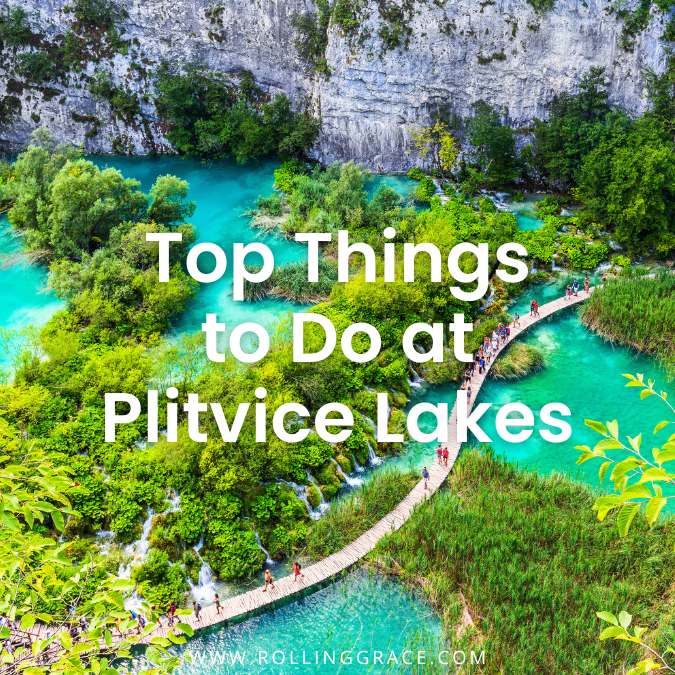
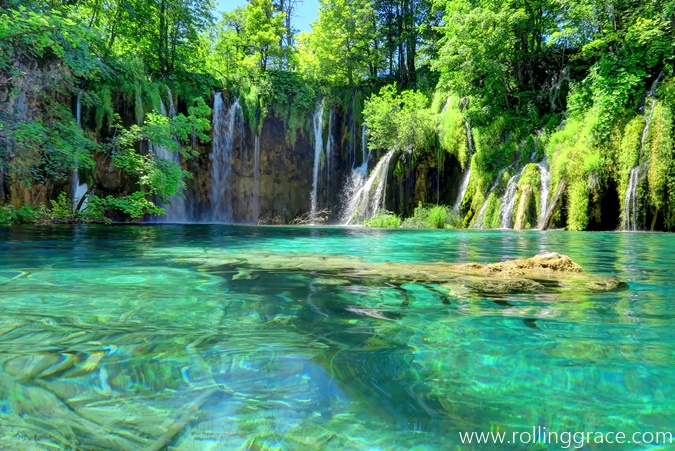
Plitvice Lakes National Park sits in the mountainous Lika-Senj region of central Croatia, where sixteen terraced lakes are linked by waterfalls and limestone formations shaped over thousands of years. Recognised as Croatia’s oldest and largest national park, it was designated a UNESCO World Heritage Site in 1979.
The lakes are formed by tufa barriers, created through the interaction of mineral-rich water and aquatic vegetation. This ongoing geological process continues to shape the cascades and channels today. Water clarity and shifting light produce tones that range from deep blue to green, depending on mineral concentration, sunlight, and biological activity.
Read also: Top 10 Traditional Balkan Food to Try in Southeast Europe
Geography and Formation
Plitvice Lakes National Park covers nearly 300 square kilometres. Its lakes are divided into Upper and Lower sections. The Upper Lakes sit in a dolomite basin surrounded by forest, while the Lower Lakes cut through limestone canyon walls.
Karst terrain defines the region. Water flows through subterranean channels before resurfacing in visible cascades. Over time, dissolved calcium carbonate deposits form natural dams, gradually altering the landscape. The result is a system that remains active and evolving.


Walking Trails and Routes
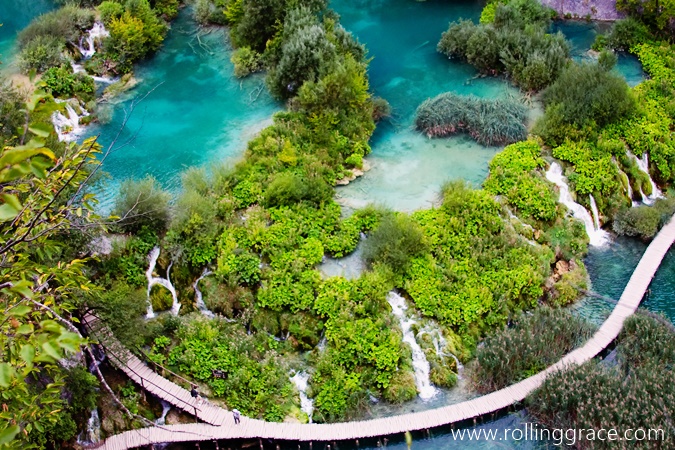
Wooden boardwalks and marked trails allow visitors to walk directly across sections of the Plitvice Lakes National Park. Circuits vary in length, with shorter routes taking two to three hours and extended loops lasting up to six hours.
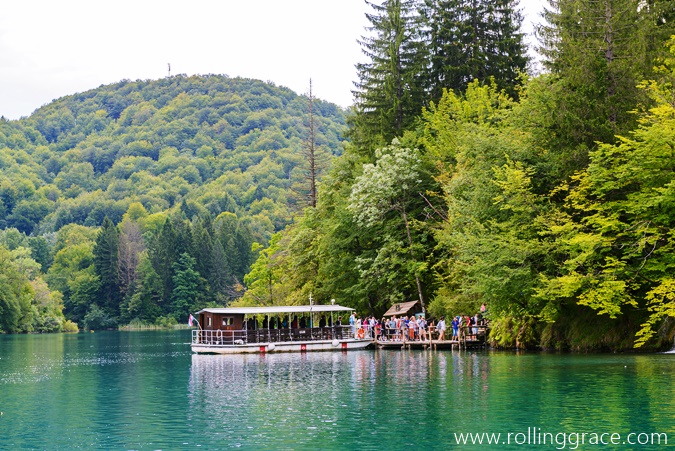
Most visitors follow established programme routes indicated at the entrance. These combine walking sections with an electric boat crossing on Lake Kozjak and a panoramic train shuttle linking the upper and lower zones.
Swimming and fishing are prohibited. Staying on marked paths is mandatory to protect the fragile tufa formations.
Estimated walking time for a mid-length circuit: approximately three hours.
Electric Boat and Panoramic Train
The electric boat ride across Lake Kozjak connects the two main lake sections and is included in the entrance ticket. The panoramic train operates along the upper ridge, reducing return walking distance.
Both are designed to manage visitor flow while limiting environmental impact. Boats are electric-powered to reduce water disturbance.
Ticket Prices and Entrance Fees
Ticket prices for Plitvice Lakes National Park vary by season. Peak summer months carry the highest rates due to visitor volume. Advance booking is recommended during summer due to timed entry limits introduced to manage crowd numbers.
Adult Tickets
- January, February, March, November, December: €10
- April, May, October: €23.5
- June, July, August, September: €40
Children (7–18 years)
- January, February, March, November, December: €4.5
- April, May, October: €6.5
- June, July, August, September: €16
Note: Children under 7 enter free.
The one-day ticket includes:
• Electric boat ride
• Panoramic train ride
• Visitor insurance
• VAT
Best Time to Visit Plitvice Lakes
Spring and autumn offer moderate temperatures and lower visitor numbers. During spring, water flow increases from snowmelt, strengthening waterfalls. Autumn brings colour contrast through surrounding forest.
Summer provides extended daylight hours but carries peak pricing and higher foot traffic.
Winter sees partial closures depending on snow and ice conditions, though the park remains open year-round.
How to Get to Plitvice Lakes National Park
Plitvice Lakes National Park is located inland between Zagreb and the Adriatic coast, making it accessible from several major Croatian cities.
From Zagreb
Zagreb is the closest major city, approximately 130 kilometres north of the park. The drive takes around two hours via the A1 motorway followed by state roads. Regular intercity buses run daily from Zagreb Bus Station to the park entrances, with journey times between two and two and a half hours.
From Dubrovnik
From Split, Plitvice Lakes lies roughly 250 kilometres inland. Driving takes about three to three and a half hours, typically via the A1 motorway heading north. Direct buses operate between Split and the park, with travel times averaging four to five hours depending on stops.
From Dubrovnik
Dubrovnik is the furthest of the three, located about 450 kilometres south of the park. By car, the journey takes approximately six to seven hours, usually combining coastal and motorway routes. Bus connections are available but limited, and travel time can exceed eight hours, often requiring a transfer.
For flexibility, renting a car offers the most direct access, particularly for travellers combining coastal cities with inland destinations. Parking is available at the park entrances.
Plitvice Lakes National Park Travel Tips
Wear supportive footwear
Wooden boardwalks run directly above water and can become damp from spray or rain, particularly near larger waterfalls. Surfaces are flat but may be slippery. Closed shoes with grip are recommended, especially on longer circuits that include gravel and forest sections.
Arrive early during peak season
From June to September, visitor numbers increase significantly. Timed entry slots operate in summer, and queues can form at the entrances by mid-morning. Arriving close to opening time allows quieter access to the Lower Lakes and reduces congestion on narrow boardwalk sections.
Bring water and light food
There are cafés and restaurant facilities within the park, mainly near Entrance 1, Entrance 2, and the ferry pier. However, options are limited and can become crowded during peak hours. Carrying water and light snacks ensures you remain hydrated during longer walking routes.
Stay on marked paths
Walking is restricted to designated boardwalks and trails. The tufa formations that create the lakes and waterfalls are fragile and continue to develop naturally. Leaving marked routes can damage these formations and disturb plant life.
Check seasonal route availability
Certain walking programmes may close during winter or after heavy rainfall due to safety conditions. Water levels and weather can affect accessibility. It is advisable to review the official park website before visiting to confirm which routes and transport connections are operating.
Sustainability and Conservation
Plitvice Lakes National Park operates under strict conservation measures. Tufa formations are fragile and can be damaged by physical contact. Limiting swimming and enforcing walkway use helps maintain ecological balance.
Visitor caps introduced in recent years aim to reduce environmental pressure during high season. Electric boats and controlled access reflect long-term preservation efforts.
The lakes’ clarity depends on maintaining biological equilibrium. Tourism management remains central to protecting water quality and forest biodiversity.
Importance of Plitvice Lakes National Park
Plitvice is not defined by a single waterfall but by the system itself. The layered lakes, mineral deposits, and forest canopy operate as one landscape. It is less about a single viewpoint and more about moving through terrain shaped gradually by geology.
For travellers exploring Croatia beyond coastal cities such as Dubrovnik or Split, Plitvice provides a contrasting inland landscape. It anchors the country’s natural identity and remains one of Southeast Europe’s most recognised protected sites.
Get the good stuff first. Join Rolling Grace for the restaurants worth crossing a city for, the stays worth the upgrade, and the places to go before everyone else. Free, straight to your inbox.
Leave a Reply