The FIFA World Cup Trophy Tour in Malaysia brings football’s most recognisable prize back to Kuala Lumpur for the first time in 12 years and placing the country at the front of the ASEAN leg of a global journey.
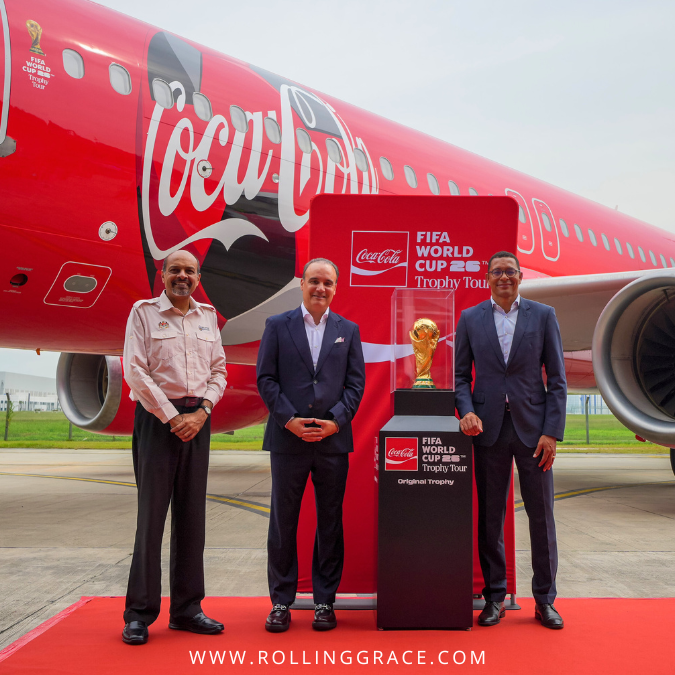
On 21 January 2026, something rarely seen arrived quietly at Subang SkyPark Terminal. Not a team, not a match, not a celebration already in full swing, but the original FIFA World Cup Trophy itself. Solid gold. Heavy. Closely guarded. Back on Malaysian soil for the first time in 12 years.
Its arrival placed Malaysia on a tightly restricted global route ahead of the FIFA World Cup 2026. Only 30 countries worldwide were selected to host the Trophy on this journey. Kuala Lumpur was not only included, but named the first stop in ASEAN, a decision that carried weight far beyond ceremony.
Read also: 5 Reasons to See AGIBOT at AI World Experience Centre i-City
Arrival at Subang SkyPark Terminal
The Trophy’s entry point was Subang SkyPark Terminal, where it was formally received during an arrival and handling ceremony conducted under strict protocol. The setting was deliberate. An aviation terminal built for control, movement, and precision. No theatrics. No distractions. The focus remained on the object itself.
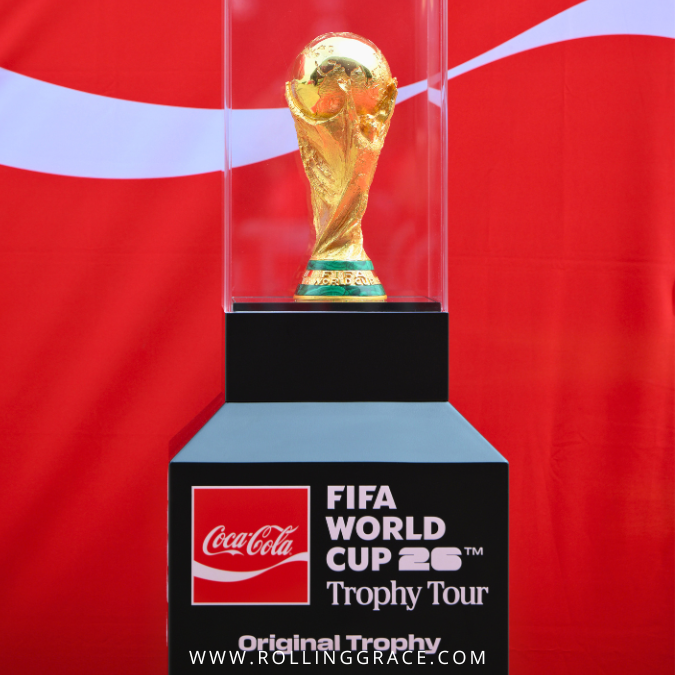
Designed in 1974, the original FIFA World Cup Trophy is made of solid gold and weighs 6.175 kilograms. It remains in FIFA’s possession at all times and may only be touched by former World Cup winners, Heads of State, and the FIFA President. Winning teams receive a separate gold-plated replica following the final.
Its presence in Malaysia marked a return not seen since 2014. For a brief moment, global football history sat inside a hangar in Subang, measured, guarded, and unmistakably real.
From Controlled Arrival to Public Encounter
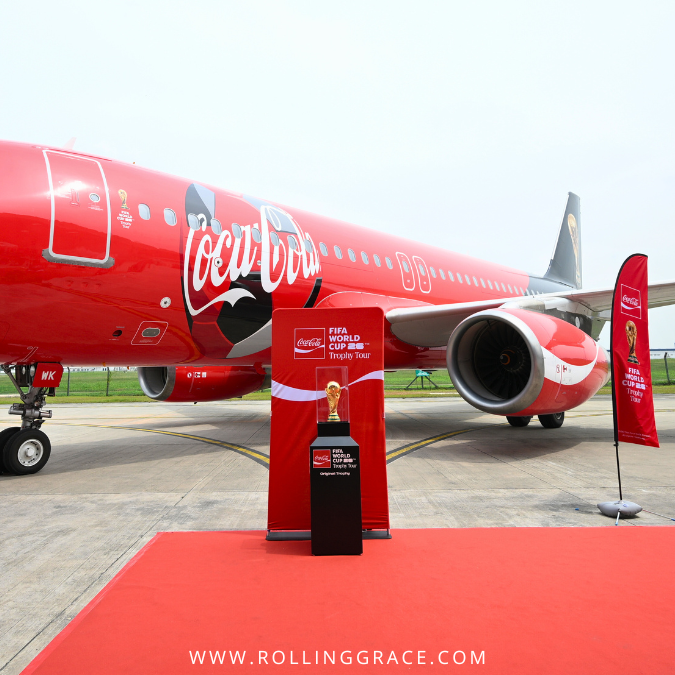
From Subang, the Trophy was transferred to Sunway Pyramid for public presentation. The shift was intentional. What entered Malaysia through a secured aviation environment was then placed into one of the country’s most active shared spaces.
Sunway Pyramid is not a neutral venue. It is a place of constant movement. Families, teenagers, office workers, football fans, and casual passersby cross paths there every day. Bringing the Trophy into that environment changed the tone of the visit.
This movement, from terminal to mall, carried meaning. A tightly protected global symbol was introduced to the public not through distance, but proximity. The Malaysia stop was shaped around access, visibility, and scale, setting it apart from stops built around closed audiences.
A Day Built Around Football
At Sunway Pyramid, the Trophy formed the centre of a full-day public programme. Five-a-side football matches unfolded alongside a special football clinic session. DJs filled the open spaces with sound. Fans gathered for scheduled viewings of the original Trophy, many encountering it in person for the first time.
Merchandise activations ran throughout the day, drawing crowds that reflected the broad reach of football in Malaysia. The atmosphere was not hushed. It was energetic and openly celebratory.
As evening approached, the programme expanded into a concert featuring Malaysian artists including Tomok, Siti Nordiana, and MK K-Clique. The day concluded with the unveiling of “Rasa-Rasa Bola”, a football anthem commissioned for the occasion and performed by Tomok, created specifically to mark Malaysia’s place on the Tour.
Malaysia as ASEAN First Stop
Being named the first ASEAN stop was not incidental. The FIFA World Cup Trophy Tour in Malaysia by Coca-Cola follows a carefully planned route. Its sequencing signals regional importance as much as global inclusion.
Malaysia’s position at the front of the ASEAN leg placed Kuala Lumpur as a reference point within Southeast Asia. It reflected the country’s capacity to host large-scale public events while keeping them accessible and grounded in everyday settings.
The Tour began internationally in Saudi Arabia on 3 January 2026 and spans more than 150 days across 75 stops worldwide, including Canada, Mexico, and the United States, the three host nations of the FIFA World Cup 2026. Malaysia’s early placement on that route signalled trust, readiness, and relevance.

Football as Shared Public Culture
Football in Malaysia does not sit behind gates. It moves through stadiums, universities, community pitches, shopping centres, and public screens. The Trophy Tour mirrored that reality.
Coca-Cola’s partnership with the Malaysian Football League frames this context. Across the year, the brand is present at more than 200 local matches nationwide, alongside grassroots football clinics and stadium experiences that connect professional competition with community participation.
The Trophy did not arrive to introduce football to Malaysia. It arrived to meet an audience already deeply engaged.
Ninety Years in Malaysia
The Malaysia stop also coincided with Coca-Cola’s 90th year in the country. Since 1936, the company has operated across Peninsular Malaysia and East Malaysia, serving over 200,000 customers through a portfolio that spans sparkling beverages, teas, juices, and water.
The Trophy Tour sat within this long presence, framed as a public moment tied to football, community, and shared experience.
FIFA World Cup Trophy Tour in Malaysia
Malaysia’s inclusion as the first ASEAN stop placed the country firmly on a selective global circuit.
For Malaysian fans, it offered rare physical proximity to a symbol usually seen only through broadcast. For the region, it positioned Kuala Lumpur as a city where global sporting history can be encountered openly, collectively, and at scale.
That is what made the FIFA World Cup Trophy Tour in Malaysia matter.
Love stories like this? Subscribe to the Rolling Grace newsletter for thoughtful travel notes, hidden dining gems, and slow discoveries from across Asia.
Leave a Reply